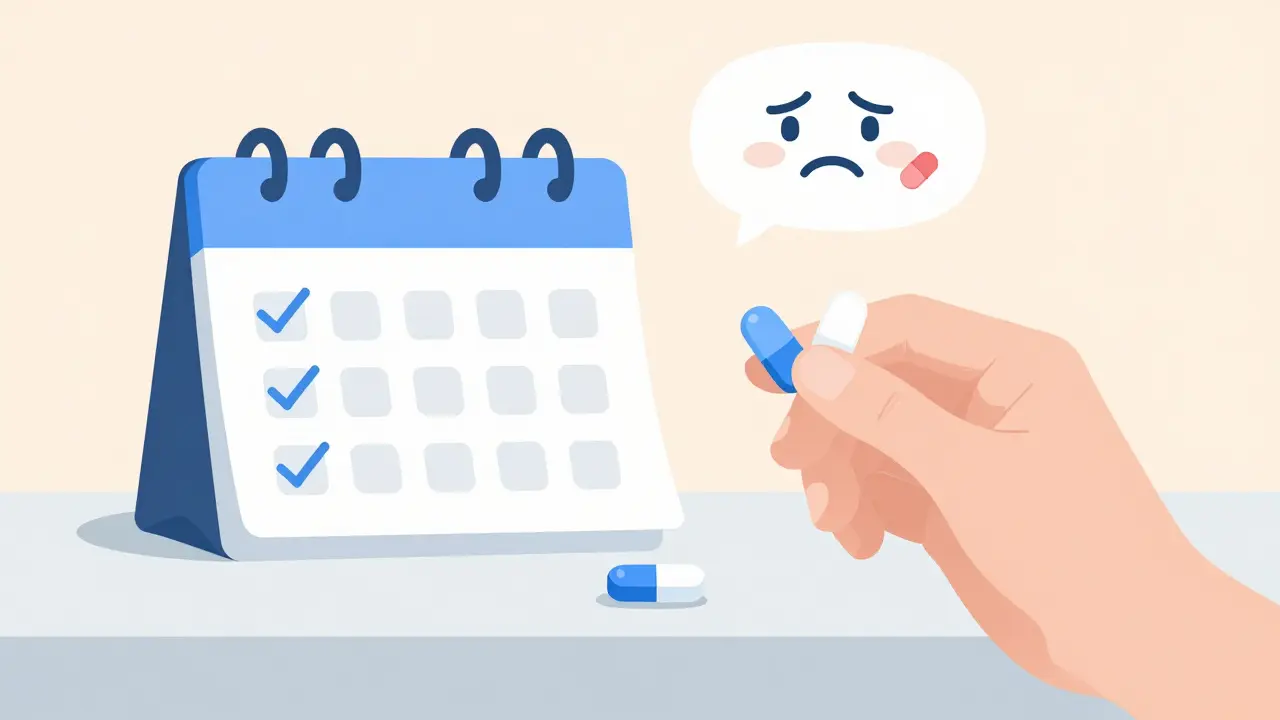
Imagine you’re managing high blood pressure. Your doctor gives you two pills: one blue, one white. You’re told to take them both every morning. But your neighbor, with the same condition, takes just one pill that does the same job. Why the difference? The answer lies in something called de facto combinations - when patients take separate generic drugs instead of a single fixed-dose combination (FDC) that contains the same ingredients. It’s not a mistake. It’s a choice. And it’s happening more than you think.
What Exactly Is a De Facto Combination?
A de facto combination isn’t a drug approved by regulators. It’s a practice. A doctor prescribes two or more generic medications separately, even though a single pill (an FDC) exists that contains the same active ingredients. For example, instead of taking one pill with amlodipine and valsartan (a common FDC for hypertension), a patient gets two pills: one with just amlodipine, another with just valsartan.
This isn’t new. It’s been around since generics became cheap and widely available. But it’s growing. In the U.S., about 34% of combination therapies for chronic conditions are still prescribed as separate generics, even when FDCs are approved and available. Why? Because sometimes, it makes sense.
Why Do Doctors Choose Separate Generics?
It comes down to three things: flexibility, cost, and patient needs.
First, flexibility. Not everyone needs the same dose. An FDC locks you into a fixed ratio - say, 10mg of drug A and 160mg of drug B. But what if you need 5mg of drug A and 160mg of drug B? Or 10mg of A and 80mg of B? With separate generics, your doctor can tweak each dose independently. That’s critical for people with kidney disease, liver problems, or those who need gradual titration. In diabetes, for instance, 67% of patients need personalized dosing that FDCs often can’t provide.
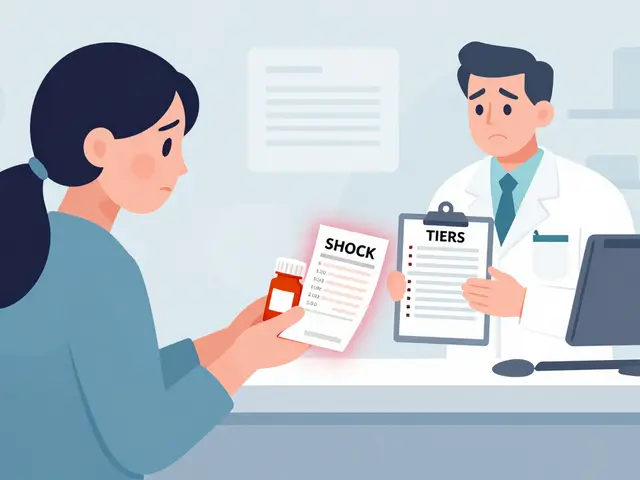
Second, cost. In some places, separate generics are cheaper. In India, a parliamentary report found that many FDCs offered no real benefit over individual drugs - and sometimes, buying the two generics separately saved patients money. Even in the U.S., if a brand-name FDC is priced higher than the sum of its generic parts, prescribers will go with the generics. It’s not about cutting corners. It’s about doing what’s affordable.
Third, patient-specific reasons. Some people can’t tolerate one component of an FDC. Maybe the combination causes swelling or dizziness. Switching to separate pills lets the doctor stop one drug without ditching the other. That’s not possible with a fixed pill.
The Hidden Risks of Taking Two Pills Instead of One
But here’s the catch: separate generics come with risks that FDCs don’t.
One major issue? Adherence. Every extra pill you have to take lowers your chance of sticking to the regimen. A study in PubMed found that each additional pill reduces adherence by about 16%. Patients on FDCs are 22% more likely to take their meds consistently than those on separate pills. Think about it: one pill in the morning. One blue, one white. Which one did you take? Did you take both? Did you skip one because you thought you already took it?
Patients on de facto combinations report confusion. One Reddit user wrote: “I switched from a single Amlodipine/Benazepril pill to two separate generics to save $15 a month. Now I miss doses because I forget which blue pill is which.” That’s not just inconvenient - it’s dangerous. Missed doses mean uncontrolled blood pressure, higher risk of stroke, heart attack.
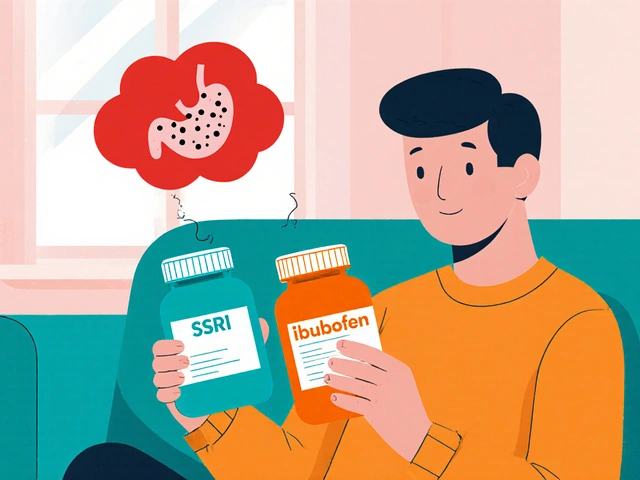
Then there’s safety. FDCs go through rigorous testing. Regulators like the FDA and EMA require proof that the combination is safe, stable, and effective together. They check for interactions, how the drugs dissolve in the body, whether one affects how the other is absorbed. Separate generics? Not so much. Each pill was tested alone. But when you put them together? That’s uncharted territory. The FDA found that 12.7% of generic drugs behave differently in the body than their reference versions. That difference could matter when two are taken together.

Who’s Saying This Is a Problem?
Experts are raising alarms.
Dr. Kenneth H. Fye from the University of Pennsylvania called unapproved combinations a “therapeutic Wild West.” He’s not exaggerating. Without formal testing, you don’t know if the drugs interact in harmful ways. Maybe one makes the other less effective. Maybe they build up in your system. Maybe they cause liver stress you didn’t expect.
The EMA says any FDC must prove it offers a clear benefit over taking the drugs separately. But for de facto combinations? No such rule exists. No one checks. No one requires evidence. It’s legal, yes. But it’s not always safe.
And it’s not just doctors. Pharmacists are worried too. A 2022 survey of over 1,500 U.S. pharmacists found that 72% were concerned about medication errors with de facto combinations. One pharmacist told me: “I’ve seen patients take two doses of the same drug because they didn’t realize both pills contained the same active ingredient.” That’s not a rare mistake.
When Is a De Facto Combination Actually the Right Choice?
It’s not all bad. Sometimes, it’s the best option.
Take HIV treatment. Almost 90% of patients use FDCs because adherence is life-or-death. But in oncology or advanced kidney disease, where doses need fine-tuning daily, separate generics are often preferred. A diabetic patient with kidney impairment might need a lower dose of metformin and a standard dose of sitagliptin. The FDC only comes in one ratio. Separate pills let the doctor adjust precisely. One patient on Drugs.com said: “I’ve kept my A1c at 6.2% for 18 months because I could adjust each drug independently.”
So the real question isn’t “Are de facto combinations good or bad?” It’s “When are they appropriate?”
How Can You Stay Safe If You’re on Separate Generics?
If you’re taking multiple pills instead of one FDC, you need to be extra careful. Here’s how:
- Use a pill organizer. Color-code it. Blue pills go in the blue compartment. White in white. Don’t rely on memory.
- Set phone reminders. One for each pill, if needed. Don’t assume you’ll remember.
- Ask your pharmacist for a medication schedule. Many pharmacies now offer printed charts with times, colors, and instructions.
- Never swap brands without checking. Generic versions of the same drug can vary in how fast they’re absorbed. If your amlodipine changes from one brand to another, it might affect how it works with your other drug.
- Keep a list. Write down every pill you take - name, dose, time. Bring it to every appointment.
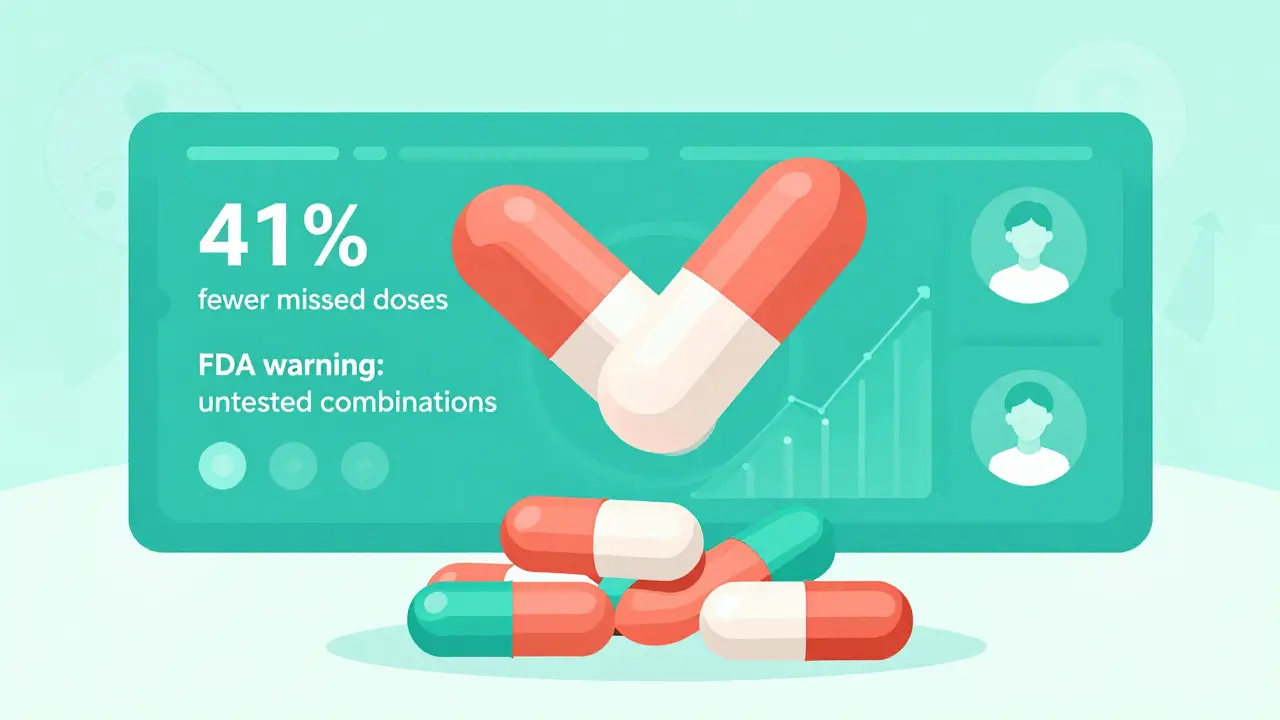
Some companies are stepping in. PillPack by Amazon now offers a “Combination Therapy Support Program” that pre-sorts pills by time of day, labels them clearly, and includes counseling. Patients using it saw a 41% drop in missed doses.
The Future: Better FDCs, Smarter Systems
The industry is responding. Companies like AstraZeneca are patenting modular FDCs - pills that let you adjust doses without switching to separate generics. Imagine a pill with a removable section: you pop out half the dose of one drug if you need less. That’s the future.
Regulators are watching too. The FDA issued a safety warning in January 2023 after 147 adverse events were linked to untested combinations. The EMA is studying the issue through 2025. By 2030, experts predict unmonitored de facto combinations will drop by 60% as electronic prescribing systems automatically flag inappropriate combinations.
But for now, the choice is yours - and your doctor’s. Sometimes, separate generics are the smartest move. Other times, they’re a gamble. The key is knowing when.
Final Thought: It’s Not About the Pill - It’s About the Plan
One pill or two? Doesn’t matter. What matters is whether you take it right. Whether you understand why you’re taking it. Whether your doctor has considered your body, your lifestyle, your ability to remember.
De facto combinations aren’t inherently wrong. But they’re not inherently right, either. They’re a tool. And like any tool, they need to be used with care, knowledge, and support.
Are de facto combinations legal?
Yes, de facto combinations are legal. Doctors can prescribe any approved generic drug separately, even if a fixed-dose combination (FDC) exists. However, while legal, they are not always safe or optimal. Regulators like the FDA and EMA do not approve or test these combinations, meaning their safety and effectiveness together are not formally evaluated.
Why aren’t de facto combinations approved like FDCs?
FDCs require regulatory approval because they are a single product with a fixed ratio of active ingredients. Manufacturers must prove the combination is safe, stable, and more effective or convenient than taking the drugs separately. De facto combinations are not manufactured as a single product - they’re prescribed off-label. No company is submitting them for approval, so regulators don’t evaluate them.
Can I switch from an FDC to separate generics on my own?
No. Never change your medication without talking to your doctor. Switching from an FDC to separate generics can affect how your body absorbs the drugs, increase side effects, or reduce effectiveness. Your doctor needs to assess your condition, kidney/liver function, and current dosing before making any change.
Do separate generics cost less than FDCs?
Sometimes, yes - especially in markets with strong generic competition. In the U.S. and India, individual generic drugs can be cheaper than branded FDCs. But in some cases, the total cost of two separate generics may be higher than a generic FDC. Always check with your pharmacy. The goal isn’t just to save money - it’s to get the safest, most effective treatment.
What should I do if I’m confused about my pills?
Ask your pharmacist for a medication schedule or use a pill organizer with labeled compartments. Set phone alarms for each dose. Keep a written list of all your medications and bring it to every appointment. If you’re taking multiple pills for the same condition, ask your doctor if an FDC might be a better option - especially if you’re missing doses.
Are there any tools to help manage de facto combinations?
Yes. Services like PillPack by Amazon offer pre-sorted, labeled blister packs with counseling for patients on multiple medications. Many pharmacies now offer free medication reviews and printed schedules. Electronic health records in some clinics can flag potential dosing conflicts. Talk to your pharmacist - they can help you set up a system that works for you.
Next Steps: What to Do If You’re on Separate Generics
- Review your medication list with your doctor every 6 months.
- Ask: “Is there an FDC that could simplify this?”
- If you’re having trouble remembering pills, request a pill organizer or pharmacy packaging service.
- Never stop or change a dose without consulting your provider.
- Keep a log of side effects - even small ones - and report them.
Managing chronic disease is hard enough. You shouldn’t have to guess which pill is which. Whether you take one or two, make sure you’re taking them right - and that your care team is helping you do it safely.





So let me get this straight-you’re telling me doctors are just winging it with pills like it’s a damn cocktail party? No testing? No oversight? I’ve been on two separate generics for years and I didn’t even know I was in some kind of regulatory loophole. This is insane. My pharmacist never mentioned this. Who’s actually checking if these drugs are playing nice together? I’m not a lab rat.
I’ve been on separate generics for hypertension since my kidney function dipped. The FDC fixed my dose too high for my creatinine levels. My doctor adjusted each component individually and my numbers stabilized. It’s not about convenience-it’s about precision. I get the adherence issue, but forcing people into one-size-fits-all pills ignores how complex human biology is.
You know, this whole thing reminds me of how we treat medicine like it’s a math problem. One pill equals one solution. But people aren’t equations. We’re messy. We have jobs, forgetfulness, budgets, bodies that change. Sometimes two pills are the only way to stay alive without going broke. The system should adapt to us-not the other way around. The fact that we even have to debate this says something about how broken our healthcare incentives are.
I swear to god if this is another corporate scam disguised as "patient choice" I’m gonna scream. Big Pharma doesn’t want you taking two cheap generics because they can’t charge $120 for a branded FDC. They’re literally betting on your confusion and forgetfulness. And now they’re gonna patent "modular pills" like it’s some genius innovation? Newsflash: we’ve had pill splitters since 1987.
The data on adherence is unequivocal. Each additional pill reduces compliance by approximately 16%. This is not anecdotal. It is clinically significant. For patients with chronic conditions, consistency is the most powerful therapeutic agent. While individualized dosing has merit, the risks of non-adherence outweigh the benefits in the majority of cases. A structured, single-pill regimen should be the default.
In India, we do this all the time. FDCs are banned if they don’t add value. Separate generics are cheaper, accessible, and doctors adjust doses daily. No one dies because they forgot which pill is which. They die because they can’t afford the branded FDC. This isn’t a US problem. It’s a profit problem.
This is all part of the Great Medication Manipulation. The FDA, WHO, and Big Pharma are in cahoots to keep you dependent on pills. They don’t want you healing. They want you dosing. That’s why they allow these untested combos-so you keep buying. They’re also hiding the truth: most of these drugs don’t even work long-term. It’s all about the money. You think your blood pressure is controlled? It’s just being masked. The real cure is diet, fasting, and sunlight. But they’ll never tell you that.
The fact that you’re even having this conversation shows how lazy prescribing has become. If you need flexibility, use titratable dosing. If cost is an issue, use generic FDCs. Stop patching systemic failures with band-aids. Two pills = two chances to mess up. That’s not patient-centered care. That’s negligence dressed up as choice.
I’m a pharmacist in Delhi. We see this daily. A man comes in with two blue pills-one from a local brand, one from a US import. He thinks they’re the same. They’re not. One dissolves slower. One has a different filler. He’s been taking both together for three months. His BP dropped too low. We had to reteach him. It’s not about the pills. It’s about education. We need more pharmacists, not more pills.
You think this is about pills? Nah. This is about control. The government doesn’t want you to know that the FDA has been quietly approving hundreds of FDCs without proper bioequivalence testing. They’re using the "de facto combo" loophole to bypass safety reviews. And now they’re pushing "modular pills" like it’s a breakthrough? That’s just the next phase-pills with microchips that track your compliance and send data to insurers. You’re being monitored. You’re being monetized. Wake up.
The evidence supporting FDCs for adherence is robust, but it does not account for patient-specific pharmacokinetic variability. In patients with hepatic impairment or polypharmacy, the ability to titrate individual components is not a luxury-it is a clinical necessity. The challenge lies not in the practice itself, but in the absence of standardized guidance and patient education. The solution is not elimination, but optimization.
Oh wow. So the solution to not taking your meds is… more pills? Brilliant. I guess we should just hand out a whole pharmacy and call it "personalized medicine." Meanwhile, the guy who takes one pill on time every day is the villain? Yeah right. This isn’t science. It’s a justification for lazy doctors and cheap prescriptions. One pill. One routine. One less thing to forget.
I have been on separate generics for over five years due to severe drug intolerance with the FDC. I experienced angioedema after one dose. Switching to individual agents allowed my physician to eliminate the offending component while preserving therapeutic efficacy. This is not a cost-saving strategy-it is a life-saving adaptation. Medical individualization must be protected, not demonized.
I just switched to two pills to save $20 a month and now I’m terrified I’m taking the wrong combo. I don’t even know what color is what anymore. My phone reminds me but I still mix them up. I hate this. Why can’t they just make one pill that works? I’m not asking for magic. Just don’t make me play pills roulette.