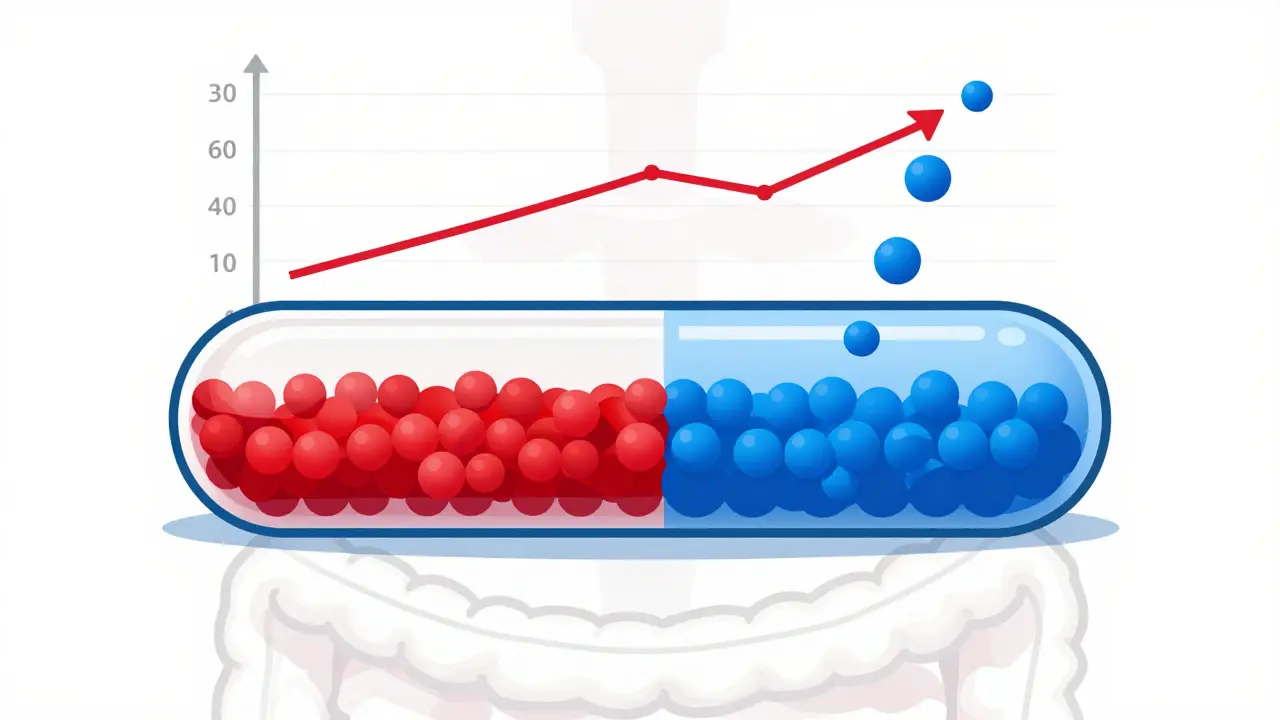
When a patient switches from a brand-name extended-release pill to a generic version, they expect the same effect-same pain control, same sleep pattern, same stable blood levels. But with modified-release (MR) formulations, that’s not always guaranteed. Unlike immediate-release pills that dump their drug into the body all at once, MR products are engineered to release medication slowly, in bursts, or at specific spots in the gut. This complexity makes proving they work the same as the original-called bioequivalence-far harder than for regular pills.
Why Modified-Release Formulations Are Different
Modified-release formulations aren’t just slower versions of immediate-release drugs. They’re designed to control how the drug enters the bloodstream. Some release a small dose right away, then a larger one hours later. Others delay release until the drug reaches the colon. A few are built to resist breaking down if alcohol is consumed. These features improve patient compliance, reduce side effects, and smooth out peaks and valleys in drug concentration.For example, a once-daily extended-release methylphenidate tablet for ADHD avoids the midday crash and need for a lunchtime dose. But if the generic version releases too fast, the patient might feel jittery at first and then have no effect by afternoon. If it releases too slowly, symptoms return before the next dose. That’s why regulators don’t treat MR generics like ordinary ones.
The FDA estimates that 35% of all approved generic drugs today are modified-release. That’s over $65 billion in annual U.S. sales. And the number is growing. With aging populations and more chronic conditions like hypertension, epilepsy, and depression being managed long-term, demand for MR drugs is rising. But getting them approved? That’s where things get tricky.
What Bioequivalence Means for MR Drugs
Bioequivalence means two drug products perform the same way in the body. For immediate-release drugs, you measure two things: how much of the drug gets into the blood (AUC) and how fast it peaks (Cmax). If both are within 80-125% of the brand-name drug, it’s considered equivalent.For modified-release drugs, that’s not enough. A generic might have the same total exposure (AUC) and similar peak concentration (Cmax), but still behave differently over time. That’s why regulators now require additional metrics.
For multiphasic MR products-like Ambien CR, which has both immediate and extended-release layers-the FDA requires partial AUC (pAUC) measurements. For Ambien CR, you must show equivalence in two time windows: 0 to 1.5 hours (the quick-release part) and 1.5 hours to infinity (the slow-release part). Both must fall within the 80-125% range. In 2012, a generic version of Concerta (methylphenidate ER) was rejected because it didn’t meet bioequivalence at the critical early timepoint (0-2 hours), even though overall AUC was fine.
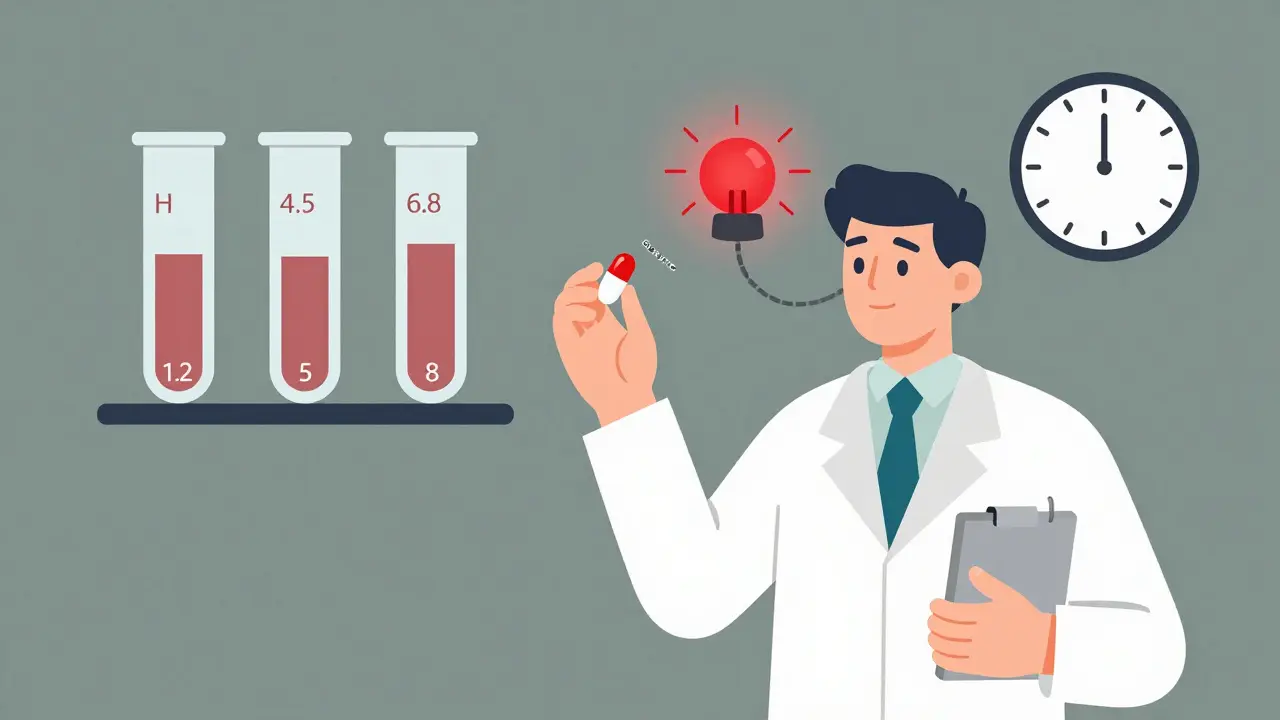
For extended-release tablets, dissolution testing isn’t just a formality. It’s a key part of proving equivalence. The FDA requires testing at three pH levels: 1.2 (stomach), 4.5 (upper intestine), and 6.8 (lower intestine). If the generic dissolves differently at any of these levels, it’s a red flag. One formulation scientist at Teva reported a 35-40% failure rate in early development just trying to match the dissolution profile of oxycodone ER tablets.
Regulatory Differences Between FDA, EMA, and WHO
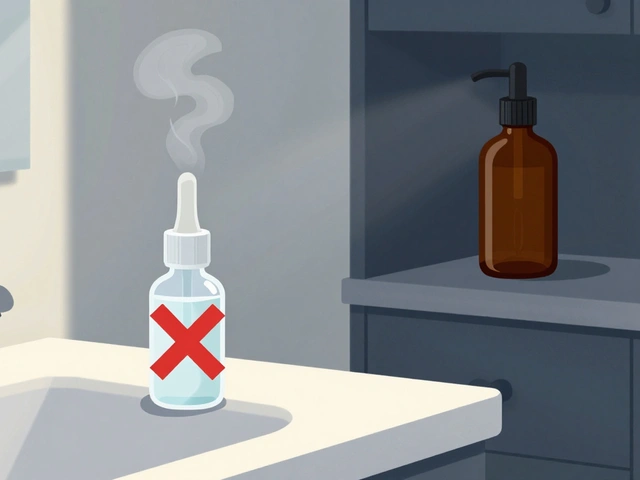
Not all agencies see MR bioequivalence the same way.The FDA focuses on single-dose, fasting studies. They believe these are more sensitive to detecting differences in drug release. Since 2015, 92% of approved extended-release generics used this approach. They also require alcohol interaction studies for any ER product containing 250 mg or more of active ingredient. Why? Because alcohol can cause dose dumping-where the entire drug is released at once. Between 2005 and 2015, seven ER products were pulled from the market due to this risk.
The European Medicines Agency (EMA) is more cautious. They still require steady-state studies for some MR drugs, especially when the drug accumulates in the body (accumulation ratio >1.5). They also look at different metrics, like half-value duration and midpoint duration time, instead of pAUC. Their dissolution requirements are similar to the FDA’s, but they allow biowaivers if the f2 similarity factor is above 50 across all pH levels.
The World Health Organization (WHO) takes a simpler view. Their 2016 guideline says MR bioequivalence criteria are “essentially the same” as for conventional drugs. But this stance doesn’t match what the FDA or EMA actually enforce. Most global manufacturers follow FDA or EMA rules because they’re the most stringent-and the most accepted by major markets.
Special Cases: Highly Variable and Narrow Therapeutic Index Drugs
Some drugs are naturally unpredictable in the body. Their AUC and Cmax vary wildly between people. These are called highly variable drugs (HVDs). For them, the standard 80-125% range is too loose. The FDA uses Reference-Scaled Average Bioequivalence (RSABE), which widens the acceptance range based on how variable the brand-name drug is. The cap is 57.38% for the reference product’s within-subject variability.One clinical pharmacologist at Mylan said implementing RSABE adds 6-8 months to development timelines. The math is complex. It requires more subjects, longer study periods, and advanced statistical tools. But without it, many MR generics for drugs like warfarin or clopidogrel could never be approved.
Narrow therapeutic index (NTI) drugs are another challenge. These are drugs where a small difference in blood level can cause toxicity or treatment failure. Warfarin, lithium, and some antiepileptics fall into this category. For NTI MR drugs, the FDA requires tighter limits: 90.00-111.11% instead of 80-125%. In one study published in Neurology in 2016, 18% of generic MR antiepileptic drugs showed higher seizure breakthrough rates than the brand, even though they passed standard bioequivalence tests. That’s why regulators are pushing for more sensitive methods.
Costs, Challenges, and Real-World Failures
Developing a generic MR drug costs $5-7 million more than a regular one. Why? Because the studies are longer, more complex, and require specialized equipment.A single-dose MR bioequivalence study costs $1.2-1.8 million. Compare that to $0.8-1.2 million for an immediate-release study. The difference comes from:
- More blood samples over longer periods (up to 72 hours instead of 24)
- Testing at multiple pH levels
- Alcohol interaction testing
- Statistical modeling for RSABE
- Advanced dissolution apparatus (USP Apparatus 3 or 4 instead of standard Apparatus 2)
And failure rates are high. Between 2018 and 2021, 22% of MR generic applications were initially rejected by the FDA-mostly because of inadequate pAUC data. One company spent $1.5 million and 10 months developing a generic tacrolimus ER that passed because they used a dissolution profile similarity (f2=68) to qualify for a biowaiver. That’s rare. Most don’t get that lucky.
Smaller companies struggle. Only 3% of MR bioequivalence studies are done by biotechs. The rest are handled by five big contract research organizations (CROs): PRA Health Sciences, Covance, PPD, ICON, and Syneos Health. Their services cost $1.1-1.9 million per study. For a small firm, that’s a dealbreaker.

What It Takes to Get It Right
If you’re working on an MR generic, you need more than good chemistry. You need deep expertise in:- Pharmacokinetic modeling (using tools like Phoenix WinNonlin or NONMEM)
- Dissolution method development
- RSABE statistical analysis
- Understanding product-specific guidances (PSGs)
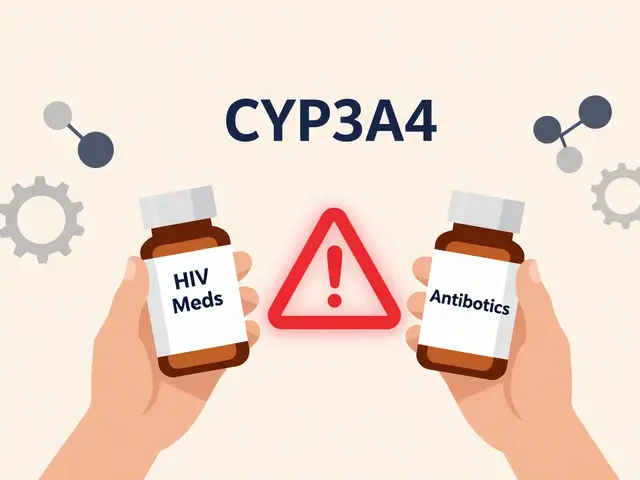
The FDA has issued over 150 product-specific guidances for MR drugs. Each one spells out exactly what’s needed for that particular drug. For dextroamphetamine sulfate ER, they recommend USP Apparatus 3. For others, they require specific timepoints for pAUC. Ignoring these can mean a complete rejection.
Training is another hurdle. According to a 2022 ISoP survey, it takes 12-18 months of specialized training for a pharmacokinetic scientist to become proficient in MR bioequivalence studies. Most universities don’t teach this. It’s learned on the job.
The Future: IVIVC, PBPK, and What’s Next
The field is moving beyond just measuring blood levels. Now, regulators are starting to accept in vitro-in vivo correlation (IVIVC) models. These are mathematical models that predict how a drug will behave in the body based on how it dissolves in the lab. The FDA has accepted Level A IVIVC for 12 MR drugs since 2019, including extended-release paliperidone. This means companies might eventually skip human studies altogether for some products.Another trend is physiologically based pharmacokinetic (PBPK) modeling. Sixty-eight percent of major pharma companies are now using it to simulate how a drug will behave under different conditions-fasting, fed, with alcohol, in elderly patients. This helps predict bioequivalence before running expensive clinical trials.
The FDA plans to release a new guidance in 2024 on complex MR products like gastroretentive systems and multiparticulate capsules. These are the next frontier. They’re harder to test, harder to replicate, and harder to prove equivalent.
By 2028, IQVIA predicts MR formulations will make up 42% of all prescription drug sales. The demand is real. But so are the risks. A generic that meets bioequivalence standards on paper might still cause problems in real life. That’s why regulators keep tightening the rules. It’s not about slowing down generics. It’s about making sure they’re truly safe and effective.
Why can’t we use the same bioequivalence standards for modified-release and immediate-release drugs?
Immediate-release drugs release all their active ingredient quickly, so measuring total exposure (AUC) and peak concentration (Cmax) is enough to show they work the same. Modified-release drugs, however, are designed to release the drug slowly, in stages, or at specific times. Two products might have identical AUC and Cmax but release the drug at different rates-leading to different effects in the body. That’s why regulators require additional measures like partial AUC (pAUC) and dissolution profiles across multiple pH levels.
What is alcohol-induced dose dumping, and why does it matter?
Alcohol-induced dose dumping happens when alcohol in the stomach causes an extended-release tablet or capsule to release its entire drug dose all at once. This can lead to dangerous spikes in blood concentration. For example, an opioid ER pill might release 100 mg of oxycodone in minutes instead of over 12 hours. The FDA requires alcohol testing for all ER products containing 250 mg or more of active ingredient. Between 2005 and 2015, seven such products were withdrawn from the market due to this risk.
What is RSABE, and when is it used?
RSABE stands for Reference-Scaled Average Bioequivalence. It’s a statistical method used for highly variable drugs-those where blood levels vary widely between individuals, even when taking the same dose. For these drugs, the standard 80-125% bioequivalence range is too strict. RSABE widens the acceptable range based on how variable the brand-name drug is, up to a cap of 57.38%. It’s required for drugs like warfarin, clopidogrel, and some extended-release stimulants.
Why do some generic MR drugs still cause breakthrough seizures or other problems?
Some generic modified-release drugs pass all regulatory bioequivalence tests but still cause clinical issues. A 2016 study in Neurology found that 18% of generic extended-release antiepileptic drugs had higher seizure breakthrough rates than the brand. This suggests current bioequivalence criteria may not fully capture how the drug behaves over time in real patients. Factors like slight differences in release timing or coating integrity can matter more than overall exposure.
Can dissolution testing replace human bioequivalence studies for MR drugs?
In some cases, yes-but only under strict conditions. The FDA allows biowaivers (no human study needed) if the generic’s dissolution profile matches the brand’s at three pH levels and meets the f2 similarity factor of ≥50. This has worked for products like extended-release tacrolimus. But it’s not a shortcut for all MR drugs. It only applies when there’s a proven link between dissolution and absorption (IVIVC), and only for certain formulations. Most complex MR products still require full clinical bioequivalence studies.




India's generic industry is quietly revolutionizing global access to MR drugs. We don't have the budgets of big pharma, but we've cracked dissolution profiles for oxycodone ER that rival the brand. It's not luck-it's years of trial and error in small labs across Hyderabad. The FDA's pAUC requirements? We've been doing them since 2017. It's just not glamorous enough for the headlines.
What they don't tell you is that 70% of global MR generics come from here. And we're not cutting corners-we're innovating with cheaper tech. USP Apparatus 3? We modified Chinese equipment to do it for $20k instead of $200k. The world needs this. Not just cheaper pills-but reliable ones.
Actually, the FDA’s 80-125% range is outdated for MR drugs. The real issue is that most bioequivalence studies use healthy young males. But 60% of MR drug users are elderly with altered gastric pH and slowed motility. You can pass a fasting study and still fail in the real world. Why isn’t the FDA requiring fed-state studies for all MR products? It’s not about science-it’s about cost.
And don’t get me started on biowaivers. If a generic dissolves the same in a beaker, it doesn’t mean it behaves the same in a gut with diverticulosis. This isn’t chemistry-it’s guesswork with a FDA stamp.
My uncle takes extended-release carbamazepine and switched to a generic last year. He had three seizures in two months. No one listened until we got the lab results-the generic released 80% of the dose in the first hour. The brand took 4 hours. Same AUC, totally different outcome.
Doctors say it's 'just coincidence.' But I know better. We need better tests. Not more paperwork-better science.
Okay but like… why does no one talk about the emotional toll? 🤔
I work in neurology and I’ve seen patients cry because their ‘same’ generic made them feel like a zombie for 12 hours then useless for the next 8. It’s not just pharmacokinetics-it’s quality of life. And the companies? They’re busy optimizing for dissolution curves, not human experience.
Also… can we please just admit that 18% seizure breakthrough rate is terrifying? 🙏
Let’s be brutally honest: the entire MR bioequivalence framework is a regulatory farce. They use pAUC, dissolution profiles, RSABE, PBPK models… all while ignoring the most obvious variable: patient adherence. If a patient misses a dose, takes it with food, or drinks alcohol, none of these fancy models matter.
And yet, regulators act like a perfect dissolution curve guarantees perfect outcomes. Meanwhile, real-world data shows 22% of MR generics have higher hospitalization rates than brand names. That’s not bioequivalence-that’s statistical sleight of hand.
RSABE? It’s just a mathematical loophole to approve generics that would otherwise fail. And don’t get me started on how EMA’s ‘cautious’ approach is just bureaucratic inertia dressed up as science.
The truth? We’re not testing equivalence-we’re testing whether a company can afford to run the right studies. The rest is theater.
Just wanted to say thank you for writing this. I’m a nurse in rural Ohio and I see this every day. Patients get switched to generics and then come back saying ‘I don’t feel right’ but no one listens because the numbers look good.
I’ve started keeping a little log-what brand they were on, what generic they got, how they felt after. It’s not scientific but it’s real. One guy said his ‘new’ ADHD med made him feel like his brain was underwater. He went back to the brand and said it was like ‘coming up for air.’
Maybe we need more stories like this and less spreadsheets. I know it’s messy but people aren’t data points.
Also typo: ‘dextroamphetamine’ not ‘dextroamphetemine’ 😅
India made the world’s most affordable MR generics. But now the West wants to shut us down with impossible standards? Pah. They fear our efficiency. They fear our engineers who fix equipment with duct tape and genius.
Let them cry over pAUC and f2 factors. We deliver millions of pills to Africa and Latin America every month-pills that save lives. While they debate dissolution profiles in air-conditioned labs, we’re putting medicine in the hands of people who would otherwise die.
Don’t call us ‘cutting corners.’ Call us the real heroes of global health. The FDA’s rules? They’re not science-they’re protectionism with a white coat.
bro i took a generic ER oxycodone once and thought i was gonna die lmao
like 30 mins later i felt like i got hit by a truck then 4 hours later i was just… gone. no pain relief. no nothing.
my doc said ‘it’s bioequivalent’ and i was like bro you’ve never taken this shit have you
now i pay 2x for the brand and i don’t care. my body ain’t a lab rat 🤡