Every year, millions of people take pills they think are saving their lives - but many of those pills are fake. Counterfeit generic drugs aren’t just poorly made imitations. They’re dangerous, often deadly, and they’re slipping into the supply chain faster than ever. In some parts of the world, as many as 1 in 3 medicines sold are fake. And it’s not just happening in faraway countries - these drugs show up in pharmacies, online stores, and even hospitals. So how do they get there? And why is it so hard to stop them?
Where fake drugs are made
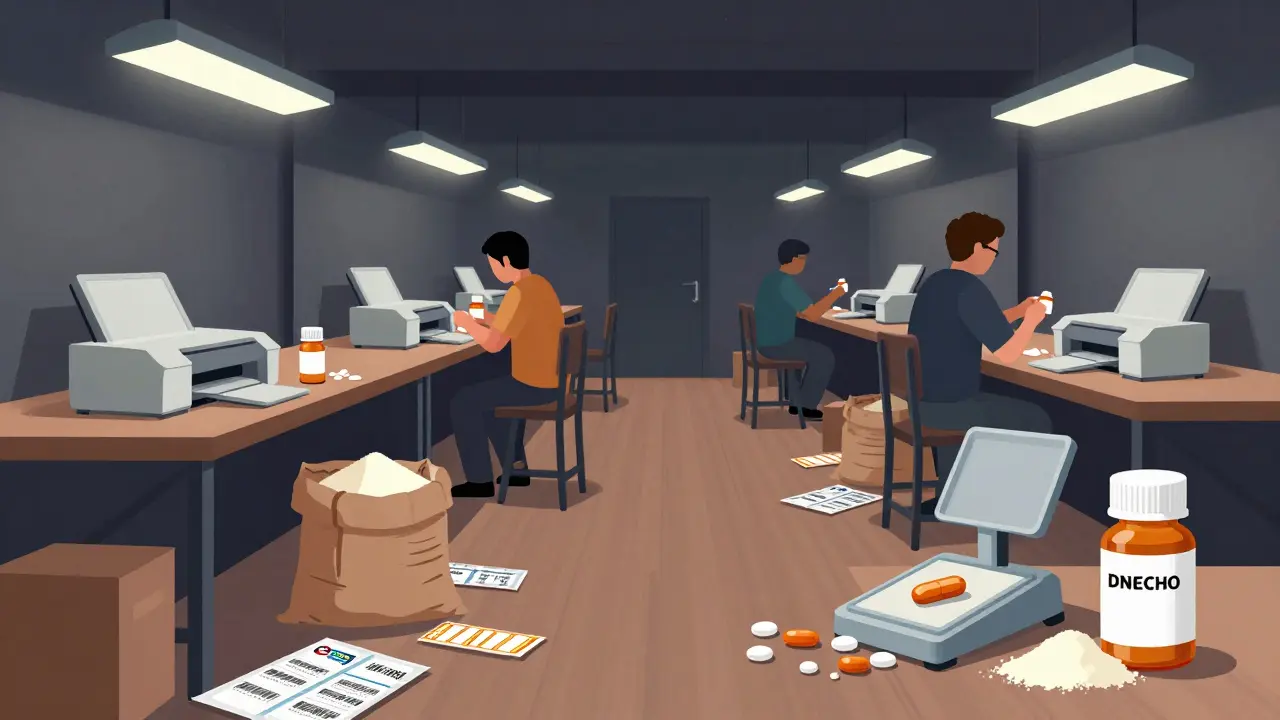
Counterfeit generic drugs don’t come from big pharmaceutical labs. They’re made in hidden factories - often in places with weak regulation and little oversight. Southeast Asia, Eastern Europe, and parts of Africa are hotspots. These aren’t high-tech labs. Many are small warehouses with cheap printing equipment, basic chemicals, and workers paid pennies to assemble fake bottles and blister packs.What makes these fakes so dangerous isn’t just that they’re fake - it’s that they’re designed to look real. Modern counterfeiters use commercial printers to copy logos, fonts, and even batch numbers. Some use the same color dyes and tablet shapes as the real thing. In one case in 2022, Europol seized cancer drugs with holograms so accurate they passed visual inspections by trained pharmacists.
The active ingredients? Often just close enough to fool a quick test. Instead of real artemisinin in antimalarials, you might get chalk, flour, or a cheap chemical that does nothing. In 2008, contaminated heparin from China - a blood thinner - killed 149 people in the U.S. because the fake ingredient wasn’t even close to what was labeled. It wasn’t just a bad batch. It was a deliberate substitution.
How they sneak into the real supply chain
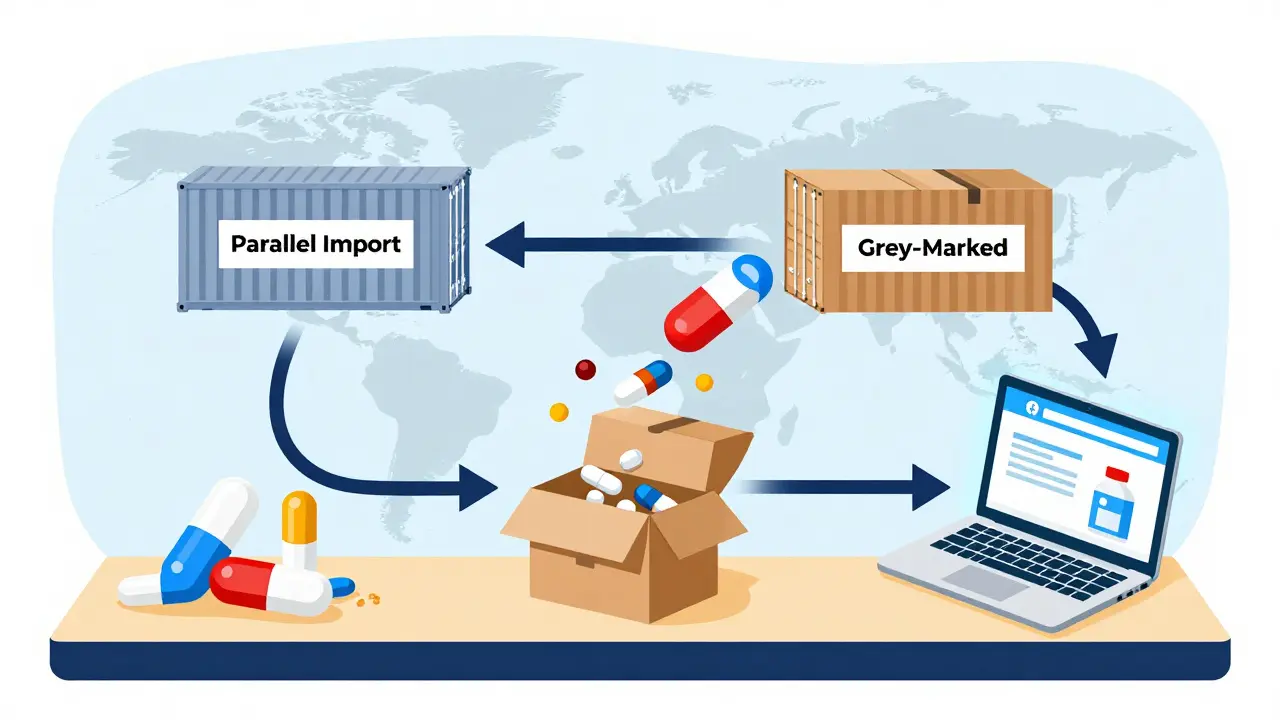
The pharmaceutical supply chain is long, complicated, and full of weak links. Legitimate drugs move through manufacturers, distributors, wholesalers, and pharmacies - sometimes across dozens of countries. Each handoff is a chance for fake drugs to slip in.There are three main ways counterfeits get into the system:
- Parallel importation: A drug sold legally in one country gets bought in bulk and resold in another where it’s priced higher. If a fake gets mixed in during this process, it looks like a legitimate import.
- Grey market sales: Unauthorized distributors buy real drugs in bulk, then mix in fakes to boost profits. This is common in regions with price controls, where real drugs are expensive but demand is high.
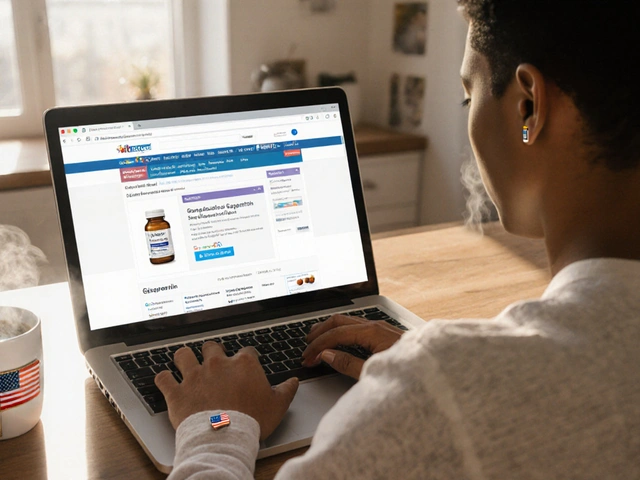
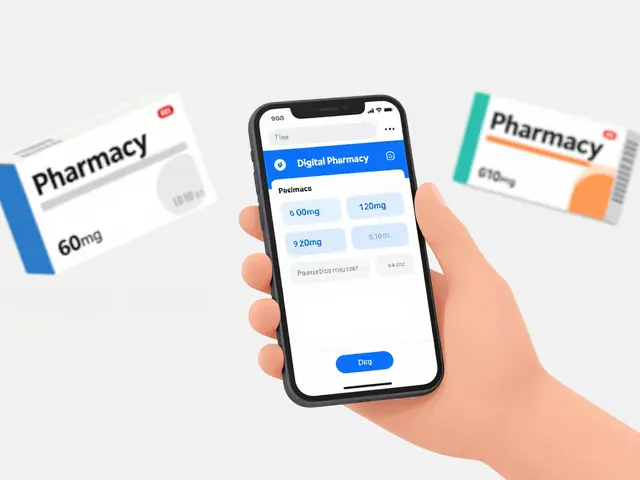
- Online pharmacies: The biggest growth area. The National Association of Boards of Pharmacy found that 95% of online pharmacies operate illegally. Many look like real sites - they have SSL certificates, customer reviews, and even fake “verified” badges. You order a heart medication, and weeks later, a package arrives with pills that look right but contain no active ingredient.
Even legitimate supply chains aren’t safe. A 2021 study in the American Journal of Tropical Medicine and Hygiene found that 77% of counterfeit drugs detected in legal channels were oral tablets - the most common form. Antibiotics, antihypertensives, and diabetes drugs are top targets because they’re taken daily, in large volumes, and by people who can’t afford to switch brands.
Why generic drugs are the main target
Generic drugs make up more than 80% of prescriptions in many countries. They’re cheaper, so more people use them. But that also makes them the perfect target for counterfeiters.When a brand-name drug’s patent expires, dozens of companies can make the same medicine. The original manufacturer no longer controls production. That’s good for patients - it lowers prices. But it also creates confusion. Who’s the real supplier? Which factory made it? If one plant cuts corners, how do you know?
Counterfeiters exploit this. They don’t need to copy the brand name - they just need to mimic the generic label. A fake “amlodipine 10mg” tablet from an unknown factory looks identical to the real one from a trusted Indian manufacturer. Pharmacists can’t tell the difference without lab tests.
The numbers tell the story. The global generic drug market was worth $438.7 billion in 2022. The OECD estimates the counterfeit drug market is $200 billion - nearly half the size of the real generic market. That’s not a coincidence. Counterfeiters go where the money is.
The tools that help fake drugs hide
Counterfeiters aren’t amateurs anymore. They’re using technology to outsmart detection.- AI-generated packaging: In early 2023, Europol caught a shipment of fake cancer drugs with holograms created by AI. The images were perfectly aligned, the color shifts were flawless - even trained inspectors missed them.
- Chemical mimicry: Instead of just using sugar, some fakes now contain chemically similar compounds that pass basic chemical tests. They might not work, but they don’t trigger alarms either.
- Stolen legitimate products: The Pharmaceutical Security Institute recorded 786 thefts of real drugs in 2022. Thieves steal shipments, replace the contents with fakes, and send them back into the supply chain. The packaging is real. The barcode is real. The product? Poison.
Even traceability systems aren’t foolproof. Only 22 of the 194 WHO member states have fully working track-and-trace systems. Most countries still rely on paper records or outdated barcodes. That means once a fake enters the system, it can travel for months before anyone notices.
What’s being done - and why it’s not enough
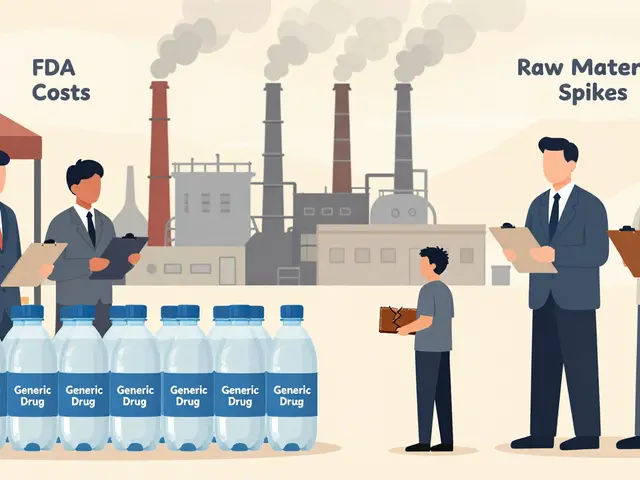
Some progress has been made. The EU’s Falsified Medicines Directive, which came into full effect in 2019, requires unique identifiers on every medicine package. Since then, counterfeit penetration in Europe has dropped by about 18%. Blockchain pilots by companies like MediLedger have shown 97% accuracy in detecting supply chain fraud.But these tools are expensive. Adding a DNA tag or a color-shifting ink to each pill costs between $0.02 and $0.05. For a company selling generic drugs at $0.10 per tablet, that’s a 50% cost increase. Most manufacturers in low-income countries can’t afford it.
Pharmaceutical companies like Pfizer have run anti-counterfeiting programs since 2004. They’ve stopped over 302 million fake doses. But they’re fighting a war on multiple fronts - and they’re outnumbered.
Regulation is patchy. The U.S. has the Drug Supply Chain Security Act, which mandates full traceability by 2023. But in many African and Asian countries, there’s no law requiring serial numbers, inspections, or even basic quality checks. And even where laws exist, enforcement is rare.
What you can do - and what to watch for
If you’re buying medicine, here’s what to look for:- Check the packaging: Look for spelling errors, blurry text, or mismatched colors. Real pills have consistent scoring, size, and color.
- Buy from licensed pharmacies: If you’re ordering online, verify the pharmacy. In the U.S., use the NABP’s Verified Internet Pharmacy Practice Sites (VIPPS) list. In South Africa, check with the South African Pharmacy Council.
- Watch for price anomalies: If a drug is 70% cheaper than usual, it’s a red flag. Counterfeiters undercut prices to lure buyers.
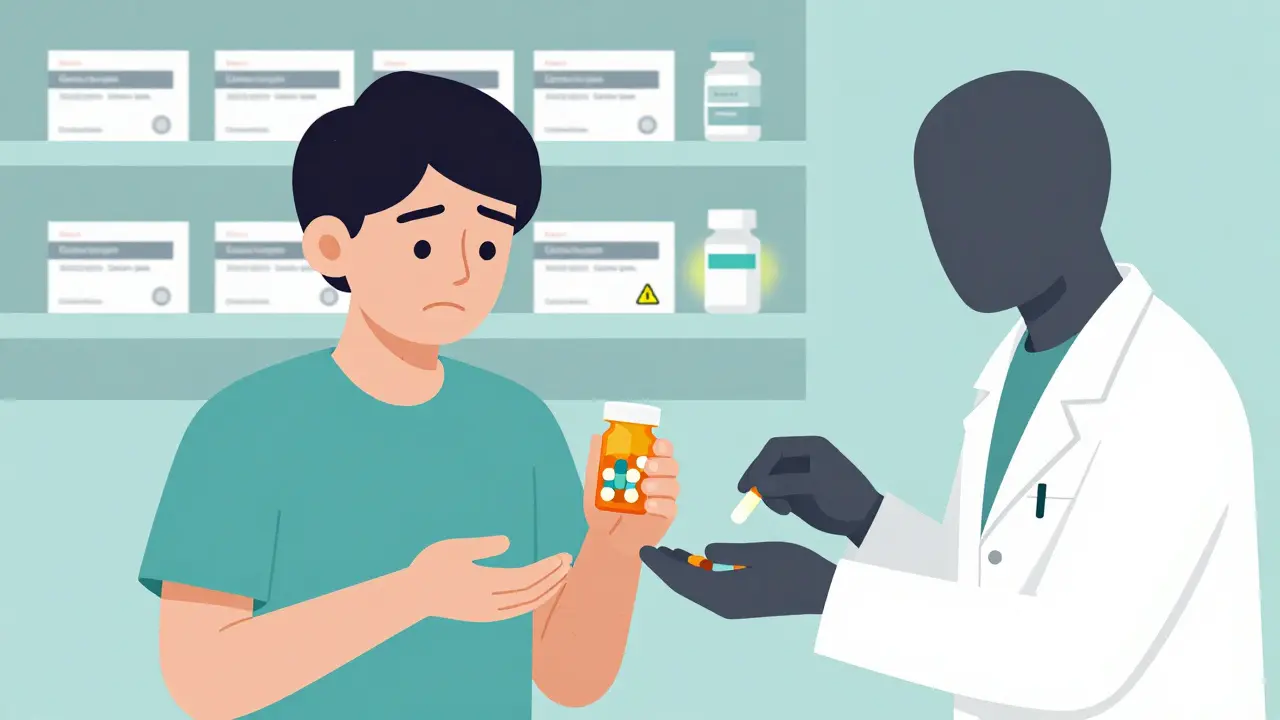
- Ask your pharmacist: If you notice a change in how your pill looks or tastes, ask if it’s the same batch. Pharmacists are trained to spot fakes - but they need you to speak up.
One Reddit user, u/PharmaWatcher, shared how they received counterfeit Lipitor. The tablets had the wrong color, the scoring was off, and when they tested them, the pills didn’t dissolve properly. That’s a sign of low-quality fillers. They reported it - and the FDA confirmed it was fake.
Doctors and pharmacists in Africa report similar stories. Antimalarials with only 10-20% of the needed artemisinin. Antibiotics with no active ingredient. Patients don’t get better. Some get worse. Others die.
What’s next
Without global cooperation, this problem will only grow. The OECD predicts that by 2030, counterfeit drugs could make up 5-7% of all medicines sold worldwide. Online sales will be the biggest driver.The fix isn’t just better tech. It’s better laws. Better training. Better transparency. And it’s not just up to governments or big companies - it’s up to patients, too. If you suspect a fake, report it. Ask questions. Don’t assume your medicine is safe just because it came from a pharmacy.
Real medicine saves lives. Fake medicine kills - quietly, slowly, and often without anyone noticing until it’s too late.
How can I tell if my generic drug is fake?
Look for changes in color, size, shape, or taste. Check the packaging for blurry printing, misspellings, or mismatched batch numbers. Compare it to previous refills - if it looks different, ask your pharmacist. You can also verify the pharmacy’s license online. In the U.S., use the NABP’s VIPPS list. In South Africa, check the South African Pharmacy Council’s website. If you’re unsure, don’t take it.
Are online pharmacies safe to buy generic drugs from?
Most aren’t. The National Association of Boards of Pharmacy found that 95% of online pharmacies operate illegally. Many use fake websites that look real - they have SSL certificates, customer reviews, and even fake seals of approval. Only buy from pharmacies that require a prescription and are listed on official verification sites like VIPPS (U.S.) or your country’s pharmacy council. If the price seems too good to be true, it is.
Why are generic drugs more likely to be counterfeited than brand-name drugs?
Because they’re cheaper, more widely used, and have multiple manufacturers. Counterfeiters don’t need to copy a brand name - they just need to mimic the generic label. With dozens of companies making the same drug, it’s harder to track which factory made which batch. This creates confusion that fake producers exploit. Plus, since generics are sold at low prices, counterfeiters can undercut real sellers and still make huge profits.
Can counterfeit drugs be detected without lab tests?
Sometimes, but not reliably. Many fakes are designed to pass visual inspections - they look identical to the real thing. Trained pharmacists can spot subtle differences in tablet scoring, ink quality, or packaging texture. But sophisticated counterfeits now use AI-generated holograms and chemically similar ingredients that mimic real drugs. Without lab testing, you can’t be sure. If you suspect a fake, don’t take it - return it and report it.
What countries have the worst counterfeit drug problems?
Africa has the highest rate - the IFPMA reports 42% of all substandard and falsified medicines globally come from African markets. Southeast Asia and parts of Eastern Europe are also major sources. But counterfeit drugs are sold everywhere. Even in the U.S. and EU, online pharmacies and grey market distributors are common entry points. The problem isn’t location - it’s regulation. Countries with weak oversight and poor enforcement are the most vulnerable.
Are there any technologies that can stop counterfeit drugs?
Yes, but they’re not widely used. Track-and-trace systems with unique serial numbers, blockchain verification, DNA tags, and color-shifting inks can all help. The EU’s Falsified Medicines Directive reduced counterfeits by 18% by requiring each package to have a unique code. Companies like MediLedger have tested blockchain systems with 97% accuracy. But these tools cost money - about $0.02-$0.05 per unit. Many manufacturers in low-income countries can’t afford them, so adoption is slow.


I just got my blood pressure meds refill and noticed the pills looked slightly off... like the color was a little too pale. 😔 I called my pharmacy and they said it was a "new batch." But after reading this, I'm terrified. I took them anyway. Please tell me I didn't just poison myself.
We live in a world where a pill can kill you and no one even notices until it's too late. 😔 The system is broken, not because of greed alone, but because we've normalized convenience over safety. We want cheap medicine, so we ignore the invisible hand that's been swapping our lives for chalk. And then we scroll past the next headline. We're not victims. We're accomplices.
The scale of this crisis is staggering. In India, where I'm from, generic drugs are the lifeline for millions. But the lack of infrastructure in rural distribution channels makes it nearly impossible to monitor every batch. While the EU and US have traceability systems, most low-income countries can't afford even basic barcode scanners. The solution isn't just tech-it's investment. Real, sustained investment in supply chain integrity, not just after a scandal breaks.
The fundamental epistemological failure lies in our reliance on institutional trust. We have been conditioned to believe that the pharmaceutical supply chain is a closed, regulated, and immutable system. Yet, the empirical evidence presented here demonstrates a systemic collapse of verification protocols. The introduction of counterfeit agents into the supply chain is not an anomaly-it is an emergent property of market liberalization without corresponding regulatory innovation. The question is not whether this will worsen, but whether society possesses the moral courage to prioritize human life over economic expediency.
Look, I get it. Big Pharma wants to make money. Governments want to cut costs. Patients want their meds to work. But here's the brutal truth: we're all playing Russian roulette with our prescriptions. I used to work in logistics for a regional distributor. Saw firsthand how a single truckload from a "verified" warehouse could have 15% fakes mixed in-packaged identically, shipped under the same manifest. And no one checked. Why? Because it's cheaper to ignore it than to audit every shipment. The FDA? They inspect 0.04% of imports. That's not oversight. That's a joke with a badge. And now we're surprised when people die? Wake up. This isn't some distant problem. It's in your medicine cabinet right now.
My mom’s in her 70s and takes 5 different generics. She trusts her pharmacy completely. I showed her this article and she cried. She said, 'I didn’t know I was risking my life just to save $10.' It breaks my heart. We need to stop treating medicine like a commodity and start treating it like a human right. Maybe if we all started asking more questions-really asking-pharmacies and regulators would have no choice but to listen.
So let me get this straight. We’ve got AI making perfect fake holograms, chemists mixing chalk that passes basic tests, and people still buying pills off Instagram because it’s $5? I’m not even mad. I’m just impressed. The counterfeiters are basically running a parallel universe where capitalism won and ethics got deleted. Congrats, humanity. You built the Matrix and then forgot to log out.
I work in pharmacy tech and I’ve seen the pressure. Pharmacists are stretched thin. We’re told to fill 40+ scripts an hour. No one has time to check every pill’s texture or batch number. And when a patient asks if their new pills are legit? We say 'probably' because we don’t have the tools to prove otherwise. It’s not negligence-it’s systemic failure. But here’s the thing: if you notice a change, speak up. Even if it’s just to your pharmacist. One question could save a life. And if you’re a patient, don’t be embarrassed to ask. You’re not being paranoid-you’re being smart.
I’ve been buying my diabetes meds online for years because the copay at the local pharmacy is insane. I always thought I was being smart. Turns out I was just lucky. I just checked the website I use and it’s NOT on the VIPPS list. 😳 I’m ordering a test kit today to check my pills. If you’re doing the same thing, stop. Just stop. Go to your local pharmacy. Pay the extra $5. It’s not about the money anymore. It’s about not dying. And if you’re a pharmacist-please, PLEASE start checking. We’re counting on you.