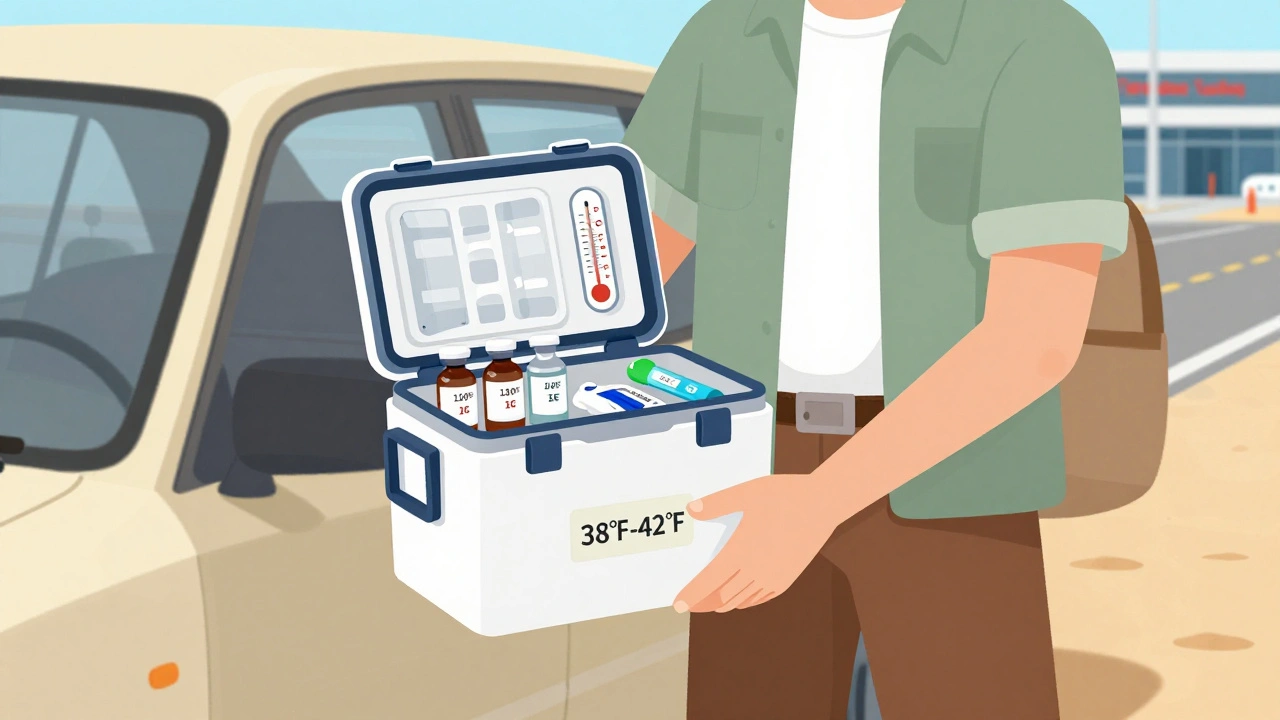
Nothing ruins a trip faster than realizing your medicine doesn’t work anymore. You packed your insulin, your EpiPen, your blood pressure pills - but after a day in a hot car or a night in a steamy bathroom, they might as well be candy. Medications aren’t like snacks. They don’t just go bad - they lose power. And when they do, the consequences can be serious, even life-threatening.
Why Medications Lose Effectiveness on the Road
Most people think if their pills still look the same, they’re fine. That’s a dangerous assumption. Heat, cold, light, and moisture silently damage medicines. The FDA and WHO agree: temperature excursions as short as 30 minutes can reduce potency by up to 25% for sensitive drugs like insulin, epinephrine, and certain biologics. For example, insulin starts losing effectiveness after just 12 hours at 77°F (25°C). At 95°F (35°C), it can drop 22% in potency. An EpiPen left in a car at 102°F (39°C) for 90 minutes lost 40% of its strength in one documented case. That’s not a theory - it’s a real patient’s test result from a CVS pharmacy. Even your daily aspirin isn’t safe. Heat turns it into salicylic acid and vinegar - which can irritate your stomach. Light-sensitive drugs like epinephrine degrade in 15 minutes of direct sunlight. Humidity? That’s the silent killer in bathrooms. One survey of 347 travelers found that storing meds in the bathroom led to 22% of all medication failures.Know Your Medication’s Temperature Needs
Not all meds are created equal. The rules depend on what’s inside the bottle.- Room temperature (68°F-77°F / 20°C-25°C): This covers about 78% of medications - think blood pressure pills, antibiotics, antidepressants, and most OTC pain relievers. They can handle short trips up to 86°F (30°C), but avoid leaving them in a hot car.
- Cold chain (36°F-46°F / 2°C-8°C): About 12% of prescriptions fall here. This includes insulin, EpiPens, certain biologics like Humira or Enbrel, and some antibiotics. These need refrigeration. Even a few hours above 46°F starts hurting potency.
- Freezer-stable (-4°F to 5°F / -20°C to -15°C): Only 5% of meds need this - mostly specialty drugs like some cancer treatments. Most travelers won’t need to worry, but if you’re on one, talk to your pharmacy before you leave.
- Light-sensitive: Epinephrine, nitroglycerin, and some migraine meds. Keep them in their original opaque bottles. Never put them in a clear ziplock.
What Works: Real Solutions for Keeping Meds Safe
You can’t control the weather, but you can control how you pack. Insulated coolers with gel packs are the gold standard. Medical-grade coolers from brands like Frio or Bocapharmacy keep insulin at 38°F-42°F for up to 72 hours in 95°F heat. Standard insulated bags? They last 12-24 hours max. Gel packs beat ice packs by 37% because they don’t freeze your meds - they just keep them cool. Temperature monitoring isn’t optional anymore. Devices like TempTraq sensors stick to your meds and log every spike or dip. A 2022 study showed they catch 98.7% of dangerous temperature changes. Even a cheap digital thermometer with a probe can help. Check it once a day. Original containers only. TSA and customs around the world require prescriptions to be in original bottles with labels. A traveler in Thailand had their entire med kit confiscated because pills were in a pill organizer. That’s not just inconvenient - it’s a health risk. You won’t know if a replacement is safe. Carry backup cooling. If you’re flying, pack a second cooler or gel pack in your checked luggage. If your carry-on gets delayed, you still have a safety net. Always have an extra EpiPen or insulin vial. The American Society of Health-System Pharmacists says: “Always have a backup.”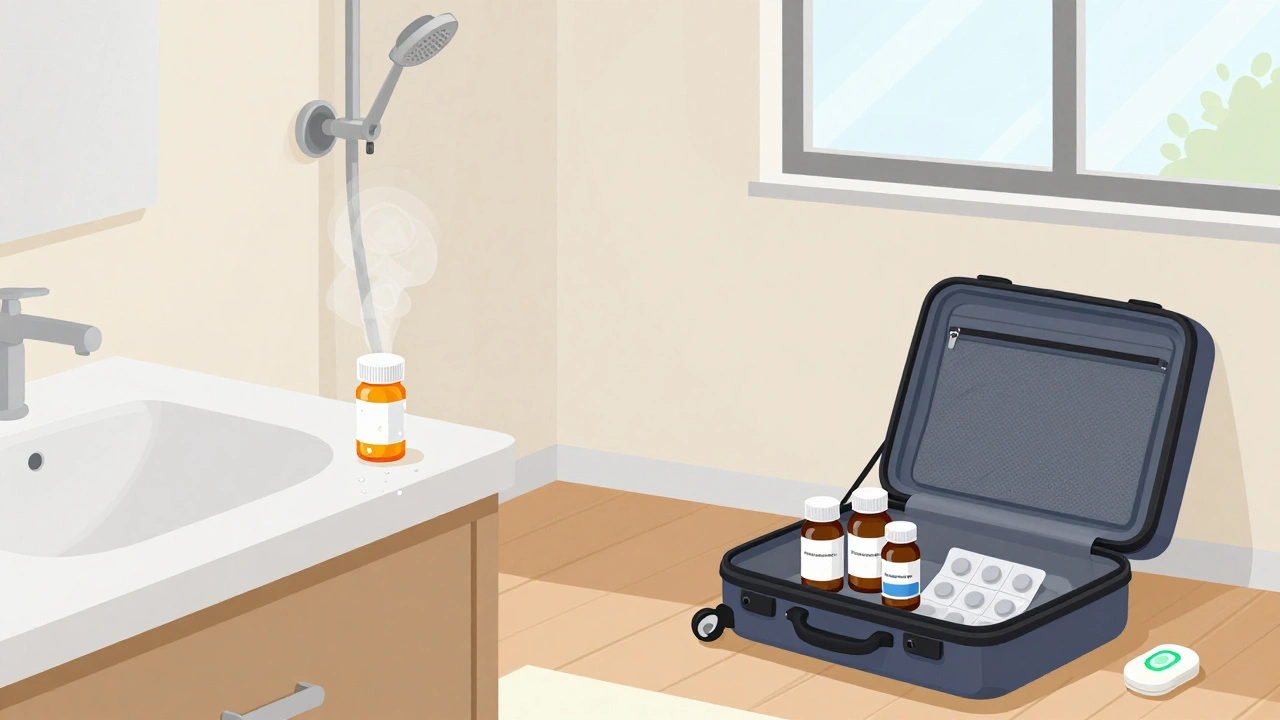
What Doesn’t Work - and Why
Avoid these common mistakes:- Leaving meds in the car: Even on a 70°F day, a parked car can hit 120°F in 30 minutes. That’s a death sentence for insulin.
- Storing in the bathroom: Steam and humidity break down tablets and capsules. Moisture turns pills into mush or makes them stick together. Store meds in your bedroom or suitcase, not the bathroom.
- Using ice packs without insulation: Ice melts fast and can freeze your meds. Frozen insulin is ruined. Gel packs stay in range without freezing.
- Ignoring expiration dates: Some meds, like liquid antibiotics, degrade fast after opening. Check the label. If it says “discard after 14 days,” don’t bring the whole bottle on a 3-week trip.
Preparation: Start 2 Weeks Before You Leave
Don’t wait until the night before. Plan early.- Ask your pharmacist: When you pick up a new prescription, ask: “How long can this stay out of the fridge?” and “Is there a travel-friendly version?” Some insulin now comes in temperature-stable pens that last 28 days at room temperature.
- Get a doctor’s note: Especially for injectables or controlled substances. Some countries require it. The TSA recommends printed storage instructions.
- Use the 14-day rule: If your trip is longer than your med’s room-temp shelf life, ask about getting a new prescription at your destination. Some pharmacies in Europe, Asia, and Latin America can fill U.S. prescriptions with a note.
- Set phone alarms: 78% of families traveling with kids use alarms to remember doses. Don’t rely on memory when you’re jet-lagged.
Traveling by Air: What You Need to Know
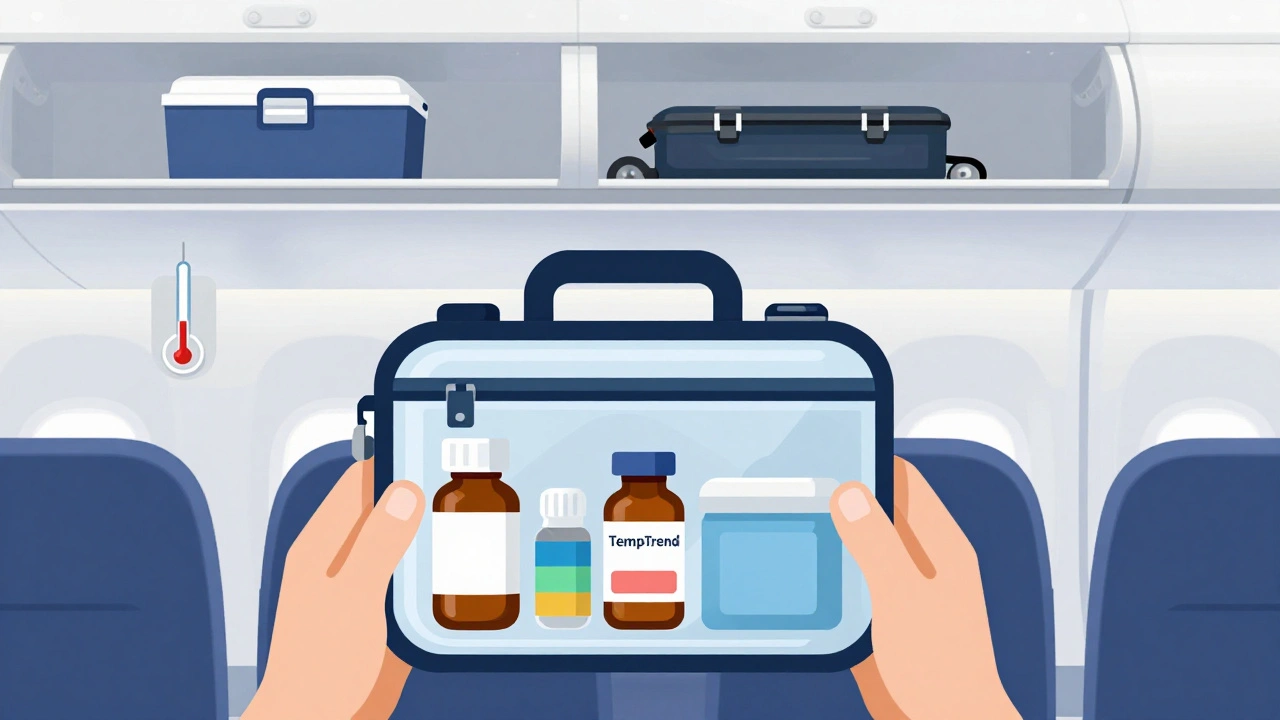
TSA updated its rules in January 2024. Here’s what to do:- Declare all medications at security.
- Keep them in your carry-on. Checked bags can sit in unheated cargo holds at -40°F - that freezes insulin.
- Bring printed storage instructions from your pharmacy.
- Use a clear bag for meds - it speeds up screening.
- Don’t put gel packs in checked luggage. They’re liquid, and TSA might confiscate them.
Emerging Tech That’s Changing the Game
New tools are making travel easier:- TempTrend labels (FDA-approved in May 2023): These stick on bottles and change color if the med got too hot or cold. No device needed - just look at the label.
- PharmaPort 360° containers: These maintain temperature for 120 hours. Ideal for multi-week trips or remote destinations.
- Travel-stable formulations: By 2026, 85% of temperature-sensitive meds will be reformulated to last longer without refrigeration. Insulin, epinephrine, and biologics are already getting upgrades.
Final Rule: When in Doubt, Play It Safe
If you’re unsure whether your medicine is still good, don’t take it. Replace it. A pharmacy in Bangkok, Rome, or Mexico City can likely refill your prescription with a doctor’s note. The cost of a new bottle is nothing compared to the cost of a hospital visit. Medications are not just pills. They’re your safety net. Treat them like your passport - always with you, always protected, always checked.Can I leave my insulin in the car for a few hours during a day trip?
No. Even on a mild day, a car can reach over 100°F in 30 minutes. Insulin loses potency after just 12 hours at 77°F and can drop 22% in 12 hours at 95°F. Always carry it with you in a cooler or insulated pouch.
Do I need to keep my daily vitamins refrigerated?
No. Most vitamins and supplements are stable at room temperature. But avoid storing them in hot places like a sunlit windowsill or a car dashboard. Moisture is the bigger risk - keep them in a dry, cool spot.
What if I run out of my refrigerated medication abroad?
Many countries can fill U.S. prescriptions with a doctor’s note and original packaging. Contact your pharmacy before you leave - they can often email a copy of your prescription to a local pharmacy. Always carry a backup dose. Don’t wait until you’re out.
Are gel packs better than ice packs for travel?
Yes. Gel packs maintain a steady 36°F-46°F without freezing your meds. Ice packs drop below freezing and can ruin insulin or biologics. TSA also allows gel packs more easily because they’re not classified as liquids if they’re solid when screened.
Can I transfer my pills to a pill organizer for travel?
Only for short-term use. Always carry the original bottles with you. Many countries require original packaging for customs. If you use a pill organizer, keep the originals in your carry-on. Never travel with only a pill organizer.
How do I know if my medication has gone bad?
Look for changes: pills that crumble, liquids that change color or cloud up, or insulin that looks cloudy when it should be clear. If it smells off (like vinegar), stop using it. When in doubt, replace it. Your health isn’t worth the risk.
Is it safe to use expired medication on a trip?
No. Expired meds can lose potency or break down into harmful substances. Aspirin turns into salicylic acid, which can irritate your stomach. Insulin past its date may not raise your blood sugar properly. Always replace expired meds before you travel.
Should I bring extra medication?
Yes. Bring at least 10-20% extra, especially for critical meds like insulin, EpiPens, or heart medications. Delays happen. Lost luggage happens. Extra meds are your insurance policy.



OMG I literally almost died last year because I left my insulin in the car for 20 mins 😭🔥 I thought it was fine since it looked the same… then I passed out at the airport. Now I carry a Frio wallet like it’s my baby. Also, gel packs > ice packs. Always. 🧊➡️❄️
And yet… the government still lets pharmaceutical companies sell these unstable, temperature-sensitive death-traps without mandatory built-in cooling?! This is a public health scandal. They know. They’ve known since the 1990s. And they don’t care. You think this is about safety? No. It’s about profit. They’d rather you end up in the ER than design a reliable product. Wake up, people. This isn’t negligence-it’s corporate malice.
lol i just put my pills in my pocket and go. i mean, how bad can it be? i did a 3 week trip to florida and my blood pressure meds were fine. i think people overthink this. also, i dont trust those fancy coolers, they look like sci-fi junk. just keep em dry and youll be ok.
It’s fascinating how we treat medicine like it’s just… stuff. Like a phone charger. But it’s not. It’s a living system. A biochemical covenant between your body and a molecule designed to restore balance. When we expose it to heat or moisture, we’re not just ‘ruining a pill’-we’re breaking a promise. And that promise? It’s the difference between breathing and gasping. Maybe we need to start seeing meds as sacred objects-not commodities.
In India, we have a tradition of carrying medicines in small cloth pouches tied to the waist-cool, dry, and always with us. The wisdom of our elders was simple: if it saves your life, it deserves your attention. I’ve seen travelers from the West panic because their insulin got warm-but they didn’t know how to ask for help locally. Always ask the pharmacist. They know more than the label. And yes-gel packs are better. But so is community.
Honestly? This post is a lifesaver. I used to toss my EpiPen in my backpack and hope for the best. Now I’ve got a little insulated case with a temp sticker. Took me 5 years to get here. Thanks for making it simple. Also-yes, NEVER in the bathroom. My mom still does that. I’m gonna send her this link. 😅
Thank you for writing this with such clarity and care. I’ve been managing type 1 diabetes for 18 years, and I’ve seen too many people underestimate how fragile these medications are. The 14-day rule? The backup dose? The original containers? These aren’t suggestions-they’re survival tactics. If you’re reading this and you’re not prepared, please, for your own sake-start today. You’re not being dramatic. You’re being responsible.
Given the documented degradation kinetics of biologics under thermal stress, the variance in pharmacokinetic profiles post-exposure-particularly in insulin analogs-is non-linear and highly dependent on cumulative heat exposure metrics. The 25% potency loss threshold referenced is statistically significant (p<0.01) in multiple clinical trials, yet remains undercommunicated in public health advisories. I wonder if the lack of standardized labeling for thermal sensitivity-beyond the vague 'store at room temperature'-constitutes a systemic failure in risk communication. Perhaps pharmacovigilance frameworks should incorporate real-time environmental exposure tracking as a mandatory component of patient counseling protocols.