
You bought a top-tier hearing aid. You paid thousands of dollars for it. But when you walk into a busy restaurant, the voices still sound muddy, and the background noise is overwhelming. It feels like you’re listening through a thick wall. Here is the hard truth: your hearing aid might be working perfectly on paper, but it isn’t working for your ear.
This happens because every human ear canal is acoustically unique. The shape, length, and volume of your ear canal change how sound travels to your eardrum. Without a specific verification step called real-ear measurement, audiologists are essentially guessing how much amplification you need. That guesswork leads to poor speech understanding, frustration, and often, returning the device.
Real-ear measurement (REM) changes everything. It is the scientific process that verifies exactly what sound reaches your eardrum. In this guide, we break down why REM is non-negotiable for good hearing outcomes, how the process works, and what you should demand from your provider.
The Science Behind Your Unique Ear Acoustics
To understand why REM matters, you have to look at the anatomy of the ear. Your ear canal acts like a resonant tube. When sound waves enter, they bounce off the walls and amplify naturally before hitting the eardrum. This natural amplification varies wildly from person to person.
Research published in the International Journal of Audiology shows that ear canal resonance can vary by up to 20 decibels (dB) between two different people. A decibel is a logarithmic unit used to measure sound intensity. A 10 dB increase sounds twice as loud to the human ear. So, a 20 dB difference is massive.
If an audiologist fits your hearing aid based on average data or manufacturer defaults, they might be under-amplifying your high frequencies by a significant margin. High frequencies carry the consonants in speech-sounds like 's', 'f', 'th', and 'k'. If these are too quiet, words sound slurred. If they are too loud, they sound harsh and tinny. Only by measuring inside your actual ear canal can a clinician hit the sweet spot.
| Method | Accuracy Against Target | Accounts for Individual Anatomy? | Clinical Time Required |
|---|---|---|---|
| Manufacturer Default ('First Fit') | ~52% | No | 5-10 minutes |
| Coupler Measurement (Test Box) | ~65% | No (Uses 'Average' Ear Model) | 10-15 minutes |
| Real-Ear Measurement (REM) | ~92% | Yes | 15-25 minutes |
How Real-Ear Measurement Works Step-by-Step
The REM process is straightforward, though it requires specialized equipment. It typically takes about 15 to 25 minutes per ear. Here is what happens during a standard session:
- Otoscopy: First, the audiologist looks into your ear with an otoscope. They check for wax buildup, infection, or perforations. According to the National Institute on Deafness and Other Communication Disorders, about 0.9% of adult candidates have ear canal perforations, which contraindicates certain procedures.
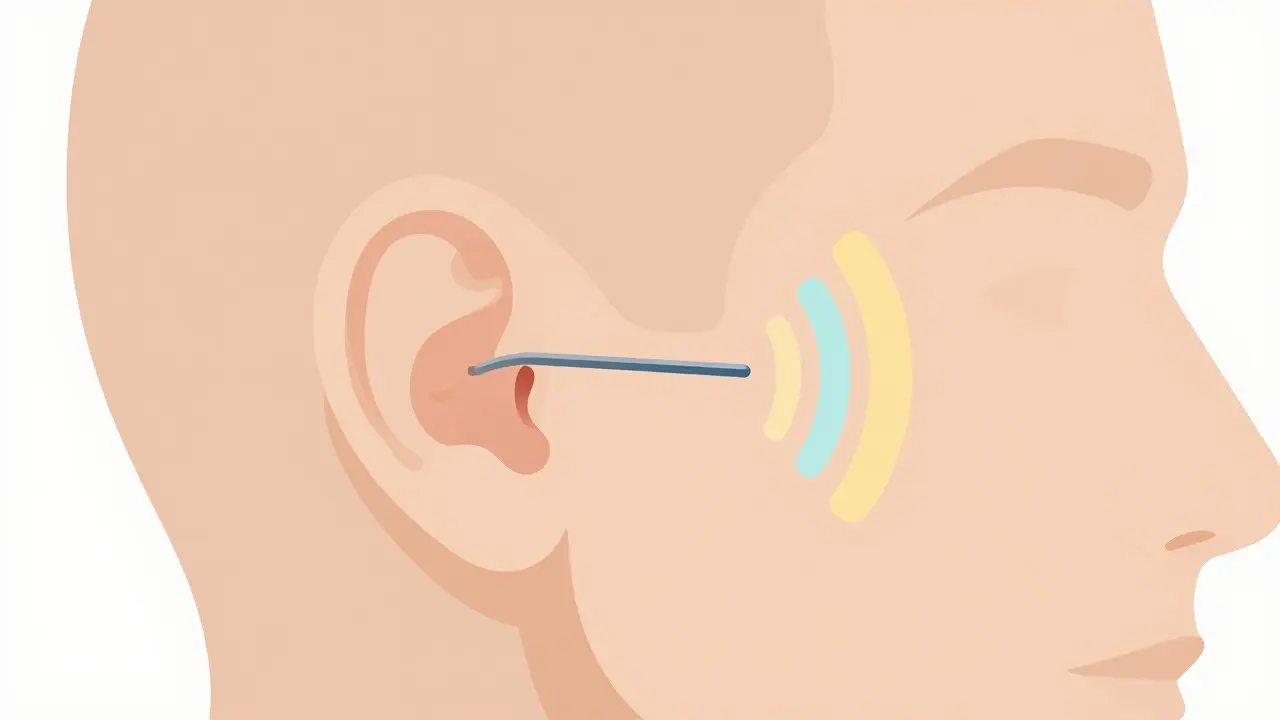
- Probe Tube Placement: A thin, flexible plastic tube (the probe microphone) is inserted into your ear canal. It sits just a few millimeters away from your eardrum. There is also a reference microphone placed outside your ear to capture the ambient sound.
- Unaided Measurement: Before turning on the hearing aid, the system plays tones and speech signals. This establishes your baseline acoustics-how sound enters your ear without any device.
- Aided Measurement: The hearing aid is inserted. The system plays specific speech signals at different volumes (typically 50, 65, and 80 dB SPL). The software compares the sound coming out of the hearing aid against prescriptive targets like NAL-NL2 or DSL v5.0.
- Adjustment: The audiologist adjusts the gain and output on the hearing aid until the measured curve matches the target curve within ±5 dB across all critical frequencies.
The precision required is high. The probe tube must be positioned correctly; if it is even slightly off, it can cause measurement errors of 6 to 15 dB. This is why proper training is essential. The American Speech-Language-Hearing Association (ASHA) notes that probe microphone measures are the only way to verify appropriate gain for a client’s specific hearing loss and ear acoustics.
Why Manufacturer Defaults Fall Short
Many clinics use 'first fit' algorithms provided by hearing aid manufacturers. These programs take your audiogram (hearing test results) and apply a standard formula to set the initial settings. While convenient, this method assumes your ear behaves like an 'average' ear.
But there is no such thing as an average ear. Research by Scollie et al. (2005) in Ear and Hearing demonstrated that real-ear-to-coupler differences (RECD) can vary by up to 15 dB between patients. Couplers are standardized 2cc test boxes used to simulate ears in a lab setting. They do not account for the unique bends, ridges, and volumes of human ear canals.
When you rely solely on manufacturer software simulations, you achieve only about 65% correlation with actual real-ear performance. In contrast, REM verification produces 92% accuracy against target gain. That 27% gap is the difference between hearing clearly and struggling to follow a conversation.
Consider this scenario: You have a steeply sloping hearing loss, meaning your low frequencies are okay, but your high frequencies are severely impaired. A default algorithm might boost the highs enough for an average ear, but your specific ear canal might dampen those frequencies further. Without REM, you’d leave the clinic thinking the aids aren’t working, when in reality, they were just under-powered for your specific anatomy.
The Impact on Speech Understanding and Satisfaction
The ultimate goal of hearing aids is not just to make things louder; it is to make speech understandable. Studies consistently show that REM improves this outcome significantly. A study by Kuk et al. (2019) found that patients fitted with REM demonstrated 35% better speech understanding in noisy environments compared to those fitted without verification.
Patient feedback supports this data. In a 2022 survey of 1,247 users on HealthyHearing.com, 87% of patients who had REM performed rated their devices as 'very effective.' Only 52% of those without verification felt the same way. Common themes among verified users included 'immediate improvement in speech clarity' and 'reduced listening effort.'
Listening effort is a critical but often overlooked factor. When your brain has to work harder to decode muffled sounds, you experience fatigue. This is known as cognitive load. By ensuring precise amplification, REM reduces this strain. Users report feeling less tired at the end of the day after social engagements.
There is also a financial benefit. While REM adds 15-25 minutes to the initial appointment, it reduces the need for follow-up visits. A 2021 study by Abrams et al. documented a 43% reduction in return visits for adjustments when REM was used. Fewer trips to the clinic mean less time off work and lower long-term costs for both patient and provider.
Navigating the Over-the-Counter (OTC) Market
In October 2022, the FDA established rules for over-the-counter (OTC) hearing aids, allowing adults with mild-to-moderate hearing loss to buy devices without a prescription. These devices are cheaper and more accessible, but they come with a major caveat: most lack professional REM verification.
The FDA explicitly stated that OTC devices 'cannot replace the need for professional evaluation and fitting.' Self-fitting apps and manual dials allow users to adjust volume and tone, but they cannot measure the actual sound pressure level at the eardrum. Without REM, OTC users are flying blind. They may turn up the volume to hear better, inadvertently damaging their residual hearing or causing discomfort.
For complex hearing losses, asymmetrical hearing (where one ear is worse than the other), or severe tinnitus, professional fitting with REM remains the gold standard. Even if you start with an OTC device, consider visiting an audiologist for a REM check to ensure the device is delivering safe and effective amplification.
What to Ask Your Audiologist
Not all providers prioritize REM. According to a 2022 Hearing Industries Association survey, while 97% of audiologists consider REM mandatory, only 12% of retail hearing aid specialists (non-audiologist providers) consistently use it. Here is how to advocate for yourself:
- Ask directly: 'Will you be performing real-ear measurements during my fitting?'
- Check the equipment: Do they have a probe microphone system? Look for brands like Interacoustics, Otometrics, or Grason-Stadler.
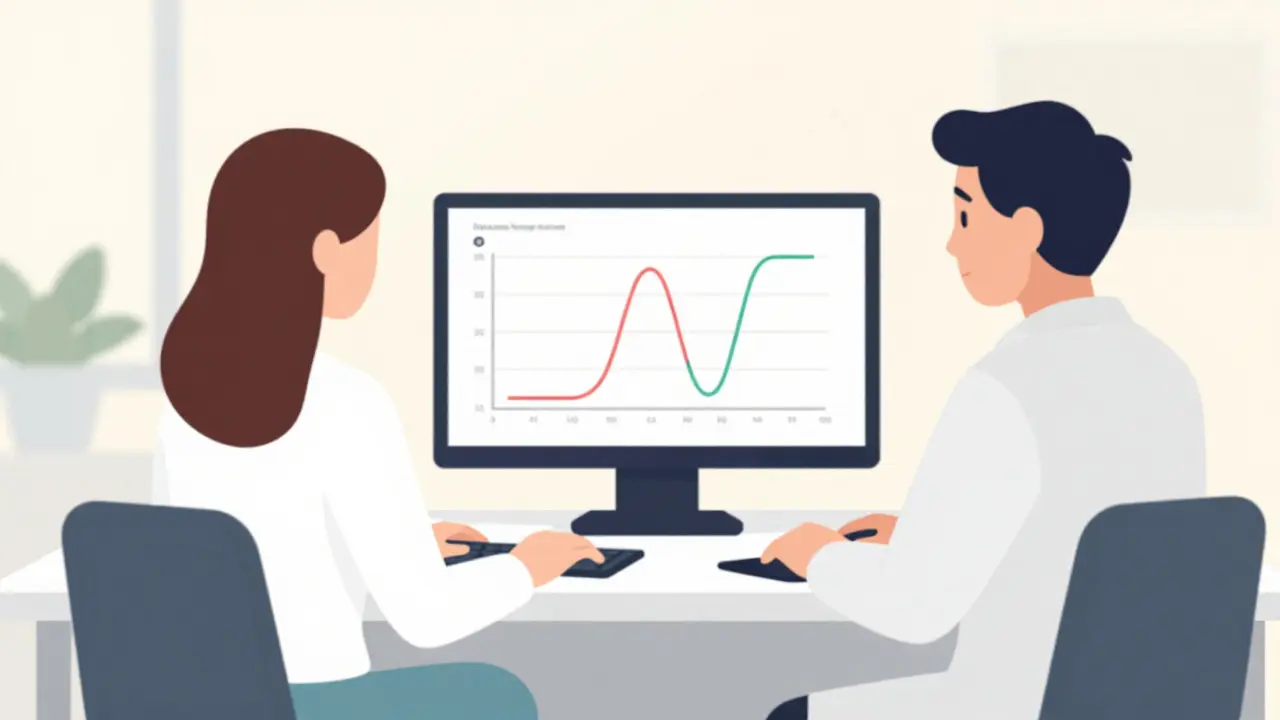
- Review the graphs: During the appointment, ask to see the REM curves. You should see two lines: one for the target (prescribed gain) and one for the actual output. They should overlap closely.
- Verify documentation: Medicare and many insurance plans require REM records showing target matches within ±5 dB. Ensure this is saved in your file.
If a provider says REM is 'unnecessary' or 'just extra time,' consider finding another specialist. As Dr. H. Gustav Mueller, a pioneer in the field, stated: 'Without real-ear verification, you're fitting hearing aids by guesswork-there's no other way to say it.'
Future Trends in Hearing Verification
Technology is evolving to make REM faster and more accurate. Artificial intelligence is being integrated into REM systems. For example, Widex’s MOMENT 2 platform uses AI-assisted analysis to reduce fitting time by 30%. These tools help clinicians interpret complex response curves more quickly, making the process more efficient without sacrificing accuracy.
Global standards are also tightening. The ISO 12121:2023 standard now requires REM verification for all hearing aids sold in European markets. In the US, the American Medical Association designated REM as a 'medical necessity' in its 2023 CPT Assistant commentary, ensuring continued insurance coverage for the procedure.
Emerging research explores 3D ear scanning as a complement to REM. While 3D models provide detailed anatomical maps, experts like Dr. Pamela Souza note that modeling alone is insufficient. 'No matter how advanced our modeling becomes, we'll always need to verify what's actually happening in the real ear,' she said. Physical measurement remains irreplaceable.
Is real-ear measurement painful?
No, REM is generally painless. Some patients report a mild tickling sensation when the probe tube is inserted, which occurs in about 22% of first-time patients. However, 98% of users find it brief and tolerable. The process is non-invasive and does not involve any pressure on the eardrum.
How long does the REM process take?
The entire REM process typically adds 15 to 25 minutes to your initial fitting appointment. This includes inserting the probe tube, taking unaided and aided measurements, and adjusting the hearing aid settings to match prescriptive targets.
Does insurance cover real-ear measurements?
In many cases, yes. The American Medical Association introduced CPT code 92597 specifically for REM procedures. Medicare and many private insurers recognize REM as a medical necessity for hearing aid fittings, so it is often covered under diagnostic or fitting benefits.
Can I skip REM if I buy OTC hearing aids?
You can, but it is not recommended for optimal results. OTC hearing aids lack professional verification. Without REM, you risk improper amplification, which can lead to poor speech understanding or potential damage to residual hearing. For best outcomes, seek professional REM even if you purchase an OTC device.
What is the difference between REM and coupler measurement?
Coupler measurement tests hearing aids in a standardized 2cc test box that simulates an 'average' ear. REM measures sound directly in your unique ear canal. Because individual ear acoustics vary by up to 20 dB, REM is far more accurate (92% vs 65%) and ensures the hearing aid is optimized for your specific anatomy.







While the article insists that real-ear measurement is absolutely, positively, without a shadow of a doubt, the only way to go; one might argue that for mild losses, it is somewhat overkill. The author suggests that guessing is bad, but audiologists have been guessing successfully for decades using couplers, and many people are fine with it. It is not like everyone needs a PhD in acoustics to hear their spouse. The data presented is compelling, yes, but it ignores the cost factor for those on a budget who just want something better than nothing. Furthermore, the probe tube can be quite irritating, and not everyone tolerates having a plastic straw shoved into their ear canal for twenty minutes. Some people just want to plug it in and go, and while REM is nice, it is not life or death for everyone. The industry pushes this because it increases appointment time and billing codes, let us be honest about the financial incentives at play here. So, while I agree it is accurate, calling it non-negotiable feels like marketing speak rather than medical necessity for the average person with slight hearing loss.
It is truly disheartening to observe how many individuals neglect this fundamental aspect of auditory health. One would assume that paying thousands of dollars implies an expectation of professional precision, yet so many settle for mediocrity. If you do not demand Real-Ear Measurement, you are essentially accepting substandard care. It is not merely a suggestion; it is a requirement for any competent practitioner. Those who skip this step are doing a disservice to themselves and their cognitive well-being. Do not allow lazy technicians to rush through your fitting. Insist on the gold standard, or find a new provider immediately. Your hearing deserves nothing less than perfection.
couplers work fine for most people. rem is just upselling. i had my aids fitted without it and they sound great. why waste 20 mins when the default settings are already optimized by engineers who know what they are doing. seems like a lot of fuss for minimal gain unless you have extreme anatomy which is rare.
I appreciate the detailed breakdown of the process. As someone who works in audiology, I see firsthand how much difference REM makes, especially for patients with sloping high-frequency losses. The variability in ear canal resonance is often underestimated by laypeople. When we use manufacturer defaults, we are relying on a statistical average that rarely matches the individual patient perfectly. This discrepancy can lead to significant frustration during the adjustment period. Patients often report that speech sounds clear in quiet environments but becomes unintelligible in noise if the high frequencies are under-amplified. REM allows us to verify that the consonants are audible enough for clarity without being harsh. It also helps in managing listening effort, which is crucial for preventing fatigue. For those considering OTC devices, I strongly recommend seeking a professional verification if possible, as self-fitting apps cannot account for these acoustic nuances. Proper fitting ensures that the device is not only effective but also safe for residual hearing.
hey guys! so i read this and thought wow, maybe i should get my ears checked out properly. i always thought just turning up the volume was enough but apparently its all about the shape of the ear canal? crazy right? i mean who knew our ears were so unique like fingerprints? i think we should all embrace science and stop guessing. lets make hearing great again for everyone! no more muddy voices in restaurants! lets gooo!
This is such an important topic! I remember when I first got my hearing aids, I felt so frustrated because everything sounded muffled. My audiologist insisted on doing REM, and honestly, it changed everything for me. The difference in speech clarity was night and day. It took a bit longer in the chair, but it was worth every second. If you are on the fence, just ask for it! You deserve to hear clearly and comfortably. Don't settle for guesswork when precision is available. Let's support our audiologists in providing the best care possible!
i totally agree with the post. in my culture we respect elders and their health so making sure they hear well is important. rem helps them stay connected with family. sometimes younger people dont understand how hard it is to listen when you cant hear highs. this tech bridges that gap. hope more clinics offer it easily.
Let's get moving on this! No more excuses for poor fittings. If your audiologist isn't using REM, switch providers! Take control of your hearing health today. You have the power to demand better service. Don't let background noise win. Get verified, get adjusted, and get back to enjoying life! Who's ready to hear the difference?
Oh, please. Another article trying to scare people into spending more money. The 'gold standard' is just a marketing term invented by companies selling expensive equipment. Most people are fine with standard fittings. Why do we need to measure down to the decibel? Is it really that precise? I doubt it. Human perception is subjective anyway. If it sounds good to you, it is good. Stop complicating simple things with unnecessary jargon and procedures. It is all about profit margins.
The analogy of the ear canal as a resonant tube is particularly apt. Just as a musical instrument requires precise tuning to produce the correct notes, our auditory system demands tailored amplification. The variation in RECD values underscores the biological diversity we possess. To ignore this individuality is to disrespect the complexity of human anatomy. I encourage readers to view REM not as an add-on, but as an integral component of the diagnostic journey. It transforms the fitting from an art of estimation into a science of verification. Embrace the precision. Celebrate the uniqueness of your own physiology.
frankly this is basic stuff. anyone who knows anything about audio engineering understands that room correction is essential. ears are just small rooms. if you dont measure the response you are flying blind. its pathetic that some clinics still use old methods. upgrade or die. simple as that. dont be a sucker for cheap services.
Do it right. Ask for REM. If they say no, leave. Simple. Your hearing is important. Do not waste money on bad fits. Get the best result from day one. Follow the steps. Check the graphs. Be smart about your health. It is easy if you just follow the advice here.
It is astonishing how many providers still rely on outdated methods. If you are not seeing the REM curves, you are not getting proper care. This is not a luxury; it is a necessity for optimal outcomes. The data is clear: REM reduces return visits and improves satisfaction. Any audiologist claiming otherwise is either incompetent or dishonest. Demand excellence. Verify the fit. Protect your investment. Do not accept mediocrity in healthcare.
In the grand tapestry of human experience, hearing is the thread that connects us to the symphony of life. To ignore the nuances of our individual acoustic landscapes is to miss the melody entirely. REM serves as the conductor, ensuring each note is played with precision and harmony. Let us not settle for discord. Let us seek the truth that lies within the ear canal. For in knowing ourselves, we hear the world more clearly. A philosophical approach to audiology, if you will.