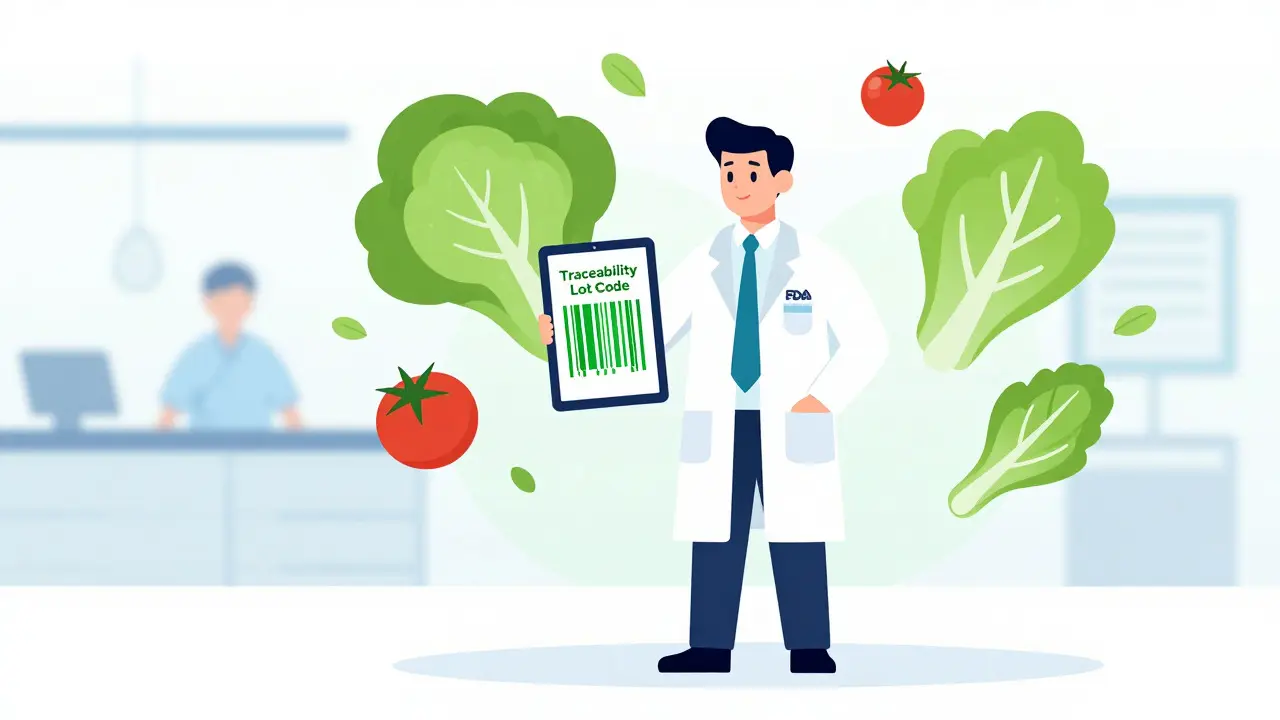
Imagine you eat a salad at lunch. By dinner, you’re in the hospital with severe stomach cramps. In the old days, figuring out which specific bag of spinach made you sick could take weeks. Investigators had to dig through paper invoices and guesswork. Today, thanks to a system called lot number tracking, the Food and Drug Administration (FDA) can pinpoint the exact contaminated batch in hours. This isn't just about convenience; it’s about stopping outbreaks before they spiral out of control.
The core of this modern safety net is the Traceability Lot Code (TLC). It acts as a unique digital fingerprint for high-risk foods. If you work in the food industry or simply care about what ends up on your plate, understanding how this system works is crucial. The rules changed significantly with the Food Safety Modernization Act (FSMA), specifically Section 204. Let's break down exactly how the FDA uses these codes to protect public health.
What Is a Traceability Lot Code?
A Traceability Lot Code is a unique alphanumeric identifier assigned to a specific group of food products to track them through the supply chain. Think of it like a social security number for a batch of lettuce. Unlike internal quality control codes that might only make sense within one company, a TLC must be unique across the entire food system.
The FDA finalized the rule requiring these codes on November 15, 2022. The goal was simple: speed. Before this rule, investigators often had to "follow the money trail" through piles of receipts. That process is slow and error-prone. With a TLC, every movement of the product is linked to that single code. When an illness is reported, regulators don't have to guess where the food came from. They look up the code, and boom-the history appears.
This system applies specifically to foods on the Food Traceability List (FTL). These are high-risk items like leafy greens, tomatoes, onions, fresh-cut fruits, cheeses, eggs, nut butters, and certain seafoods. These products account for about 15% of the U.S. food supply by volume but are responsible for a disproportionate number of outbreaks. By focusing here, the FDA aims to reduce foodborne illnesses by 20-30%, based on pilot data from 2019-2021.
When Must You Assign a Code?
You can't just slap a code on anything at any time. The FDA has strict rules on when a TLC must be created. There are only three specific moments:
- Initial Packing: When raw agricultural commodities (RACs) are first packed, excluding seafood from fishing vessels.
- First Land-Based Receiving: For seafood caught on fishing vessels, the code is assigned when it hits land-based facilities for the first time.
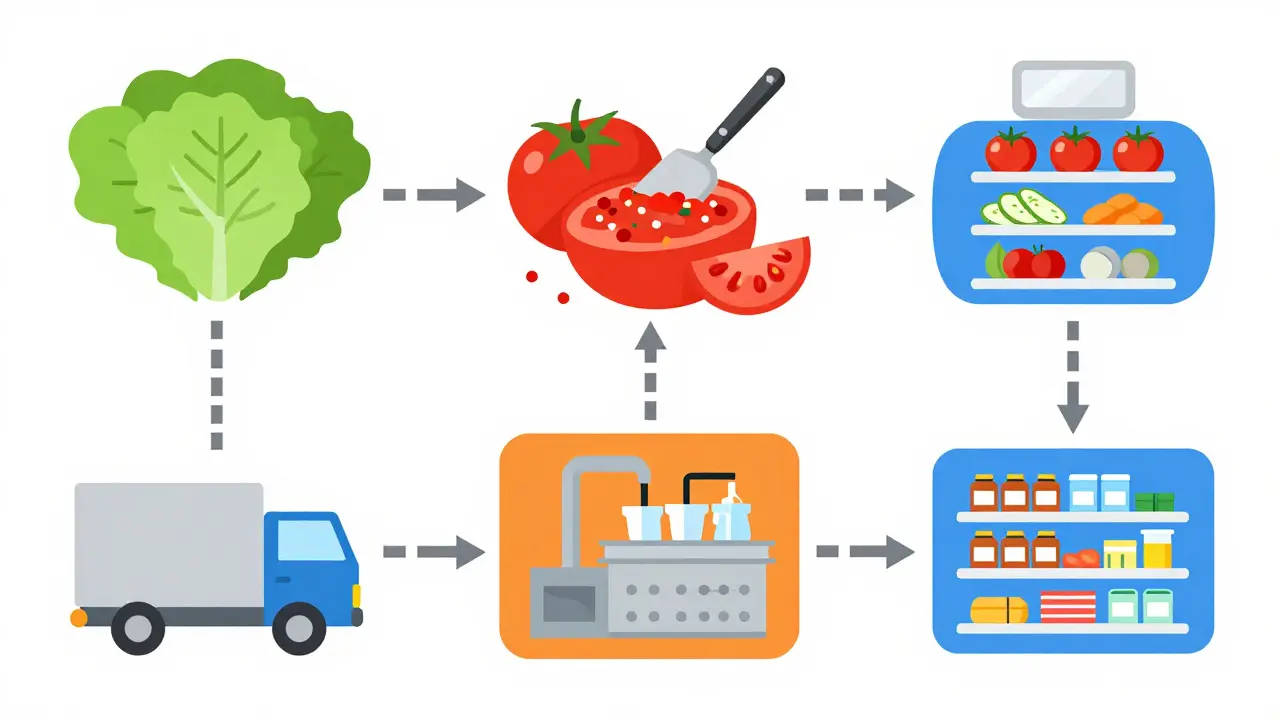
- Transformation: When the food changes its physical state or packaging. For example, if whole tomatoes are chopped into salsa, the original tomato code stops, and a new TLC for the salsa begins. However, the new code must link back to the old one so the trail remains unbroken.
Once assigned, that code stays with the product. It doesn't change hands until the next transformation event. This consistency is what allows the FDA to trace a product from farm to fork without losing the thread.
The Seven Key Data Elements
A lot number alone isn't enough. It’s useless if it doesn’t tell you what the product is or where it went. To make the TLC effective, it must be linked to seven other pieces of information known as Key Data Elements (KDEs).
| Data Element | Description |
|---|---|
| TLC Source | The physical location where the code was assigned. |
| Product Description | Common name, variety, size, and packaging type. |
| Quantity | How much product is in the lot. |
| Unit of Measure | Kilograms, cases, pounds, etc. |
| Transaction Date | When the product moved between parties. |
| Receiving Location | Where the product arrived after the transaction. |
| Sending Location | Where the product left from during the transaction. |
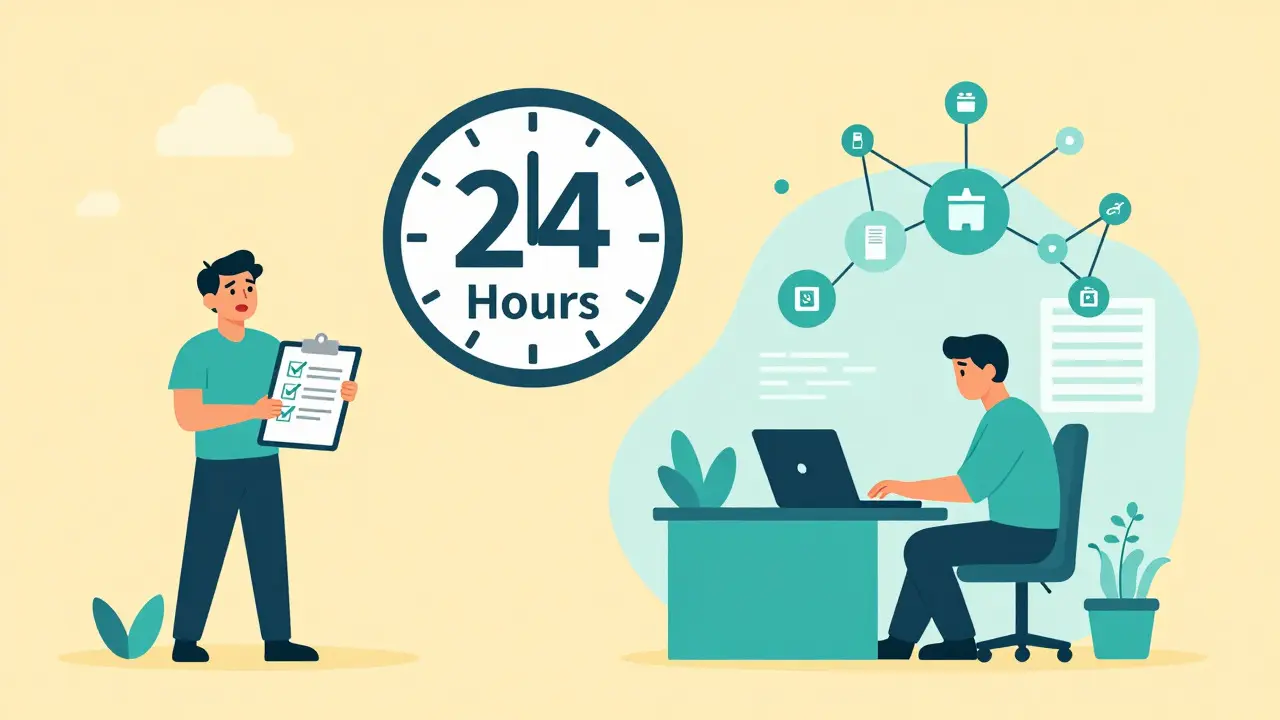
If a retailer receives a shipment of strawberries, their records must show the TLC, the quantity received, who sent it, who received it, and when. During an investigation, the FDA can request all this data within 24 hours. Electronic records are encouraged because they need to be sortable and exportable, usually in CSV format. This ensures that when the phone rings with an emergency, the data is ready to go.
Compliance Deadlines and Extensions
Change is hard, especially for small farms and processors. The initial compliance date was set for January 20, 2026. However, recognizing the complexity of updating legacy systems, the FDA proposed extending this deadline by 30 months to July 20, 2028. This extension, announced in September 2023, gives companies more time to integrate these requirements into their existing workflows.
Why the delay? Many companies were worried about "tandem coding." This is the fear that they would need to keep their old internal lot codes while also creating new TLCs. The FDA clarified that existing internal codes can serve as TLCs if they meet the uniqueness and linkage requirements. Still, integrating this into Enterprise Resource Planning (ERP) systems takes time. A 2023 survey found that 78% of large produce companies had already started modifying their systems, but smaller businesses struggled with the technical hurdles.
Cost vs. Benefit: Is It Worth It?
Critics argue the system is expensive. The FDA estimates annual implementation costs at $6.5 million for the industry. But compare that to the cost of a major recall. In 2018, a romaine lettuce recall cost the industry over $100 million and took weeks to resolve. Faster tracing means fewer sick people and less waste. The FDA projects $60 million in annual benefits from faster response times.
Dr. David Acheson, former FDA Assistant Commissioner, calls the TLC the "linchpin" of the system. Without it, you have data silos. With it, you have a connected network. While some experts like Mike Taylor argue it’s "necessary but insufficient" without standardized data formats, the progress is undeniable. The market for food traceability technology is growing fast, projected to reach $4.62 billion by 2028.
Challenges for Small Businesses
Not everyone has a massive IT department. Small farms and local processors face real challenges. Only 42% of small and medium food businesses were aware of the TLC requirements as of mid-2023, according to the Government Accountability Office. To help, the FDA launched the Traceability Assistance Program in January 2023. This provides training modules and technical support. The 2023 Farm Bill even included $25 million specifically to help small farms comply. If you run a small operation, manual record-keeping is allowed, but it must be accurate and accessible. Don't wait until the last minute to organize your paperwork.
Does my business need to use Traceability Lot Codes?
You only need to use TLCs if you handle foods on the Food Traceability List (FTL). This includes items like leafy greens, tomatoes, onions, fresh-cut fruits, cheeses, eggs, nut butters, and certain seafoods. If you sell apples or bread, you likely aren't covered yet, though the list may expand in the future.
Can I use my existing internal lot numbers as TLCs?
Yes, provided your current codes uniquely identify the lot within the broader food system and are passed along the supply chain. The FDA explicitly stated that you do not need to create a separate "tandem" code if your existing system meets the requirements.
What happens if I fail to provide data within 24 hours?
Failure to provide Key Data Elements within 24 hours during an investigation can lead to enforcement actions, including fines or injunctions. The FDA views rapid data access as critical for public health emergencies.
When is the final compliance deadline?
The FDA has proposed extending the compliance date to July 20, 2028. This gives businesses additional time to update their software, train staff, and align with supply chain partners.
Do I need special software to comply?
No, electronic records are encouraged but not mandated. Small businesses can use manual systems like spreadsheets or paper logs, as long as the data is complete, accurate, and retrievable within 24 hours. Larger companies often integrate this into their ERP systems.