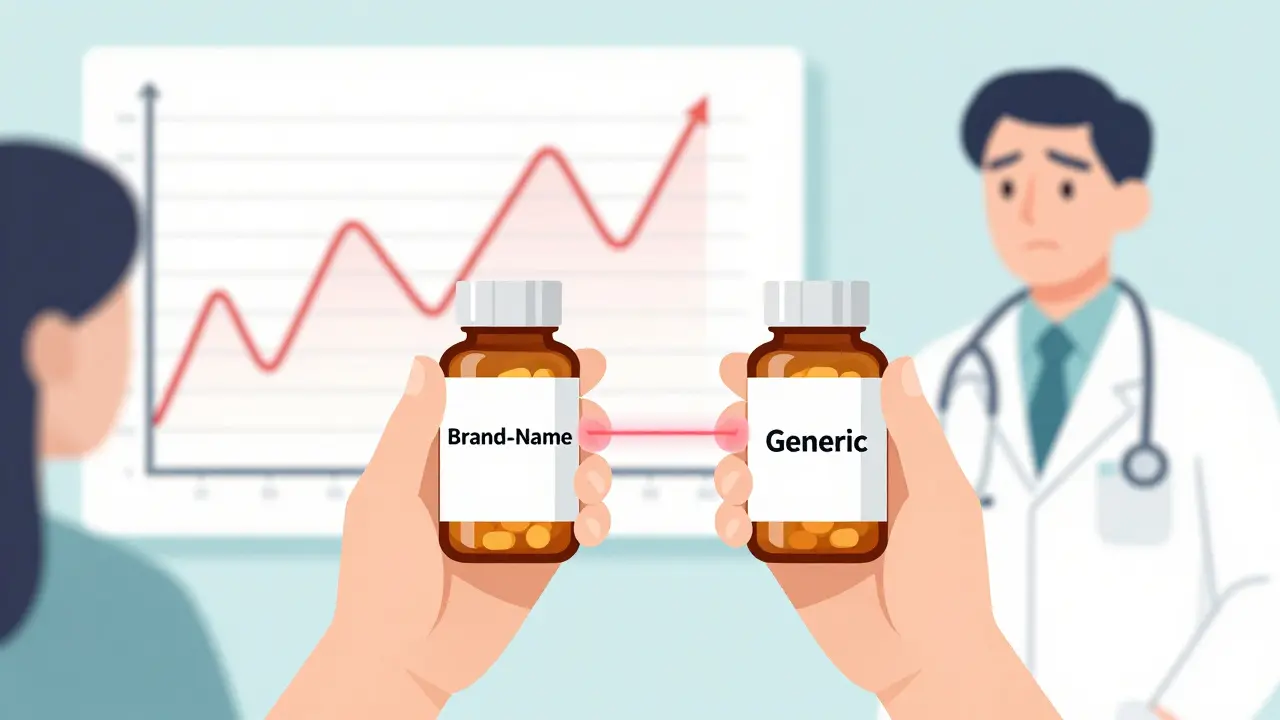
It’s supposed to be the same drug. Same active ingredient. Same price. So why does it sometimes not work?
For millions of people taking generic medications, the assumption is simple: if the FDA approved it, it’s just as good as the brand-name version. But for some patients, that’s not true. When a generic drug fails to deliver the expected results-when symptoms return, side effects spike, or a chronic condition suddenly worsens-it’s not just bad luck. It’s a therapeutic failure. And it’s happening more often than most people realize.
What Does ‘Therapeutic Failure’ Really Mean?
Therapeutic failure isn’t when the drug doesn’t cure your disease. It’s when the drug doesn’t do what it’s supposed to do-based on the dose you’re taking. You’re taking your blood pressure pill every day, but your numbers keep climbing. You’re on your seizure medication, but the convulsions are back. You’re on chemotherapy, and the tumor keeps growing. The doctor says everything looks right on paper. But your body says otherwise.
That’s when you start asking: Is it the disease? Is it me? Or is it the pill?
For many, the answer is the pill. Not because it’s fake. Not because it’s counterfeit. But because the generic version you’re holding doesn’t behave the same way in your body as the brand-name drug it’s meant to copy.
The Bioequivalence Loophole
The FDA says generics must be ‘bioequivalent’ to the brand-name drug. That sounds solid-until you dig into what that actually means.
Under current rules, a generic drug is approved if its absorption into the bloodstream falls within 80% to 125% of the brand-name version. That’s a 45% window. Think about it: one pill could deliver 20% less of the active ingredient. Another could deliver 25% more. Both are considered ‘equivalent.’
For most drugs, that’s fine. But for drugs with a narrow therapeutic index-where the difference between a helpful dose and a toxic one is razor-thin-this margin is dangerous.
Drugs like warfarin (a blood thinner), phenytoin (for seizures), digoxin (for heart rhythm), and tacrolimus (for organ transplant patients) fall into this category. A 10% drop in active ingredient might mean your blood doesn’t thin enough, leading to a stroke. A 10% increase might cause internal bleeding. There’s no room for error. Yet the system allows it.
Manufacturing Isn’t Always Consistent
Even if a drug passes initial tests, what happens after it leaves the factory? That’s where things get messy.
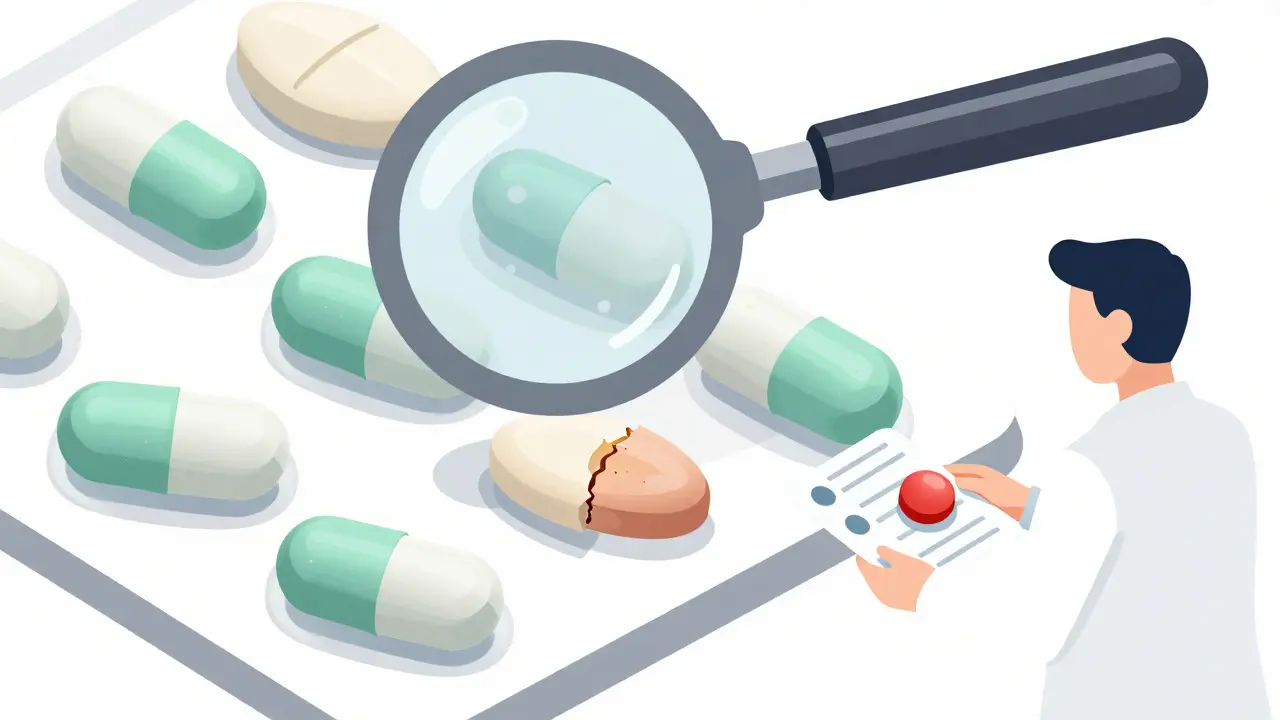
Studies show that 31% of problems with generic drugs come from manufacturing issues. Some pills contain too little active ingredient. Others have too much. In one investigation, pills from the same blister pack had wildly different amounts-some as low as 72% of the labeled dose. Others were over 112%.
Why? Because the active ingredient isn’t always mixed evenly. The coating might dissolve too fast or too slow. The fillers-those inactive ingredients-can change how the drug is absorbed. A small change in one of these components can turn a reliable medication into a gamble.
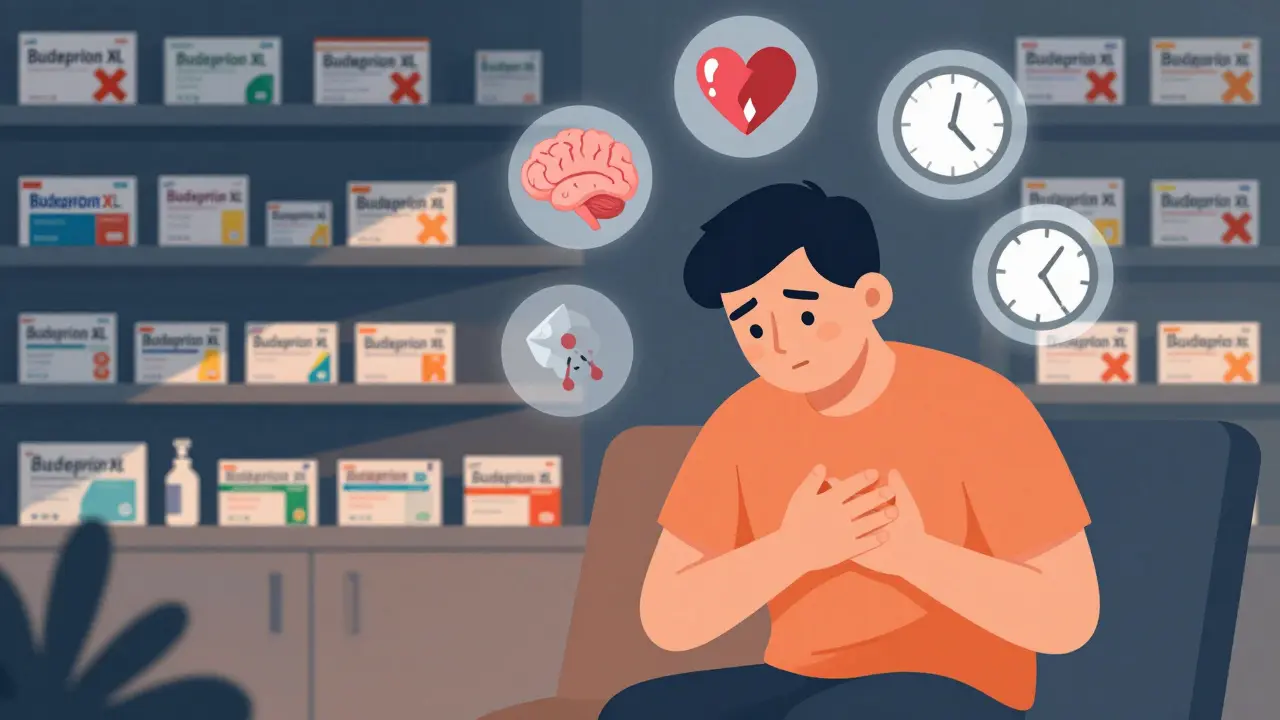
Take Budeprion XL, a generic version of Wellbutrin. Patients reported severe mood swings, anxiety, and suicidal thoughts after switching. The FDA pulled it off the market in 2013 after finding the ‘recipe’ of inactive ingredients altered how the drug released into the body. The active ingredient was the same. The effect? Totally different.
When It Happens: Real Stories
One patient, Salberg, had a heart transplant. She was on tacrolimus-critical to prevent rejection. After switching to a generic, she started feeling dizzy, short of breath, and fatigued. Her doctors couldn’t explain it. Her blood levels fluctuated wildly. She wondered: was the drug being dumped into her system too fast? Was it not lasting long enough? Her life depended on consistency. The generic didn’t deliver it.
In another case, multiple sclerosis patients who had been stable for years suddenly relapsed. Tests showed their generics contained only 81.6% and 72.5% of the required dose. The ones who stayed stable? Their generics had 97.4% to 103.3%.
And it’s not just neurological drugs. Cancer patients have been given generics with so little active ingredient that their tumors kept growing. Others developed severe nausea and vomiting from overdosing on methotrexate. One recall in 2024 pulled nearly 47 million potassium chloride tablets because they weren’t dissolving properly. Patients with heart conditions were at risk of lethal electrolyte imbalances.
Who’s Responsible?
The blame doesn’t lie with one group. It’s a system failure.
Manufacturers in some countries cut corners to save money. Regulatory oversight is weaker in places where most generics are made. Quality control isn’t always monitored after approval. The FDA conducts inspections, but not every factory, every time.
And then there’s the supply chain. Pharmacy Benefit Managers (PBMs)-middlemen who negotiate drug prices-often push pharmacies to dispense the cheapest generic, regardless of how it performs. Doctors may not even know which generic their patient received. Pharmacists are told to substitute unless the prescription says ‘do not substitute.’ But they’re rarely given data on which generics actually work.
Dr. Van Nuys from the USC Schaeffer Center put it bluntly: ‘Distribution-system inefficiencies, anticompetitive practices and a lack of transparency are increasing middlemen profits, with patients footing the bill.’
What You Can Do
If you’re on a generic drug and something feels off-your symptoms are returning, you’re feeling worse, or you’re experiencing new side effects-don’t assume it’s just ‘your body adjusting.’
Here’s what to do:
- Check the name on your prescription. Is it the brand name or a generic? Write it down.
- Ask your pharmacist: ‘Which manufacturer made this batch?’
- Track your symptoms. When did they start? Did they change after switching to a new generic?
- Talk to your doctor. Say: ‘I think this generic might not be working.’
- Request the brand-name version. If cost is an issue, ask about patient assistance programs.
For high-risk drugs-like anticoagulants, seizure meds, transplant drugs, or chemotherapy-never assume interchangeability. Ask your doctor to write ‘dispense as written’ or ‘no substitution’ on the prescription.
It’s Not About Cost-It’s About Safety
Generics saved billions. That’s real. But saving money shouldn’t come at the cost of safety. The same companies that make brand-name drugs often make the generics. The difference isn’t the science-it’s the oversight.
Patients aren’t asking for luxury. They’re asking for reliability. For consistency. For the same effect, every time.
If your medication isn’t working, it’s not your fault. It’s not your body. It’s the system. And you have the right to demand better.
What’s Being Done?
The FDA is starting to take notice. For narrow therapeutic index drugs, they now require stricter bioequivalence standards-90% to 111% instead of 80% to 125%. That’s progress.
But it’s not enough. Only a handful of high-risk drugs have these tighter rules. Most don’t. And enforcement is patchy.
Some countries, like Canada and the UK, require more testing before approving generics. Others are moving toward tracking batch numbers so patients and doctors can trace issues back to the manufacturer.
Until global standards improve, the burden falls on patients and providers to stay alert. Because when a generic doesn’t work, the consequences aren’t theoretical. They’re real. And they can be deadly.
Can a generic drug really be less effective than the brand-name version?
Yes. While generics must contain the same active ingredient, differences in inactive ingredients, manufacturing processes, and dissolution rates can change how the drug is absorbed. For drugs with a narrow therapeutic index-like warfarin, phenytoin, or tacrolimus-even small differences can lead to therapeutic failure. The FDA’s bioequivalence standard allows for up to a 25% higher or 20% lower absorption rate, which can be dangerous for certain conditions.
Which generic drugs are most likely to cause therapeutic failure?
Drugs with a narrow therapeutic index are the most vulnerable. These include anticoagulants like warfarin, anti-seizure medications like phenytoin, heart drugs like digoxin, immunosuppressants like tacrolimus and cyclosporine, and some chemotherapy agents. Extended-release formulations, like Concerta for ADHD or Wellbutrin XL for depression, have also shown inconsistent performance in generics due to altered release mechanisms.
How do I know if my generic drug is causing problems?
Watch for sudden changes: worsening symptoms, new side effects, or loss of effectiveness after switching to a new generic. If you’ve been stable for months and suddenly aren’t, the drug may be the issue. Keep a symptom journal and note when you switched generics. Bring this to your doctor. Don’t assume it’s your condition progressing-ask if the medication could be the cause.
Can I ask my doctor to prescribe the brand-name drug instead?
Yes. You have the right to request the brand-name version. If your doctor agrees, they can write ‘dispense as written’ or ‘no substitution’ on the prescription. Many insurance plans will still cover it if you can prove the generic isn’t working. Patient assistance programs from drug manufacturers may also help reduce the cost.
Are generic drugs from certain countries more likely to be unsafe?
The FDA inspects facilities globally, but oversight varies. Countries with less stringent regulatory systems may produce generics with inconsistent quality. However, problems have been found even in U.S.-based manufacturing. The issue isn’t always location-it’s lack of transparency and inconsistent quality control. Always check the manufacturer and batch number if you suspect an issue.
What should I do if I think my generic drug is faulty?
Don’t stop taking it without talking to your doctor. Instead, document your symptoms, note the drug’s name and manufacturer, and contact your pharmacist for batch details. Report the issue to your doctor and to the FDA’s MedWatch program. If others are experiencing the same problem, it may trigger a recall or investigation. Your report could help prevent harm to others.




so i switched to this generic blood pressure med last month and suddenly i’m dizzy all day like i just got off a rollercoaster that ran on batteries
my doc said ‘it’s just your body adjusting’ but bro it’s been 6 weeks and i’m still walking into doors
the bottle says ‘Aurobindo’-i looked it up turns out they make 70% of generics in the US and half their factories are in places where the water’s dirtier than my socks after a marathon
why am i the guinea pig for this?
hi! i’m a pharmacist in london and i see this all the time
it’s not that generics are bad-it’s that the system doesn’t track which batch goes where
i had a patient on warfarin who kept INR spiking-turned out the generic came from a different supplier than last time, and the fillers changed the dissolution rate
we started asking patients to write the manufacturer on their med log-game changer
also, if you’re on transplant meds? never let them switch without you saying ‘no substitution’ in writing. seriously. write it down. i’ve seen people get rejected kidneys over this.
as someone who’s been on tacrolimus for 12 years after my liver transplant… i’ve had 3 different generics.
the first one? i was fine.
the second one? i got a fever for 10 days, my hands shook, i thought i was having a stroke.
the third one? same as the first.
my doctor finally wrote ‘dispense as written’ and i pay $120 more a month-but i’m alive.
if you’re on a narrow-therapeutic-index drug, don’t let them play roulette with your life. it’s not ‘cost-saving,’ it’s cost-risking.
and yes, i’ve complained to the FDA. twice. they sent me a form letter. no one’s listening.
why do americans act like they’re the only ones with drug problems? in india we’ve been using generics since the 80s and no one dies
the real issue is that you people want your pills to be perfect and your insurance to be cheap
the FDA is a joke-let the market decide
if your generic makes you sick, switch back to brand and pay for it yourself
stop whining about your ‘therapeutic failure’-you’re just not used to real medicine anymore
also, stop using emoticons and capital letters like you’re texting your mom
my mom’s on phenytoin and she had a seizure after switching generics-she was fine for 3 years
we found out the new batch had a different coating-slowed absorption too much
we called the pharmacy, they didn’t even know which manufacturer it was
now we keep a little notebook: date, generic name, manufacturer, batch number, symptoms
it’s annoying but it saved her life
if you’re on one of these meds, do this too
you don’t need to be a doctor to be your own advocate
and yes, i know it’s a pain-but your life isn’t a cost-cutting experiment
i took a generic version of my antidepressant and suddenly i couldn’t get out of bed for two weeks
no one believed me until i checked the label-different maker
my doctor said ‘it’s the same chemical’
well yeah but my brain didn’t get the memo
now i only take the brand and i pay $40 a month out of pocket
mental health isn’t optional
and if your doctor doesn’t get that you’re not being dramatic-you need a new doctor
india makes 70% of the world’s generics and we don’t have this problem
you americans think your body is special
we’ve been taking generics since the 70s and no one dies
the real issue is your healthcare system is broken not the pills
stop blaming the medicine and fix your insurance
also stop writing novels in comments
my cousin’s on digoxin. switched generics. ended up in the ER with a heart rate of 48.
they found the batch had 120% of the labeled dose.
they didn’t even know which company made it.
the system is broken.
and yeah, i’m pissed.
you people are so naive. you think the FDA is your mom? 🤦♀️
they approve generics based on paperwork, not your lived experience
and you wonder why people are dying?
you didn’t even check the manufacturer. you didn’t track the batch.
you just trusted the system.
now you’re surprised?
if you want safety, pay for the brand.
if you want cheap, accept the risk.
stop pretending you’re a victim when you chose the cheapest option.
your life is your responsibility. 🚫💊