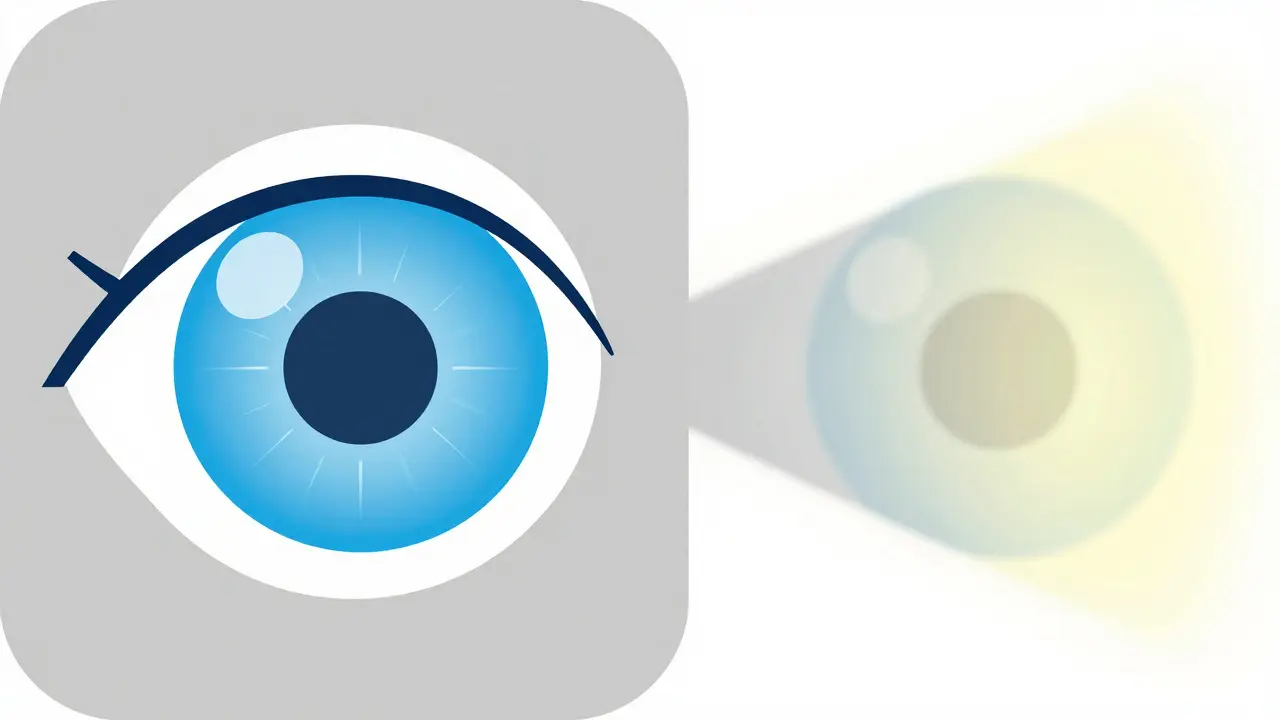
Imagine trying to read a street sign while driving at night. The letters blur into a glowing smear of light. Now imagine looking at your phone screen, but the text is fuzzy unless you hold it arm’s length away. For billions of people, this isn’t a hypothetical scenario-it’s their daily reality. These vision issues stem from refractive errors, which are optical imperfections where the eye fails to focus light precisely on the retina. They are not diseases in the traditional sense, but rather mechanical mismatches between the shape of your eye and how light travels through it.
The three main culprits are myopia (nearsightedness), short-sightedness, hyperopia (farsightedness), long-sightedness, and astigmatism. According to data from the National Eye Institute, these conditions account for a massive portion of vision problems worldwide. In fact, studies suggest that over half of adults aged 40 to 69 have some form of refractive error. The good news? These conditions are highly correctable. Whether you need glasses, contacts, or surgery, understanding exactly what is happening inside your eye helps you choose the right path to clear vision.
Understanding the Mechanics: Why Vision Blurs
To understand why your vision is blurry, you first need to understand how a healthy eye works. Think of your eye like a camera. Light enters through the cornea (the clear front window) and passes through the lens. This system should bend, or refract, that light so it lands directly on the retina-the film at the back of the camera. If the light hits the retina perfectly, you see sharp images. If it misses, everything looks out of focus.
Myopia occurs when the eyeball is too long or the cornea is too curved. Imagine an egg that is slightly elongated. Because the eye is longer than normal (typically exceeding 24mm in axial length), light focuses in front of the retina instead of on it. This makes distant objects look blurry, while close-up tasks remain clear. This condition often starts in childhood around age 10 and stabilizes in early adulthood.
Hyperopia is the opposite problem. Here, the eyeball is too short (less than 22mm) or the cornea is too flat. Light rays converge behind the retina. Younger eyes can sometimes compensate by straining their internal lenses to pull the focus forward, leading to headaches and eye strain during near work. As we age and our lenses lose flexibility-a condition known as presbyopia-this compensation fails, making reading difficult even if distance vision was previously okay.
Astigmatism adds another layer of complexity. Instead of being round like a basketball, the cornea or lens is shaped more like a football. This irregular curvature causes light to focus on multiple points rather than a single focal point. Consequently, both near and far vision can appear distorted or shadowed. Astigmatism often coexists with myopia or hyperopia, complicating the prescription needed to correct vision.
Glasses and Contact Lenses: The First Line of Defense
For most people, corrective lenses are the immediate solution. They work by bending light before it enters the eye, compensating for the eye's structural imperfections.
- Myopia Correction: Requires concave lenses (minus power). These lenses diverge light rays outward, pushing the focal point back onto the retina.
- Hyperopia Correction: Requires convex lenses (plus power). These lenses converge light inward, pulling the focal point forward onto the retina.
- Astigmatism Correction: Requires toric lenses. These have different powers in different meridians to counteract the irregular curvature of the cornea. The prescription includes an "axis" number (from 1 to 180 degrees) indicating the orientation of the correction.
Glasses are safe, non-invasive, and offer immediate clarity. However, they can fog up, slip down your nose, or distort peripheral vision. Contact lenses sit directly on the eye, offering a wider field of view and better aesthetics. But they come with responsibilities. You must maintain strict hygiene to avoid microbial keratitis, an infection that affects about 3-4% of contact lens wearers according to the CDC. Daily disposables reduce this risk significantly compared to reusable lenses.

Surgical Options: Permanent Solutions
If you want to break free from glasses and contacts, refractive surgery might be the answer. These procedures permanently reshape the cornea to correct how light enters the eye.
| Procedure | Mechanism | Recovery Time | Risks/Side Effects |
|---|---|---|---|
| LASIK | Creates a corneal flap, then uses an excimer laser to reshape tissue underneath. | 24-48 hours for functional vision. | Dry eyes (20-40% initially), night glare, rare flap complications. |
| PRK | Removes the outer layer of the cornea (epithelium) and reshapes the surface directly. | 3-7 days for comfort; weeks for stable vision. | Painful initial recovery, slower visual acuity improvement, haze risk. |
| SMILE | Small Incision Lenticule Extraction: A femtosecond laser creates a tiny lens-shaped piece of tissue removed through a small cut. | 1-3 days for functional vision. | Fewer dry eye cases than LASIK, limited correction range for high prescriptions. |
LASIK has been FDA-approved since 1995 and remains the most popular option. It offers rapid visual recovery, with many patients seeing clearly within hours. However, it requires sufficient corneal thickness (minimum 500 microns) and a stable prescription for at least 12 months. SMILE is the newer contender, gaining popularity due to its minimally invasive nature. By avoiding a large corneal flap, it preserves more corneal nerve fibers, potentially reducing dry eye symptoms. PRK is often recommended for those with thinner corneas or active lifestyles (like martial artists) where a flap could be dislodged.
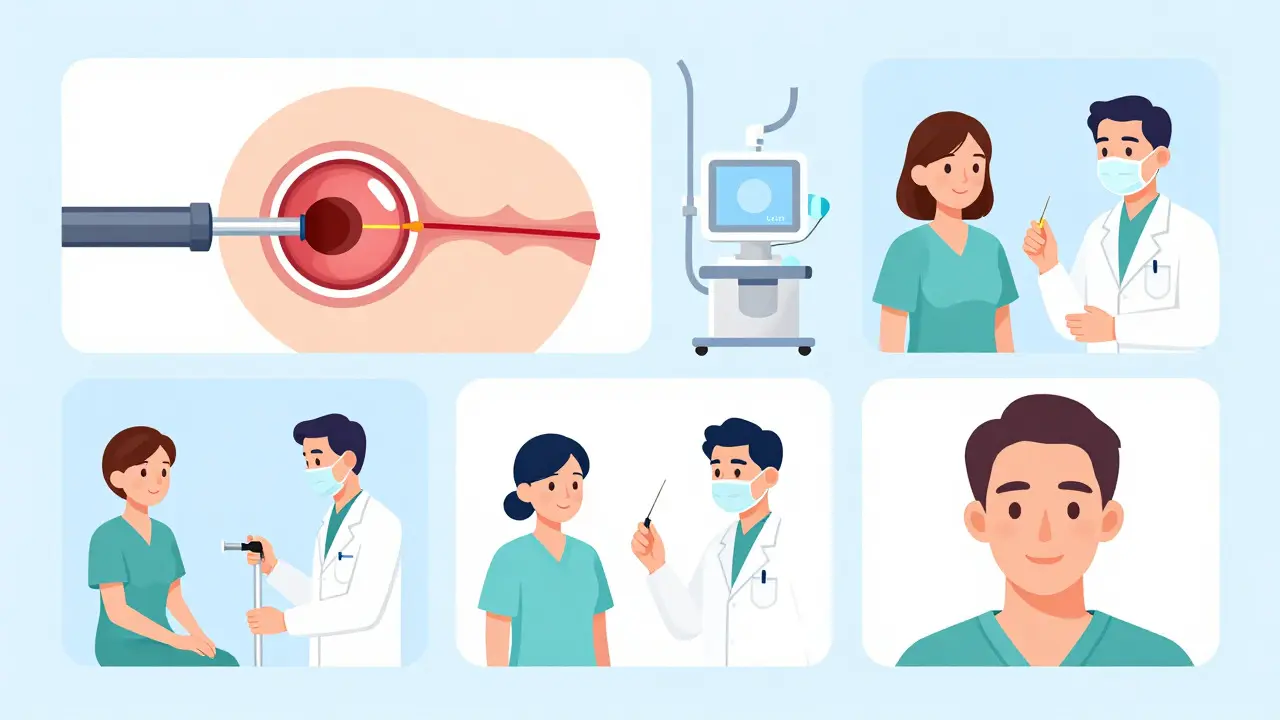
The Global Myopia Epidemic and Prevention
While hyperopia and astigmatism are common, myopia is exploding globally. The World Health Organization estimates that uncorrected refractive errors cause millions of cases of blindness. More alarmingly, projections suggest that by 2050, half the world’s population could be myopic. This surge is particularly dramatic in East Asia, where 80-90% of young adults in countries like Singapore and South Korea are nearsighted.
Why is this happening? Research points to a combination of genetics and environment. The National Eye Institute highlights two major environmental factors: excessive close-up work (reading, screens) and insufficient time outdoors. Natural daylight triggers dopamine release in the retina, which may inhibit the elongation of the eyeball. Children who spend less time outside are at higher risk of developing myopia.
For parents worried about their children’s vision, intervention strategies exist beyond standard glasses. Orthokeratology (Ortho-K) involves wearing rigid gas-permeable contact lenses overnight. These lenses temporarily reshape the cornea, providing clear vision during the day without glasses. Studies show Ortho-K can slow myopia progression by 36-56%. Another emerging treatment is low-dose atropine eye drops (0.01%-0.05%), which have demonstrated a 50-80% reduction in myopia progression in clinical trials over two years. Early detection and management are crucial, especially since high myopia (greater than -6.00 diopters) carries a 5-10 times higher risk of retinal detachment and degeneration later in life.
Choosing the Right Path for You
Selecting the best correction method depends on your lifestyle, age, and eye health. If you are a child with progressing myopia, discuss Ortho-K or atropine with a pediatric ophthalmologist. If you are an adult with a stable prescription and thick enough corneas, LASIK or SMILE might offer the freedom you desire. Always consult with an eye care professional who can measure your corneal thickness, check for dry eye disease, and assess your overall ocular health.
Remember, refractive errors are manageable. With modern technology, whether through precision-crafted lenses or advanced laser surgery, clear vision is within reach. Don’t ignore blurred vision or frequent headaches-they are signs that your eyes are struggling to focus. Get tested, explore your options, and take control of your visual health.
What is the difference between myopia and hyperopia?
Myopia (nearsightedness) occurs when the eye is too long, causing light to focus in front of the retina, making distant objects blurry. Hyperopia (farsightedness) happens when the eye is too short, causing light to focus behind the retina, making near objects blurry. Both are refractive errors but require opposite lens corrections: minus lenses for myopia and plus lenses for hyperopia.
Is LASIK surgery permanent?
LASIK reshapes the cornea permanently, so the correction itself does not wear off. However, your eyes can still change over time due to aging or other conditions. Most patients enjoy stable vision for decades, but some may experience minor regression or develop presbyopia (age-related near vision loss) after age 40, requiring reading glasses.
Can astigmatism be corrected with glasses?
Yes, astigmatism is commonly corrected with glasses using toric lenses. These lenses have specific cylindrical power and axis measurements to compensate for the irregular curvature of the cornea. Contact lenses and refractive surgery like LASIK and SMILE can also effectively correct astigmatism.
How can I prevent my child from becoming nearsighted?
Encourage your child to spend at least two hours outdoors daily in natural light, which helps regulate eye growth. Limit prolonged close-up work and ensure proper lighting when reading. Regular eye exams are essential to detect early signs of myopia, allowing for interventions like Ortho-K or low-dose atropine drops if necessary.
What are the risks of contact lens wear?
The primary risk is infection, specifically microbial keratitis, which occurs in 3-4% of wearers. Risks increase with poor hygiene, sleeping in lenses not designed for overnight wear, or swimming in them. Using daily disposable lenses and adhering to strict cleaning routines significantly reduces these risks.
When should I consider refractive surgery?
You should consider refractive surgery if you are over 18, have had a stable prescription for at least 12 months, have adequate corneal thickness, and are bothered by dependence on glasses or contacts. A comprehensive eye exam will determine if you are a suitable candidate for LASIK, PRK, or SMILE.