
Did you know that while e-cigarettes lack tar, they still pump chemicals like formaldehyde and acrolein directly into your airways? For years, vapers have been told their habit is a "safer" alternative to smoking. But as of 2026, the medical consensus has shifted from "we don't know yet" to "here is what we definitely know." The question isn't whether vaping is less harmful than combustible cigarettes-it generally is-but whether it is safe enough to ignore the growing pile of evidence linking it to chronic lung issues.
If you are vaping, or thinking about starting, you need to understand the specific mechanisms by which aerosol affects your respiratory system. This isn't about fear-mongering; it's about looking at the data from major health bodies like the National Academies of Science and the American Thoracic Society to see exactly where the risks lie. From immune suppression to long-term disease development, here is the breakdown of how vaping impacts your lungs in 2026.
The Chemical Reality Inside Your Vape
Let’s strip away the marketing fluff and look at what is actually being heated. An e-cigarette device heats a liquid solution, often called e-liquid, to create an inhalable aerosol. The base ingredients are usually propylene glycol and vegetable glycerin. While these sound harmless, a study from the University of North Carolina found that these compounds can be toxic to cells when aerosolized, and toxicity increases with the number of added ingredients.
Beyond the base, you have flavorings and additives. Diacetyl, for instance, was once a common flavoring agent. Although banned in many countries due to links with bronchiolitis obliterans (often called "popcorn lung"), its presence in unregulated products remains a concern. More critically, the heating process creates volatile organic compounds. The American Lung Association highlights that e-cigarettes produce dangerous chemicals including:
- Acetaldehyde, a known irritant.
- Acrolein, which damages the lining of the airways.
- Formaldehyde, a carcinogen found in higher concentrations in some high-voltage devices.
Furthermore, heavy metals like nickel, tin, and lead can leach from the coil into the vapor. When you inhale this mix, you aren't just getting nicotine; you are introducing ultrafine particles and reactive oxygen species into your delicate lung tissue. The U.S. Surgeon General’s 2016 report confirmed that even secondhand e-cigarette emissions contain these hazardous compounds, meaning the risk extends beyond the user.
How Aerosols Suppress Your Immune Defense
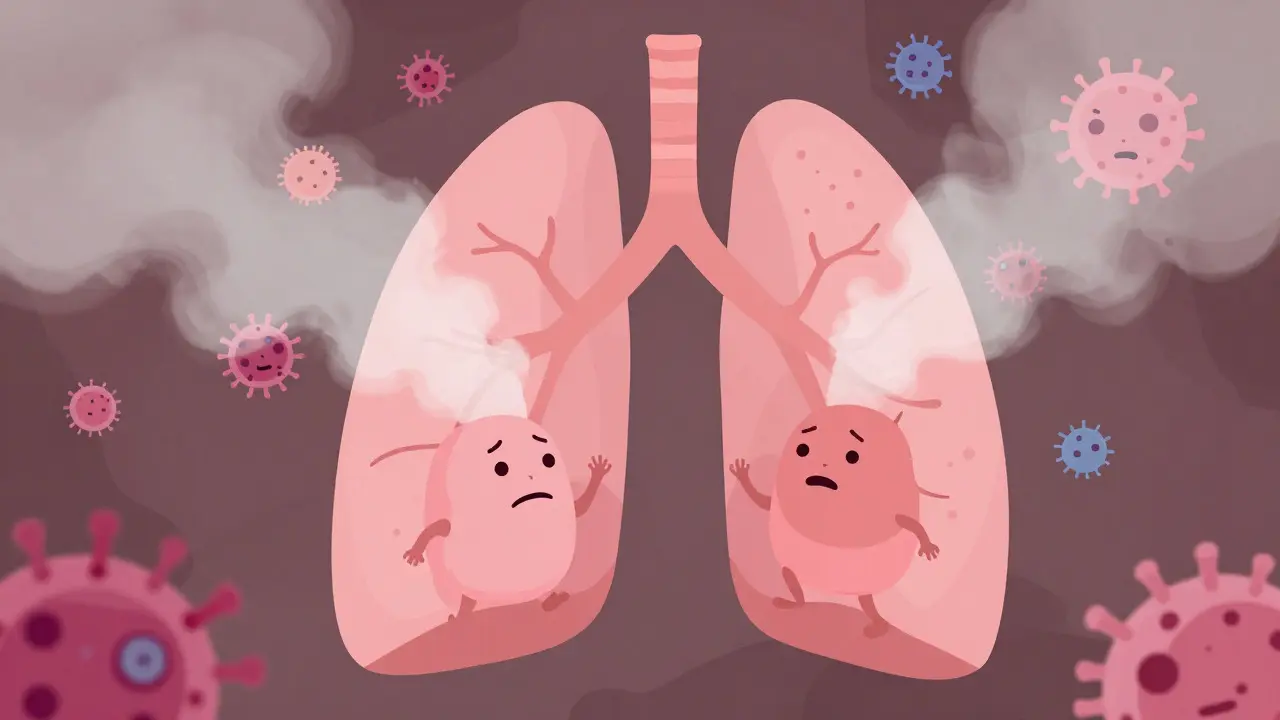
One of the most underappreciated risks of vaping is its effect on your body's ability to fight off infection. It’s not just about irritation; it’s about dysfunction. Research from the American Thoracic Society demonstrates that e-cigarette vapor suppresses key immune defenses in the lungs.
Your lungs rely on macrophages-immune cells that eat up bacteria and viruses-to stay healthy. Studies show that exposure to e-cigarette aerosol impairs the function of these macrophages. Essentially, the chemical environment created by vaping makes it harder for your lungs to clear out pathogens. This leaves users more vulnerable to respiratory infections, including pneumonia and bronchitis. For someone with pre-existing asthma, this can mean more frequent exacerbations and longer recovery times after a cold or flu.
This immune suppression is distinct from the effects of traditional cigarette smoke. While both cause damage, the specific profile of chemicals in vape aerosol interacts differently with lung cells, leading to unique patterns of inflammation. Dr. NeSmith, a respiratory expert, notes that "no matter how you inhale nicotine-through smoke or vapor-you're putting your lungs under stress," but the nature of that stress is evolving in ways we are only now fully understanding.
EVALI and the Long-Term Disease Risk
You might remember the panic surrounding EVALI (E-cigarette or Vaping Use-Associated Lung Injury) in 2019. Thousands were hospitalized, and several died, primarily due to THC-containing products adulterated with vitamin E acetate. While that specific outbreak has subsided, it served as a stark reminder that unregulated substances in vaping products can cause rapid, severe lung damage.
However, the risk doesn't stop at acute injury. There is mounting evidence linking regular vaping to chronic obstructive pulmonary disease (COPD). A recent NIH study analyzed pooled data and found that current e-cigarette users had significantly higher odds of developing COPD compared to non-users. The pooled odds ratio was 1.48, indicating a 48% higher risk. While traditional smoking carries a much higher risk, this statistic confirms that vaping is not a neutral activity for lung function.
| Risk Factor | Traditional Cigarettes | E-Cigarettes (Vaping) | Non-Smoker/Non-Vaper |
|---|---|---|---|
| Tar Exposure | High | Negligible | None |
| COPD Odds Ratio | Significantly High (>3.0) | Moderately Elevated (1.48) | Baseline (1.0) |
| Immune Suppression | Documented | Documented (Macrophage impairment) | Normal Function |
| Key Toxicants | Tar, CO, PAHs | Aldehydes, Heavy Metals, VOCs | Ambient Air Pollutants |
| Acute Injury Risk (e.g., EVALI) | Low (from product defect) | Moderate (linked to additives/adulterants) | Very Low |
Symptoms You Shouldn't Ignore
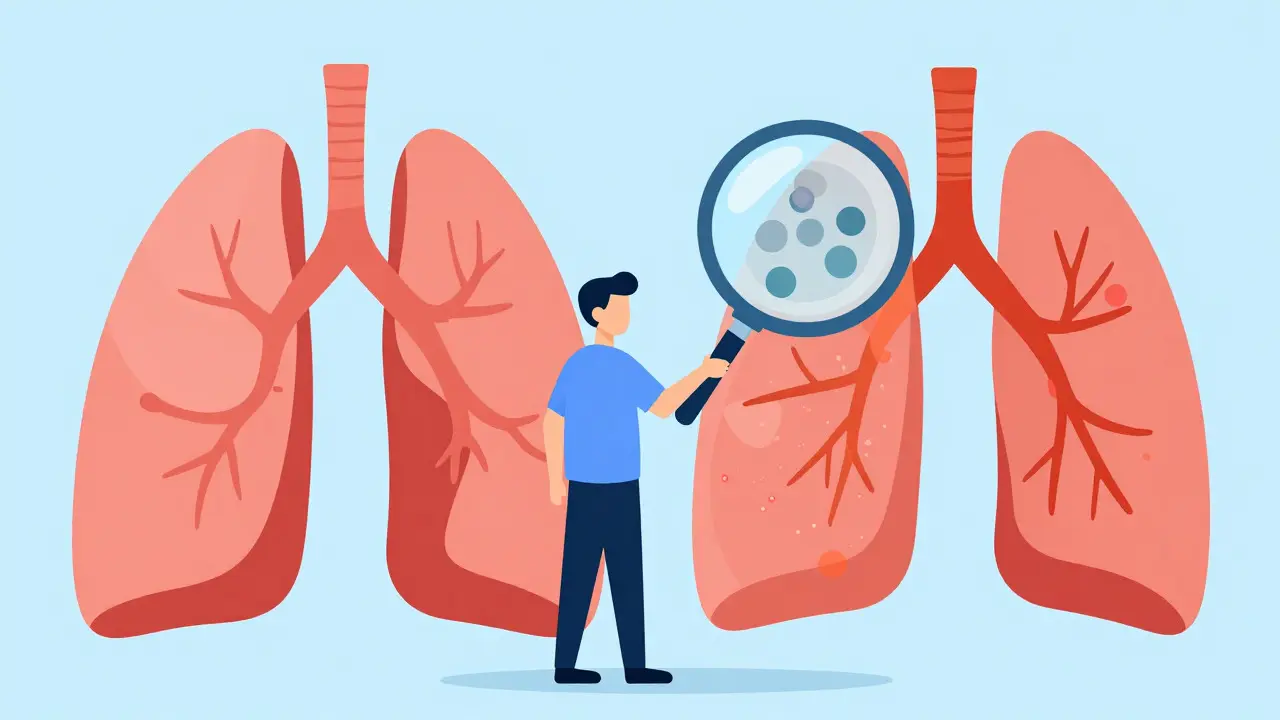
Lung damage from vaping rarely announces itself with a single dramatic event. Instead, it creeps in. If you are a vaper, pay close attention to your body's signals. The CDC acknowledges that breathing in aerosols can irritate the lungs and exacerbate existing conditions. Here are the red flags that warrant a visit to a pulmonary specialist:
- Persistent Cough: A cough that lasts more than three weeks, especially if it produces mucus.
- Shortness of Breath: Feeling winded during activities that used to be easy, like climbing stairs or walking to the car.
- Chest Tightness: A feeling of pressure or constriction in the chest, unrelated to heart palpitations.
- Decreased Exercise Tolerance: Noticing that your stamina has dropped without any change in your fitness routine.
- Recurring Infections: Catching bronchitis or sinus infections more frequently than friends or family members who don't vape.
It’s important to note that symptoms may develop gradually. You might think you're just "getting older" or "out of shape," but if you've been vaping daily for a year or more, it could be early-stage airway inflammation. Asymptomatic users should also discuss their vaping history during routine check-ups so doctors can monitor lung health over time.
Vaping as a Quitting Aid: The Trade-Off
Many adults turn to e-cigarettes to escape the grip of combustible tobacco. Is it worth it? The data suggests a complex trade-off. According to Our World in Data, vaping is substantially less harmful than smoking because it avoids tar and many known carcinogens. However, "less harmful" does not equal "safe."
For an adult smoker who cannot quit nicotine entirely, switching to vaping may reduce overall mortality risk and cancer risk compared to continuing to smoke. But you are trading one set of respiratory stresses for another. You eliminate the carbon monoxide and tar, but you introduce aldehydes and potential immune suppression. Dr. NeSmith emphasizes that the safest choice is to quit both. If you use vaping as a bridge, the goal must always be complete cessation of all nicotine delivery systems.
For youth, however, the picture is less favorable. The National Academies' 2018 report highlighted that youth who use e-cigarettes are at increased risk for cough, wheezing, and asthma exacerbations. Since their lungs are still developing, the impact of chronic aerosol exposure could be more profound than in adults. The gateway effect remains a significant public health concern, with many young adults becoming addicted to nicotine through vaping before ever trying a traditional cigarette.
What the Future Holds for Lung Health
As of 2026, regulatory landscapes are tightening. Many countries have banned specific flavorings and increased scrutiny on ingredient transparency following the EVALI crisis. Yet, the market continues to evolve with new device types and liquid formulations. The scientific community is calling for rigorously designed clinical trials and longitudinal studies to track the long-term effects of vaping over decades, not just months.
Until then, the burden of proof rests on the user. If you choose to vape, treat it with the same caution you would give any other chemical exposure. Buy from regulated sources to avoid unknown additives. Monitor your lung function. And remember that while vaping might spare you the tar of a Marlboro, it is still pumping foreign particles into your alveoli. Your lungs are resilient, but they are not infinite. Protect them by staying informed and listening to your body.
Is vaping safer than smoking?
Yes, for adult smokers, vaping is generally considered less harmful than combustible cigarettes because it lacks tar and many combustion byproducts. However, it is not risk-free. It introduces different chemicals like aldehydes and heavy metals, and it carries its own risks for lung inflammation and immune suppression.
Can vaping cause permanent lung damage?
Potential exists. While some inflammatory changes may be reversible upon quitting, long-term exposure to aerosol chemicals can alter lung cell structure and function. Conditions like COPD involve irreversible airflow limitation, and the risk of developing such chronic diseases is statistically higher among current vapers compared to non-users.
What is EVALI?
EVALI stands for E-cigarette or Vaping Use-Associated Lung Injury. It is a serious lung condition identified in 2019, largely linked to THC-containing vaping products cut with vitamin E acetate. It causes severe lung damage, leading to hospitalization and, in some cases, death.
Does vaping affect people with asthma?
Yes. The CDC notes that aerosols can irritate the lungs and exacerbate asthma. Vaping can trigger wheezing, coughing, and make asthma symptoms harder to control. Individuals with asthma should consult their doctor before using e-cigarettes, as the immune-suppressing effects of vapor can complicate management.
How long does it take for lungs to heal after quitting vaping?
There is no fixed timeline, as it depends on the duration and intensity of use. Some inflammatory markers may improve within weeks or months of cessation. However, structural changes or chronic conditions like COPD may persist. Early cessation offers the best chance for full recovery of lung function.