GI Side Effect Estimator
Your Expected Improvement Timeline
Your estimated symptom reduction:
35%
Based on clinical studies of gradual dose titration and dietary adjustments
Personalized Recommendations
When you're managing type 2 diabetes, the last thing you want is to feel like your digestive system is staging a rebellion. For many people prescribed acarbose or miglitol, that’s exactly what happens. These medications help control blood sugar after meals, but they come with a side effect that’s hard to ignore: excessive gas, bloating, and abdominal discomfort. The good news? You don’t have to suffer through it. With the right approach, you can reduce these symptoms dramatically-and keep taking a drug that actually works.
Why These Drugs Cause Gas
Acarbose and miglitol belong to a class called alpha-glucosidase inhibitors. They work by slowing down how fast your body breaks down carbs in the small intestine. That means more undigested sugar reaches your colon, where gut bacteria feast on it-and produce gas as a byproduct. It’s not a flaw in the drug; it’s how they do their job. The difference between acarbose and miglitol comes down to how much of the drug gets absorbed. Acarbose barely enters your bloodstream-it stays in your gut, working right where carbs are being digested. That means more undigested sugar hits your colon all at once. Miglitol, on the other hand, gets absorbed about half as much, so it’s gentler on the lower intestine. That’s why studies show miglitol causes less flatulence than acarbose. In one trial, patients on acarbose reported gas scores nearly 50% higher than those on miglitol.What the Numbers Say
You might hear people say, “I can’t take acarbose-it made me gassy.” And they’re not wrong. About 30% of people stop taking these drugs within the first few weeks because of GI issues. But here’s what most don’t tell you: the worst of it usually fades. Research from a 2016 meta-analysis of over 3,000 patients showed that while 20-30% quit early, those who stuck with the medication for more than 8 weeks saw a sharp drop in symptoms. By week 4, most reported significant improvement. Why? Your gut bacteria adapt. They shift from gas-producing species to ones that handle undigested carbs better. Think of it like training your microbiome. A 2023 study at the ADA Scientific Sessions found that adding a specific probiotic-Bifidobacterium longum BB536-to miglitol cut flatulence by 42%. That’s not a fluke. It’s biology.Start Low, Go Slow
The biggest mistake people make? Starting at the full dose. Doctors often prescribe 50-100 mg of acarbose or miglitol three times a day. But that’s like throwing a full bucket of water on a dry sponge. Your gut isn’t ready. Instead, begin with 25 mg once a day-with your largest meal. After a week, if you’re not having major discomfort, add a second dose. Then, after another week or two, go to the full three-times-daily schedule. This slow ramp-up cuts discontinuation rates from 30% down to just 12%. One patient on Reddit, u/DiabeticDave1982, started with 25 mg of acarbose once daily and waited six weeks before going to the full dose. By month two, his gas was barely noticeable. He didn’t quit. He adapted.Diet Tweaks That Make a Difference
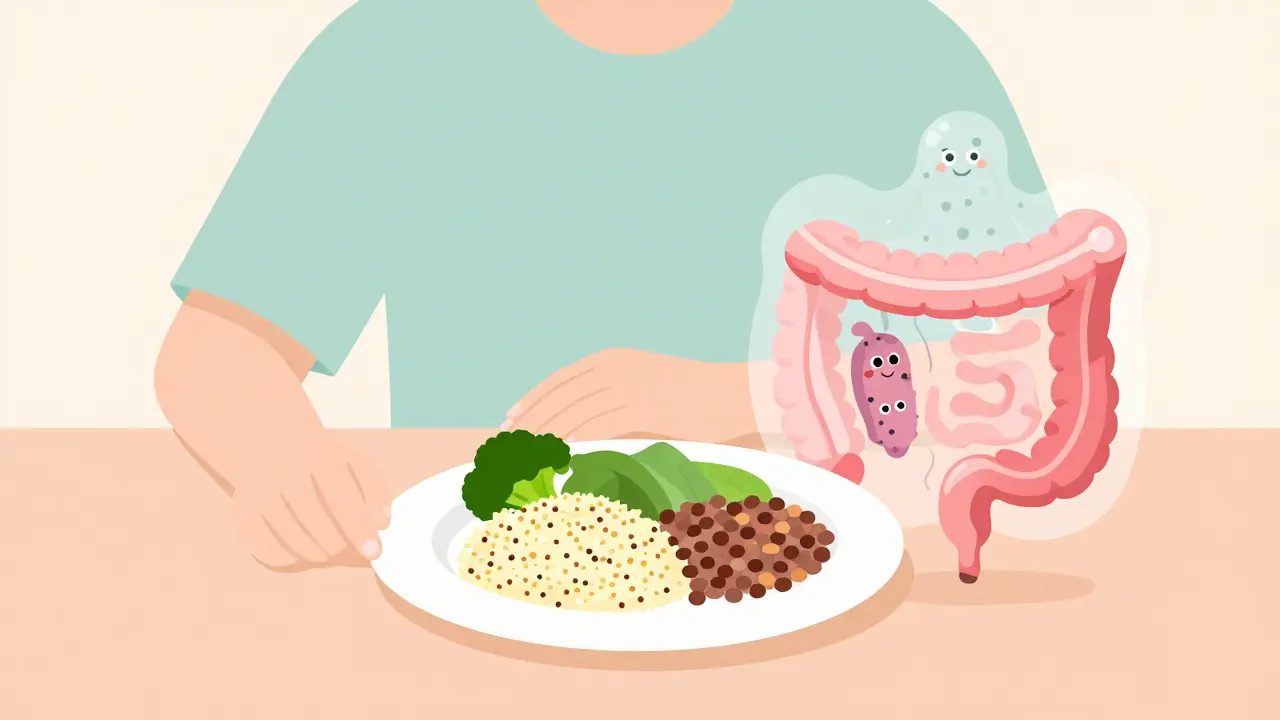
It’s not just about the drug-it’s about what you eat with it. Avoid large amounts of simple sugars during the first few weeks. Candy, soda, fruit juice, and even white bread can cause a sudden spike in undigested carbs hitting your colon. That’s a recipe for gas explosions. Instead, stick to complex carbs: whole grains, legumes, vegetables. They break down slower, so your gut has time to adjust. Keep your carb intake consistent at each meal-45 to 60 grams per meal is ideal. That steady flow gives your bacteria time to adapt, rather than overwhelming them. One user, u/SugarFreeSue, avoided high-fiber foods like beans and broccoli during the first month on miglitol. She didn’t cut them forever-just until her gut got used to the drug. Then she slowly added them back in.
Tools to Reduce Gas
You don’t have to just wait it out. There are proven, over-the-counter tools that help.- Activated charcoal: Take 2-4 capsules 30 minutes before meals. Studies show it reduces flatus volume by about 32%. It’s not magic, but it’s effective.
- Simethicone: Found in Gas-X or Mylanta. Take 120 mg three times daily. It breaks up gas bubbles in your gut, reducing bloating by 40%.
- Probiotics: Look for strains like Lactobacillus GG or Bifidobacterium longum BB536. Take 10 billion CFU daily. In a 12-week trial, this cut flatulence frequency by 37%.
When to Consider Miglitol Over Acarbose
If you’ve tried acarbose and the gas is unbearable, miglitol might be your better option. It’s not a miracle-gas still happens-but it’s significantly better tolerated. In clinical trials, miglitol users reported less bloating and fewer episodes of flatulence. The reason? Less drug stays in the upper gut, so less undigested sugar floods the colon at once. It’s a subtle difference, but it matters. Also, miglitol has a slight edge in weight management. One study showed patients lost an average of 1.2 kg in 12 weeks on miglitol-something acarbose doesn’t do. If you’re overweight and need a weight-neutral drug, miglitol gives you better results with fewer complaints.What About the New Combination Drug?
In 2023, the FDA approved a new pill called Acbeta-M-a combo of acarbose and metformin in a controlled-release formula. Early data shows it cuts flatulence by 28% compared to regular acarbose. That’s huge. It’s not available everywhere yet, but if you’re struggling with acarbose and your doctor is open to new options, ask about it.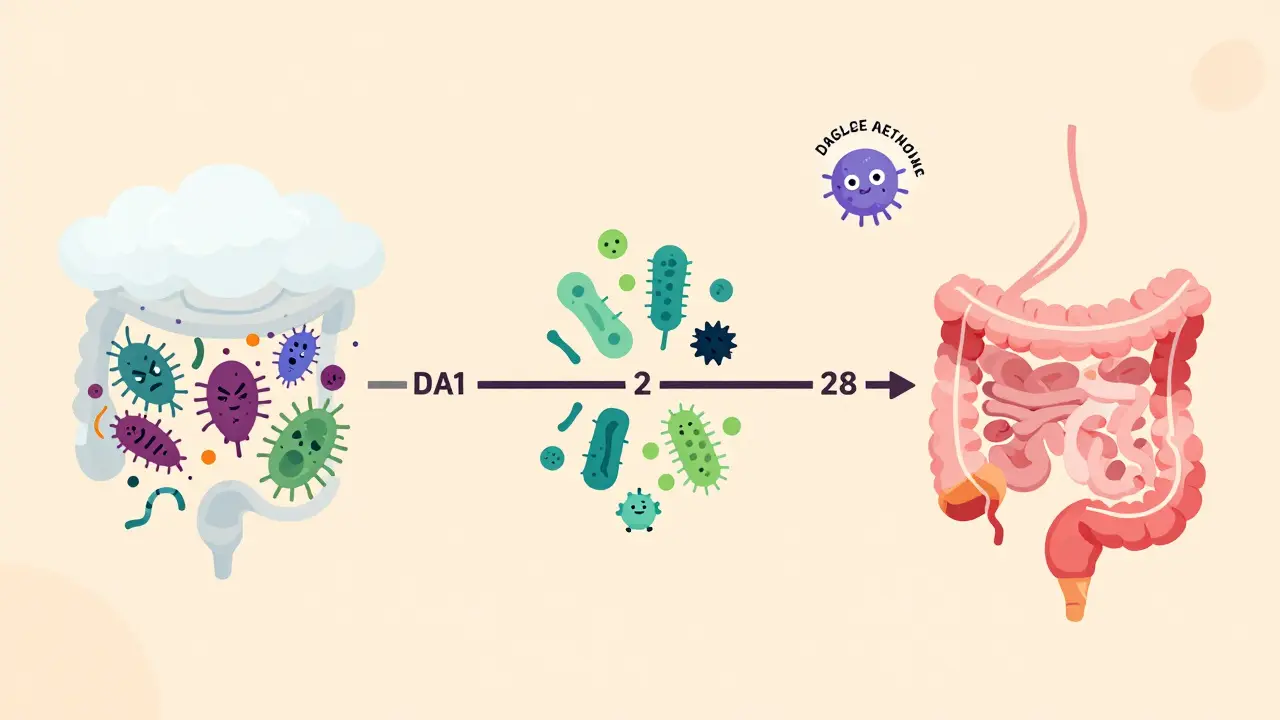
Don’t Give Up Too Soon
The first 3-7 days are the worst. That’s when your gut is scrambling to adjust. But by day 14, most people start feeling better. By day 28, many say they barely notice the side effects anymore. This isn’t a drug for people who want quick fixes. It’s for those who want steady, long-term control without weight gain or hypoglycemia. It’s especially valuable for people who can’t take metformin due to stomach issues, or for those who need to avoid insulin. If you’ve been told these drugs are “too gassy,” don’t believe it. You just haven’t been shown how to use them right.What Your Doctor Should Tell You
Most doctors don’t spend time on this. But they should. Here’s what you need to hear:- Start at 25 mg once daily. Don’t rush.
- Take it with the first bite of every meal. Timing matters.
- Don’t avoid carbs-just make them complex and consistent.
- Gas will peak in the first week. It will drop by week 4.
- Try simethicone or probiotics if it’s too much.
- If gas doesn’t improve after 8 weeks, switch to miglitol.
Bottom Line
Acarbose and miglitol aren’t glamorous drugs. They don’t make headlines. But they work. They lower HbA1c by 0.5-1.0% without causing weight gain or low blood sugar. And for many people, especially in Asia, they’re first-line therapy. In the U.S., they’re underused-not because they’re ineffective, but because people aren’t taught how to manage the side effects. You can change that. Start low. Adjust your diet. Use the right tools. Give it time. Your gut will thank you. And so will your blood sugar.Why do acarbose and miglitol cause gas?
These drugs block enzymes that break down carbs in the small intestine. Undigested carbs move into the colon, where gut bacteria ferment them, producing gas as a byproduct. This is how the drugs work-it’s not a flaw, it’s the mechanism.
Is miglitol better than acarbose for reducing gas?
Yes. Studies show miglitol causes significantly less flatulence and bloating than acarbose. This is because miglitol is partially absorbed in the upper intestine, so less undigested sugar reaches the colon. Clinical trials report gas scores up to 30% lower with miglitol.
How long does it take for the gas to go away?
Symptoms usually peak between days 3 and 7. Most people notice improvement by week 2-4, and by week 6-8, gas and bloating are often minimal. This happens because your gut bacteria adapt to the increased fiber load.
Can probiotics help with acarbose or miglitol side effects?
Yes. Probiotics like Lactobacillus GG and Bifidobacterium longum BB536 have been shown to reduce flatulence by 37-42% in clinical trials. Take 10 billion CFU daily for at least 8 weeks to see results.
Should I stop taking these drugs if I have gas?
Not unless symptoms are severe or don’t improve after 8 weeks. Most side effects are temporary and manageable. Stopping means losing the benefits-better blood sugar control without weight gain or hypoglycemia. Try dose titration, diet changes, and OTC aids first.
What’s the best way to start taking acarbose or miglitol?
Start with 25 mg once daily with your largest meal. After one week, add a second dose. After another 1-2 weeks, add the third dose. This gradual increase reduces side effects and improves long-term adherence.
Can I eat carbs while taking these drugs?
Yes-but choose complex carbs like whole grains, beans, and vegetables. Avoid large amounts of simple sugars (soda, candy, white bread) during the first few weeks. Consistent carb intake (45-60g per meal) helps your gut adapt better.
Are there any new treatments to reduce side effects?
Yes. A new combination drug called Acbeta-M (acarbose + metformin) with controlled-release technology was approved in 2023 and reduces gas by 28% compared to standard acarbose. Also, combining miglitol with specific probiotics has shown a 42% drop in flatulence in recent trials.




i started miglitol last month and honestly thought i was gonna quit by week 2 but it got better?? my gut just… adapted?? like my bacteria threw a party and then settled down. weird but true.
you people are being manipulated by big pharma to accept side effects as normal… they know these drugs cause gas because they’re designed to-so you’ll buy more simethicone and probiotics… it’s a cycle… and no one talks about the real reason they’re underused… it’s because they’re cheap and don’t make enough profit…
bro this is gold. i was on acarbose for 3 months and thought i was cursed. started at 25mg once a day like you said and now i eat biryani without fear. thank you.
if you can't handle a little gas you shouldn't be on diabetes meds. america is soft. we used to just deal with it. no probiotics, no simethicone, no whining. just take the pill and move on.
in india, we’ve used acarbose for decades. no one complains about gas because we eat dal, roti, and sabzi every day-complex carbs are normal. the problem is not the drug, it’s the western diet with soda and white bread. your gut isn’t trained for this.
my buddy took acarbose and turned into a human whooshing wind tunnel-like, legit scary. he tried the 25mg slow ramp, added lactobacillus GG, and now he’s basically a ninja. no more midnight gas emergencies. life changed.
I find it fascinating-almost absurd-that we’ve normalized the idea that side effects are just ‘part of the journey’-as if our bodies are mere machines that need to be brute-forced into compliance. The fact that we don’t question why a drug that works by poisoning the gut microbiome is even considered first-line therapy in the first place… it speaks volumes about how little we value true physiological harmony. We’re not just treating diabetes-we’re medicating our way through a broken food system. And now we’re supposed to be grateful for probiotics as a Band-Aid on a gunshot wound? No. No, no, no. We need systemic change, not just a different brand of simethicone.
It’s amusing how the post casually mentions ‘Reddit user u/DiabeticDave1982’ as if that’s some kind of clinical validation. The real study is the 2023 ADA data, not a random guy on the internet who waited six weeks. This feels like a blog post dressed up as medical advice.
just wondering-does anyone know if the probiotic strain BB536 is available over the counter in the US? i checked a few stores and they only had generic ones. maybe i’m missing something.
the gas… it’s not just gas… it’s the universe whispering to you… telling you that your body is not meant for this… that modern medicine has lost its way… and maybe… just maybe… you’re not supposed to be taking this… 🌌💧