
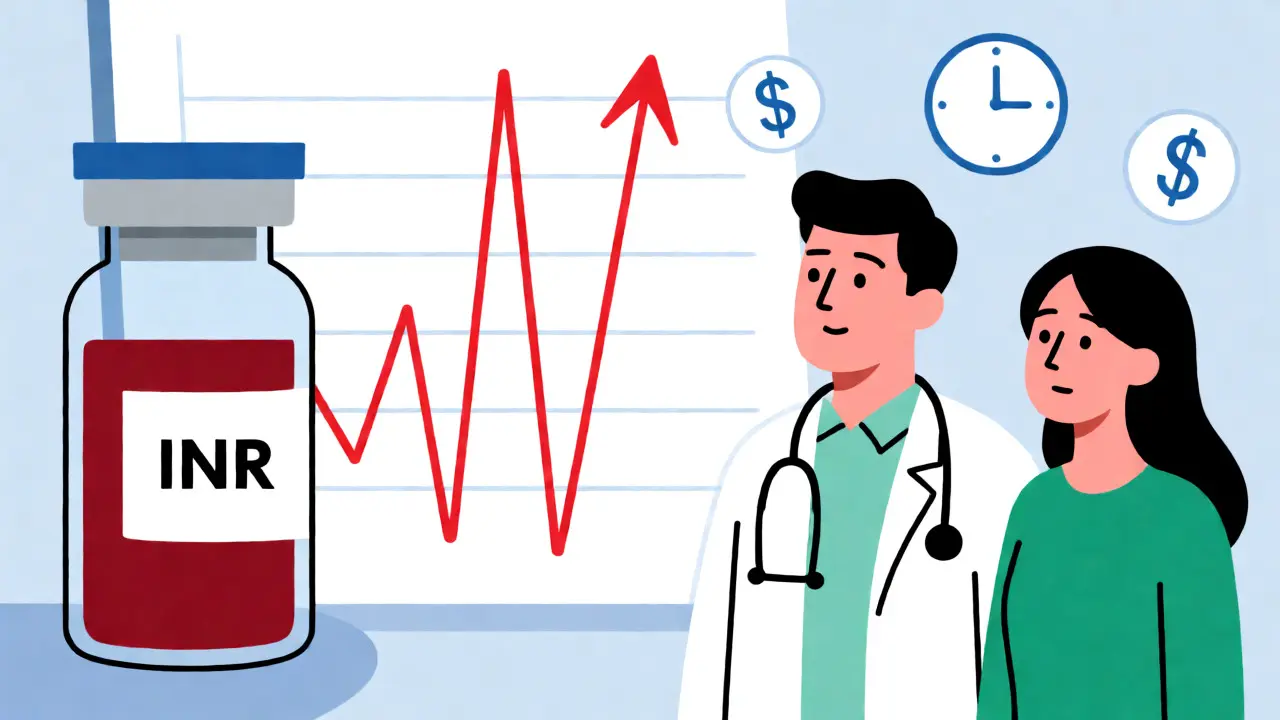
Imagine your blood thinner dosage shifts just slightly, sending your INR from a safe 2.5 to a dangerous 6.8 in three days. For patients on Narrow Therapeutic Index (NTI) drugs, this isn't a hypothetical nightmare-it's a real risk that gets exponentially worse when multiple NTI drugs are combined. While single NTI generics have become common, the landscape for combination therapies is riddled with gaps. If you or someone you care for takes two or more narrow-window medications, understanding why generic availability is so scarce-and where it fails-is critical for safety.
The Tightrope Walk of NTI Pharmacology
To understand the problem, we first need to define what makes an NTI drug different. Unlike standard medications where a small dosing error is harmless, NTIs have a razor-thin margin between the dose that heals and the dose that harms. The FDA defines these drugs by specific pharmacological traits: minimal separation between toxic and effective concentrations, high risk of serious failure if levels drift, and the frequent need for therapeutic drug monitoring. Classic examples include warfarin, levothyroxine, lithium, and phenytoin. When clinicians combine these agents-for instance, pairing warfarin with amiodarone for complex cardiac cases-the complexity doesn't just add up; it multiplies. Each component introduces its own variability, creating a compounded risk profile that standard generic testing often fails to capture.
This concept isn't new. Oncologists pioneered combination therapy in the 1960s to tackle acute leukemia, but applying those principles to NTIs today reveals unique hurdles. The goal is efficacy without toxicity, but achieving that balance with generic substitutes requires precision manufacturing that many facilities struggle to maintain consistently across multiple active ingredients.
Why Bioequivalence Standards Make Combination Generics Rare
Generic drugs must prove they work the same way as the brand-name version through bioequivalence studies. For most drugs, the acceptable range for peak concentration (Cmax) and total exposure (AUC) is 80% to 125%. But for NTIs, the FDA tightened these standards significantly in 2022. Now, the 90% confidence interval for Cmax must fall within 90.00%-111.11%, and AUC within 90.00%-112.00%. This leaves almost no room for error.
When you combine two NTI drugs into a fixed-dose product, the regulatory burden skyrockets. Manufacturers must demonstrate that both components meet these strict criteria simultaneously in a replicated crossover study. As Dr. Donald Berry noted in Nature Reviews Drug Discovery, even the tighter window allows for significant variation. If two drugs each vary by 10%, the combined potential deviation can trigger clinical instability. Consequently, very few companies attempt to develop fixed-dose combinations of NTIs. In the US market, while generic warfarin exists alone, there are virtually no approved fixed-dose combinations containing warfarin plus another NTI drug because the scientific and financial risks are too high.
| Parameter | Standard Drug | Single NTI Drug | Combination NTI (Proposed) |
|---|---|---|---|
| Cmax Range | 80.00% - 125.00% | 90.00% - 111.11% | 90.00% - 107.69% |
| AUC Range | 80.00% - 125.00% | 90.00% - 112.00% | 90.00% - 110.00% |
| Study Design | 2-way crossover | 4-way crossover | Replicated 4-way + Modeling |
| Market Availability | High | Moderate (87% coverage) | Very Low (<13% coverage) |

The Coverage Gap: Where Generics Fail Complex Regimens
Data from the FDA Orange Book highlights a stark disparity. Approximately 87.4% of single-entity NTI monotherapies have generic alternatives available. However, only about 12.6% of combination regimens involving NTI drugs have generic versions. This gap forces many patients to pay full price for brand-name combinations or manage separate prescriptions for each component, increasing pill burden and adherence challenges.
The issue isn't just about cost; it's about therapeutic stability. A 2020 study published in JAMA Internal Medicine found that adverse event rates jumped by 27% when generic substitution occurred in combinations containing at least one NTI drug, compared to just 8% in non-NTI combinations. Patients on complex regimens, such as those treating tuberculosis with isoniazid (an NTI) alongside rifampin, face heightened risks if the generic substitute doesn't perform identically to the brand.
Patient and Provider Experiences: Real-World Risks
If you ask a pharmacist about swapping NTI generics, you'll likely hear cautionary tales. A survey of over 1,200 patients revealed that 63.4% reported adverse effects after switching to generic NTI combinations, versus 18.2% who stayed on brand-name versions. One patient on a warfarin and amiodarone regimen described how a pharmacy switch caused their INR to spike dangerously, requiring hospitalization. Imagine doubling that risk if both drugs were substituted simultaneously.
Healthcare providers share these concerns. An ASHP survey found that 78.3% of pharmacists had witnessed therapeutic failure following generic substitution in NTI-containing combinations. Many hospitals and enterprise healthcare systems now restrict automatic substitution for these patients, requiring physician approval before any change. Community pharmacies, however, may not always flag these interactions effectively, leading to inconsistent care.
Practical Management: Monitoring and Cost Implications
Managing combination NTI therapy demands rigorous oversight. Therapeutic drug monitoring costs average $1,200 to $2,500 annually per patient, significantly higher than the $400-$800 typical for non-NTI combinations. Clinicians often need 6 to 8 weeks to stabilize a patient on a new combination regimen, during which time multiple dose adjustments-averaging 3.2 changes-are necessary.
For patients, this means frequent blood tests and close communication with your healthcare team. Do not assume that a generic label guarantees identical performance in complex regimens. Always inform your doctor if you experience unexpected side effects after a pharmacy switch. Documentation quality also varies; while single NTI products have clear labeling, combination products often score lower on clarity due to their complexity, making it harder for patients to self-manage.
The Future: Regulatory Shifts and Manufacturing Advances
Regulators are aware of these gaps. The FDA’s 2023 draft guidance proposes even tighter bioequivalence standards for fixed-dose combinations containing NTIs, suggesting a Cmax range of 90.00%-107.69%. This reflects a growing recognition that current methods don't fully capture real-world variability. Meanwhile, manufacturers argue that modern precision controls can meet these demands. European experience shows some success with generic levothyroxine combinations since 2015, reporting low adverse event rates.
However, experts remain divided. Some believe advances in pharmacometric modeling will eventually solve these issues, while others argue that fundamental pharmacokinetic challenges make true equivalence unattainable with current technology. Until validated methods for combination NTI bioequivalence are widely accepted, expect limited generic options and continued reliance on careful monitoring.
Why are generic versions of combination NTI drugs so rare?
Generic development for combination NTI drugs is difficult because manufacturers must prove that every component meets strict bioequivalence standards simultaneously. The statistical probability of passing these tight limits decreases with each additional NTI ingredient, making the financial risk too high for many companies to pursue.
Can I safely switch to a generic version of my NTI medication?
It depends on the specific drug and your health status. For single NTI drugs like levothyroxine, generics are generally safe with monitoring. For combination therapies, especially those involving warfarin or lithium, consult your doctor. Automatic substitution may lead to therapeutic instability, so provider approval is often recommended.
What signs indicate a problem after switching to a generic NTI?
Watch for symptoms related to under- or overdosing. For anticoagulants like warfarin, look for unusual bruising or bleeding. For thyroid meds, fatigue or heart palpitations may signal imbalance. Any sudden change in how you feel after a pharmacy switch should be reported to your healthcare provider immediately.
How does combination NTI therapy differ from standard combination therapy?
Standard combinations allow wider margins for error. NTI combinations require precise control because minor variations in either drug can cause toxicity or treatment failure. This necessitates more frequent monitoring, stricter manufacturing controls, and often prevents independent dose adjustment of individual components.
Are there regional differences in NTI generic availability?
Yes. Europe has seen some successful introduction of generic NTI combinations with lower adverse event rates, partly due to different regulatory approaches. The US remains more conservative, resulting in fewer available generic options for complex NTI regimens.




this is so important for my mom who takes warfarin and lithium together. the fear of a tiny shift messing everything up is real. glad someone explained why generics are hard to find here
While the article correctly identifies the regulatory hurdles, it fails to acknowledge that the FDA's tightening of standards in 2022 was largely driven by industry lobbying rather than pure scientific necessity. The bioequivalence windows are already excessively narrow for most patients, creating an artificial barrier to entry that benefits brand-name manufacturers at the expense of consumer choice.
Your analysis is superficially correct but fundamentally flawed in its understanding of market dynamics. You ignore the fact that combination NTIs are niche products with low volume sales, making the ROI for generic development negligible regardless of regulatory stringency. Blaming the FDA alone is a simplistic narrative that ignores basic economic principles governing pharmaceutical manufacturing.
wow this table is wild!! i had no idea the confidence intervals were that tight for combos. like seriously how do they even manufacture stuff within 107%?? seems like magic or just insane precision engineering lol. makes me wonder if we should just stick to separate pills if the combo risk is too high?
I... don't really get it??? Why... would anyone... take two... dangerous drugs... instead of one... safer one??? Seems... like... bad doctoring... honestly... I mean... sure... complex cases... exist... but... still... feels... excessive...
The lack of generic availability is not an accident; it is a deliberate strategy by Big Pharma to maintain monopoly pricing on critical medications. By setting impossibly high bars for combination NTI generics, they ensure that insurance companies continue paying premium rates for branded versions. This is classic regulatory capture where the agency serves the industry it regulates rather than the public health interest.
yeah the pharmacokinetics get super messy when you stack agents. usually we see this with anti-epileptics or psych meds where enzyme induction/inhibition plays a huge role. the fixed dose combo approach is elegant theoretically but practically nightmare fuel for compounding pharmacies and hospital formularies alike. definitely worth reading if you deal with polypharmacy
hey great post man!! i work in pharma quality control back in india and yes the validation for these combos is hell. every batch has to be perfect or else recall. we see many failures in stability testing for multi ingredient tablets. hope more companies step up soon. keep writing such useful stuff!!!
they're hiding the data. the FDA knows full well that single-entity generics interact poorly enough without needing fixed-dose monstrosities. It's all about controlling the supply chain. If you can't buy the combo cheap, you stay dependent on the brand. Simple as that. Wake up sheeple.
This is such a helpful breakdown! It’s reassuring to know there are strict standards, even if they make things difficult. I’m sure it helps patients feel safer knowing their meds are tested so rigorously. Thanks for sharing!
Finally, some actual science instead of emotional anecdotes. The distinction between standard and NTI bioequivalence is crucial for clinicians to understand. Most GPs overlook this nuance when prescribing. :thumbsup:
Oh fantastic another reason to hate the system. Can’t wait until my insurance drops my coverage because some bureaucrat decided my life-saving combo pill isn't 'generic' enough. Love it here.