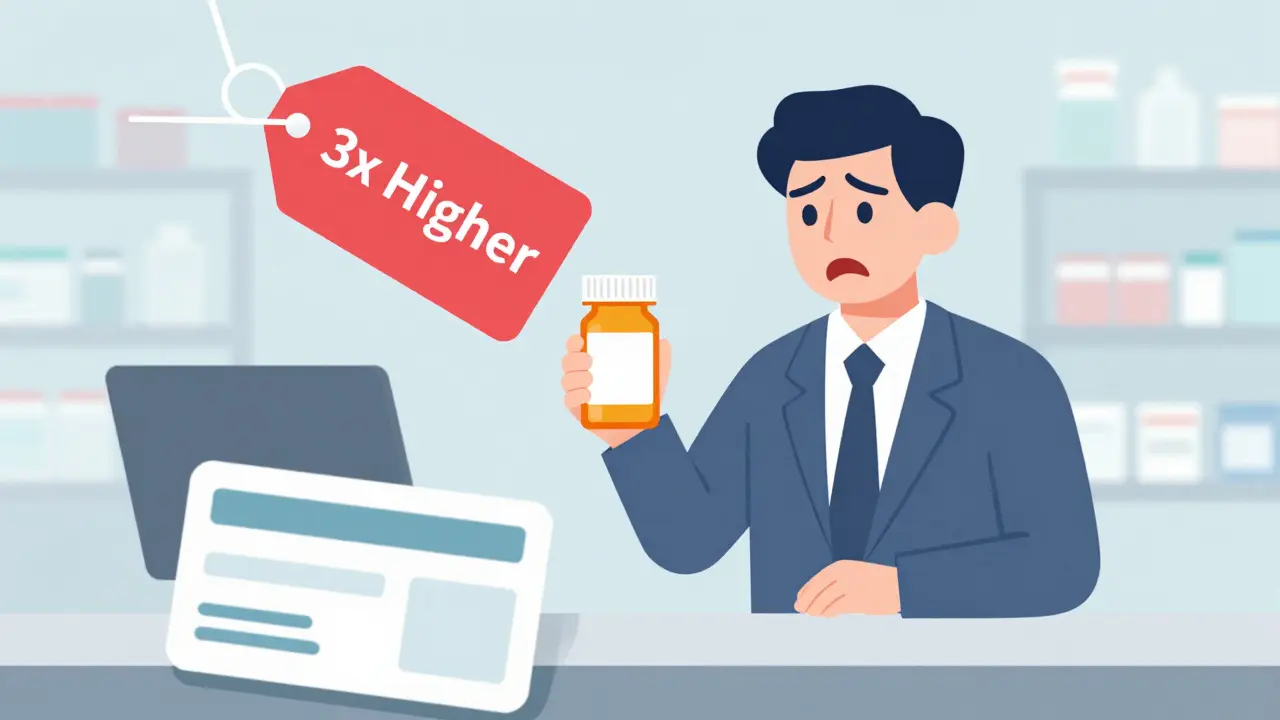
Imagine getting a bill for your usual medication that is three times higher than last month. You haven't changed doctors. You haven't changed the dose. But you might have changed pharmacies, or worse, the insurance company quietly moved your drug to a different tier. This is the reality for millions of employees navigating employer health plans today. These plans are designed with a strong preference for generic drugs to control costs, but understanding how that works requires looking under the hood at insurance formularies and the lists of covered medications that determine your out-of-pocket costs.
If you are trying to manage your healthcare budget in 2026, knowing why your plan pushes generics-and what happens when it doesn't-is crucial. It isn't just about picking the cheapest pill; it's about understanding the complex web of Pharmacy Benefit Managers (PBMs), rebate structures, and tiered pricing that dictates what you pay at the counter.
Why Your Plan Loves Generics
The push for generic medications isn't arbitrary. It is driven by hard numbers. According to the Food and Drug Administration (FDA), generic drugs are required to be as safe and effective as their brand-name counterparts. However, they cost significantly less-typically 80% to 85% cheaper. Why? Because generic manufacturers don't spend billions on clinical trials, advertising, or marketing campaigns.
For employers, this savings is massive. The Schauer Group notes that generic medications save roughly $3 billion every week, adding up to more than $150 billion annually across the industry. When an employer designs a health plan, integrating a strong preference for generics is one of the most effective ways to keep premiums stable for everyone. If you are on a high-deductible plan or a Consumer Driven Health Plan (CDHP), these savings directly impact your wallet. By choosing a generic, you often pay a minimal copay instead of facing the steep costs associated with brand-name drugs.
Understanding the Formulary Tiers
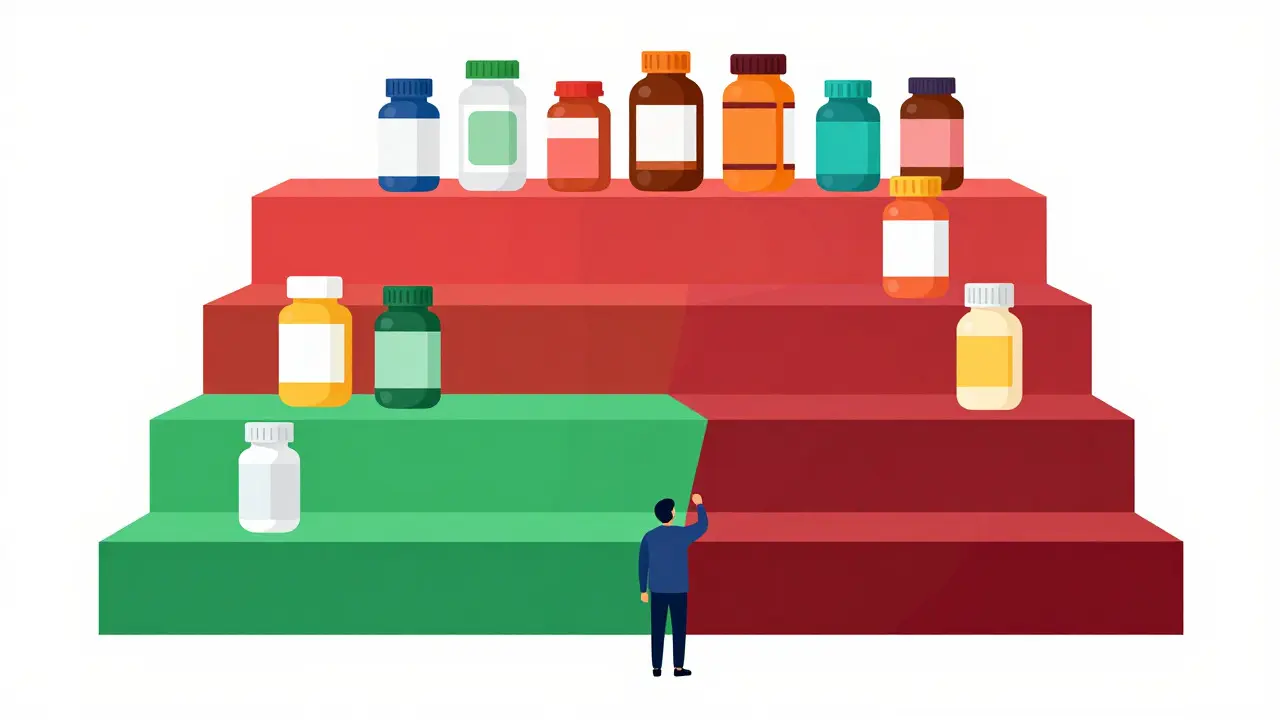
Your employer's plan uses a tiered system to categorize medications. Think of these tiers as price brackets. Where your drug sits determines how much you pay.
| Tier Level | Medication Type | Typical Copayment Example |
|---|---|---|
| Tier 1 | Generic Medications | $10 - $20 |
| Tier 2 | Preferred Brand-Name Drugs | $40 - $60 |
| Tier 3 | Non-Preferred Brand-Name Drugs | $75 - $100+ |
| Tier 4 | Specialty Medications | High Coinsurance (e.g., 20-50%) |
In many standard plans, like those outlined by the Ohio Department of Administrative Services, a generic drug might cost you a flat $10. A preferred brand-name drug could jump to $40, and a non-preferred brand can hit $75. Specialty drugs, which treat complex conditions like cancer or rheumatoid arthritis, often sit in Tier 4. Here, you might pay a percentage of the drug's total cost rather than a flat fee, leading to very high out-of-pocket expenses.
The catch? These tiers aren't static. When a brand-name drug loses its patent and a generic version becomes available, PBMs like OptumRx automatically move the generic to Tier 1. Simultaneously, they may kick the original brand-name drug into Tier 4. If you continue taking the brand without realizing the shift, your bill can skyrocket overnight.
The Role of Pharmacy Benefit Managers (PBMs)
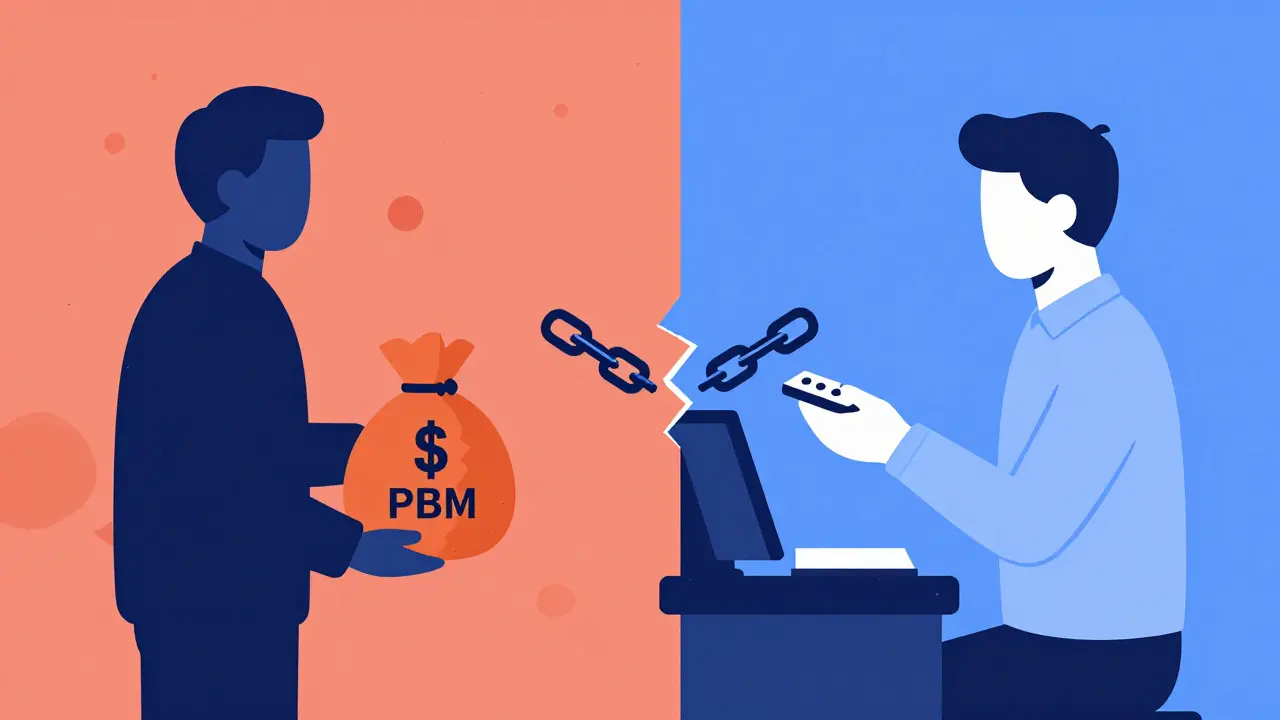
You rarely deal with a PBM directly, but they control your access to medicine. Companies like OptumRx, CVS Caremark, and Express Scripts act as middlemen between insurers, pharmacies, and drug manufacturers. They negotiate prices and decide which drugs make it onto the formulary.
PBMs use "formulary exclusions" as powerful negotiating tools. In early 2024 alone, the three largest PBMs eliminated over 1,800 prescription drugs from their formularies combined. If a drug manufacturer refuses to offer a large rebate to the PBM, the PBM may exclude the drug entirely. This forces patients to switch to a competitor's drug that offers better financial terms to the insurer.
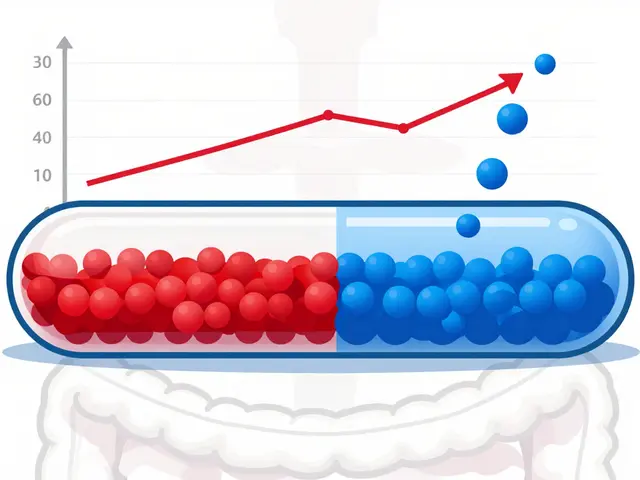
This creates a confusing dynamic known as Gross-to-Net (GTN) pricing. KPMG estimates the average GTN spread is around 55%. This means if a drug has a list price of $100, the actual net price paid after rebates and discounts might be $45. The problem? Those savings don't always trickle down to you. Sometimes, the PBM keeps the difference, meaning the system saves money, but your copay remains high because the underlying list price hasn't dropped proportionately.
Navigating Coverage Changes
Because formularies change frequently, staying informed is part of managing your health. Here is how to stay ahead of the curve:
- Check the Summary of Benefits and Coverage: This document outlines your specific tier structure and copays. Don't just glance at it; read the section on prescription drugs.
- Use Online Tools: Most insurers provide a searchable formulary on their website. Before starting a new medication, type it in to see which tier it falls under.
- Ask About Exceptions: If a generic causes side effects or isn't medically suitable for you, your doctor can file a "medical necessity exception." If approved, the insurer may cover the brand-name drug at a lower tier rate.
- Monitor for Patent Expirations: If you take a popular chronic medication, check periodically to see if a generic version has launched. Switching proactively can save you hundreds per year.
For those with chronic conditions like diabetes, asthma, or hypertension, specialized programs exist. Organizations like HealthOptions.org offer Chronic Illness Support Programs (CISP) where care managers help members navigate coverage issues and find affordable medication options. Don't hesitate to call your insurer's member services line-they are there to explain these nuances.
Practical Tips for Saving Money
Even within a rigid formulary, there are ways to reduce your costs. First, always ask your pharmacist if a generic equivalent exists. Pharmacists are trained to spot these opportunities instantly. Second, consider mail-order pharmacy options for maintenance medications. Many employer plans offer discounted rates for 90-day supplies shipped directly to your home.
If you find yourself needing a specialty drug that is excluded or placed in a high-cost tier, talk to your employer's benefits administrator. Some companies have negotiated special contracts with manufacturers for certain high-cost therapies. Additionally, look into patient assistance programs offered by pharmaceutical companies. These programs can sometimes bridge the gap when insurance coverage is insufficient.
Remember, the goal of these systems is cost containment, not necessarily consumer convenience. By understanding the mechanics of formularies and PBM strategies, you transform from a passive payer into an active manager of your healthcare spending. You gain the power to choose cost-effective alternatives without compromising on safety or efficacy.
Are generic drugs really as effective as brand-name drugs?
Yes. The FDA requires generic drugs to have the same active ingredient, strength, dosage form, and route of administration as the brand-name drug. They must also demonstrate bioequivalence, meaning they work in the body in the same way and over the same amount of time. The only differences are usually inactive ingredients like dyes or fillers, which rarely affect performance.
What is a formulary exclusion?
A formulary exclusion occurs when a Pharmacy Benefit Manager (PBM) removes a specific drug from the list of covered medications. This is often done to pressure drug manufacturers into offering larger rebates. If your drug is excluded, you may have to pay the full cash price unless your doctor secures a medical necessity exception or switches you to a covered alternative.
Why did my copay increase suddenly?
Your copay likely increased because your medication was moved to a higher tier in the formulary. This often happens when a generic version of your brand-name drug becomes available, pushing the brand to a higher, non-preferred tier. Alternatively, the PBM may have renegotiated contracts, changing the preferred status of certain drugs without prior notice to individual members.
How do I get a brand-name drug covered if a generic is available?
You need a "failure therapy" or "medical necessity" exception. Your doctor must submit documentation proving that the generic drug caused adverse side effects, failed to treat your condition, or is contraindicated for your specific health profile. If the insurer approves this request, they will cover the brand-name drug, often at a lower tier cost than standard non-preferred pricing.
What is the Gross-to-Net (GTN) spread?
The GTN spread is the difference between a drug's list price (what you see on the invoice) and the net price (what is actually paid after rebates and discounts). PBMs negotiate significant rebates from manufacturers, creating a large gap-often around 55%. Critics argue that this spread allows PBMs to retain profits that could otherwise be passed on to consumers as lower copays or premiums.