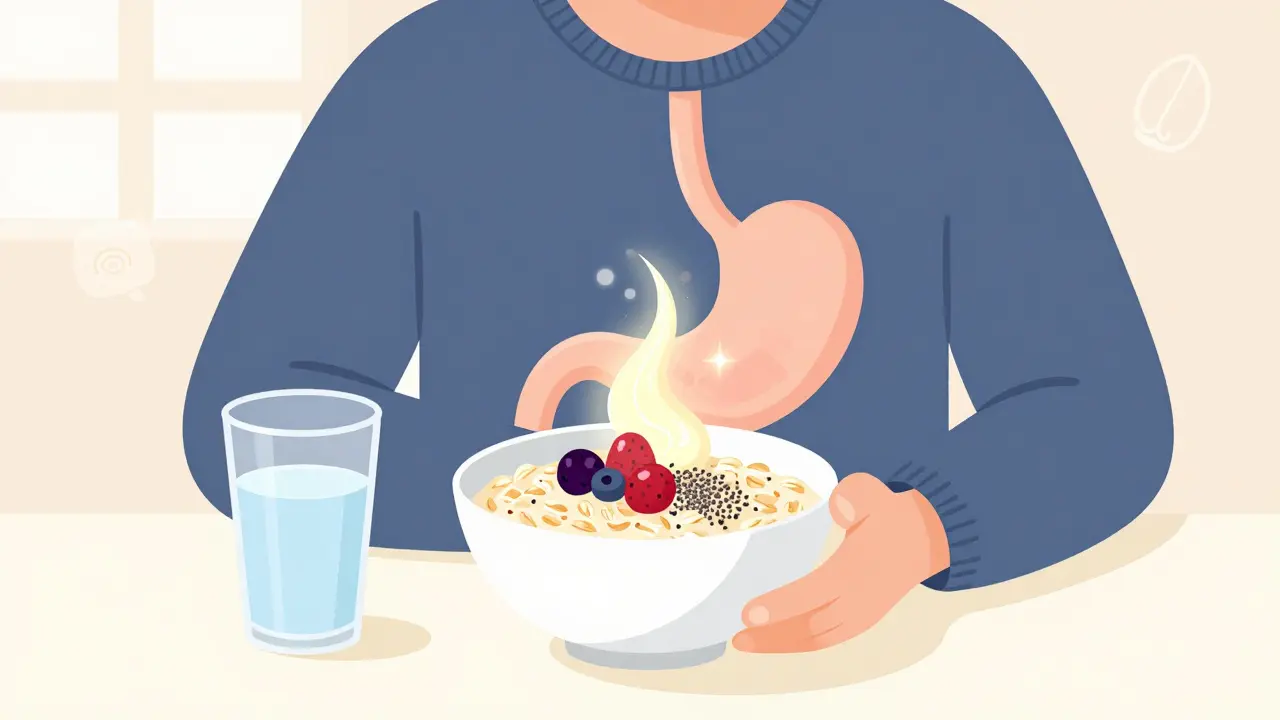
Want to lose weight but tired of complicated diets? You might be missing something simple-fiber. Not just any fiber, but the right kind. The difference between soluble and insoluble fiber isn’t just science jargon-it’s the difference between feeling full longer and just passing food through your system. And if you’re trying to control your weight, that matters.
What Soluble Fiber Actually Does for Weight Loss
Soluble fiber doesn’t just disappear in your gut. It turns into a thick, gooey gel when it meets water. Think of it like oatmeal turning into porridge-that’s soluble fiber at work. This gel slows down how fast your stomach empties. That means food stays in your belly longer, and you don’t feel hungry again after just an hour.
Studies show that viscous soluble fibers-like psyllium, beta-glucans, glucomannan, and pectin-can delay gastric emptying by 25-30%. That’s not a small thing. It translates to feeling satisfied for an extra 1-2 hours after each meal. In one 8-week study, people who took psyllium lost 3.2% of their body weight, while those on a placebo lost just 1.1%. That’s more than triple the difference.
And it’s not just about fullness. That gel also traps some of the fat you eat, blocking about 15-20% of it from being absorbed. It also smooths out blood sugar spikes after meals. When your blood sugar doesn’t crash an hour after eating, you’re less likely to reach for a snack. Beta-glucans from oats, for example, reduce post-meal glucose spikes by 12-15%.
But here’s the catch: these effects only show up with enough of the right kind of soluble fiber. You need about 7 grams of viscous soluble fiber daily to see measurable results. That’s not easy to get from food alone. One medium apple has about 1.7 grams of soluble fiber. A cup of cooked lentils gives you 3.5 grams. You’d need to eat a lot to hit that target.
Insoluble Fiber: The Silent Helper
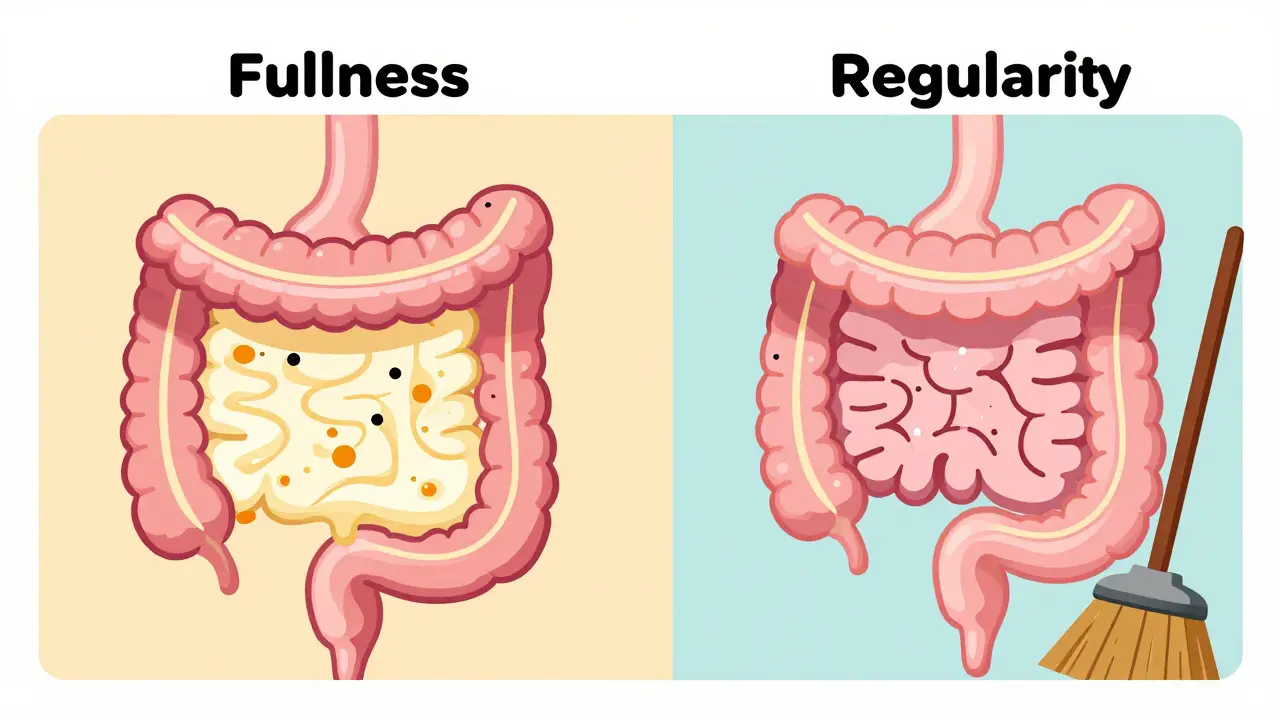
Insoluble fiber doesn’t dissolve. It doesn’t turn into gel. It just moves through your system like a broom, sweeping things along. It adds bulk to your stool-about 3-5 grams of bulk for every 10 grams you eat. That helps you go more regularly and prevents constipation.
But does it help you lose weight? Not directly. Insoluble fiber doesn’t affect your hunger hormones, doesn’t slow digestion, and doesn’t block fat absorption. It doesn’t lower blood sugar or reduce cravings. What it does do is keep your gut running smoothly. And that’s still important.
Why? Because if your digestion is sluggish, you’re more likely to retain water, feel bloated, and misread hunger signals. A healthy gut environment also supports good bacteria, which studies link to lower obesity risk. So while insoluble fiber won’t make you lose pounds on its own, it creates the foundation your body needs to respond better to other weight-loss efforts.
Whole wheat bread, brown rice, nuts, and vegetables like celery and carrots are packed with insoluble fiber. You’re probably already getting enough if you eat whole plant foods regularly. But if you’re only eating white bread and processed snacks, you’re missing out.
Why Whole Foods Beat Supplements Every Time
There are a lot of fiber supplements on the market-psyllium husk powders, inulin gummies, glucomannan pills. They promise quick results. And yes, they work. But not as well as real food.
Why? Because fiber doesn’t work alone. When you eat an apple, you get fiber, water, antioxidants, vitamins, and natural sugars that signal fullness. When you take a psyllium capsule, you get one thing: fiber. Your body doesn’t get the same full picture.
Harvard researchers found that people who got their fiber from whole foods had better long-term weight control than those relying on supplements. Why? The food matrix-the way nutrients are naturally packaged-makes a difference. Fiber from food also comes with other compounds that feed your gut bacteria, which in turn produce short-chain fatty acids that help regulate appetite and fat storage.
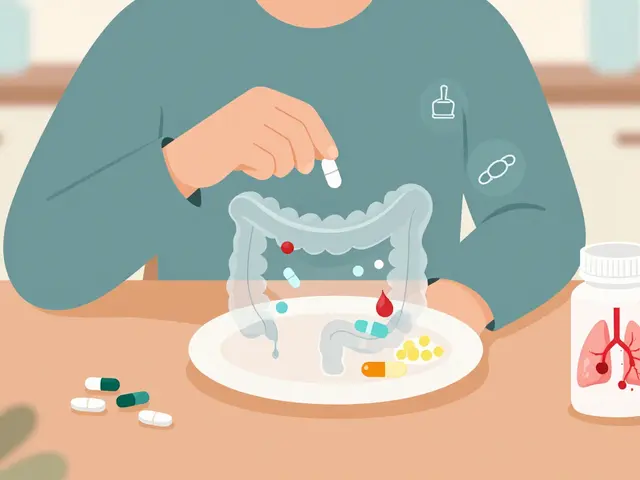
Plus, supplements can backfire. If you take psyllium without enough water, it can swell and cause blockages. Inulin, a popular prebiotic, causes bloating and gas in nearly half of users. Amazon reviews show that 34% of negative reviews for inulin supplements mention “severe bloating.”
One study tracked 1,245 people trying to lose weight with more fiber. Sixty-three percent who used whole foods stuck with it for six months. Only 54% of supplement users did. Real food is easier to stick with.
How Much Fiber Do You Actually Need?
Most people think they need 25-38 grams of total fiber a day. That’s true. But for weight control, the split matters.
Experts recommend getting at least 10-15 grams of soluble fiber daily-especially viscous types. That’s hard to hit with diet alone. Here’s how you can get there:
- 1 cup cooked oats = 4 grams soluble fiber
- 1 cup cooked lentils = 3.5 grams soluble fiber
- 1 medium apple with skin = 1.7 grams soluble fiber
- 1 tablespoon psyllium husk = 5 grams soluble fiber
- 1 cup chia seeds = 10 grams soluble fiber
That’s a lot. You’d need to eat a big bowl of oats, a cup of lentils, two apples, and a tablespoon of psyllium to hit 15 grams. That’s not realistic for most people.
So here’s the practical approach: focus on getting most of your fiber from whole foods, and use a supplement only if you’re falling short. Start with 5 grams of psyllium before your biggest meal. Add more only if you tolerate it well.
How to Use Fiber Without the Bloating
Most people give up on fiber because it makes them feel awful. That’s not the fiber’s fault-it’s how they use it.
Here’s what actually works:
- Go slow. Increase fiber by 5 grams per week. Jumping from 10 to 30 grams overnight? You’ll bloat for days.
- Drink water. For every 5 grams of supplemental fiber, drink 16-24 ounces of water. No water? You’ll get constipated.
- Time it right. Take soluble fiber 15-30 minutes before meals. That’s when it’s most effective at slowing digestion and reducing calorie intake by 10-15%.
- Balance your types. Aim for a 3:1 ratio of insoluble to soluble fiber. That keeps things moving without overloading your gut.
- Don’t rely on supplements alone. Use them to fill gaps, not replace food.
People on Reddit’s r/loseit community reported that psyllium reduced snacking within 3-5 days. But 42% had initial bloating-until they slowed down their increase and drank more water.

The Real Secret: Fiber Isn’t a Magic Bullet
Fiber won’t make you lose weight if you’re still eating junk food. It won’t fix a sedentary lifestyle. It won’t undo years of sugar overload overnight.
But when you pair fiber with a balanced diet, it becomes powerful. People who eat 25+ grams of fiber daily have 27% lower obesity rates than those eating less than 15 grams-even after adjusting for other habits.
And the best part? You don’t need to be perfect. Just get better. Swap white rice for brown. Add beans to your salad. Eat an apple instead of a granola bar. Drink water with your fiber. That’s it.
Weight loss isn’t about drastic changes. It’s about stacking small, smart habits. Fiber is one of the easiest, cheapest, and most proven habits you can start today.
What to Eat for Weight Loss (Simple Plan)
Here’s how to start tomorrow:
- Breakfast: Oats with chia seeds and berries
- Lunch: Lentil soup with whole grain bread
- Dinner: Grilled chicken with roasted broccoli and quinoa
- Snack: Apple or a handful of almonds
- Supplement (if needed): 5g psyllium husk before dinner, with a large glass of water
That’s it. No calorie counting. No extreme diets. Just real food, good fiber, and enough water.




fiber isn't magic but it's the closest thing we got without drugs or surgery. i used to snack at 3pm like clockwork until i started eating oats with chia every morning. now i'm full till dinner. no willpower needed. just biology.
and yeah, the gel thing? it's wild. it's like your stomach gets a cozy blanket instead of a slap in the face from sugar spikes.
i love this so much!! i switched to lentil soup for lunch last month and i swear i haven't craved cookies once. also i drink like 3 liters of water now because i learned the hard way that fiber + no water = brick city. 🤯
stop lying to people. psyllium is a scam. i took it for two weeks and turned into a bloated balloon with a bad attitude. my husband said i smelled like a gym sock and cried during dinner. you think this is healthy? it's torture wrapped in a health trend. #fiberhate
so wait if soluble fiber slows gastric emptying by 25-30% does that mean it also slows nutrient absorption or just fat and sugar
and what about the gut bacteria do they feed on both types or just soluble
and why do some people get gas from inulin but not psyllium
and is there a difference between golden flax and brown flax for this
and why does everyone say chia seeds but no one talks about hemp seeds
and how much water is enough really because i drink 2l and still feel bloated
OMG YES THIS!! 🙌 i started with just adding an apple to my lunch and now i'm eating lentils like they're candy 🥰 my jeans fit better and i'm not grabbing candy at 4pm anymore 😭 fiber is my new bestie 💕
the author ignores the elephant in the room. fiber supplements are marketed aggressively because they're profitable. whole foods are cheaper and more effective but don't generate billion-dollar industries. also, 34% negative reviews on inulin? that's not a warning, it's a red flag. people who recommend this without mentioning side effects are either naive or paid. the truth is, most people can't tolerate supplemental fiber long-term. this is a feel-good lie wrapped in pseudoscience.
It is a curious phenomenon that in the United States, a nation which prides itself on innovation and scientific rigor, so many individuals place undue faith in dietary fads that have been understood in rudimentary form for over a century. The notion that soluble fiber can 'trap fat' is a gross oversimplification of gastrointestinal physiology. One must consider the broader context of caloric intake, macronutrient balance, and physical activity. Fiber is not a panacea; it is a component of a balanced diet. To elevate it to the status of a weight-loss elixir is both scientifically misleading and culturally regrettable.
Thank you for writing this with such clarity. I’ve been trying to explain this to my sister for months - fiber isn’t about magic, it’s about rhythm. Like breathing. You don’t need to gasp for air, you just need to breathe steadily. Same with fiber. Slow increase. Water. Real food. No supplements unless you’re truly behind.
And honestly? The bloating isn’t the fiber’s fault. It’s our impatience. We want overnight results, but our guts need weeks to adjust. That’s not weakness. That’s biology.