
Cardiovascular disease remains the leading cause of death globally, claiming approximately 17.9 million lives every year according to World Health Organization data. It feels like a silent threat because symptoms often appear only after significant damage has occurred. The good news is that about 80% of premature heart attacks and strokes are preventable. Understanding your specific risks is the first step toward taking control of your heart health.
We tend to think of heart disease as something that just happens, but it is actually the result of a complex interplay between genetics, lifestyle, and environment. By breaking down these factors into modifiable and non-modifiable categories, you can identify exactly where to focus your energy. This guide covers the top ten risk factors identified by the American Society for Preventive Cardiology (ASPC) and explains how they interact to impact your cardiovascular system.
The Non-Modifiable Risks: What You Cannot Change
Some risk factors are written into your DNA or determined by the passage of time. While you cannot change them, knowing they exist helps you monitor your health more aggressively. These include age, sex, race, and family history.
Age is a primary biological factor in cardiovascular risk progression. As we get older, our arteries naturally stiffen and narrow. The risk for coronary artery disease increases significantly after age 45 for men and 55 for women. Each decade of life adds approximately 2-3% to your independent risk. Data from the Framingham Heart Study shows that lifetime risk reaches 50% for men and 40% for women by age 40, climbing to 70% and 60% respectively by age 70.
Sex also plays a critical role. Men generally face a higher risk of heart disease than premenopausal women, with statistics showing a 3-4 times higher likelihood. However, this gap closes rapidly. Women’s risk increases to match men’s approximately 10 years after menopause due to the loss of protective estrogen effects.
Racial disparities are another unavoidable reality. According to CDC data from 2022, African Americans have a 30% higher mortality rate from heart disease compared to non-Hispanic whites. Mexican Americans, American Indians, Hawaiians, and some Asian populations also experience elevated risks, often linked to higher rates of hypertension and diabetes within these communities.
Family history is perhaps the most concerning non-modifiable factor. If a first-degree relative (parent or sibling) developed heart disease before age 55 for males or 65 for females, your risk jumps by 30-75%. The INTERHEART study highlights that genetic factors account for 40-60% of the variation in cardiovascular risk between individuals. Specific conditions like familial hypercholesterolemia, which affects 1 in 250 people, can increase heart attack risk by 13-20 times if left untreated.
Smoking: The Single Most Preventable Cause
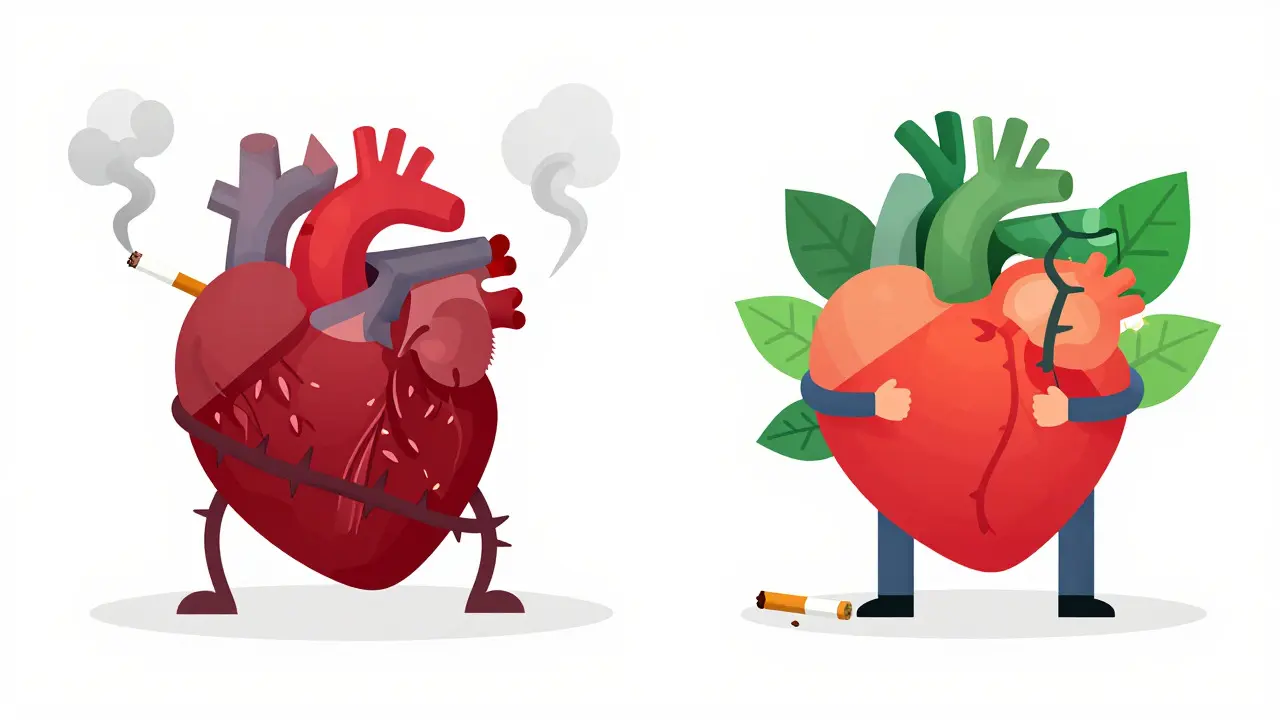
If there is one thing you can do today to save your heart, it is to stop smoking. The American Society for Preventive Cardiology identifies tobacco use as the single most preventable cause of heart disease. Current smokers face a 2-4 times higher risk of coronary heart disease compared to non-smokers.
You might think cutting back is enough, but the data says otherwise. A 2020 study in JAMA Internal Medicine found that even light smoking-just 1 to 5 cigarettes a day-increases heart disease risk by 50%. The chemicals in tobacco damage the lining of your arteries, reduce oxygen in your blood, and make your heart work harder. Quitting brings rapid benefits. Within one year of stopping, your excess risk drops by 50%. After 15 smoke-free years, your risk approaches that of someone who never smoked.
Blood Pressure and Cholesterol: The Silent Killers
High blood pressure and high cholesterol rarely show obvious symptoms, which is why they are called "silent killers." Yet, they are responsible for a massive portion of cardiovascular events.
Hypertension is chronically elevated arterial pressure that strains the heart and damages blood vessels. The CDC reports that high blood pressure affects approximately 116 million American adults, representing 47% of the population. When uncontrolled, it increases heart disease risk by 300-400%. The SPRINT trial demonstrated that targeting a systolic blood pressure below 120 mmHg, rather than the traditional 140 mmHg, reduced cardiovascular events by 25% in high-risk patients.
Cholesterol levels are equally critical. High LDL ("bad") cholesterol impacts 94 million U.S. adults. Elevated LDL levels increase heart disease risk by 50% compared to optimal levels. Management typically involves statin therapy. High-intensity statins, such as atorvastatin 40-80 mg or rosuvastatin 20-40 mg daily, are recommended for patients with established cardiovascular disease, reducing risk by 25-35% according to the Cholesterol Treatment Trialists' Collaboration.
| Risk Factor | Prevalence / Impact | Risk Increase |
|---|---|---|
| Smoking | 1 in 4 CVD deaths in US | 2-4x higher risk for current smokers |
| High Blood Pressure | Affects 47% of US adults | 300-400% when uncontrolled |
| High Cholesterol | Affects 38% of US adults | 50% higher risk vs optimal levels |
| Diabetes | Major metabolic disorder | 2-4x higher risk; 68% of diabetics die from CVD |
Diabetes and Metabolic Health
Diabetes is not just about blood sugar; it is a major driver of heart disease. The American Diabetes Association states that diabetes increases heart disease risk by 2-4 times. In fact, 68% of people with diabetes aged 65 and older die from heart disease or stroke. High blood glucose damages blood vessels over time, making them more susceptible to plaque buildup.
Management goes beyond insulin. Newer medications like SGLT2 inhibitors and GLP-1 receptor agonists provide additional cardiovascular protection. Clinical trials like DECLARE-TIMI 58 and LEADER showed these drugs reduce cardiovascular risk by 14-26% beyond just controlling glucose levels. Targeting an HbA1c level below 7% is standard for most patients to mitigate this danger.
Lifestyle Factors: Diet, Activity, and Weight
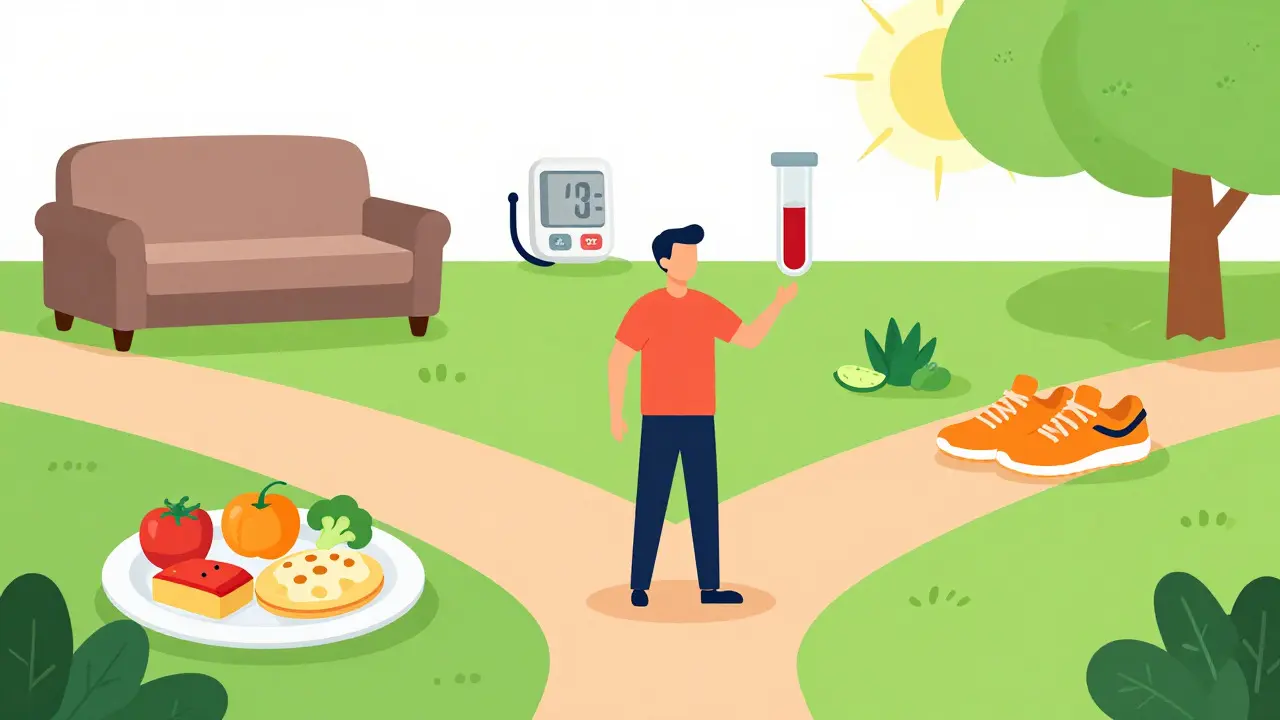
Your daily habits form the foundation of your heart health. Unhealthy diet, physical inactivity, and obesity are interconnected behavioral risks.
Physical inactivity contributes to 6% of the global burden of coronary heart disease. Regular exercise strengthens the heart muscle and improves circulation. Conversely, poor dietary patterns contribute to 11 million deaths globally each year. Diets high in sodium, saturated fats, and processed sugars drive up blood pressure and cholesterol. The CDC's Sodium Reduction in Communities Program achieved a 14% reduction in sodium intake, which translated to a 5.8% drop in hypertension prevalence in those areas.
Weight status matters too. Obesity puts extra strain on the heart and is closely linked to hypertension, diabetes, and high cholesterol. Maintaining a healthy weight through balanced nutrition and regular movement is one of the most effective ways to lower your overall risk profile.
Social Determinants and Emerging Risks
Heart health does not exist in a vacuum. Social determinants of health account for 30-50% of cardiovascular risk. Individuals in the lowest socioeconomic quartile face a 2-3 times higher mortality rate from cardiovascular disease compared to those in the highest quartile. Stress, limited access to healthcare, and food insecurity all play significant roles.
New research is also highlighting environmental factors. Air pollution, specifically PM2.5 exposure, is an emerging risk factor. The Global Burden of Disease Study 2022 indicates that PM2.5 exposure increases cardiovascular mortality by 10-15% for every 10 μg/m³ increase in concentration. Additionally, sleep apnea and chronic stress are gaining recognition as contributors to inflammation and arterial damage.
Assessing Your Personal Risk
Knowing your numbers is essential. Healthcare providers use tools like the American College of Cardiology/American Heart Association Pooled Cohort Equations to estimate your 10-year risk of atherosclerotic cardiovascular disease (ASCVD). These calculators consider age, sex, race, total cholesterol, HDL cholesterol, systolic blood pressure, diabetes status, and smoking history.
Risk is categorized as low (<5%), borderline (5-7.4%), intermediate (7.5-19.9%), or high (≥20%). For example, a 48-year-old man with smoking, hypertension, obesity, and family history had his 10-year ASCVD risk reduced from 18.2% to 6.3% through comprehensive lifestyle changes and medication adherence over 18 months. This demonstrates that even with multiple risk factors, aggressive management works.
The ABCS approach recommended by the CDC's Million Hearts initiative provides a clear path forward:
- Asprin when appropriate (for secondary prevention)
- Blood pressure control (target <120/80 mmHg)
- Cholesterol management (statin therapy if indicated)
- Smoking cessation (complete avoidance of tobacco)
Addressing just three modifiable risk factors-smoking, hypertension, and physical inactivity-could prevent 45% of cardiovascular deaths in the United States, according to Dr. Roger Blumenthal of Johns Hopkins. Start with one change, measure your progress, and build from there.
What is the biggest risk factor for heart disease?
While age and family history are significant, high blood pressure is often cited as the most common modifiable risk factor, affecting nearly half of all adults. However, smoking is considered the single most preventable cause, doubling or tripling your risk if you are a current smoker.
How much does family history increase my risk?
If a first-degree relative had heart disease before age 55 (male) or 65 (female), your risk increases by 30-75%. Genetic factors account for 40-60% of cardiovascular risk variation, making early screening crucial for those with a strong family history.
Can I reverse heart disease risk factors?
Yes, many risk factors are reversible. Quitting smoking reduces risk by 50% within a year. Controlling blood pressure and cholesterol through diet, exercise, and medication can significantly lower your 10-year ASCVD risk score, as seen in numerous clinical case studies.
At what age should I start worrying about heart disease?
Risk begins accumulating early. The Framingham Heart Study notes that lifetime risk is already 50% for men and 40% for women by age 40. Doctors recommend starting regular screenings for blood pressure and cholesterol in your 20s, especially if you have other risk factors.
Does air pollution really affect heart health?
Yes. Recent guidelines recognize air pollution as an emerging risk factor. Exposure to fine particulate matter (PM2.5) increases cardiovascular mortality by 10-15% per 10 μg/m³ increase. Living in areas with poor air quality requires additional vigilance regarding heart health.