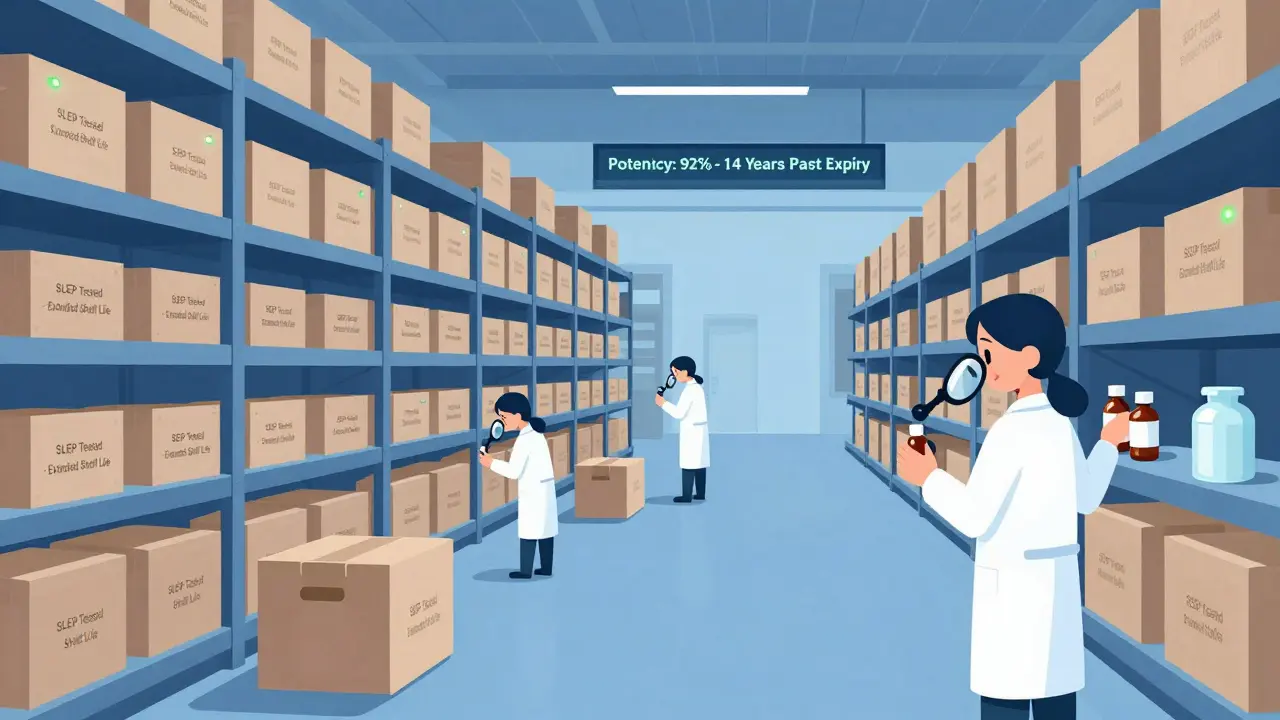
What if the pills in your medicine cabinet could last five, ten, even fifteen years past their expiration date - and still work just as well? It sounds unbelievable, but it’s happening right now in military stockpiles across the U.S., and the science behind it is changing how we think about expired medications.
Why Expired Drugs Aren’t Always Bad
Most people throw away medicine the moment the expiration date passes. You’ve probably done it yourself. The label says ‘Do not use after,’ so you toss it. But here’s the thing: expiration dates aren’t safety deadlines. They’re conservative estimates based on manufacturer testing, usually done over 2-3 years. The Shelf-Life Extension Program (SLEP) proves that many drugs remain stable and effective far longer - if stored properly. SLEP started in 1986 after the Department of Defense noticed that stockpiled medications weren’t degrading as fast as expected. Instead of automatically replacing them, they began testing. What they found shocked even scientists: 88% of the 122 drugs tested in a 2006 study still met potency standards over a decade past their labeled expiration. Some stayed effective for more than 15 years. This isn’t about old aspirin sitting on a bathroom shelf. These are drugs stored in climate-controlled military depots - dry, cool, dark, and sealed. That’s key. SLEP doesn’t say all expired drugs are safe. It says properly stored federal stockpiles can be trusted long after the label says otherwise.How SLEP Works: Science Over Paper Labels
SLEP is run by the U.S. Department of Defense, with the FDA doing the actual lab testing. Here’s how it works:- Drug lots from federal stockpiles (like the Strategic National Stockpile) are selected for testing.
- Each sample is analyzed for potency, purity, and chemical breakdown.
- To qualify for an extension, the drug must retain at least 85% of its original strength.
- If it passes, the FDA approves a new expiration date - typically extending it by 2-3 years per cycle.
Real-World Impact: Tamiflu, Battlefield Kits, and Pandemic Readiness
SLEP isn’t just about saving money. It’s about saving lives. In 2019, the Strategic National Stockpile extended the shelf life of oseltamivir (Tamiflu) by three years. That preserved 22 million treatment courses - enough to protect millions during a flu pandemic. Without SLEP, those doses would’ve been destroyed and replaced at huge cost. Military medical kits used in combat zones also benefit. The Army Medical Logistics Support Activity reported a 42% drop in waste after adopting SLEP protocols. Instead of replacing expired antibiotics or painkillers every few years, they keep them on hand, ready for emergencies. And it’s not just the U.S. The program became a global model. By 2022, 12 NATO countries had built their own versions based on SLEP’s framework. When disasters strike - whether natural or man-made - having reliable, long-lasting medical supplies matters.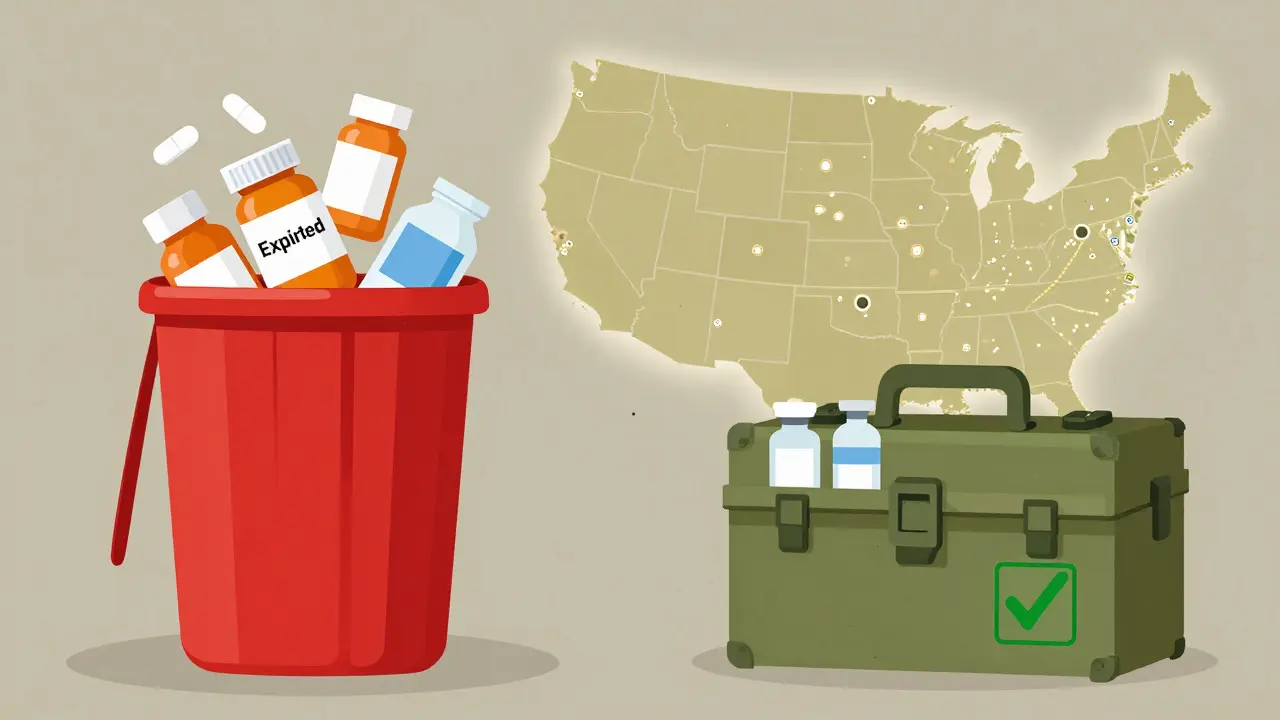
What SLEP Doesn’t Tell You
Here’s the catch: SLEP’s findings don’t apply to your home medicine cabinet. The FDA is very clear - shelf-life extensions under SLEP are specific to the exact lot number, packaging, and storage conditions tested. A pill that lasted 15 years in a military warehouse might degrade in weeks if left in a hot car or humid bathroom. Dr. Michael D. Swartzburg from UCSF warns against generalizing SLEP results. “The program is brilliant for stockpiles,” he says, “but it doesn’t mean your expired insulin or EpiPen is safe.” Also, SLEP doesn’t cover everything. Initially, it excluded biologicals like vaccines and blood products. Even after expansion in 2021, those still make up only about 5% of extended items. Some drugs - like nitroglycerin, insulin, and certain antibiotics - are naturally unstable and still get discarded on schedule.Why Commercial Pharmacies Don’t Follow SLEP
You might wonder: if this works so well, why don’t pharmacies extend expiration dates too? The answer is liability, not science. Drug manufacturers set expiration dates based on their own testing, often for legal protection. If a patient takes an expired drug and has a bad reaction, the manufacturer could be sued - even if the drug was fine. So they play it safe. Pharmacies follow those labels. They’re not labs. They don’t have the resources to test every batch. And regulators don’t allow them to alter expiration dates. That’s why SLEP is unique. It’s a government-run program with federal authority, scientific oversight, and centralized testing. No private pharmacy or pharmacy chain can legally do the same.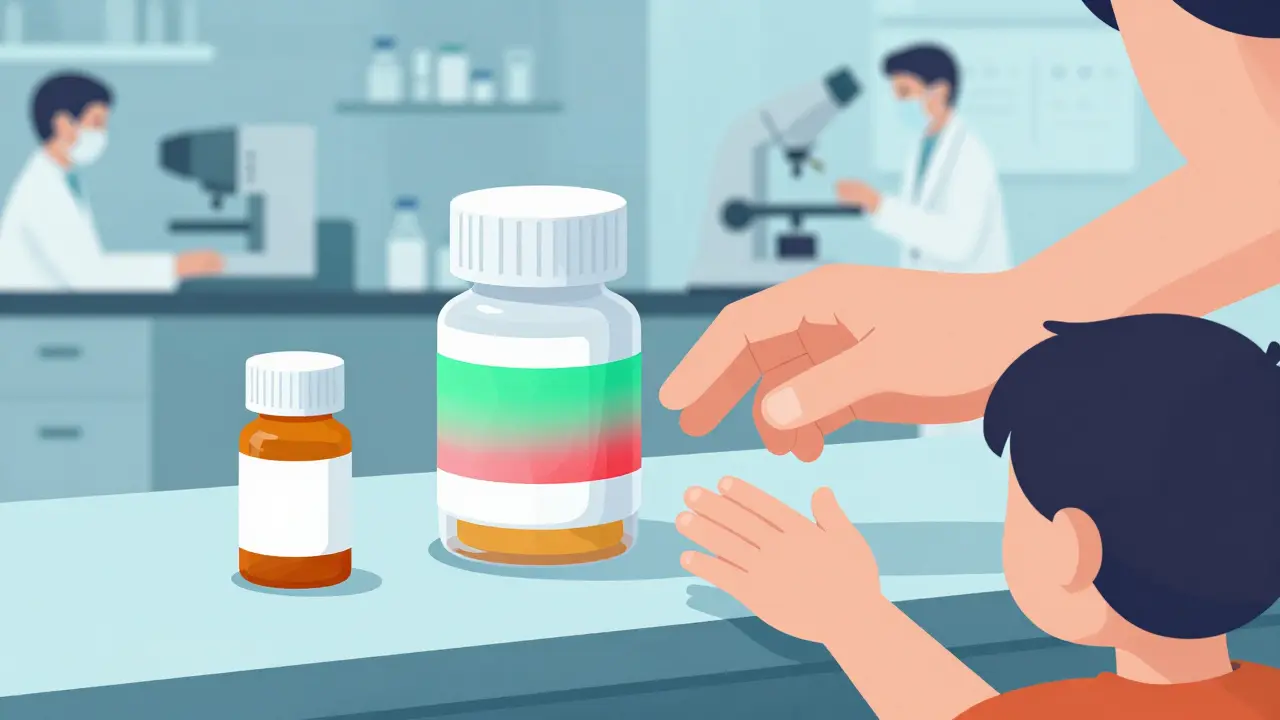
The Cost of Waste
Every year, U.S. hospitals and pharmacies throw away about $1.7 billion worth of expired drugs. That’s not just money. It’s environmental waste, unused resources, and lost preparedness. SLEP cuts that waste dramatically. One Army report showed facilities following SLEP protocols saved $87 million annually in pharmaceutical waste. That’s enough to buy 1.5 million doses of antibiotics - or fund a small hospital’s entire drug budget. The program’s success has sparked interest in expanding it. The 2023 National Defense Authorization Act added funding to include more medical countermeasures for chemical, biological, and nuclear threats. But there’s a catch: full implementation could cost $75 million more per year - a 28% budget increase. Still, the return on investment is clear. For every dollar spent on testing, SLEP saves $10 in replacement costs.What’s Next for Drug Stability Science
The future of expiration dates may not be printed on a label at all. FDA’s 2022-2026 plan includes using advanced tools like mass spectrometry and predictive modeling to forecast how drugs break down over time. Instead of waiting years to test, scientists want to predict stability from chemical signatures. If that works, we might see smart packaging - like time-temperature indicators - that show real-time drug condition. Imagine a pill bottle that glows green if it’s still good, red if it’s not. No more guessing. SLEP laid the groundwork for this. It proved that expiration dates are often arbitrary. The real question isn’t “Is it expired?” - it’s “Is it still safe and effective?”What This Means for You
You won’t be able to extend your prescription’s shelf life like the military does. But you can learn from SLEP:- Don’t panic when a drug expires. Check with your pharmacist - some drugs are safe beyond the date.
- Store medications properly: cool, dry, dark, and out of reach of kids or pets.
- Don’t use drugs that look discolored, smell odd, or are crumbling.
- For critical meds like epinephrine or insulin, always follow the label - no exceptions.
Are expired medications dangerous to take?
Most expired medications aren’t dangerous - they just lose potency over time. Very few become toxic. The exception is certain drugs like tetracycline antibiotics, which can degrade into harmful compounds. For critical medications like insulin, epinephrine, or nitroglycerin, always follow the expiration date. For others, check with a pharmacist before using.
Does the military really use drugs that are 10+ years old?
Yes. The Shelf-Life Extension Program has confirmed that many drugs in federal stockpiles remain effective for 10 to 15 years past their original expiration date - as long as they’ve been stored properly in controlled environments. One 2006 study found some drugs retained over 90% potency after 15 years.
Why can’t pharmacies extend expiration dates like the military does?
Pharmacies don’t have the resources, legal authority, or testing capabilities to verify drug stability. The military’s program is backed by the FDA and DoD, with lab-grade testing and strict protocols. Pharmacies follow manufacturer labels to avoid liability. Extending dates without testing could lead to lawsuits if a patient is harmed.
How accurate are expiration dates on drug labels?
Expiration dates are conservative estimates based on manufacturer testing, usually over 2-3 years. They’re not a guarantee of failure after that date. Many drugs remain stable for years longer, especially if stored properly. The FDA’s own data from SLEP shows that 88% of tested drugs retained potency beyond their labeled expiration.
Can I store my medications like the military does to make them last longer?
You can improve storage to help your meds last longer - keep them in a cool, dry, dark place like a bedroom drawer, not the bathroom. But you can’t replicate military conditions. Without lab testing, you won’t know if they’re still potent. Don’t assume your drugs are safe past their expiration just because you stored them well.


Finally someone talks sense about this. I’ve been telling people for years that expiration dates are mostly marketing, not science. The military’s been doing this since the 80s and no one’s dropped dead from old antibiotics. It’s not magic-it’s chemistry.
Oh please. You’re romanticizing a government program that’s built on bureaucratic inertia and budget cuts disguised as innovation. Sure, 88% of drugs tested held up-but what about the 12% that didn’t? Who’s responsible when someone takes a 14-year-old heart pill that’s 70% potent and keels over? The FDA? The DoD? The poor soul who didn’t know better? This isn’t sustainability-it’s negligence dressed up as efficiency. And don’t even get me started on how this gets weaponized in third-world conflicts where people are forced to use expired meds because no one sent replacements. You call it smart. I call it dangerous.
Let me just say this: if you’re storing your insulin or epinephrine in a drawer because you read a Reddit post about military stockpiles, you’re not being resourceful-you’re being reckless. People die because they assume ‘it’s probably fine.’ It’s not fine. The military has climate-controlled vaults, lab-grade testing, and liability shields. You have a bathroom cabinet and a hope. Don’t confuse privilege with universal truth.
OMG I JUST REALIZED I HAVE A 5-YEAR-OLD BOTTLE OF IBUPROFEN IN MY KITCHEN CABINET 😱 I’M SO GUILTY BUT ALSO SO CURIOUS-DO YOU THINK IT’LL STILL WORK?? I’M NOT GOING TO TAKE IT BUT I JUST WANT TO KNOW IF I SHOULD THROW IT OUT OR PUT IT IN A TIME CAPSULE 😭
What’s fascinating isn’t just that drugs last longer-it’s that our entire cultural relationship with medicine is built on a lie. We treat expiration dates like divine decrees, but they’re arbitrary benchmarks set by corporations with zero incentive to prove longevity. The real question is: why do we trust paper labels more than empirical data? SLEP exposes a deeper truth: we fear uncertainty more than we fear risk. We’d rather throw away billions than accept that science doesn’t always conform to neat little print deadlines. It’s not about pills-it’s about our need for control over chaos.
Let’s be crystal clear: the notion that civilians should emulate SLEP is not only scientifically unsound-it’s legally indefensible. The Department of Defense operates under Title 10, U.S.C., with FDA oversight, and the authority to re-certify pharmaceutical lots under strict chain-of-custody protocols. Your local CVS? They’re a retail entity bound by FDA 21 CFR Part 211. Extending expiration dates without formal retesting constitutes adulteration under U.S. law. The fact that anyone would suggest otherwise reveals a dangerous conflation of institutional capability with personal responsibility. Do not be a fool.
Man, this is the kind of thing that makes you realize how much of modern life is just performative waste. We throw away perfectly good stuff because someone printed a date on it. Imagine if we did that with cars, laptops, or clothes. We’d be living in a dystopian landfill. The military figured out that if you treat things with care, they last. Maybe we need to apply that to everything-not just pills. Keep your meds cool, dry, and dark? Sure. But also-keep your relationships, your habits, your hope that way too.
thank you for writing this i never thought about how much money and medicine gets tossed out every year and it just makes me sad. i used to be scared of expired stuff but now i get it. still never taking my grandma's old heart medicine though lol