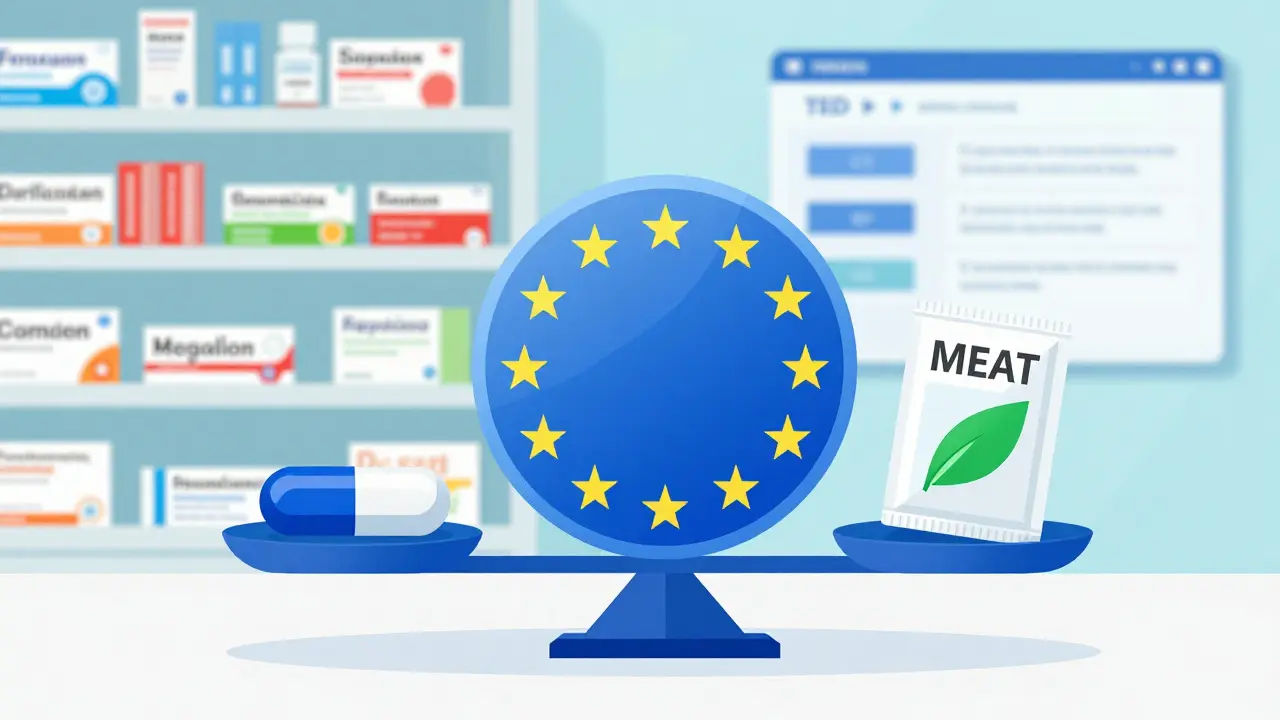
When European governments buy generic medicines, they don’t just pick the cheapest option. They run a structured, legally enforced process called tendering-and it’s one of the most transparent systems in the world. This isn’t about guesswork or backroom deals. It’s a multi-step, rules-driven system designed to get the best value for public money while keeping markets open to suppliers from any EU country. For pharmacies, hospitals, and health ministries, this process determines which low-cost drugs actually reach patients-and how efficiently.
At its core, the EU’s approach to generic drug purchasing is built on three pillars: fairness, competition, and value. Every public contract above a certain value must be advertised across the bloc. Any company, whether based in Portugal or Poland, can apply. And the winner isn’t always the one with the lowest price. That’s where the MEAT method comes in-Most Economically Advantageous Tender. This means authorities weigh price against quality, reliability, delivery speed, and even sustainability. A drug that costs 5% more but has a 99% on-time delivery rate and zero packaging waste might win over a cheaper option that frequently runs out of stock.
How the System Works: The Six Steps
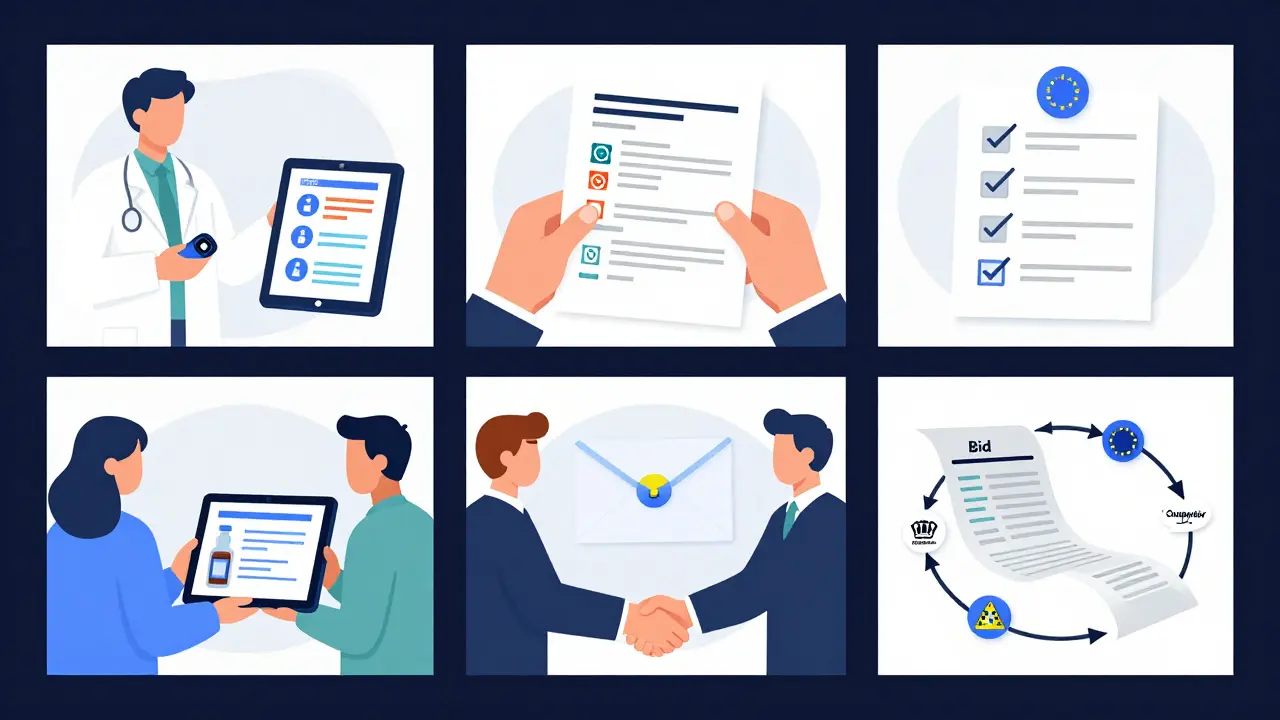
Buying generics through public tendering follows a clear sequence. It’s not random. Here’s how it unfolds:
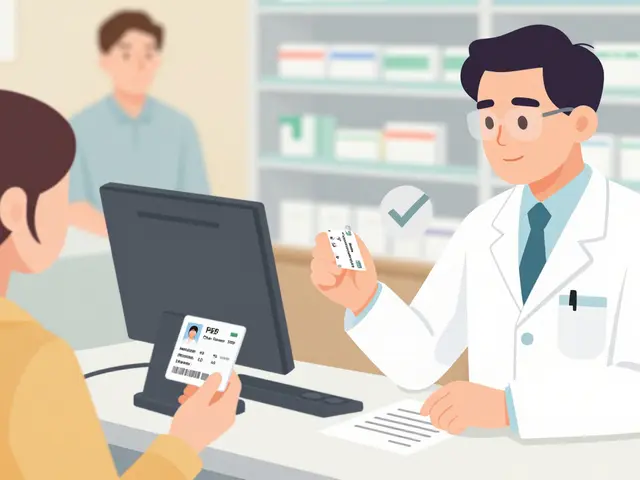
- Register for alerts on Tenders Electronic Daily (TED), the EU’s central online portal. This is where every public contract over €100,000 is published. Missing a notice means missing a chance.
- Review the notice and request the full tender documents. These aren’t simple one-pagers. They include detailed technical specs, required certifications, and evaluation criteria.
- Pass selection by proving you meet legal, financial, and technical requirements. You’ll need proof of financial stability, clean compliance records, and sometimes proof of prior supply to public health systems.
- Submit your bid with both technical and financial proposals. For generics, this means showing batch consistency, shelf life data, and pricing per unit across different volumes.
- Negotiate if needed. Some complex tenders-like those for multi-dose delivery systems or specialty packaging-allow for negotiation. This step is rare for basic generics but common for new formulations.
- Wait for award. The contract is published publicly. If you win, you enter a framework agreement-often lasting 2-4 years-with periodic mini-competitions to adjust quantities and prices.
This system is standardized across the EU, but implementation varies. A tender in Denmark might be fully digital and take 30 days. One in Romania could involve paper submissions and take six months. The difference? Digital readiness. Countries with e-procurement systems in place-like Finland and the Netherlands-see 90%+ of tenders completed online. Others still rely on fax and postal mail.
Types of Tendering Procedures
Not all tenders are the same. The EU offers four main procedures for generic drug procurement:
- Open procedure: Anyone can apply. It’s the most competitive-and the most time-consuming for authorities. About 45% of EU health tenders use this. It works best for simple, well-defined products like paracetamol or amoxicillin.
- Restricted procedure: Suppliers first apply to be pre-qualified. Only those who pass get to submit a full bid. This cuts down paperwork and speeds things up. Around 35% of tenders use this. It’s common for mid-sized purchases like insulin pens or asthma inhalers.
- Competitive Negotiated: Used when the product is complex or the need isn’t fully defined. For example, if a hospital needs a new pediatric formulation with taste-masking technology, they might use this. Only 20% of tenders use this, but it’s growing.
- Framework Agreements: This is where most generic drug buying happens long-term. Authorities pre-select 3-5 suppliers for a category (e.g., oral antibiotics). Then, every time they need a refill, they run a mini-tender among those pre-approved suppliers. It saves time, reduces paperwork, and creates stable revenue for manufacturers.
Multi-supplier frameworks are the gold standard. They prevent monopolies. Single-supplier agreements can lead to price hikes if the supplier has no competition. The European Commission found that multi-supplier frameworks reduced generic drug price inflation by 18% over five years compared to single-source deals.
Why MEAT Beats Lowest Price Only
Many assume the EU picks the cheapest bid. That’s a myth. Since 2022, EU rules require that at least 50% of the evaluation score for any tender over €1 million must be based on non-price factors. That means:
- Quality of manufacturing (GMP certification)
- Supply chain reliability (on-time delivery history)
- Packaging safety (child-resistant, tamper-evident)
- Environmental impact (recyclable packaging, carbon footprint)
- Post-market support (how fast they respond to batch recalls)
A 2023 study by the European Public Procurement Observatory found that authorities using MEAT saw 15.7% more innovation in their drug supplies-like better blister packs, digital dosing reminders, or eco-friendly shipping. In contrast, countries that still used lowest-price-only methods saw higher rates of stockouts and supplier failures.
Dr. Anna De Lillo, a public procurement expert at Bocconi University, put it simply: “Paying 10% more for a supplier who never misses a delivery is cheaper than paying 5% less and having a hospital run out of antibiotics in winter.”
Who Wins and Who Struggles
Large generic manufacturers like Teva, Sandoz, and Mylan dominate the EU market-but not because they’re the cheapest. They win because they’ve mastered the system. They have dedicated teams that monitor TED daily, submit bids in 20+ languages, and track every regulatory change across 27 countries.
Small and medium businesses have a harder time. A 2023 Eurochambres survey found that SMEs spend an average of 117 hours per tender submission. For a small pharmacy chain in Greece, that’s three full weeks of work just to bid on one contract. Many give up. The European Commission estimates 41% of small firms abandon EU tenders because the paperwork is overwhelming.
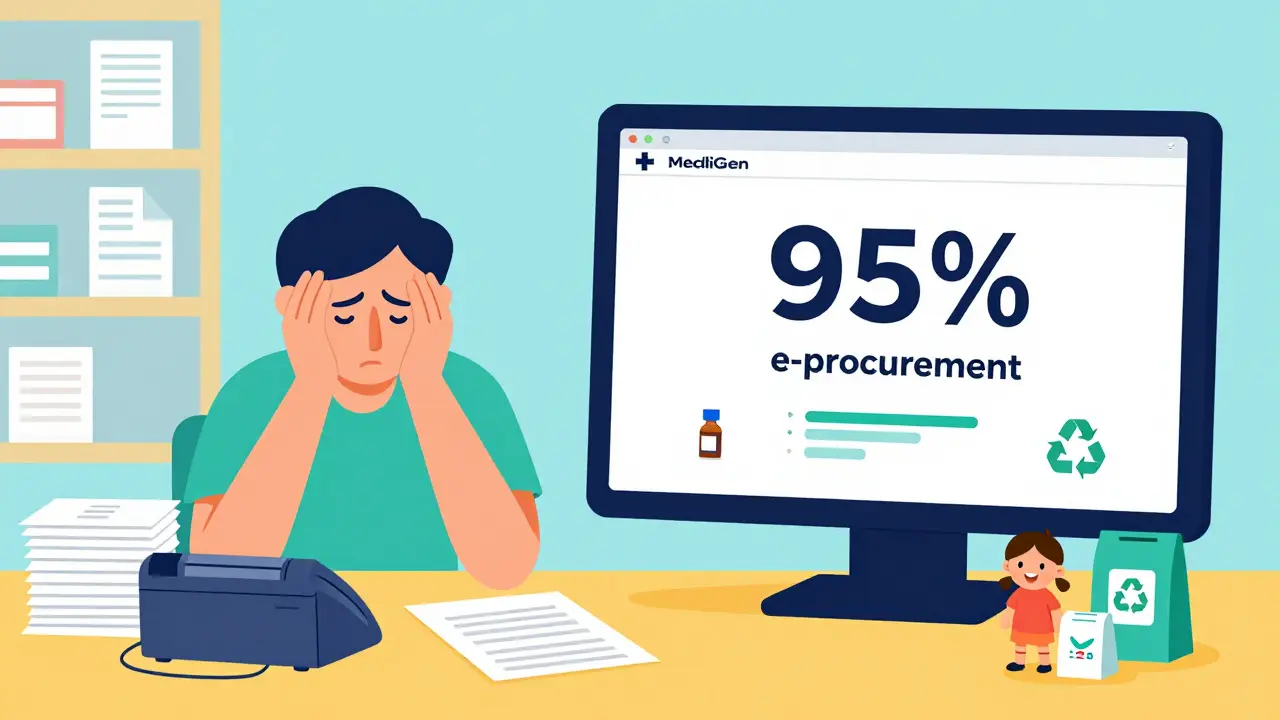
But there are success stories. A Spanish startup called MediGen won a €2 million framework agreement for pediatric syrups after using the Competitive Dialogue procedure. They worked with regional health authorities for six months to refine their formulation-adding flavor options based on child taste tests. The result? A product that reduced medication refusal by 40% in clinics. That’s value beyond price.
Challenges and Changes Ahead
The system isn’t perfect. One major issue? Inconsistent rules. While the EU sets the framework, each country translates it into national law. In some places, authorities still demand excessive financial guarantees-like requiring a company to show €10 million in annual revenue to bid on a €500,000 contract. That’s a violation of the EU’s proportionality rule. The European Court of Justice has ruled against this multiple times.
Another problem? Paperwork. Even with the European Single Procurement Document (ESPD), which replaced 20+ national forms with one digital template, 23% of bids in 2022 were rejected due to incorrect classification under CPV codes (the EU’s product labeling system). A company bidding on “oral antibiotics” might accidentally use the code for “injectable vaccines”-and get disqualified.
The future is digital and green. By 2027, the EU aims for 95% of all tenders to be electronic. AI tools are already being tested in France and Finland to auto-score bids-cutting evaluation time by 30%. Sustainability is rising too. By 2025, 85% of high-value drug tenders will include environmental criteria. That means suppliers will need to prove their manufacturing uses renewable energy, their packaging is recyclable, and their logistics have low emissions.
And there’s a new trend: strategic autonomy. After supply chain disruptions during the pandemic, some EU countries are now favoring suppliers within the bloc-even if they’re slightly more expensive. It’s not protectionism. It’s resilience. If a critical antibiotic is made in Germany, not China, the EU can control its supply better.
What This Means for Patients
At the end of the day, this whole system is about access. The EU spends €2.1 trillion a year on public procurement-about 14% of its GDP. Health care takes up nearly a quarter of that. By using transparent, competitive tendering, European governments keep drug prices low without sacrificing quality. Generic drugs now make up 70% of prescriptions in the EU-and they’re cheaper than in the U.S. or Canada.
Patients don’t see the tendering process. But they benefit from it every time they pick up a prescription for a generic pill that costs €0.15 instead of €1.50. Behind that price difference is a system that values fairness over favoritism, and long-term reliability over short-term savings.
What is the difference between open and restricted tendering in EU generic drug procurement?
Open tendering allows any supplier to submit a bid without prior qualification. It’s transparent but slow, with high administrative load. Restricted tendering lets suppliers apply to be pre-qualified first; only those approved can submit full bids. It’s faster and less burdensome for authorities, but may exclude smaller or new suppliers who don’t have the track record to pass the initial screening.
Why doesn’t the EU always pick the lowest-priced bid for generic drugs?
Because price alone doesn’t guarantee value. A drug that’s 10% cheaper might have inconsistent quality, poor delivery records, or packaging that fails safety standards. Since 2022, EU rules require at least 50% of the evaluation score to be based on non-price factors like reliability, safety, and sustainability. This ensures medicines are not only affordable but also consistently available and safe.
How do small generic manufacturers compete in EU tendering systems?
They focus on niche markets and use Framework Agreements. Instead of bidding for massive national contracts, smaller firms target regional tenders or specialize in hard-to-manufacture formulations-like pediatric liquids or controlled-release tablets. Many also partner with larger distributors to meet financial requirements. The European Single Procurement Document (ESPD) has also cut administrative costs by 40%, making it easier for SMEs to participate.
What role does sustainability play in current EU generic drug tenders?
Sustainability is now a major factor. By 2025, 85% of high-value drug tenders will include environmental criteria such as carbon footprint, recyclable packaging, and energy use in manufacturing. Suppliers must prove their production facilities meet green standards. This isn’t just about ethics-it’s about supply chain resilience. Eco-friendly logistics reduce delays, and sustainable packaging lowers waste disposal costs for hospitals.
Are EU tendering rules the same in every member state?
The core rules are the same because they’re based on EU directives. But each country implements them differently. Some have fully digital systems and clear guidelines; others still rely on paper forms and inconsistent interpretation. This creates uneven experiences for suppliers. The European Commission is pushing for harmonization, especially through the Digital Europe Procurement Accelerator, aiming for 95% electronic tendering by 2027.



sooo... the EU is basically saying 'we dont care if its cheaper if it might break'... wow. thats so naive. like yeah sure, 'reliability' and 'sustainability'... but who pays for that? the taxpayer. and dont get me started on how many times these 'eco-friendly' packages end up in landfills anyway. i mean come on. 50% non-price factors? that's just a fancy way of saying 'lets make everything more expensive under the guise of virtue'. dumb.
Honestly? I'm kind of moved by this. I work in a clinic that's had stockouts before, and let me tell you-nothing feels worse than telling a patient, 'I'm sorry, we're out.' The idea that someone is actually thinking about delivery reliability, packaging safety, even *child taste tests*? That’s not bureaucracy. That’s care. It’s not perfect, but it’s trying. And that matters.
omg this is actually kinda cool?? i didnt know the eu did this stuff so thoughtfully 😍 like whoa-mini-competitions within framework agreements?? that’s genius. and the part about pediatric syrups with taste tests?? that’s next level. i feel like we could learn a LOT from this back home. maybe if we stopped just chasing lowest price we’d actually have fewer crises?? 🤔
While the article presents a compelling case for the MEAT methodology, it is important to acknowledge the structural disparities in implementation across member states. The digital divide is not merely a logistical issue-it is a systemic inequity. SMEs in regions with underdeveloped e-procurement infrastructure are effectively excluded, regardless of product quality. Harmonization must be accompanied by targeted investment in digital capacity-building, not just regulation.
i just think it's cool that they're trying to do the right thing. not always the cheapest, but the best overall. makes sense. if your medicine runs out every month, you're not saving money-you're just making people sick. and i love that they care about packaging and the environment too. small stuff adds up. 🙌
Let us not be misled by the rhetoric. The MEAT framework is not a triumph of efficiency-it is an elaborate cost-shifting mechanism. By embedding non-price criteria with subjective weightings, authorities create opaque benchmarks that favor established conglomerates with legal teams and compliance departments. The 41% abandonment rate among SMEs is not a failure of effort-it is a feature of the system. This is not transparency. It is institutionalized gatekeeping dressed in green packaging.
okay but the part about taste-tested pediatric syrups?? i cried. like actual tears. who even THOUGHT of that?? and then they won a 2 million euro contract?? that’s literally the most beautiful thing i’ve heard all year. someone cared enough to ask kids what flavor they liked and then MADE IT HAPPEN. i’m so emotional. also the part where they don’t just pick the cheapest? YAS QUEEN. we need more of this in the US. like RIGHT NOW.
you all think this is good? it's just another way to make the rich richer. big pharma already owns this system. they have teams of lawyers and translators. small guys? they get buried under paperwork. this isn't fairness. it's a tax on being small. and don't even get me started on the 'sustainability' crap. they just want you to pay more for plastic that says 'recyclable' on it.
Interesting. I wonder if the 18% price inflation reduction from multi-supplier frameworks would hold up if we looked at countries that also incentivize local manufacturing. And what about the environmental metrics-are they standardized across borders? Or is a 'low carbon footprint' in France measured differently than in Poland? Just thinking out loud…