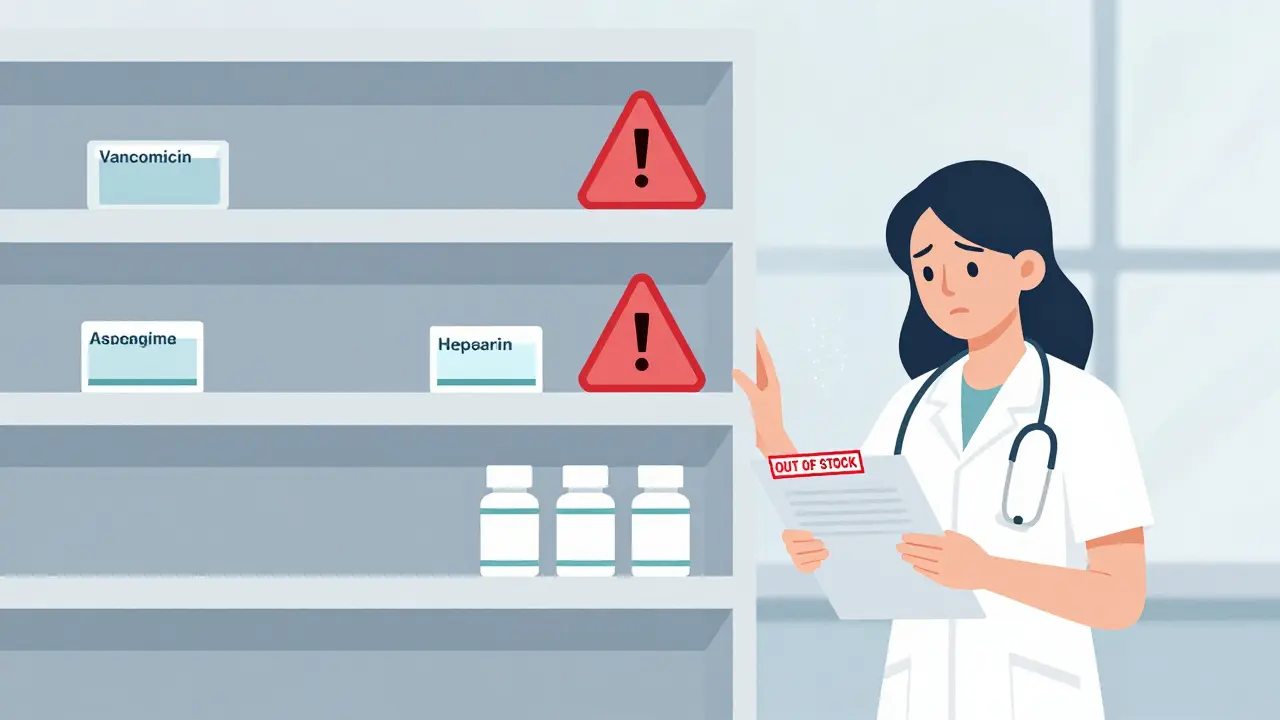
When a patient needs a life-saving drug and it’s simply not there, the consequences aren’t theoretical-they’re immediate, personal, and sometimes fatal. In 2025, more than 250 medications remain in short supply across the U.S., forcing doctors to make impossible choices: delay treatment, substitute a less effective drug, or tell a patient to wait. This isn’t a rare glitch. It’s the new normal in American healthcare.
What’s Actually Missing?
It’s not just one or two obscure drugs. The shortages hit the most critical medicines patients rely on every day. Antimicrobials like vancomycin and cefazolin are running low, making it harder to treat infections after surgery or in ICU patients. Oncology drugs such as asparaginase and nelarabine-essential for childhood leukemia-are often unavailable for weeks or months at a time. Even basic medications like heparin (used to prevent blood clots during surgery) and IV saline bags have been in short supply for years.
According to the American Society of Health-System Pharmacists (ASHP), 72% of these shortages started in 2022 or later. Pediatric hospitals are hit hardest-25% more than general hospitals-because children often need specialized doses that manufacturers don’t produce in bulk. A child with cancer might wait 10 days for their next dose of asparaginase. That delay can mean the difference between remission and relapse.
How Shortages Directly Harm Patients
When a drug isn’t available, patients don’t just wait. They suffer.
A 2024 analysis by the National Institutes of Health found that drug shortages caused a 43% spike in medication errors. Why? Because pharmacists are forced to substitute drugs that aren’t quite the same. A patient given lorazepam instead of midazolam for seizure control might not respond the same way. A cardiac patient switched from heparin to an alternative anticoagulant could face longer surgery times and higher bleeding risks.
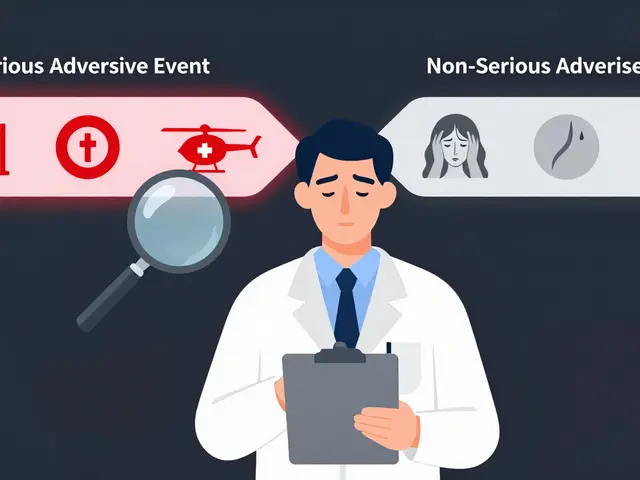
One in three pharmacy directors reported adverse events directly tied to shortages. In some cases, patients missed treatments entirely. Outpatient infusion centers saw 41% of scheduled treatments delayed or skipped. People with chronic pain couldn’t fill opioid prescriptions. Cancer patients skipped doses because they couldn’t afford the alternative. One study found patients paid 18.7% more out-of-pocket during shortages-not because the drug got pricier, but because they had to buy less effective versions or pay for extra doctor visits.
And then there are the cancellations. About 65% of hospitals reported procedures being postponed or canceled because the needed drug wasn’t in stock. Imagine being scheduled for heart surgery, then being told three days before: “We don’t have the anesthetic.” That’s not a hypothetical. It’s happening right now.
Why Does This Keep Happening?
It’s not bad luck. It’s broken economics.
Eighty-three percent of shortages involve generic drugs-medications that cost pennies but are made by companies with razor-thin profit margins. When a manufacturer’s plant fails an FDA inspection, or when a key ingredient from overseas gets stuck in customs, there’s no financial incentive for another company to jump in and fill the gap. Making a $0.10 pill isn’t worth the risk or the paperwork.
Supply chains are fragile. Nearly half of all shortages trace back to global manufacturing issues. A single factory in India or China that produces 70% of the world’s heparin can shut down for months due to quality control problems-and suddenly, every hospital in America is scrambling.
Even when alternatives exist, switching isn’t simple. Hospitals spend 15 to 20 hours per week, per shortage, training staff, rewriting protocols, and updating electronic systems. Pediatric facilities need even more time. One study found it took an average of 47 staff hours just to switch from one drug to another-without any guarantee the new drug works as well.
The Human Cost Behind the Numbers
Behind every statistic is a person.
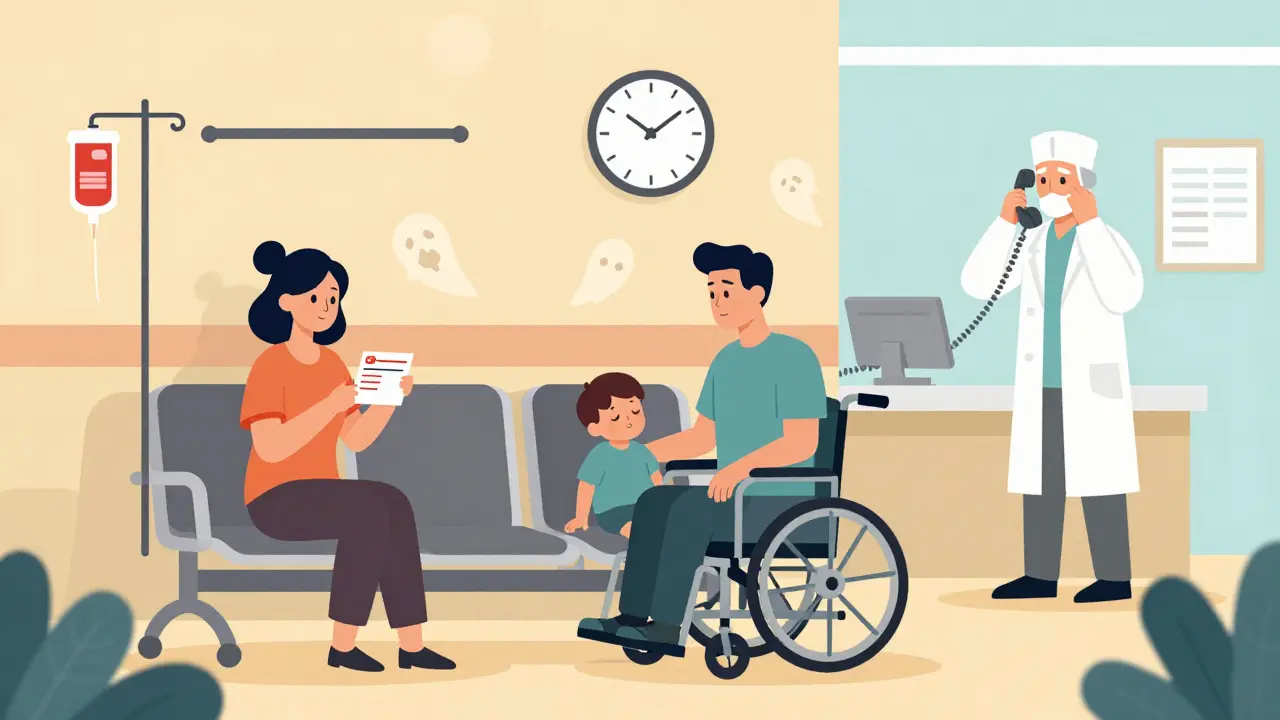
A mother whose 5-year-old with leukemia missed a treatment cycle because asparaginase wasn’t available. A man with sepsis who had to wait three days for antibiotics, worsening his condition. An elderly patient with atrial fibrillation who couldn’t get his blood thinner and ended up in the ER with a stroke. A cancer patient who had to drive 90 miles to find a pharmacy that still had the drug-and paid $400 out of pocket because insurance wouldn’t cover the substitute.
These aren’t isolated cases. The American Hospital Association says 99% of hospital pharmacists faced shortages in 2023. Eighty-five percent called them critically or moderately impactful. And yet, most patients never hear why their medication is late. They just feel ignored.
What’s Being Done-and Why It’s Not Enough
The FDA now requires manufacturers to report potential shortages six months in advance. That’s a step forward. But it’s still reactive. Many shortages still catch hospitals off guard.
Group purchasing organizations like Vizient have helped hospitals avoid $300 million in inventory costs since 2023 by pooling orders and sharing inventory. Some hospitals now use AI tools to predict shortages before they happen. But these are bandaids on a broken system.
Real solutions require structural change: financial incentives for manufacturers to produce low-margin generics, diversification of global supply chains, and federal funding to build domestic production capacity for critical drugs. Right now, the U.S. relies on foreign countries for 80% of its active pharmaceutical ingredients. That’s not resilience-it’s risk.
Some hospitals have started stockpiling key drugs. But that’s expensive and unsustainable. What happens when the next shortage hits-and the stockpile runs out?
What Patients Can Do
You can’t fix the system alone. But you can protect yourself.
- Ask your doctor: Is this medication in short supply? If so, what are the alternatives?
- Call your pharmacy ahead of time to check availability before making a trip.
- If your prescription is delayed, ask if your insurance covers a therapeutic substitute.
- Keep a list of all your medications-including doses and why you take them-and share it with every provider.
- Report delays or refusals to fill prescriptions to your state pharmacy board. Your voice matters.
Don’t assume your doctor knows what’s available. Many don’t. Pharmacists are the frontline in this crisis-and they’re overwhelmed.
The Bottom Line
Drug shortages aren’t a supply chain issue. They’re a patient safety crisis.
Every time a medication is unavailable, someone’s care is compromised. Every delay, substitution, or cancellation carries risk. And while the number of active shortages has dropped slightly-from 323 in early 2024 to 253 by mid-2025-it’s still far above pre-pandemic levels. The system is still broken.
Until manufacturers are paid fairly to make essential drugs, until supply chains are diversified, and until hospitals aren’t left to manage this chaos alone, patients will keep paying the price-in pain, in risk, and in lost time.
This isn’t about politics. It’s about whether a child with cancer gets their next dose. Whether a senior gets their heart medication. Whether a mother can bring her baby home from the hospital without a preventable infection.
These aren’t abstract problems. They’re happening right now. And they’re preventable-if we choose to act.


Been there. My mom had to wait six weeks for her heparin last year. They gave her a cheaper substitute that made her bruise like a grape. She didn’t complain, but I saw her wincing every time they checked her IV site. This isn’t just about supply chains-it’s about people being treated like afterthoughts.
Let’s be real: this is what happens when you outsource everything to the lowest bidder-and then wonder why your healthcare system is crumbling. We import 80% of our active pharmaceutical ingredients? That’s not globalization-it’s national suicide. We need to bring production back, invest in domestic manufacturing, and stop pretending that $0.10 pills don’t deserve a stable supply chain.
And yes, I’m talking to you, Congress. Stop handing out tax breaks to Big Pharma while hospitals scramble for saline bags.
Stop acting like this is new. It’s been building for 20 years. The FDA’s approval process is a joke-overly strict on paperwork, zero accountability for shortages. And don’t get me started on how generics are treated like disposable commodities. A $0.05 pill saves lives. Why aren’t we paying manufacturers to make it reliably? Because profit > people. Again.
And no, ‘AI predictions’ and ‘group purchasing’ won’t fix this. You need a federal mandate, funding, and penalties for manufacturers who don’t report delays. Not bandaids. Real policy.
Oh wow, a 2025 article about drug shortages? Groundbreaking. Next you’ll tell me the sky is blue and water is wet. We’ve known this for a decade. But hey, at least the media finally noticed. Maybe next time they’ll cover how insurance companies refuse to cover substitutes because ‘it’s not the brand name.’
Also, who wrote this? A hospital admin trying to sound woke? The real villain isn’t India-it’s the CEOs who think ‘cost-cutting’ means ‘let patients die quietly.’
I work in oncology. I’ve watched kids wait for asparaginase. I’ve held their hands while their parents cried because the pharmacy said ‘no stock for three weeks.’ It’s not just the drugs-it’s the silence after. No one tells you why it’s delayed. No one apologizes. You just get a note: ‘Treatment postponed.’
And then you go home and Google ‘what happens if you miss a chemo cycle’ at 2 a.m. That’s the real trauma. Not the shortage. The invisibility.
THIS IS A COVER-UP. The FDA, Big Pharma, and the WHO are ALL IN ON THIS. They want you dependent on expensive, patented drugs so they can keep raking in billions. The shortages? Fake. Just to scare you into buying the $2,000 version instead of the $0.10 one. They even poison the supply chains themselves to create panic. Watch the videos-there are hidden cameras in the factories. The government knows. They just don’t care.
Also, saline bags? That’s not a shortage. That’s a mind-control tactic. They’re making you thirsty so you’ll buy their bottled water with ‘electrolytes.’ It’s all connected.
Ok but like… why are we still surprised? We live in a country where you can’t get a decent coffee without a 10-minute wait, but we expect life-saving meds to just appear? 😅
Also, I called my pharmacy yesterday for my thyroid med-out of stock. They said ‘try the one down the street.’ I drove 20 miles. They had it. Cost $120. Insurance didn’t cover it. I cried in the parking lot. Then I bought a latte. Because self-care, right?
It’s the immigrants. That’s why. 70% of these drugs come from China and India. We let them build factories here while our own workers get laid off. We don’t need foreign labs. We have the best scientists in the world. Build it here. Hire Americans. Pay them fairly. Stop outsourcing our medicine like it’s a damn T-shirt.
And stop blaming the FDA. They’re doing their job. The problem is weak leadership. We need a president who puts America first. Not some PhD in a lab coat who thinks ‘global supply chains’ are cool.
Ah yes, the tragedy of the commons meets the tyranny of capitalism. The system doesn’t fail because it’s broken-it fails because it’s working exactly as designed. Profit is maximized when scarcity is engineered. A $0.10 pill? Too low-margin. Too human. Too inconvenient.
So we let children wait. We let elders die. We let nurses cry in supply closets. All because we’ve reduced life to a spreadsheet. The real question isn’t ‘how do we fix this?’
It’s: when did we stop caring enough to try?
Bro. I work in pharma logistics. Let me tell you-this isn’t about ‘manufacturing.’ It’s about the fact that nobody wants to touch generics anymore. Why? Because the paperwork is a nightmare, the margins are zero, and if one batch fails, you’re fined $2M. Meanwhile, someone in Bangalore is making 500M tablets in a warehouse with no AC.
And yes, I cried last week when I saw a nurse cry because she couldn’t get midazolam for a seizure patient. I sent her a 🥺 emoji. She replied: ‘Thanks. I needed that.’
That’s our system now. Emojis as emotional PPE.
I’ve been a nurse for 22 years. I’ve seen this cycle. Every few years, it’s vancomycin. Then heparin. Then saline. Then asparaginase. And every time, we scramble. Every time, we make do. Every time, we lie to families and say ‘it’ll be here soon.’
But here’s the thing-I’m tired. Not just physically. Spiritually. We’re not just nurses. We’re grief counselors, pharmacists, and miracle workers all rolled into one. And no one’s paying us to be superheroes.
Maybe it’s time we stopped pretending we’re okay with this.
My cousin’s 8-year-old got leukemia last year. They were out of asparaginase for 11 days. She had to get it from a hospital 3 states away. Insurance denied it. We raised $8K on GoFundMe. She’s in remission now. But I still have nightmares about the day they told us ‘we don’t have it.’
People think this is about money. It’s not. It’s about dignity. About not having to beg for your kid’s life.
Wait, so you’re saying hospitals don’t have enough drugs? What’s next? Air is running out? 😂
Just kidding. But seriously-why don’t people just buy extra? Like, stockpile it? I keep 3 months of my blood pressure meds in my closet. It’s called being prepared. Not everyone is this lazy.
It’s not the shortage. It’s the lack of regulatory enforcement. The FDA knows which plants are unsafe. They know which companies are cutting corners. But they don’t penalize them. Why? Because the same corporations fund their lobbying. This is a captured agency. And the cost? Human lives.
Transparency is not enough. Accountability is. Name the manufacturers. Fine them. Shut them down. Then rebuild with public investment.
Look. I’m not a doctor. But I’ve read the news. And I know this: if you’re poor, you’re dead. If you’re old, you’re dead. If you’re a child, you’re dead. This isn’t a ‘crisis.’ It’s a eugenics program disguised as healthcare policy.
And the people writing these articles? They’re the same ones who send their kids to private hospitals with 24/7 drug access. They don’t care. They just want you to feel guilty for not being ‘prepared.’
Wake up. This isn’t an accident. It’s intentional.
Yeah, I saw your post about stockpiling meds. That’s not a solution. That’s a privilege. Most people can’t afford to buy 6 months of insulin upfront. Or they’re on Medicaid and can’t get more than a 30-day supply. This isn’t about laziness. It’s about systemic injustice.