Licorice Interaction & Risk Calculator
Risk Assessment
Potential Symptoms to Watch:
- None expected for this configuration.
Recommendation:
Proceed with caution if consuming real licorice regularly. Consult your doctor.
That sweet, chewy stick of candy you grab at the checkout counter might be doing more than just satisfying a sugar craving. For many people, it’s completely harmless fun. But if you take certain prescription medications, that innocent treat could quietly disrupt your health in ways you never expected. The culprit isn’t the sugar or the dye-it’s a compound called glycyrrhizin, found in real licorice root.
We often think of drug interactions as something that happens when we mix two pills. We rarely consider that a common food item can act like a powerful drug modifier. Licorice is one of those rare cases where a traditional flavoring agent has potent pharmacological effects. It doesn’t just sit in your stomach; it changes how your body handles hormones, electrolytes, and other medications. Understanding this connection isn’t about fear-mongering-it’s about staying safe while enjoying what you love.
The Hidden Mechanism: How Licorice Affects Your Body
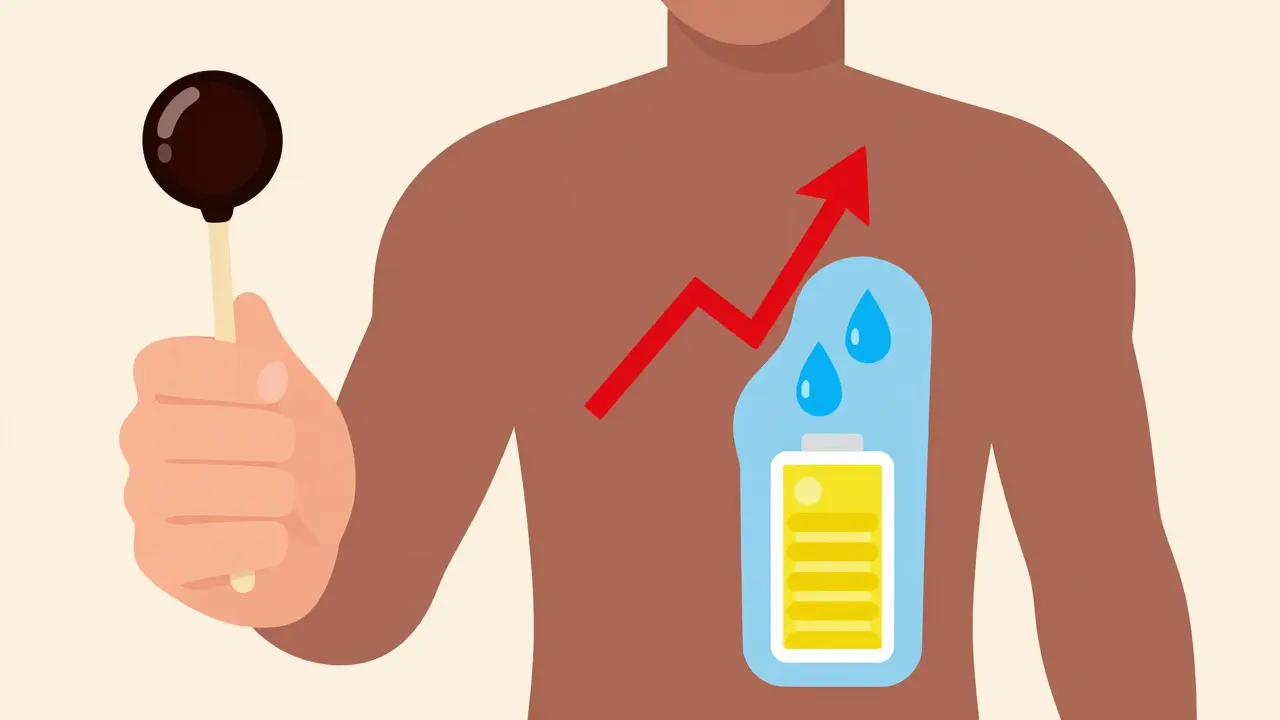
To understand why licorice interacts with drugs, we need to look at what Glycyrrhiza glabra, the plant source of true licorice, does inside you. The active ingredient, glycyrrhizin, inhibits an enzyme called 11β-hydroxysteroid dehydrogenase type 2. This might sound like complex biology, but the result is simple and significant.
When this enzyme is blocked, your body accumulates cortisol, a stress hormone. Normally, that enzyme breaks down cortisol so it doesn’t overactivate mineralocorticoid receptors. When it doesn’t break down, cortisol mimics aldosterone, a hormone that controls salt and water balance. This leads to three main problems:
- Sodium retention: Your body holds onto salt.
- Potassium excretion: Your kidneys flush out potassium.
- Fluid retention: Extra fluid builds up in your tissues.
This combination causes blood pressure to rise and potassium levels to drop-a condition known as pseudoaldosteronism. The European Food Safety Authority (EFSA) set a safe upper limit of 100 mg of glycyrrhizin per day for healthy adults. However, individual sensitivity varies wildly. Some people develop symptoms after just a few days of moderate consumption, while others tolerate more. The threshold for adverse effects is generally considered to be consuming more than 100 mg of glycyrrhizin daily for longer than two to four weeks.
Real Licorice vs. Anise Flavored Candy
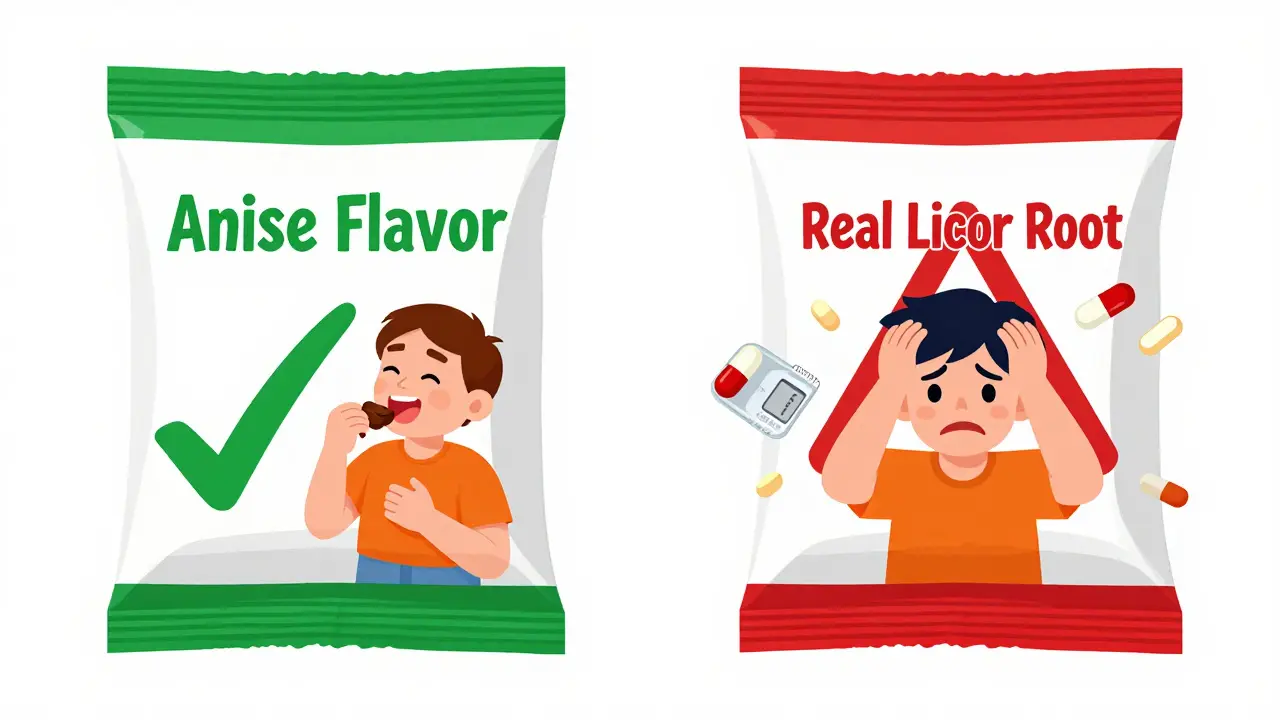
Here is the first big trap: not all "licorice" contains licorice root. In the United States and many other regions, much of the black licorice candy sold is actually flavored with anise oil, which comes from the aniseed plant. Anise tastes similar to licorice but contains no glycyrrhizin. It does not cause these dangerous interactions.
If you are buying traditional black licorice, especially imported varieties or herbal supplements, you are likely getting the real deal. Traditional black licorice candy typically contains 0.5% to 2% glycyrrhizin by weight. Herbal supplements can contain between 4% and 24%, and medicinal extracts may reach even higher concentrations. Always check the label. If it lists "licorice root extract" or "glycyrrhizin," proceed with caution. If it lists "anise oil" or "anise flavor," you are generally safe from these specific interaction risks.
| Product Type | Glycyrrhizin Content | Risk Level | Common Use |
|---|---|---|---|
| Anise-Flavored Candy | 0% | Low | Candy stores, general snacking |
| Traditional Black Licorice | 0.5% - 2% | Moderate to High | Candy, chewing tobacco flavoring |
| Deglycyrrhizinated Licorice (DGL) | < 1% | Low | Digestive health supplements |
| Herbal Supplements/Extracts | 4% - 24%+ | Very High | Alternative medicine, teas |
Medications That Clash with Licorice
Licorice doesn’t interact with every drug, but it poses serious risks when combined with specific classes of medications. The danger lies in both pharmacodynamic interactions (where licorice amplifies or opposes the drug’s effect on the body) and pharmacokinetic interactions (where licorice changes how the liver processes the drug).
Diuretics and Blood Pressure Medications
This is the most dangerous pairing. Diuretics, particularly thiazide and loop diuretics like hydrochlorothiazide or furosemide, work by helping your body eliminate excess fluid and sodium. They also cause potassium loss. Licorice accelerates potassium loss through a different mechanism. When you combine them, your potassium levels can plummet dangerously low, a condition called hypokalemia.
Low potassium can lead to muscle weakness, fatigue, irregular heartbeats, and in severe cases, cardiac arrest. Additionally, because licorice raises blood pressure, it directly counteracts antihypertensive drugs like lisinopril or amlodipine. You might find your blood pressure readings spiking despite taking your medication correctly. A documented case involved a man whose blood pressure jumped from a stable range to 205/110 mmHg after consuming licorice while on fludrocortisone.
Corticosteroids
Drugs like prednisone, dexamethasone, and cortisone already have mineralocorticoid effects. Adding licorice acts like pouring gasoline on a fire. The risk of severe hypertension, fluid retention, and electrolyte imbalance increases dramatically. Patients on long-term steroid therapy should strictly avoid licorice root products unless explicitly approved by their doctor.
Digoxin and Heart Failure Medications
Digoxin is used to strengthen heart contractions and control heart rate. It requires precise potassium levels to work safely. Low potassium makes digoxin toxic. Since licorice lowers potassium, it indirectly increases the risk of digoxin toxicity, which can cause nausea, vision disturbances, and dangerous arrhythmias.
Blood Thinners (Warfarin and Others)
The interaction here is complex and less predictable. Some studies suggest licorice may inhibit liver enzymes that metabolize warfarin, potentially increasing its effect and raising bleeding risk. Other reports show contradictory effects, possibly due to varying constituents in different licorice products. Because the margin for error with blood thinners is so small, any change in diet-including adding licorice-should trigger immediate INR monitoring.
CYP450 Substrates
Licorice contains compounds that can affect cytochrome P450 enzymes, the liver’s primary tool for breaking down drugs. While recent studies (such as PMC9900865 in 2023) suggest that standardized extracts may not cause clinically relevant CYP interactions, older research and anecdotal evidence warn of potential issues with drugs like tacrolimus, cyclosporine, and certain statins. The variability in licorice products means you cannot rely on a single study to guarantee safety. Caution is advised if you take narrow-therapeutic-index drugs.
Symptoms to Watch For
You don’t need a blood test to know something is wrong. Your body will send signals. If you consume licorice regularly and start experiencing any of the following, stop immediately and consult your healthcare provider:
- Severe headache: Often a sign of rising blood pressure.
- Muscle weakness or cramps: Classic signs of low potassium.
- Fatigue and lethargy: Resulting from electrolyte imbalances.
- Swelling in legs or feet: Due to fluid retention.
- Rapid heartbeat or palpitations: Potentially linked to hypokalemia or hypertension.
- Confusion or irritability: Can stem from severe electrolyte shifts.
In extreme cases, untreated hypokalemia can lead to paralysis or respiratory failure. Hypertension induced by licorice can contribute to stroke or heart attack. These are not minor side effects; they are medical emergencies.
Safe Alternatives and Management Strategies
If you love the taste of licorice but must avoid glycyrrhizin, you have options. First, switch to anise-flavored candies. They provide the same nostalgic flavor profile without the pharmacological risks. Second, consider Deglycyrrhizinated Licorice (DGL). DGL is processed to remove most of the glycyrrhizin, leaving behind compounds that are often used to soothe digestive issues like acid reflux. DGL is generally safe for people who need to avoid licorice’s blood pressure effects, but always verify the product claims.
If you choose to consume real licorice, follow these guidelines:
- Limit duration: Do not consume licorice daily for more than one to two weeks.
- Monitor intake: Stay well below the 100 mg glycyrrhizin daily limit. For context, 50 grams of strong traditional licorice candy can contain close to this limit.
- Check labels: Look for "glycyrrhizin" or "licorice root extract." Avoid products that do not disclose ingredients clearly.
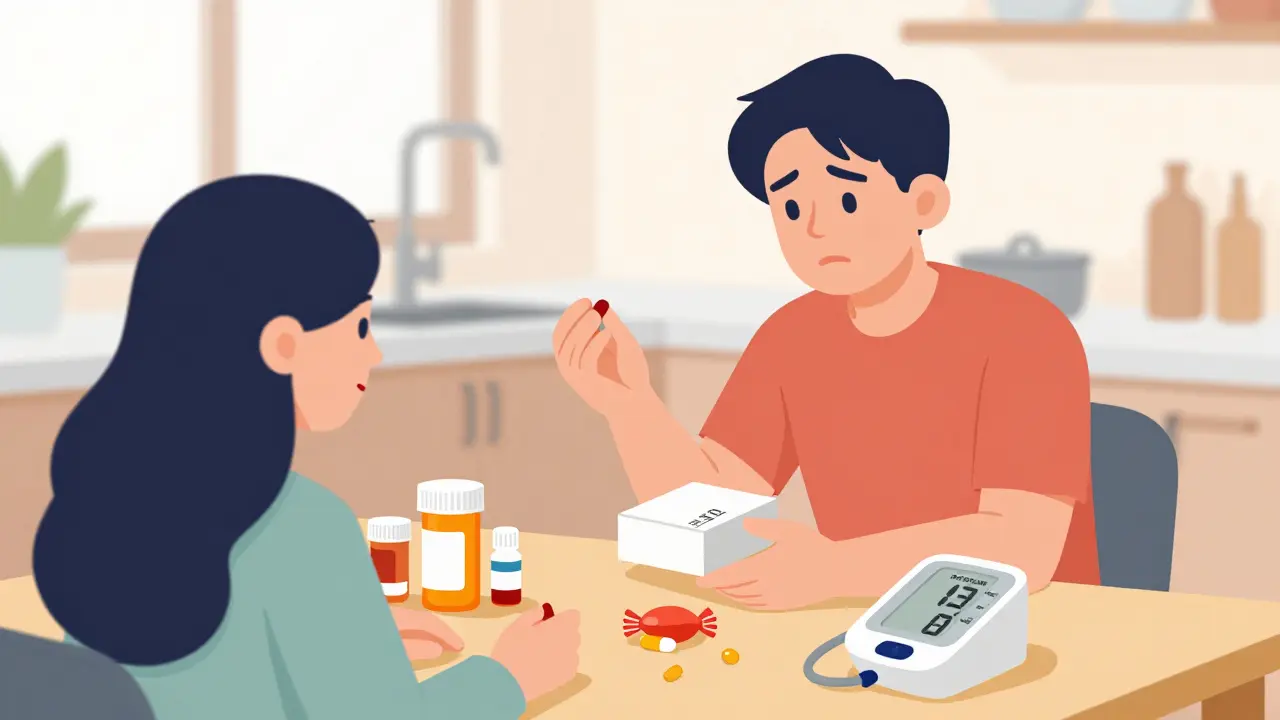
- Consult your pharmacist: Bring your medication list to a pharmacy. Ask specifically, "Does my medication interact with licorice root?" Pharmacists are trained to spot these interactions, though awareness varies.
- Monitor vitals: If you must use licorice-containing products, check your blood pressure weekly and discuss periodic potassium blood tests with your doctor.
Regulatory Landscape and Consumer Awareness
Despite the known risks, consumer awareness remains low. A 2022 survey by ConsumerLab.com found that 68% of licorice supplement users were unaware of potential drug interactions. In the U.S., the FDA classifies licorice as "Generally Recognized As Safe" (GRAS), but this designation applies to typical dietary use, not excessive consumption or use alongside interacting medications. The FDA does not mandate warning labels on candy, unlike the UK Food Standards Agency, which requires warnings for products containing significant amounts of glycyrrhizin.
This regulatory gap puts the burden on the consumer. You cannot assume that because a product is sold in a grocery store, it is safe for everyone. The global licorice market continues to grow, with dietary supplements comprising a large portion. As demand rises, so does the potential for adverse events. The American Herbal Pharmacopoeia has proposed mandatory glycyrrhizin quantification on all product labels by 2026, which would help consumers make informed choices. Until then, vigilance is your best protection.
Can I eat black licorice candy if I have high blood pressure?
It is strongly discouraged. Real black licorice contains glycyrrhizin, which can raise blood pressure significantly by causing sodium and fluid retention. Even small amounts can interfere with blood pressure medications. Opt for anise-flavored alternatives instead.
How much licorice is too much?
The European Food Safety Authority recommends limiting glycyrrhizin intake to 100 mg per day. This is roughly equivalent to 50 grams of traditional black licorice candy with 2% glycyrrhizin content. Consuming more than this for extended periods (over 2-4 weeks) increases the risk of serious side effects like hypertension and low potassium.
Is Deglycyrrhizinated Licorice (DGL) safe with medications?
Yes, DGL is generally safer because the glycyrrhizin has been removed. It is commonly used for digestive health and does not carry the same risks of blood pressure elevation or potassium depletion. However, always consult your doctor before starting any new supplement.
Does anise-flavored licorice cause drug interactions?
No. Anise-flavored licorice does not contain glycyrrhizin. It is made from anise oil and does not have the pharmacological effects associated with real licorice root. It is safe to consume with most medications.
What are the symptoms of licorice-induced hypokalemia?
Symptoms include muscle weakness, cramps, fatigue, constipation, and irregular heartbeat. In severe cases, it can lead to paralysis or cardiac arrest. If you experience these symptoms after eating licorice, seek medical attention immediately.