For decades, Metformin is the most widely prescribed medication for type 2 diabetes worldwide. It sits on the counter of nearly every pharmacy and in the pill bottles of millions. But despite its ubiquity, fear still surrounds it. You’ve likely heard the whispers: "It ruins your stomach," "It steals your energy by draining Vitamin B12," or "It’s too old-fashioned for modern medicine." These fears often lead people to skip doses or switch to more expensive drugs prematurely. The reality is far less dramatic and much more manageable. Metformin remains the gold standard not just because it works, but because we finally understand how to use it correctly.
The gap between what patients experience and what science shows us is huge. Most negative stories stem from how the drug was started, not the drug itself. When you separate the myths from the clinical facts, a clear picture emerges. This isn’t about blind faith in a pill; it’s about understanding the mechanics of tolerability, monitoring specific nutrients like Vitamin B12 is a crucial nutrient that can be depleted by long-term metformin use., and recognizing the proven benefits of long-term therapy. Let’s break down exactly what happens when you take this medication and how to stay on top of it.
Key Takeaways
- Gastrointestinal side effects are common at the start but drop significantly with gradual dose increases or switching to extended-release formulations.
- Vitamin B12 deficiency affects up to 30% of long-term users, but regular testing and simple supplementation prevent serious complications.
- Lactic acidosis is extremely rare and typically only occurs in patients with severe kidney or liver failure who should not be taking the drug anyway.
- Metformin promotes modest, durable weight loss (2-3%) over time, unlike many other diabetes medications that cause weight gain.
- Starting low and going slow is the single most effective strategy for improving tolerability and staying on the medication long-term.
The Gut Truth: Separating GI Side Effects from Permanent Damage
The biggest hurdle for anyone starting metformin is the gut. If you have ever taken this medication, you know the reputation. Diarrhea, nausea, and abdominal cramping are the classic complaints. A 2022 meta-analysis published in Frontiers in Endocrinology looked at 71 randomized controlled trials and found that metformin users had a 50% higher risk of abdominal pain compared to those on placebo. That sounds scary, but context matters immensely. These symptoms are usually acute, meaning they happen early in treatment and fade away.
The Diabetes Prevention Program (DPP), a landmark study followed participants for 15 years, showed that while 28% of people reported GI symptoms initially, these numbers dropped drastically over time. By the later years of the study, the difference between the metformin group and the placebo group vanished. Your body adapts. The issue isn’t that metformin permanently damages your digestive system; it’s that introducing it too quickly shocks the system.
Here is where the formulation makes all the difference. Immediate-release (IR) tablets dissolve quickly, dumping the medication into your system all at once. Extended-release (XR) tablets dissolve slowly over hours. A retrospective chart review showed that when patients switched from IR to XR, adverse events dropped from 26.34% to 11.71%. Diarrhea specifically cut in half, falling from 18.05% to 8.29%. If you are struggling with the immediate-release version, the solution is rarely stopping the drug-it’s switching to the XR version and taking it with your largest meal of the day, usually dinner.
Consider the experience of 'Type2Warrior87' from online diabetes communities. He started on 500mg of immediate-release metformin and suffered terrible diarrhea for two weeks. His doctor didn’t tell him to quit; they switched him to 500mg XR once daily with dinner. Six months later, he had zero issues. This is the standard pattern. About 4% of people discontinue metformin due to side effects, but many of those could have been retained with better initial management strategies.
Vitamin B12: The Silent Risk Factor
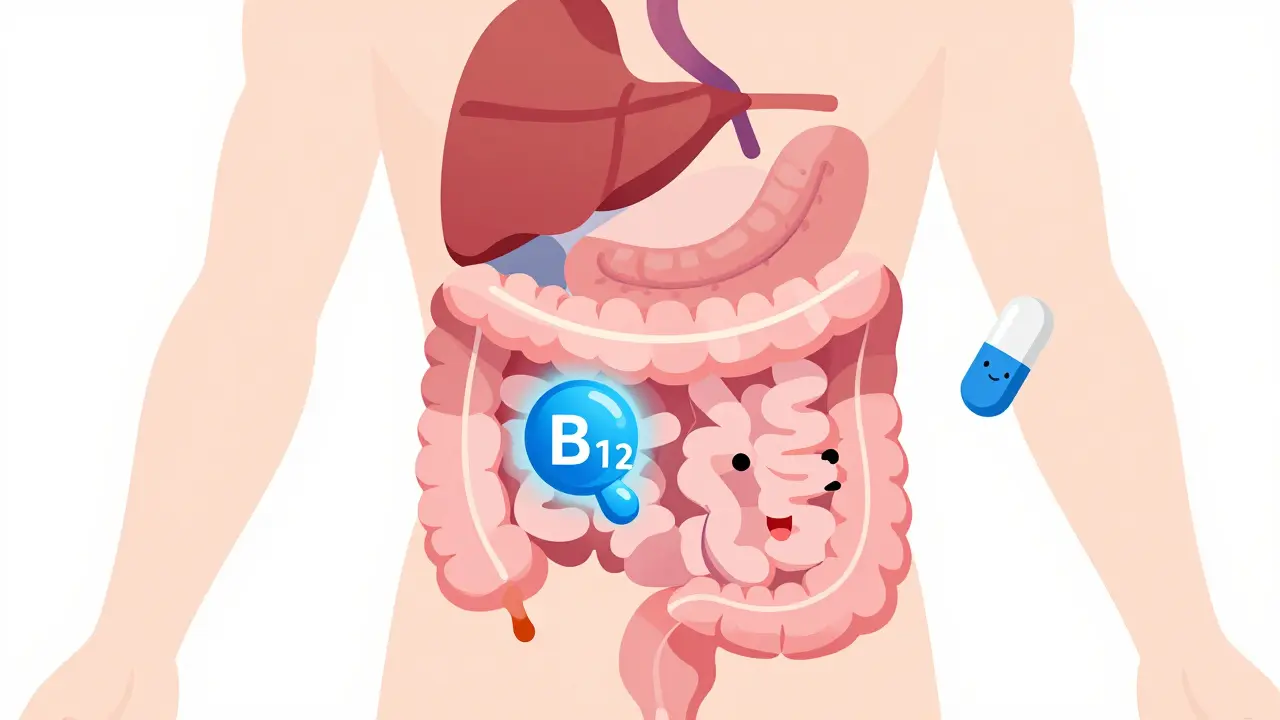
If there is one legitimate concern that requires active management, it is Vitamin B12 is essential for nerve health and red blood cell production. Metformin interferes with the absorption of Vitamin B12 in the ileum, the final section of the small intestine. This doesn’t happen overnight. It is a slow creep that takes years to manifest as a clinical problem.
A 2020 systematic review in the Journal of Clinical Medicine found that taking metformin for 4 to 12 years resulted in a 19% reduction in Vitamin B12 levels compared to controls. The American Diabetes Association (ADA) notes that deficiency can occur in up to 10-30% of long-term users. Why does this matter? Low B12 causes neuropathy (nerve damage) and anemia. Since diabetics already risk nerve damage from high blood sugar, adding B12 deficiency on top of that creates a confusing clinical picture. You might think your diabetes is getting worse, when actually your B12 is just low.
The good news? This is entirely preventable. The ADA recommends periodic measurement of Vitamin B12 levels in patients taking metformin, especially if you have signs of anemia or neuropathy. The European Medicines Agency suggests checking levels every 2 to 3 years. If your levels drop, you don’t need to stop metformin. You simply supplement. Oral B12 supplements are cheap and effective. In some cases, doctors may recommend sublingual (under-the-tongue) B12 to bypass the gut absorption issue entirely. Do not let fear of B12 deficiency keep you off a life-saving medication. Monitor it, and fix it if needed.
| Feature | Immediate Release (IR) | Extended Release (XR) |
|---|---|---|
| Dosing Frequency | Usually twice daily | Once daily (often at bedtime) |
| GI Side Effect Risk | Higher (up to 26% in some studies) | Lower (reduced by ~32-50%) |
| Absorption Speed | Rapid | Slow, sustained release |
| Pill Size | Smaller | Larger (may be hard to swallow) |
| Cost | Very low ($4-$10/month) | Low to moderate (slightly higher than IR) |
Long-Term Safety: Debunking the Lactic Acidosis Myth
You will hear older doctors or read older textbooks warn about lactic acidosis. This is a condition where lactate builds up in the bloodstream faster than the body can remove it. It is serious, even fatal. However, the incidence of lactic acidosis associated with metformin is exceptionally rare. FDA post-marketing surveillance data shows an incidence of only 3 to 10 cases per 100,000 patient-years.
Crucially, these cases almost exclusively occur in patients who have contraindications for the drug. We are talking about people with severe renal impairment (eGFR below 30 mL/min/1.73m²), hepatic insufficiency, or acute heart failure. If your kidneys are working normally, your risk is negligible. The 15-year follow-up from the Diabetes Prevention Program Outcomes Study (DPPOS) found no significant safety issues regarding lactic acidosis in properly screened patients.
Another myth is that metformin causes permanent anemia. The DPP study did show a slight decline in hemoglobin and hematocrit during the first year of treatment, but these levels stabilized and did not continue to drop over the next 14 years. This initial dip is often linked to the B12 absorption issue mentioned earlier, not bone marrow suppression. Once again, monitoring solves the problem.
Dr. Ralph DeFronzo, a leading expert in diabetes research and co-author of the DPP publication, stated in a 2021 article that metformin’s risk-benefit profile remains favorable even after 60 years of clinical use. The fear of lactic acidosis has led to unnecessary discontinuation of the drug in patients with mild-to-moderate kidney disease, which actually puts them at greater risk from uncontrolled diabetes. Current guidelines allow metformin use down to an eGFR of 30, provided the patient is monitored closely.
Weight Management and Cardiovascular Benefits
In a world where many diabetes medications cause weight gain, metformin stands out. The DPP research group documented that metformin is associated with modest but durable weight loss of approximately 2-3% of body weight over 10 to 15 years. While this isn’t the dramatic weight loss seen with newer GLP-1 agonists like Ozempic or Wegovy, it is significant. Maintaining a stable weight helps improve insulin sensitivity, creating a positive feedback loop for blood sugar control.
Beyond weight, metformin has shown cardiovascular benefits. While newer drugs like SGLT2 inhibitors have stolen the spotlight for heart health, metformin still reduces the risk of cardiovascular events in overweight patients with type 2 diabetes. It lowers blood pressure slightly and improves lipid profiles. For many patients, especially those who cannot afford the newest injectables, metformin provides a robust foundation for metabolic health.
The American College of Physicians reaffirmed in their 2022 guideline update that no medication has demonstrated superior long-term outcomes for initial diabetes management compared to metformin. It is cost-effective, safe, and effective. With generic prices averaging $4 to $10 for a 30-day supply in the United States, it remains accessible to millions who would otherwise go untreated.

Practical Strategies for Success
So, how do you make this work in real life? Based on clinical data and user experiences, here is the playbook for tolerability:
- Start Low: Begin with 500mg once daily. Do not start at the full therapeutic dose.
- Go Slow: Increase the dose by 500mg weekly, only as tolerated. Rushing this process is the #1 cause of GI distress.
- Take with Food: Always take metformin with a meal. Taking it on an empty stomach invites nausea and cramping.
- Switch to XR if Needed: If immediate-release causes diarrhea, ask your doctor for the extended-release version. Take it at bedtime with dinner.
- Monitor B12: Get your Vitamin B12 levels checked annually if you have been on metformin for more than four years.
- Hydrate: Dehydration can worsen GI side effects and stress the kidneys. Drink plenty of water.
A 2023 study in Diabetes, Obesity and Metabolism showed that gradual titration reduced discontinuation rates from 15.2% to just 4.7% compared to immediate full-dose initiation. This simple change saves thousands of patients from giving up on their treatment plan prematurely.
If you are still having issues after trying XR and proper dosing, talk to your doctor. There are alternatives, such as combining metformin with an SGLT2 inhibitor, which allows you to lower the metformin dose while maintaining glucose control. Seven fixed-dose combinations have been approved by the FDA as of 2023, offering flexible options for complex cases.
Frequently Asked Questions
Does metformin cause permanent damage to the stomach?
No, metformin does not cause permanent damage to the stomach. Gastrointestinal side effects like diarrhea and nausea are common when starting the medication but typically resolve within a few weeks as your body adjusts. Switching to an extended-release (XR) formulation or taking the drug with food significantly reduces these symptoms. Long-term studies show that GI tolerance improves over time, and symptoms rarely persist after the first year of use.
How often should I check my Vitamin B12 levels while on metformin?
The American Diabetes Association recommends periodic monitoring of Vitamin B12 levels for patients taking metformin, particularly if you have symptoms of anemia or neuropathy. The European Medicines Agency suggests checking levels every 2 to 3 years. If you have been on metformin for more than four years, an annual check is a prudent approach. Deficiency is treatable with oral or sublingual supplements, so you do not need to stop the medication.
Is lactic acidosis a real risk with metformin?
Lactic acidosis is a real but extremely rare side effect, occurring in only 3 to 10 cases per 100,000 patient-years. It almost exclusively happens in patients with severe kidney failure, liver disease, or other conditions that contraindicate metformin use. For healthy individuals or those with well-controlled diabetes and normal kidney function, the risk is negligible. Regular kidney function tests (eGFR) ensure you remain a safe candidate for the drug.
Can I take metformin if I have mild kidney disease?
Yes, current guidelines allow metformin use in patients with mild to moderate kidney disease, specifically those with an estimated glomerular filtration rate (eGFR) above 30 mL/min/1.73m². If your eGFR is between 30 and 45, your doctor may reduce the dose and monitor you more closely. Metformin is generally discontinued if eGFR falls below 30 due to the increased risk of lactic acidosis.
Why is metformin preferred over newer diabetes drugs?
Metformin is preferred as a first-line treatment because of its extensive safety record, efficacy, and low cost. It promotes modest weight loss, unlike many other diabetes medications that cause weight gain. While newer drugs like SGLT2 inhibitors and GLP-1 agonists offer additional cardiovascular benefits, metformin remains the most cost-effective option, with generic prices often under $10 per month. It is also highly effective at lowering blood sugar without causing hypoglycemia when used alone.
What should I do if metformin gives me diarrhea?
If you experience diarrhea, do not stop the medication abruptly. First, ensure you are taking it with a substantial meal. If symptoms persist, ask your doctor to switch you from immediate-release (IR) to extended-release (XR) metformin. Studies show that switching to XR can reduce GI adverse events by more than 50%. Additionally, ensure you are increasing the dose gradually rather than jumping to a high dose immediately.
Metformin is not perfect, but it is powerful. By understanding the myths around tolerability and B12, you can take control of your treatment. Don’t let outdated fears dictate your health decisions. Work with your doctor to find the right formulation and dosing strategy, and you can enjoy the long-term benefits of this trusted medication.