Imagine being told you have chronic obstructive pulmonary disease (COPD) at age 40. You’ve never smoked a day in your life. You’re healthy, active, and confused. This isn’t just bad luck; it might be your genes. For many people, this scenario points to Alpha-1 Antitrypsin Deficiency, also known as AATD. It is a hereditary genetic disorder that causes low levels of the protective protein alpha-1 antitrypsin, leading to early-onset lung damage and liver disease. Unlike typical COPD caused by smoking or pollution, this condition is written into your DNA from birth.
AATD affects roughly 1 in 2,000 to 1 in 5,000 people worldwide, but the real number is likely higher because so many cases go undiagnosed. In fact, studies show it takes an average of eight years for patients to get the right diagnosis after symptoms start. During those eight years, they often see three different doctors who mislabel their breathing issues as asthma or standard COPD. If you or a loved one has been struggling with unexplained shortness of breath, especially before age 45, understanding this genetic condition could change everything.
How Your Body Protects Its Lungs
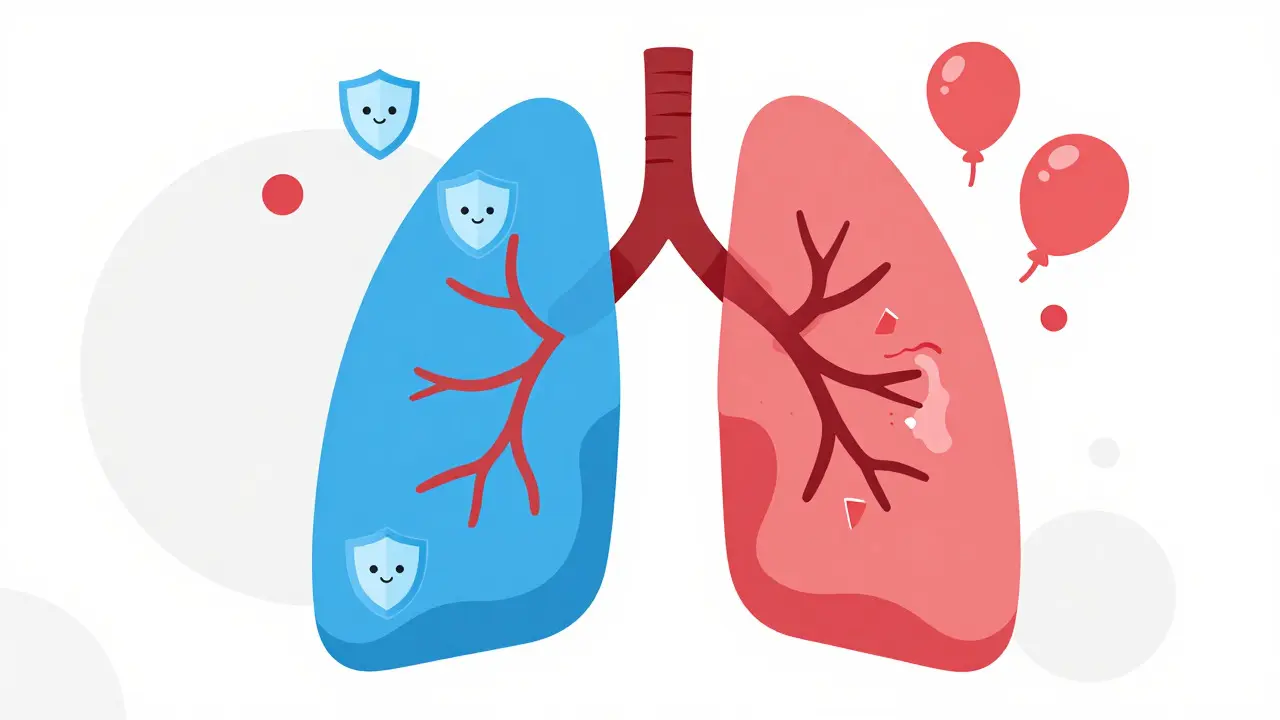
To understand why AATD is so damaging, we first need to look at how healthy lungs work. Your body produces a protein called alpha-1 antitrypsin (AAT). Think of AAT as a shield. It travels through your bloodstream from your liver to your lungs. There, it neutralizes an enzyme called neutrophil elastase. This enzyme is part of your immune system’s defense against infection, but if left unchecked, it acts like acid-it eats away at the delicate air sacs (alveoli) in your lungs.
In a healthy person, AAT keeps neutrophil elastase in check. But in someone with Alpha-1 Antitrypsin Deficiency, the body doesn’t make enough of this protective shield. Without it, the elastase destroys lung tissue freely. Over time, this leads to emphysema-a form of COPD where the lungs lose their elasticity and can’t push air out effectively. The result? Chronic coughing, wheezing, and severe shortness of breath, often appearing decades earlier than in smokers.
The problem doesn’t stop at the lungs. Because the defective AAT protein is made in the liver, it can cause trouble there too. In some genotypes, the misfolded proteins clump together inside liver cells (hepatocytes). These clumps trigger inflammation, which can eventually lead to cirrhosis or even liver cancer. So, while lung disease is the most common concern, liver health is equally critical in managing this condition.
The Genetics Behind the Condition
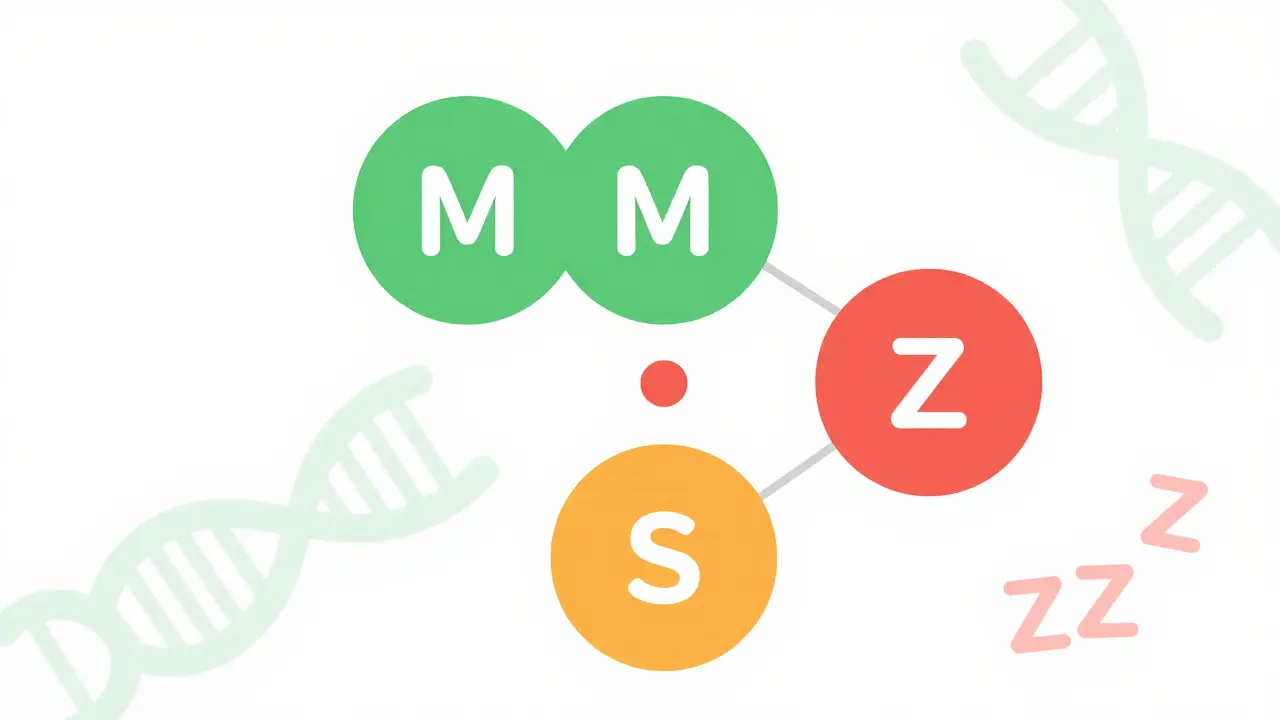
AATD is inherited in what experts call an autosomal codominant pattern. This means you inherit one copy of the gene from each parent. The gene responsible is called SERPINA1, located on chromosome 14. Scientists have identified over 120 different variations (alleles) of this gene, but two are the most important clinically: the S allele and the Z allele.
- MM Genotype: This is normal. Both copies of the gene produce healthy amounts of AAT. Serum levels range from 100-200 mg/dL.
- MS or MZ Genotype: These are carrier states. You have one normal gene and one deficient gene. Most people with these genotypes have enough AAT protection and don’t develop serious disease, though they may be slightly more susceptible to lung damage if they smoke.
- SS Genotype: Moderate deficiency. Serum levels drop to about 40-60% of normal. Risk of lung disease is increased, especially with smoking exposure.
- ZZ Genotype: Severe deficiency. Serum levels plummet to just 11-17 mg/dL (about 15-20% of normal). This group faces the highest risk for both early-onset emphysema and liver disease.
If you have the ZZ genotype, you carry a 75% lifetime risk of developing lung symptoms. Smoking drastically accelerates this process. Quitting smoking can reduce the risk of severe emphysema by up to 60%. That single action is the most powerful tool you have to protect your lungs.
Spotting the Signs: AATD vs. Typical COPD
One reason AATD is underdiagnosed is that its symptoms look exactly like other respiratory conditions. However, there are subtle clues that set it apart from smoking-related COPD.
| Feature | AATD-Related COPD | Smoking-Related COPD |
|---|---|---|
| Typical Age of Onset | Before age 45 (often 35-44) | After age 60 |
| Smoking History | Often non-smokers or light smokers | Usually heavy smokers (20+ pack-years) |
| Lung Damage Pattern | Basilar predominance (lower lungs affected first) | Apical predominance (upper lungs affected first) |
| Liver Involvement | Common (cirrhosis, hepatitis) | Rare |
| Family History | Often present (genetic link) | Less specific |
If you fit the profile of young-onset COPD without a heavy smoking history, ask your doctor for testing. The American Thoracic Society and European Respiratory Society recommend testing anyone diagnosed with COPD, asthma with fixed airflow obstruction, unexplained liver disease, or necrotizing panniculitis (a rare skin condition).
Getting Diagnosed
Diagnosis starts with a simple blood test to measure your serum AAT levels. If your levels are below 11 μM (approximately 50 mg/dL), further testing is needed. Doctors will then perform phenotyping (isoelectric focusing) or genotyping to identify your specific alleles (e.g., ZZ, SZ). The entire process usually takes 2-6 weeks, depending on lab availability.
Once diagnosed, you’ll likely undergo spirometry-a breathing test-to measure your lung function (specifically FEV1, or forced expiratory volume in one second). This baseline measurement helps track disease progression over time. Regular monitoring every 6-12 months is crucial.
Treatment Options and Management
There is no cure for AATD yet, but treatments can slow down lung damage and manage symptoms. The cornerstone of therapy for severe deficiency (like ZZ genotype) is augmentation therapy. This involves weekly intravenous infusions of purified human AAT protein to raise serum levels above the protective threshold of 11 μM.
Current FDA-approved products include Prolastin-C, Zemaira, and Aralast NP. A newer option, Kedrab (approved in 2022), allows for subcutaneous injection, which some patients find easier than IV drips. The goal is to maintain trough levels between 14-20 μM. While augmentation therapy doesn’t reverse existing damage, studies suggest it slows the decline in lung function when started early.
Beyond medication, lifestyle changes are non-negotiable:
- Quit Smoking: As mentioned, this reduces emphysema risk by 60%.
- Vaccinations: Get annual flu shots and pneumococcal vaccines to prevent infections that can worsen lung damage.
- Pulmonary Rehabilitation: Exercise programs designed for lung patients can improve stamina and quality of life.
- Liver Monitoring: Regular ultrasounds or blood tests to check for liver fibrosis or cirrhosis.
For liver disease, current treatments focus on managing complications rather than reversing the underlying genetic defect. Researchers are actively working on small molecule correctors and gene therapies that could potentially fix the root cause, but these are still in clinical trials.

Living with AATD: Challenges and Support
Living with a genetic condition comes with unique emotional and logistical hurdles. Many patients describe a "diagnostic odyssey," spending years feeling unheard by doctors who assume their breathing problems are due to lifestyle choices. Once diagnosed, relief often sets in because you finally have an explanation-and a path forward.
The weekly infusion schedule can disrupt work and family life. Venous access issues are common, making self-infusion or home care setups necessary for many. Insurance battles are another reality; about 42% of initial claims for augmentation therapy face denial, requiring appeals. Don’t give up-patient advocacy groups like the Alpha-1 Foundation provide resources and support networks to help navigate these systems.
Genetic counseling is also vital. Since AATD is hereditary, your children and siblings should be tested. Knowing their status allows for early intervention, such as strict avoidance of smoke and pollutants, which can significantly delay or prevent symptom onset.
Future Outlook and Research
The landscape of AATD treatment is evolving. Beyond traditional augmentation, scientists are exploring RNA interference therapies to stop the liver from producing misfolded proteins. Several Phase II trials are underway. Additionally, newborn screening programs are expanding in the U.S., with 12 states currently piloting tests to detect AATD at birth. Early detection could allow for preventative care before any lung damage occurs.
While the cost of augmentation therapy remains high ($70,000-$100,000 annually), experts argue that early diagnosis saves money long-term by preventing expensive hospitalizations, exacerbations, and transplants. As research progresses, the hope is for more accessible, targeted therapies that address both lung and liver manifestations.
Is Alpha-1 Antitrypsin Deficiency contagious?
No, AATD is not contagious. It is a genetic condition passed down from parents to children through the SERPINA1 gene. You cannot catch it from someone else.
Can I live a normal lifespan with AATD?
Many people with AATD live full lives, especially if diagnosed early. Quitting smoking, avoiding lung irritants, and undergoing augmentation therapy can significantly slow disease progression. Life expectancy varies based on genotype, lifestyle, and access to care.
What foods should I avoid if I have AATD?
There is no specific "AATD diet," but protecting your liver is key. Limit alcohol consumption, as it adds stress to the liver already burdened by misfolded proteins. Focus on a balanced diet rich in antioxidants to support overall lung and liver health.
Does insurance cover augmentation therapy?
Most major insurance plans and Medicare cover augmentation therapy for eligible patients (typically those with ZZ genotype and FEV1 below 65%). However, prior authorization is required, and initial denials are common. Persistence and appeal processes are often necessary.
Should my family members get tested?
Yes. Since AATD is genetic, your siblings and children have a higher risk of carrying the gene. Testing them allows for early prevention strategies, such as smoking cessation and environmental protection, which can dramatically improve outcomes.