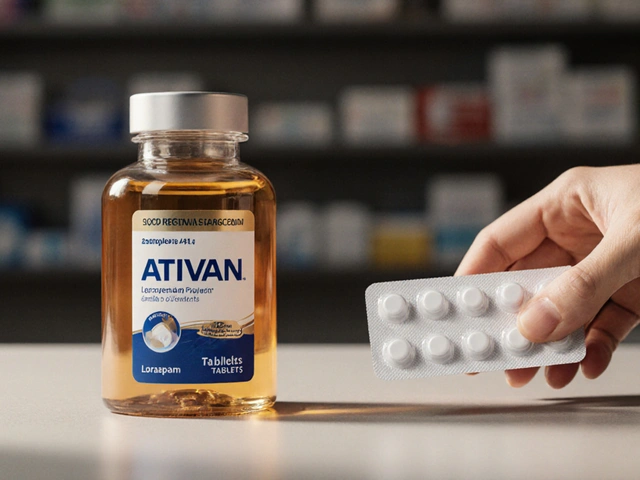
You likely take your medication without a second thought. You grab the pill from the bottle, swallow it with water, and move on with your day. But what if the white tablet in your hand isn't exactly the same as the one you took last month? It might have the same active ingredient, sure, but the filler, the binder, or even the color could be different. This is the reality of generic combinations. While they save money and keep healthcare costs down for millions, they sometimes present a puzzle where components don't match brand formulations perfectly. Understanding when these differences matter can help you make smarter decisions about your health.
The pharmaceutical world operates on a simple premise: if a generic drug works the same way as the brand-name version, it should be approved. The U.S. Food and Drug Administration (FDA) established this framework in 1984 through the Hatch-Waxman Act. Since then, generics have become the backbone of prescription filling, accounting for roughly 90% of prescriptions in the United States. However, "same" is a tricky word. It means the active ingredient must be identical in strength and quality. It does not mean the rest of the pill has to look, feel, or taste the same. For most people, this doesn't matter. But for specific groups of patients, those tiny variations can lead to real-world issues like side effects or reduced effectiveness.
The Core Difference: Active vs. Inactive Ingredients
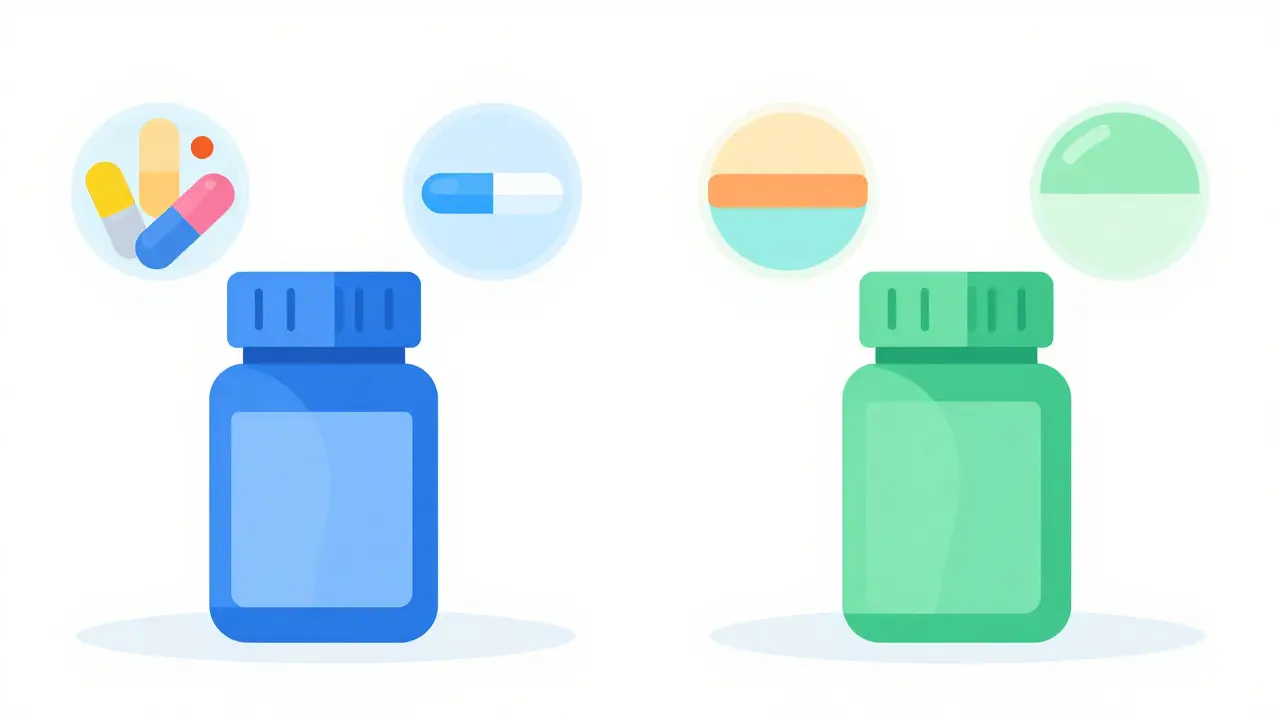
To understand why a generic combination might behave differently, you need to know what’s actually inside the pill. Every medication consists of two main parts: the active pharmaceutical ingredient (API) and inactive ingredients. The API is the part that fights the disease or manages symptoms. The inactive ingredients-often called excipients-are the fillers, binders, preservatives, and coloring agents that hold the pill together and help your body absorb the medicine.
Active Pharmaceutical Ingredients (APIs) are the chemically active substances in a medicinal product that produce a pharmacological effect. For a generic to be approved, its API must match the brand name drug exactly in quantity and quality. If the brand has 50mg of a certain drug, the generic must also have 50mg of that exact same chemical structure.
Inactive ingredients, however, have more freedom. A 2017 study published in the Journal of the American Pharmacists Association found that 47% of generic combination drugs had different inactive ingredient profiles compared to their brand counterparts. Common variations included magnesium stearate (found in 38% of cases), lactose (29%), and microcrystalline cellulose (22%). These sounds harmless, right? They are usually just food-grade chemicals. But for someone with a rare allergy to lactose or a sensitivity to certain dyes, switching brands can trigger reactions that weren’t there before. More importantly, these ingredients affect how the pill dissolves in your stomach. If the dissolution profile changes slightly, the speed at which the drug enters your bloodstream can shift, potentially altering how well it works.
Bioequivalence: The Gold Standard with Limits
How do we know a generic is safe if the recipe is slightly different? We use a metric called bioequivalence. This is a scientific comparison of how fast and how much of the drug gets into your blood. The FDA requires that generic drugs fall within a 90% confidence interval of 80-125% for two key parameters: the area under the curve (AUC) and the maximum concentration (Cmax). In plain English, this means the generic must release the drug into your system at a rate very similar to the brand.
For most standard medications, this test is reliable. If the AUC and Cmax match, the drug works. But there are limits. Bioequivalence testing assumes that the drug behaves consistently in everyone. It doesn’t always account for subtle differences in extended-release formulations or complex combination products where multiple drugs interact. A 2019 report by the FDA acknowledged that 17% of abbreviated new drug applications (ANDAs) for combination products required additional dissolution testing beyond the standard requirements. This suggests that the standard test isn't always enough to catch every potential issue with how a multi-drug pill breaks down in the body.
| Feature | Brand-Name Formulation | Generic Combination |
|---|---|---|
| Active Ingredients | Specific proprietary blend | Identical strength and quality |
| Inactive Ingredients | Fixed proprietary formula | May vary (fillers, dyes, binders) |
| Cost | High (covers R&D) | Low (approx. 85% less than brand) |
| Regulatory Test | Full clinical trials | Bioequivalence studies (AUC/Cmax) |
| Potential Risk | Higher cost burden | Formulation sensitivity in NTI drugs |

When Small Changes Matter: Narrow Therapeutic Index Drugs
Not all medications are created equal. Some drugs have a wide safety margin; you can take a little too much or a little too little, and you’ll still be fine. Others have a narrow therapeutic index (NTI). For these drugs, the difference between a helpful dose and a toxic dose is very small. The FDA identifies about 14 distinct drug products as NTIs, including warfarin (a blood thinner), levothyroxine (for thyroid issues), and certain anti-epileptics.
If you are taking an NTI drug, a slight change in how quickly the generic releases the medication can push your blood levels out of the safe zone. A 2020 retrospective cohort study in JAMA Internal Medicine analyzed nearly 90,000 Medicare patients who switched from brand to generic levothyroxine. The result? 12.3% of those who switched experienced changes in their thyroid-stimulating hormone (TSH) levels that required dosage adjustments, compared to only 8.7% in the control group. That’s a statistically significant jump. It proves that while the generic was "bioequivalent" on paper, the real-world impact wasn't identical for everyone.
This risk extends to combination drugs. A 2021 analysis in the journal Pharmacotherapy looked at patients switching from Advair Diskus (a combo of fluticasone and salmeterol for asthma) to generic equivalents. Within 90 days, 23% of these patients reported using their rescue inhaler more often. Why? The generic inhaler device might deliver the powder slightly differently, or the excipients might affect lung deposition. Independent testing showed some generic versions had 15-20% lower lung deposition than the brand. For an asthmatic, that’s the difference between staying calm and struggling to breathe.
Real-World Experiences and Patient Concerns
Numbers tell part of the story, but patient experiences tell the rest. On platforms like PatientsLikeMe, analysis of over 12,000 posts between 2020 and 2023 revealed that 23.7% of users reported adverse effects after switching to generic combinations. The complaints were highest for psychiatric medications (31.2%) and endocrine therapies (28.6%).
Reddit’s r/pharmacy community documented hundreds of case reports in 2022 alone. A common theme involved gastrointestinal issues. Many users taking metformin/sitagliptin combinations reported nausea or stomach upset with the generic that they didn’t experience with the brand. A 2022 survey by the National Community Pharmacists Association found that 34% of independent pharmacists received complaints about generic substitutions. The top three issues were gastrointestinal problems (41%), skin reactions (29%), and reduced efficacy (22%).
These aren't just complaints; they are signals. They suggest that for a subset of the population, the "standard" bioequivalence test misses something. Maybe it’s a specific dye causing a rash. Maybe it’s a binder that slows down absorption just enough to reduce the drug's peak effect. For these individuals, the generic isn't just cheaper; it’s a different experience.

How to Navigate Substitutions Safely
So, should you avoid generics? Not necessarily. For 98.5% of substitutions, nothing goes wrong. But if you fall into a sensitive category, you can take proactive steps. Here is a practical approach to managing your medications:
- Check Your Therapeutic Index: Ask your doctor if your medication is classified as a Narrow Therapeutic Index (NTI) drug. If yes, monitor your blood levels closely after any switch.
- Review Inactive Ingredients: If you have known allergies to lactose, dyes, or sulfites, check the label of your generic. Look for the specific excipients listed. If you’re unsure, ask your pharmacist to compare the brand and generic labels side-by-side.
- Consider Authorized Generics: An authorized generic is produced by the original brand manufacturer but sold under a generic name. It is chemically identical to the brand, including all inactive ingredients. While it costs 15-20% more than a standard generic, it is still significantly cheaper than the brand and eliminates formulation variance entirely.
- Document Changes: If you switch from brand to generic, note any new side effects or changes in how you feel. Keep a log. If you notice a pattern, bring it to your doctor. This data helps them decide if a switch back is necessary.
- Ask About Therapeutic Interchange Protocols: Many pharmacies now use protocols for sensitive patients. Ask your pharmacist if they follow guidelines for checking patient history before substituting combination generics.
Pharmacists play a crucial role here. Following USP Chapter <1099> guidelines, they should conduct a five-point assessment before substituting: evaluating the therapeutic index, checking your history of sensitivity, reviewing bioequivalence data, screening for inactive ingredient allergies, and assessing your disease stability. A 2023 study showed that implementing this protocol reduced adverse substitution events by 62% across 300 community pharmacies. So, trust your pharmacist, but also advocate for yourself.
The Future of Generic Combinations
The industry is listening. The FDA has increased scrutiny on complex combination products. In 2023, the number of complex generic applications requiring specialized formulation review jumped by 27% compared to 2018. New rules are being drafted to require better disclosure of inactive ingredients. The Generic Pharmaceutical Alliance has committed to voluntarily disclosing all inactive ingredients in combination generics through standardized labeling by 2025. This transparency will help patients and doctors make more informed choices.
Meanwhile, the market continues to grow. Generic combinations are projected to dominate 93% of the market share by 2028. But a niche segment for specialized formulations for sensitive populations is also emerging, predicted to reach $14.2 billion by 2030. This means that in the coming years, you may see more options tailored specifically for people who react poorly to standard generic variations.
Ultimately, the goal is not to fear generics, but to understand them. They are a vital part of modern healthcare, keeping medicines affordable and accessible. But they are not magic. They are chemical formulas, and like any formula, small tweaks can have big impacts. By staying informed and communicating with your healthcare team, you can ensure that the pills in your pocket work exactly as intended.
Are generic combination drugs always cheaper than brand names?
Yes, generally speaking. Generic combinations average 85% less than their brand counterparts. Even authorized generics, which are identical to the brand, are typically 60-70% cheaper than the original brand-name product. This cost savings is the primary driver behind the high adoption rate of generics in the US healthcare system.
What is a Narrow Therapeutic Index (NTI) drug?
An NTI drug is a medication where the difference between a therapeutic dose and a toxic dose is very small. Examples include warfarin, levothyroxine, and phenytoin. Because the margin for error is slim, small changes in how the drug is absorbed (which can happen with different generic formulations) can lead to serious side effects or treatment failure. These drugs require closer monitoring when switching between brands and generics.
Can I request my pharmacy to dispense the brand-name drug instead of the generic?
In many cases, yes. You can ask your doctor to write a prescription specifying "dispense as written" or "no substitution." However, insurance plans may still cover only the generic unless the brand is medically necessary. If you have experienced adverse effects with a generic, discuss this with your doctor and insurer to see if an exception can be made for the brand-name version or an authorized generic.
Do inactive ingredients really affect how a drug works?
They can. Inactive ingredients like binders and fillers influence the dissolution profile of the tablet, which determines how quickly the active ingredient is released into your bloodstream. For most drugs, this variation is negligible. However, for extended-release formulations or drugs with narrow therapeutic indices, these differences can alter the timing or peak concentration of the drug, potentially affecting efficacy or safety.
What is an authorized generic?
An authorized generic is a version of a brand-name drug produced by the original manufacturer but marketed under a generic name. It contains the exact same active and inactive ingredients as the brand-name drug. It offers the benefit of guaranteed formulation consistency at a price point lower than the brand but slightly higher than standard generics. It is a good middle ground for patients sensitive to formulation changes.