
The Hidden Crisis of Eating Disorders
Imagine a condition where one person dies every 52 minutes. It sounds like a statistic from a disaster zone, but this is the reality for Eating Disorders, which are serious psychiatric conditions characterized by abnormal eating behaviors, distorted body image, and harmful weight control practices. These aren't just phases or lifestyle choices; they are life-threatening illnesses that impact millions of people globally. In the U.S. alone, about 9% of the population, or roughly 28.8 million Americans, will face an eating disorder in their lifetime. The economic toll is staggering too, costing an estimated $64.7 billion annually. Despite this, the stigma remains high, and many people suffer in silence because they don't fit the stereotypical image of someone with these conditions.
It is a common misconception that only underweight individuals suffer from eating disorders. In reality, less than 6% of people with these conditions are medically diagnosed as 'underweight.' This gap between perception and reality delays diagnosis and treatment for too many people. When you understand the clinical severity, the urgency becomes clear. Anorexia nervosa specifically carries the highest case mortality rate of any mental illness. A 2023 study published in PubMed found a mortality rate of 5.1 deaths per 1000 person-years, nearly six times higher than age-matched individuals without the disorder. This isn't just about weight; it's about survival.
Understanding the Major Eating Disorders
To navigate recovery, you first need to understand what you are dealing with. While there are several types, three stand out due to their prevalence and impact: Anorexia Nervosa, Bulimia Nervosa, and Binge Eating Disorder. Each has distinct diagnostic criteria and risks.
Anorexia Nervosa is a condition marked by significantly low body weight, an intense fear of gaining weight, and a distorted body image. It affects approximately 1% of the population. Historically, the female-to-male ratio was thought to be 10:1, but recent data shows increasing diagnoses in males. The physical toll is severe. The standardized mortality ratio (SMR) indicates a death risk 12 times higher than same-age peers. In young people specifically, the mortality rate ranges between 4% and 11%. This is why medical stabilization is often the first step before psychological treatment can even begin.
Then there is Bulimia Nervosa, which is characterized by recurrent episodes of binge eating followed by inappropriate compensatory behaviors. This affects around 1.5% of women and 0.5% of men. The compensatory behaviors often include self-induced vomiting, misuse of laxatives, or excessive exercise. One in ten patients experiences painful swelling of the cheeks and face due to vomiting. The SMR for bulimia is 1.93, meaning nearly double the expected mortality compared to the general population. While the physical weight might not always look 'underweight,' the internal damage to the digestive system and electrolytes is profound.
Finally, we have Binge Eating Disorder (BED), which is the most prevalent eating disorder, involving recurrent binge eating without compensatory behaviors. It impacts 3.5% of women and 2% of men. A 2012 study cited by the Eating Recovery Center suggests half the risk of developing BED is genetic. Unlike bulimia, there is no purging, which often leads to higher rates of obesity-related health issues, but the psychological distress is equally debilitating.
| Disorder | Prevalence (Lifetime) | Key Behavior | Mortality Risk |
|---|---|---|---|
| Anorexia Nervosa | 1% of population | Restriction, Fear of weight gain | Highest (12x peers) |
| Bulimia Nervosa | 1.5% women, 0.5% men | Binge + Purge/Compensate | 1.93x general population |
| Binge Eating Disorder | 3.5% women, 2% men | Recurrent Bingeing | Varies by comorbidity |
The Physical and Mental Toll
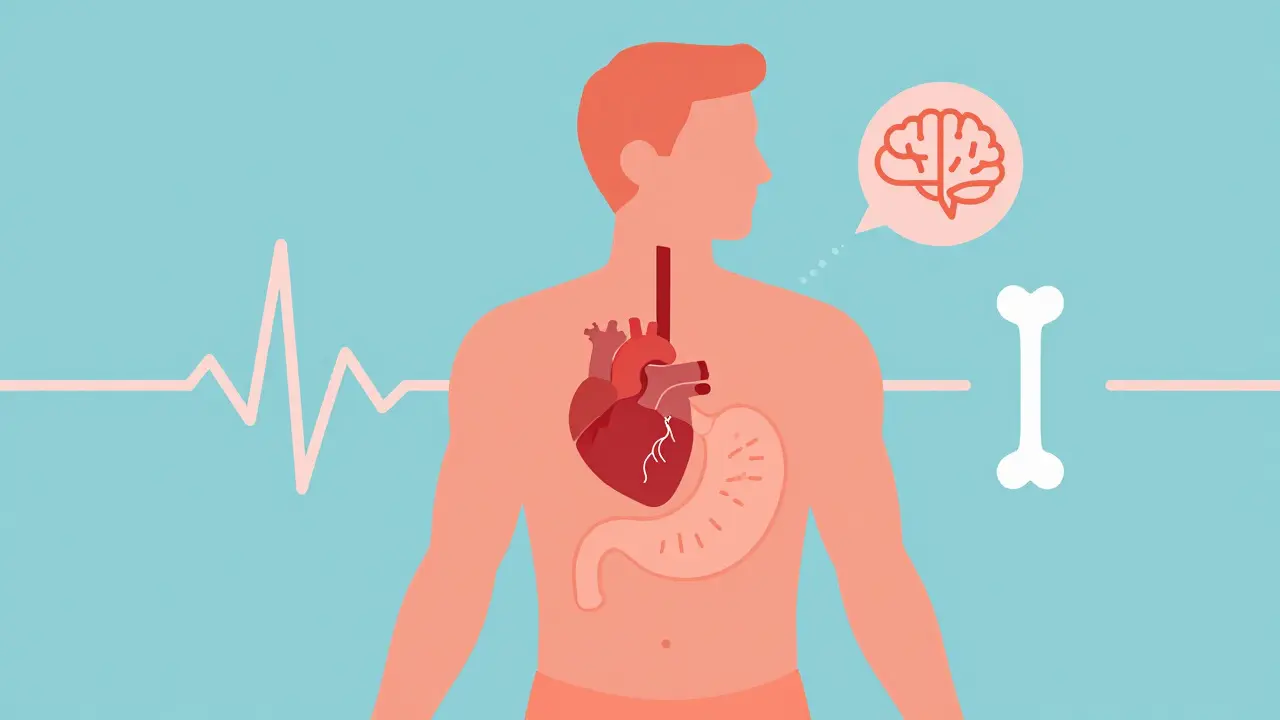
The damage from eating disorders extends far beyond the digestive system. It is a full-body assault. Dr. Jennifer Gaudiani, author of 'Sick Enough,' notes that 97% of eating disorder patients have at least one physical complication. This includes heart issues, bone density loss, and hormonal imbalances. Refeeding syndrome, a dangerous shift in fluids and electrolytes, occurs in 10-20% of severe anorexia cases during initial weight restoration. It requires careful monitoring, often involving vital signs, electrolytes, and EKGs before nutritional rehabilitation even starts.
Mental health comorbidities are equally concerning. Research published in the Journal of Affective Disorders found that 31% of individuals with anorexia nervosa have attempted suicide. For those with anorexia, the suicide risk is 18 times higher than those without eating disorders. Depression rates are also high, with bulimia nervosa showing the highest rate at 76.3%, followed by binge eating disorder at 65.5%. Substance use disorders affect up to half of all eating disorder patients, with rates five times higher than the general population. This interconnectedness means treatment must address both the eating behavior and the underlying mental health struggles simultaneously.
Evidence-Based Treatments That Work
When it comes to recovery, not all therapies are created equal. Relying on anecdotal advice can be dangerous. We need to look at what the data says works. The American Psychiatric Association's 2023 practice guidelines identify Family-Based Treatment (FBT) as the first-line intervention for adolescent anorexia nervosa. This approach empowers parents to take charge of their child's refeeding initially. Recovery rates are impressive: 40-50% after 12 months compared to 20-30% with individual therapy alone. It shifts the burden off the struggling adolescent and utilizes the family unit as a resource.
For adults, particularly those with bulimia or anorexia, Enhanced Cognitive Behavioral Therapy (CBT-E) is a transdiagnostic approach that works across multiple eating disorder diagnoses. A 2021 meta-analysis in the International Journal of Eating Disorders showed remission rates of 60-70% after 20 sessions. Dr. Kamryn Eddy from Massachusetts General Hospital emphasizes that when treatment begins within three years of symptom onset, 65% of patients achieve full remission. This highlights the critical window for early intervention.
Medication also plays a role, though it is rarely a standalone cure. The 2023 FDA approval of lisdexamfetamine (Vyvanse) for binge eating disorder represents a breakthrough. It was the first medication specifically indicated for an eating disorder, showing 50.9% remission rates in phase 3 trials compared to 21.9% with placebo. While antidepressants are often prescribed for comorbid depression, Vyvanse targets the binge behavior directly. However, medication should always be part of a broader treatment plan including nutritional counseling and psychological support.
Barriers to Accessing Care
Even when we know what works, getting treatment is a massive hurdle. The gap between need and access is widening. Approximately 30 million Americans live with eating disorders, but only 35 specialized residential facilities exist nationwide. With a total bed capacity of 1,200, these facilities serve less than 0.004% of the affected population annually. This scarcity creates a bottleneck where demand vastly outstrips supply.
Insurance is another major wall. In NEDA's 2022 survey, 68% of respondents reported at least one insurance denial for eating disorder treatment, with an average of 3.2 denials per person. Treatment Access Matters documented 1,247 insurance appeals in 2023, with 57% requiring legal intervention to secure coverage. Stories from users on forums like Reddit's r/EatingDisorders highlight the emotional toll of these battles. One user described waiting 27 months for specialized care due to insurance denials, while another had to use GoFundMe to raise $78,000 for 90 days of residential care. The 2023 Mental Health Parity and Addiction Equity Act (MHPAEA) enforcement is a step forward, with the Department of Labor fining 17 health plans $3.2 million in 2023 for inadequate coverage, but enforcement remains inconsistent.
Geographic location also dictates access. A 2023 Johns Hopkins study found only 22% of rural counties have any eating disorder specialist. This forces families to travel long distances or rely on telehealth. While telehealth is predicted to expand access by 40% by 2027, it cannot replace the need for in-person medical stabilization for severe cases.

Future Developments and Hope
Despite the challenges, the landscape is slowly improving. Digital health interventions are expanding rapidly. Recovery Record's app, used by 150,000 patients, demonstrated 32% greater symptom reduction than standard care in a 2023 JAMA Network Open study. These tools provide daily support and monitoring that bridges the gap between therapy sessions.
Research is also moving toward early detection. The $25 million NIH HEALthy Brain and Child Development Study is tracking 7,500 children from birth through adolescence to identify early biomarkers. Preliminary data is expected in Q3 2025. Early identification is key, as the rate of children under 12 being admitted to hospitals for eating disorders rose 119% between 2012 and 2021. By catching signs earlier, we can prevent the severe medical complications that drive up mortality rates.
The Academy for Eating Disorders forecasts a 25% reduction in mortality rates by 2030 through early intervention programs. However, this relies on increased funding and capacity. Without it, the 93% increase in youth eating disorder medical visits documented in 2023 will likely overwhelm existing infrastructure. We need more specialized training for clinicians too. The Learning Curve Assessment Tool shows clinicians require 120-180 hours of specialized training to competently deliver FBT or CBT-E. Currently, only 43% of treatment centers implement evidence-based protocols, and only 12% use standardized outcome measures.
Getting Started with Recovery
If you or someone you know is struggling, the path to recovery starts with a medical assessment. This typically involves checking vital signs, electrolytes, and an EKG to ensure the body is stable enough for nutritional rehabilitation. Nutritional needs vary by severity, typically ranging from 1,200 to 2,500 calories daily. This is not a diet; it is medical nutrition therapy designed to restore health.
Psychological intervention follows or happens concurrently. Motivational interviewing is often used initially, with 70% efficacy in engagement per a 2022 study. Documentation quality varies, but you should look for centers that meet comprehensive clinical documentation standards. The National Institute for Health and Care Excellence (NICE) guidelines specify that outpatient treatment should begin within 2 weeks of referral for moderate cases. However, reality often differs, with wait times averaging 68 days for outpatient and 132 days for intensive programs.
Recovery is possible. It is a journey that requires patience, the right team, and often a fight for resources. But with the right evidence-based care, remission is a realistic goal for the majority of patients.
What is the mortality rate of anorexia nervosa?
Anorexia nervosa has the highest case mortality rate of any mental illness. A 2023 study found a mortality rate of 5.1 deaths per 1000 person-years, which is nearly six times higher than age-matched individuals without the disorder. In young people, the mortality rate ranges between 4% and 11%.
Is Family-Based Treatment (FBT) effective for adolescents?
Yes, the American Psychiatric Association identifies FBT as the first-line intervention for adolescent anorexia nervosa. Recovery rates are 40-50% after 12 months, compared to 20-30% with individual therapy alone.
Are there medications approved for eating disorders?
Yes, in 2023, the FDA approved lisdexamfetamine (Vyvanse) for binge eating disorder. It showed 50.9% remission rates in phase 3 trials compared to 21.9% with placebo. It is the first medication specifically indicated for an eating disorder.
How common are insurance denials for eating disorder treatment?
Insurance barriers are significant. NEDA's 2022 survey found that 68% of respondents reported at least one insurance denial, with an average of 3.2 denials per person. 57% of appeals documented in 2023 required legal intervention.
What is the prevalence of binge eating disorder?
Binge Eating Disorder is the most prevalent eating disorder, affecting 3.5% of women and 2% of men. About 2.8% of American adults experience it during their lifetime.
Can digital health apps help with recovery?
Yes, digital interventions are growing. Recovery Record's app demonstrated 32% greater symptom reduction than standard care in a 2023 JAMA Network Open study, showing promise as a supportive tool.







It is truly heartbreaking to see how many people suffer in silence because they do not fit the mold that society expects them to look like.
The statistics presented here really highlight the severity of the situation we are facing as a global community.
I have seen friends struggle with body image issues that were dismissed by others as just a phase or vanity.
The mortality rates mentioned are alarming and should wake everyone up to the reality of these conditions.
It is not just about food or weight control but about deep psychological distress that needs professional intervention.
The part about insurance denials is particularly frustrating because it adds so much stress to an already difficult recovery journey.
Families need to be empowered to take charge of the refeeding process for their children without feeling guilty or blamed.
We need more specialized training for clinicians so that they can deliver evidence-based protocols effectively.
The gap between need and access is widening and this needs to be addressed by policy makers immediately.
Digital health interventions are a step in the right direction but they cannot replace the need for in-person care in severe cases.
Early detection is key to preventing the severe medical complications that drive up mortality rates so much.
We must reduce the stigma surrounding these illnesses so that people feel safe seeking help without fear of judgment.
The genetic component mentioned for binge eating disorder shows that this is not a choice but a biological predisposition.
Support systems need to be strengthened to ensure that individuals do not feel isolated during their recovery process.
It is encouraging to see that remission is a realistic goal for the majority of patients with the right care.
We all have a role to play in spreading awareness and supporting those who are struggling with these invisible battles.
This is so scarry and i cant beleive the numbers are this high.
One person dying every 52 minutes is like a disaster zone for real.
The insurance thing is crazy too and it is unfair that they keep denying people help.
It makes me so mad that people have to fight just to get better.
I hope everyone reads this and realizes how serious it is.
The Vyvanse stuff sounds like a game changer for some people atleast.
We need to do better as a society to help these folks out.
I completely agree with you and your points are so valid!!!
It is so important that we talk about this openly without shame!!!
The part about families taking charge is something I think needs more attention!!!
We really need to support each other and not judge!!!
Recovery is possible and we should celebrate that!!!
Thank you for sharing such a thoughtful perspective!!!
It is amazing how much data is available to back these claims!!!
The statistics on mortality are truly shocking and need to be shared widely!!!
We cannot ignore the financial barriers that prevent people from getting help!!!
Insurance companies need to be held accountable for their denials!!!
Families often feel helpless but they can be the strongest resource for their children!!!
The new medication approvals give us hope for the future of treatment!!!
Digital health tools are becoming more effective every single year!!!
We must continue to advocate for better access to specialized care!!!
Every person deserves the chance to recover and live a healthy life!!!
Most of this is just people making excuses for lack of discipline.
The brain is powerful but people choose to ignore the consequences of their actions.
Blaming genetics or insurance does not change the fact that individuals need to take responsibility.
Society is too soft on these issues and it enables the behavior.
We need to stop coddling people who refuse to eat properly.
The mortality rates are high because people refuse to listen to reason.
It is a philosophical failure of will rather than a medical condition.
That is a very harsh take and ignores the clinical data presented in the post.
Eating disorders are recognized psychiatric conditions not simply a lack of willpower.
The mortality rates are comparable to severe physical illnesses which requires medical intervention.
Dismissing the biological and psychological factors is dangerous and unhelpful for anyone trying to recover.
We should be focusing on evidence-based treatments like CBT-E and FBT instead of blaming patients.
It is important to approach this with empathy and understanding of the science involved.
Big Pharma is pushing these meds for a reason :).
The FDA approval of Vyvanse is just another way to keep people dependent on pills.
They want you to believe it is a chemical imbalance so you buy their solution.
The insurance denials are probably planned to force people into specific treatment centers.
Wake up people the system is rigged against you :/.
You are so delusional if you think its all a con.
Real people die from this and your conspiracy theories are rude.
The data is from PubMed and Johns Hopkins not some blog.
Stop being so cynical and acknowledge the suffering of others.
It is pretentious to think you know better than the doctors.
I think the part about wait times is really bad.
68 days for outpatient care is way too long.
People need help now not later.
My friend had trouble getting in too.
It sucks that insurance says no so much.
We should fix the system so people dont wait.
The philosophical implication of the mind-body connection in eating disorders is profound.
The distortion of body image represents a fundamental disconnect between perception and reality.
Medical stabilization must precede psychological treatment because the vessel must be intact for the mind to heal.
This hierarchy of needs is often overlooked in modern therapeutic approaches.
The genetic predisposition suggests that free will is not the sole determinant of behavior.
We must consider the interplay between biology and environment when formulating treatment plans.
The ethical obligation of society is to provide access to care regardless of economic status.
Your analysis is incredibly insightful and well-articulated.
The distinction between medical and psychological stabilization is crucial for effective recovery.
It is wonderful to see such a thoughtful perspective on the ethical obligations involved.
We must ensure that our healthcare systems reflect these philosophical principles in practice.
Thank you for contributing such a high-quality comment to this discussion.
Stop wasting money on these useless programs.
I understand you feel strongly about resource allocation but these programs save lives.
The data shows that early intervention reduces mortality rates significantly.
It is important to remember that every person deserves access to necessary healthcare.
We can discuss budget priorities without dismissing the value of these treatments.
Let's focus on how to improve efficiency rather than cutting support.