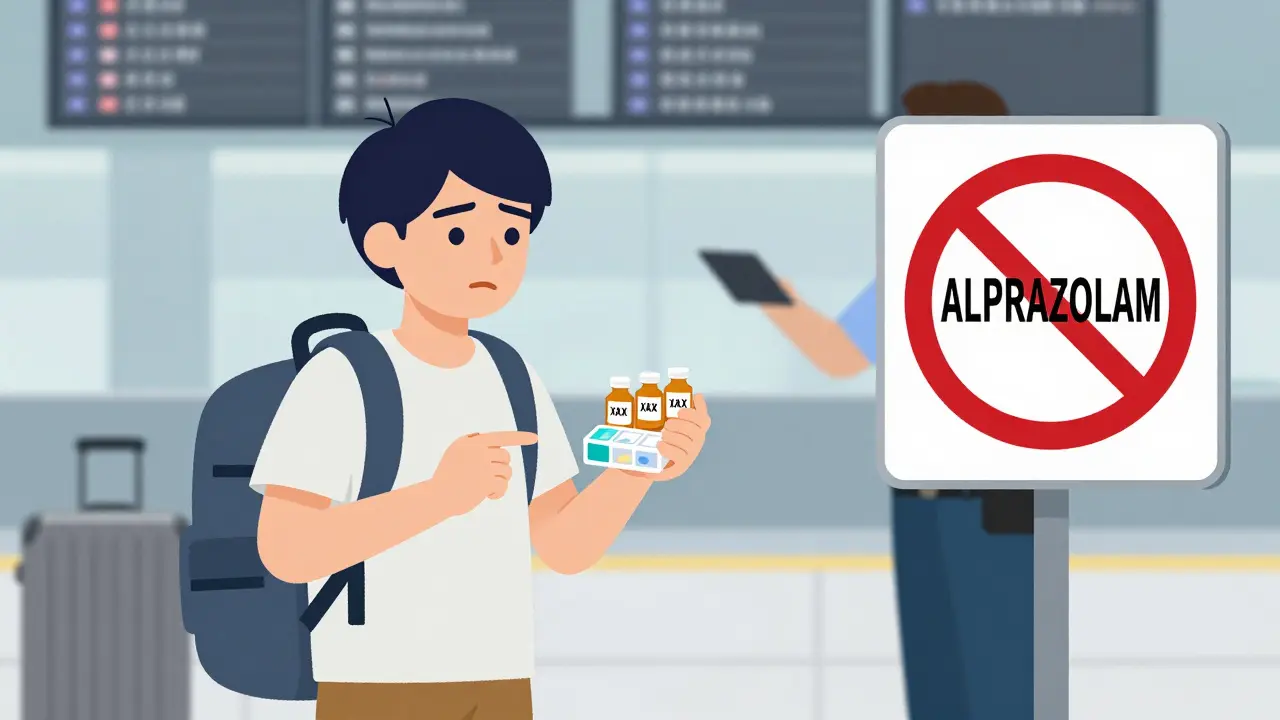
Imagine landing in Tokyo after a 14-hour flight, only to have your anxiety medication taken away by customs - and you’re told you can’t enter the country because it’s illegal there. This isn’t a movie plot. It happened to a woman from Chicago in 2024. She had her prescription, her doctor’s note, and 30 pills in a pill organizer. None of it mattered. Japan bans alprazolam - a common brand name for Xanax - outright. No exceptions.
That’s the reality for millions of travelers every year. Over 93 million Americans traveled internationally in 2023, and nearly 1 in 5 of them carried prescription medication. But only about 30% checked if those meds were legal where they were going. The result? Confiscations, detentions, fines, and even jail time in places like the UAE, Thailand, and Singapore.
Why This Isn’t Just About Running Out of Pills
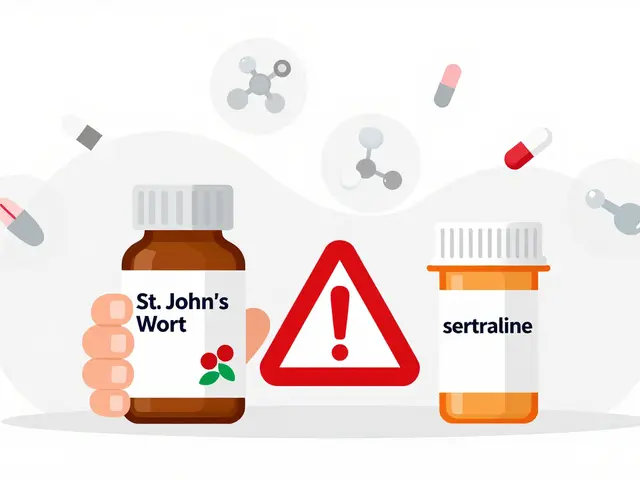
Most people think the biggest risk is forgetting their meds or running out. But the real danger is breaking the law. What’s legal in the U.S. might be a controlled substance - or completely banned - in your destination.Here are the most common troublemakers:
- Narcotics: Hydrocodone, oxycodone, codeine - even in cough syrup. The UAE treats codeine like heroin. Possession can mean 5 years in prison.
- Sedatives and sleep aids: Diazepam (Valium), alprazolam (Xanax), zolpidem (Ambien). Thailand detains travelers for days over Ambien. Japan bans it entirely.
- ADHD meds: Adderall, Ritalin, Vyvanse. These contain amphetamines. France, Germany, and Japan don’t allow them without special permits - even if you have a U.S. prescription.
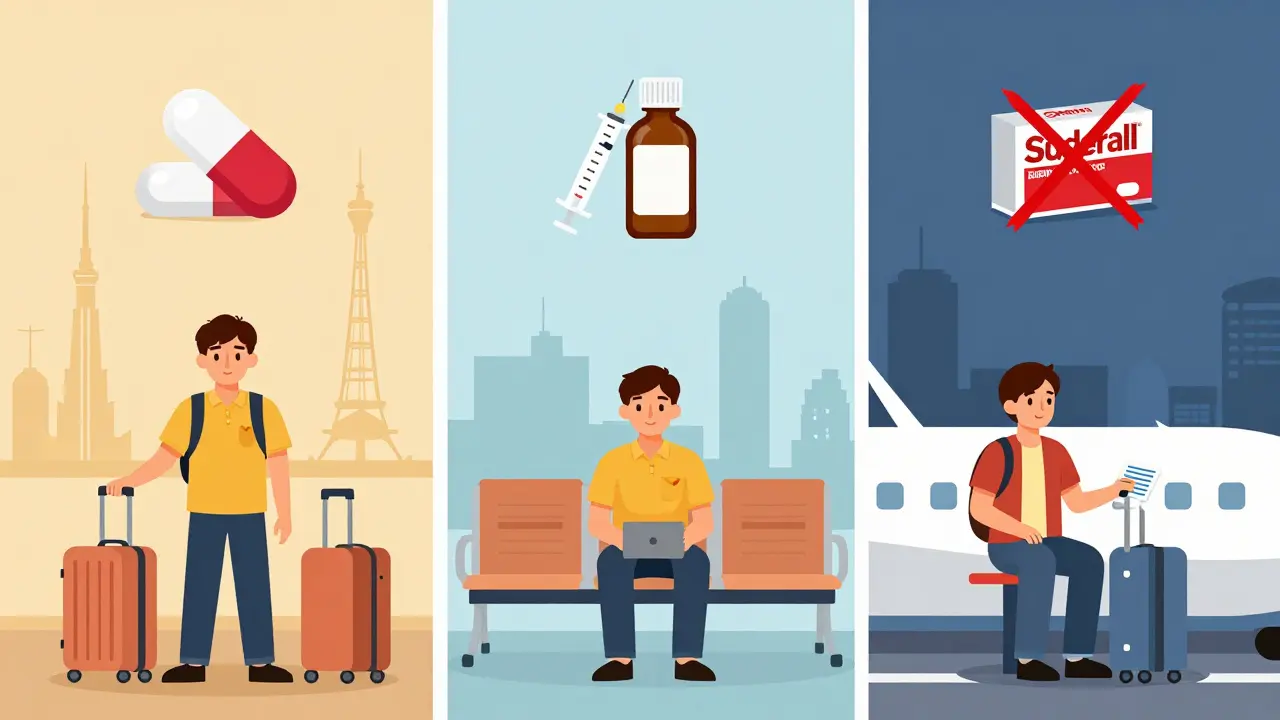
- Decongestants: Pseudoephedrine (Sudafed) is banned in Japan and restricted in many Asian countries. It’s used to make methamphetamine.
- CBD and cannabis products: Even if legal in your state, CBD is banned in 19 countries including South Korea, Malaysia, and the UAE.
The CDC reports that 12-15% of travelers have medication-related problems abroad. Half of American adults have at least one chronic condition. If you’re on insulin, blood pressure meds, or thyroid medication, missing a dose isn’t just inconvenient - it’s dangerous.
Step-by-Step: How to Get Your Meds Across Borders Safely
Don’t wait until the day before your flight. Start 8-12 weeks out. Here’s how to do it right.
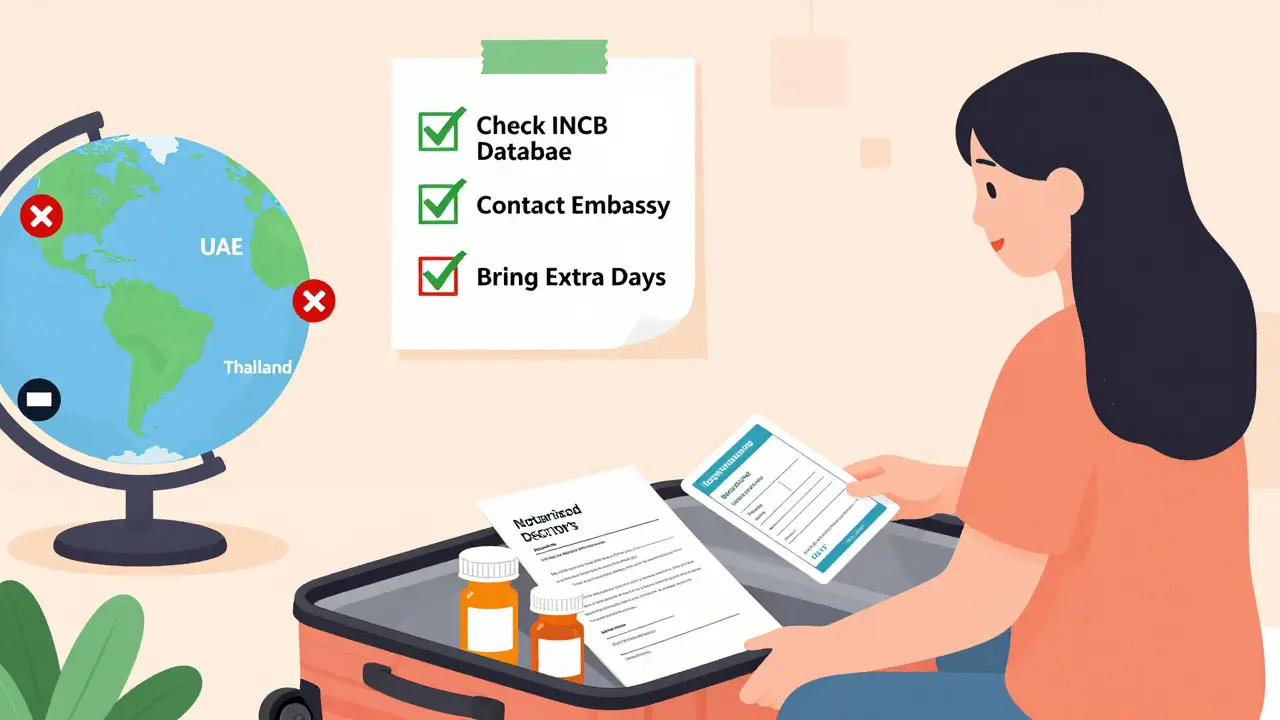
- Check your meds against your destination’s rules
Use the International Narcotics Control Board (INCB) Country Regulations database. It’s the most reliable public source. Type in your medication’s generic name (not brand name). If it says "prohibited," don’t bring it. If it says "restricted," you’ll need a permit. - Contact the embassy or consulate
Don’t rely on Google. Go directly to the official website of the country you’re visiting. Look for their embassy’s health or consular section. Email them with your full medication list - generic names, dosages, and purpose. Ask: "What documentation is required for a tourist to bring these?" Many countries require a notarized letter from your doctor or a government-issued permit. Japan requires this for even common antibiotics. - Talk to your doctor
Ask for a letter on letterhead that includes:
- Your name and date of birth
- The generic name of each medication
- Dosage and frequency
- The medical condition being treated
- The total quantity you’ll be carrying
- The doctor’s license number and contact info
Some countries require this letter to be notarized. Your doctor’s office can help with that. Many pharmacies can also provide an International Certificate for Medicinal Products (ICMP) - it costs $25-$40 but saves headaches. - Get enough supply - plus a buffer
Bring at least 7-10 extra days’ worth. Flights get delayed. Visas get extended. Pharmacies abroad may not carry your exact brand or dosage. For example, a 500mg tablet in the U.S. might be 250mg in Europe. You’ll need to adjust. Never rely on buying meds overseas unless you’ve confirmed they’re available and legal. - Pack smart
- Keep all meds in their original bottles with prescription labels. No pill organizers for controlled substances.
- Carry everything in your carry-on. Checked bags get lost. Delta, United, and other airlines require meds to be in carry-on for accessibility.
- If you have liquids over 3.4 oz (like insulin pens or liquid pain meds), declare them at TSA. You don’t need a doctor’s note for TSA, but you must show them at the checkpoint.
- If you use needles or syringes, bring a letter from your doctor explaining why. TSA allows them, but you must declare them.
What Happens If You Get Caught?
Consequences vary wildly:
- Thailand: Detention for up to 72 hours over Ambien. Fines and deportation follow.
- Japan: Permanent entry ban for ADHD meds. No appeal.
- United Arab Emirates: 5-year prison sentence for codeine. No exceptions for tourists.
- Germany: Confiscation and a fine, but usually no arrest - unless you’re carrying large amounts.
- U.S. airports: Even if you’re just connecting, some states like California and New York require controlled substances to be in original bottles. If your bottle is empty or unlabeled, you could be detained by local police.
There’s no universal rule. One traveler was fined $500 in Singapore for carrying 10 tablets of ibuprofen - because the bottle didn’t have a prescription label. Another was let go in Dubai after showing a doctor’s note - but only because they had less than a 30-day supply.
Real Stories from the Road
A Reddit user from Florida shared how they were held for 4 hours at Bangkok Airport in 2024. They had 28 alprazolam tablets - their entire 10-day supply. No doctor’s letter. No original bottle. They were released after paying a $200 fine and signing a form promising not to bring it again.
A man from Texas tried to mail his insulin to his hotel in Mexico. It was seized by customs. He spent three days in a hotel with no insulin, until his sister flew in with a fresh supply.
On the flip side, a woman with multiple sclerosis used the INCB database to find out that Spain required a special permit for her muscle relaxant. She emailed the Spanish embassy 60 days ahead. They sent her a form. She filled it out, got it notarized, and brought it with her. No issues.
What About Transit Countries?
You’re flying from New York to Bali with a layover in Dubai. Dubai has strict rules. Even if you’re not leaving the airport, your bags go through customs. If you have prohibited meds in checked luggage, they’ll find them. You don’t need to be in the country to get in trouble.
Same goes for Canada, the UK, or Germany. If you’re connecting through one of them, treat their rules like your final destination. Don’t assume transit means exemption.
Tools and Resources You Can Use Today
- INCB Country Regulations Database - Free, official, updated monthly. The only global source.
- U.S. State Department Travel Advisories - Each country page has a "Health" section with medication warnings.
- MedPassport app - A digital tool that stores your meds, doctor’s letter, and embassy contacts. Costs $49/year.
- Delta Air Lines Accessibility Line - 404-209-3434. They help with meds, needles, and liquid exceptions.
- Mobility International USA Checklist - Free downloadable PDF used by over 127,000 travelers in 2024.
And if you’re flying with a chronic condition? Call your airline ahead of time. Tell them you’re carrying medication. Ask if they have a special form or process. Most do.
The Bottom Line
You wouldn’t leave home without your passport. Why risk your health - or your freedom - by skipping this step? Medication rules aren’t just bureaucracy. They’re legal boundaries with real consequences.
Start early. Check every country on your route. Get the documents. Pack smart. Bring extra. And never, ever assume your U.S. prescription is enough.
The world doesn’t follow American rules. But if you plan ahead, you can travel anywhere - safely, legally, and without a single panic attack.



I once had my Adderall confiscated in Dubai. No warning. No mercy. Just a guy in a uniform holding up my bottle like it was a bomb. I had the prescription, the doctor’s note, everything - and still, they laughed. Don’t assume your paperwork means anything abroad. If it’s an amphetamine, assume it’s a crime. I learned the hard way. Now I carry a printed copy of the INCB page for every country I fly through. It’s not paranoia - it’s survival.
They’re lying. The government doesn’t care if you die overseas - they just don’t want you to have the meds that keep you alive because they’re scared of Big Pharma. I’ve seen it. The CDC? Part of the cover-up. Why do you think they won’t let you bring your anxiety pills? Because they want you to panic. Because panic = control. And guess who profits when you’re locked in a foreign jail? The prison contractors. The pharmaceutical lobbyists. The TSA. It’s all connected. You think your insulin is safe? They’re tracking your blood sugar through your phone. They know when you’re low. And they’re waiting.
This is why I always carry my meds in original bottles with doctor’s letter - even when flying to Nigeria. People think Africa is chaotic, but Lagos customs? Very strict. One time, a friend brought ibuprofen in a plastic bag. They held him for 6 hours. He cried. I didn’t. I had my papers. I smiled. They let me go. You don’t need to fear the world - just respect it. Your pills aren’t yours alone. They’re part of a global system. Play by the rules, even if they’re weird.
They’re hiding something. Why does Japan ban Xanax but allow 10x the amount of alcohol? Why does the UAE jail people for codeine but let in tons of opioids through military channels? It’s not about safety - it’s about control. And the State Department? They’re in on it. They tell you to check the INCB database because they want you to think it’s fair. But I’ve talked to people in Dubai prisons - they say the real offenders are the diplomats with unmarked suitcases. You’re just the sacrifice. Don’t be fooled. Bring your meds - but keep your head down.
It’s funny how we treat medicine like a privilege instead of a human right. I lived in Thailand for a year with chronic migraines. I had to get a permit for my triptans. It took three months. I cried. I begged. I emailed embassy after embassy. But when I finally got it? The pharmacist in Chiang Mai looked at me like I was a god. He said, 'You carried your pain with you like a pilgrim.' That’s the thing - medicine isn’t just a pill. It’s dignity. It’s survival. And if we treat it like a legal loophole, we’ve already lost. Take the time. Do the work. You’re not just packing pills - you’re packing your right to exist.
Original bottles. Carry-on. Doctor’s letter. Extra supply. That’s it. No drama. No conspiracy. Just do the five things listed. If you can’t manage that, maybe you shouldn’t travel. Simple. Done.
Why do Americans think the whole world owes them their prescriptions? You’re not special. You’re not exempt. Japan bans Xanax because they don’t want their citizens on benzodiazepines - and you think your ‘anxiety’ is more important than their public health policy? Get over it. You don’t get to bring your American entitlement overseas. If you need it, get it locally. Or don’t go. Simple solution. Stop whining.
I get it - it’s scary. But don’t let fear turn you into a robot. I’ve flown to 47 countries with my antidepressants. I’ve had a few close calls. But here’s the secret: be polite, be honest, and carry your letter. I once showed my doctor’s note to a customs officer in Singapore. He looked at it, sighed, and said, ‘I have the same thing for my mom.’ He waved me through. People aren’t monsters. Systems are. But you can still be human in them. Don’t just follow rules - connect. Ask. Explain. You’d be surprised how often they help.
The entire framework of pharmaceutical regulation is a neo-liberal hegemonic construct designed to commodify health outcomes while maintaining geopolitical asymmetries. Your ‘medication’ is a biopolitical artifact - a symptom of capitalist pathologization. The INCB database? A performative legitimization apparatus masking structural violence against neurodivergent and chronically ill populations. You’re not ‘preparing’ - you’re internalizing the disciplinary mechanisms of the global medical-industrial complex. Your ‘buffer supply’ is a band-aid on a hemorrhage. The real solution is abolition - not compliance.
Of course you’re going to get caught. You didn’t even check if your thyroid med was banned in Mexico? You think you’re smart because you have a doctor’s note? That’s what everyone says. Then they get deported. Or worse - they get labeled a ‘drug trafficker’ and their kid gets taken away. You’re not a victim. You’re negligent. And now you’re putting other travelers at risk by being so careless. This isn’t a ‘guide’ - it’s a warning label for people who think the world revolves around their prescription.
Wait - so if I have a prescription for pseudoephedrine in the U.S., and I’m flying through Japan with Sudafed, and I have the bottle, the letter, and the INCB printout - but I’m just transiting and never leave the airport - do they still scan my checked bag? Or is it just carry-on? And what if I have a layover in Germany and my insulin is in a cooler? Do I need to declare it at the transfer desk? Or just at the final destination? I’m confused. Is there a flowchart? I need a flowchart.
Can you confirm if the MedPassport app syncs with the INCB database in real time? Because I tried it last month and it showed my medication as allowed in South Korea - but when I called the embassy, they said it was banned. So is the app wrong? Or did the database update? And if the app is wrong, does that mean I’m liable if I rely on it? I’m trying to understand the legal liability here. Because if I get arrested because an app gave me bad info - who do I sue? The app developer? The State Department? The airline? I need to know before I book my flight.