When your kidneys aren’t working right, what you eat becomes just as important as any medicine. A renal diet isn’t about cutting out food you love-it’s about choosing smarter options so your kidneys don’t have to work overtime. For people with chronic kidney disease (CKD), managing sodium, potassium, and phosphorus can mean the difference between staying out of the hospital and avoiding dialysis longer. This isn’t a fad diet. It’s backed by decades of research and updated every few years by top kidney experts. And yes, it works-if you know how to do it right.
Why Sodium Matters More Than You Think
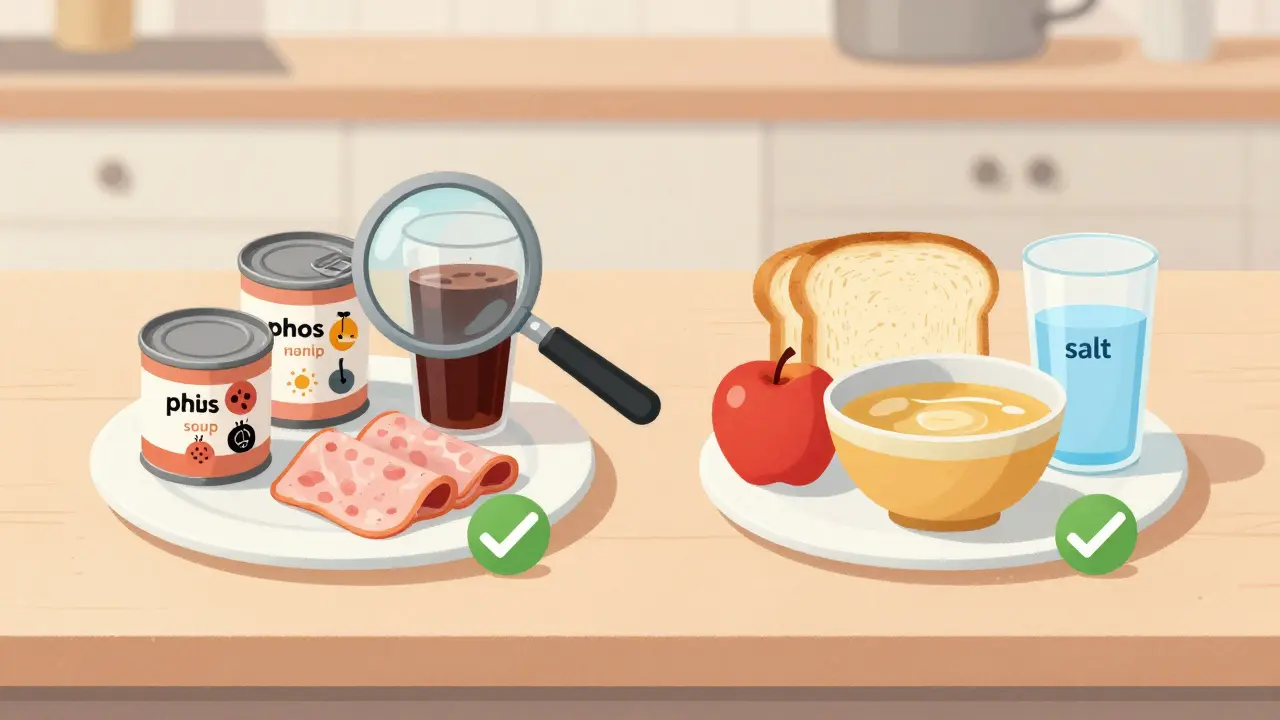
Sodium isn’t just about salt on your fries. It’s in everything: bread, soup, frozen meals, even some bottled waters. For someone with kidney disease, too much sodium means your body holds onto water. That raises your blood pressure, swells your legs, and puts extra strain on your heart. The current recommendation from KDIGO (Kidney Disease: Improving Global Outcomes) is to keep sodium under 2,300 mg per day. That’s about one teaspoon of table salt. But here’s the catch: most people get over 75% of their sodium from processed foods, not from the salt shaker.One can of canned soup can have 800 to 1,200 mg of sodium. A single slice of deli ham? Up to 500 mg. That means if you eat two meals with processed ingredients, you’ve already hit your daily limit before dinner. The fix? Read labels. Look for "low sodium," "no salt added," or "unsalted." Choose fresh meats over packaged ones. Cook with herbs like rosemary, thyme, or garlic powder instead of salt. The CDC says cutting sodium by 1,000 mg a day can lower systolic blood pressure by 5 to 6 points-big for someone with kidney issues.
Potassium: The Silent Risk
Potassium helps your muscles and heart beat normally. But when your kidneys fail, they can’t flush out the extra. That’s when levels climb dangerously high. Above 5.5 mEq/L, you risk irregular heartbeat-or worse. That’s why most people with stage 3-5 CKD are told to keep potassium under 3,000 mg per day. But here’s the twist: many "healthy" foods are loaded with it.Bananas? One has 422 mg. Avocados? 708 mg per half. Spinach? Cooked, it’s 840 mg per cup. These aren’t bad foods-they’re nutritious. But they’re risky if you have kidney disease. The solution isn’t to avoid them completely, but to manage portions and prep them smartly. For example, a small apple (150 mg potassium) is fine. Half a cup of blueberries (65 mg) is even better. Leaching vegetables helps too. Soak chopped potatoes, carrots, or beets in warm water for 2-4 hours, then boil them in plenty of fresh water. This can cut potassium by half. And remember: potassium from animal foods (like meat or dairy) gets absorbed more easily than from plants. So even if a vegetable has high potassium, it might be safer than a banana.
Phosphorus: The Hidden Enemy in Processed Foods
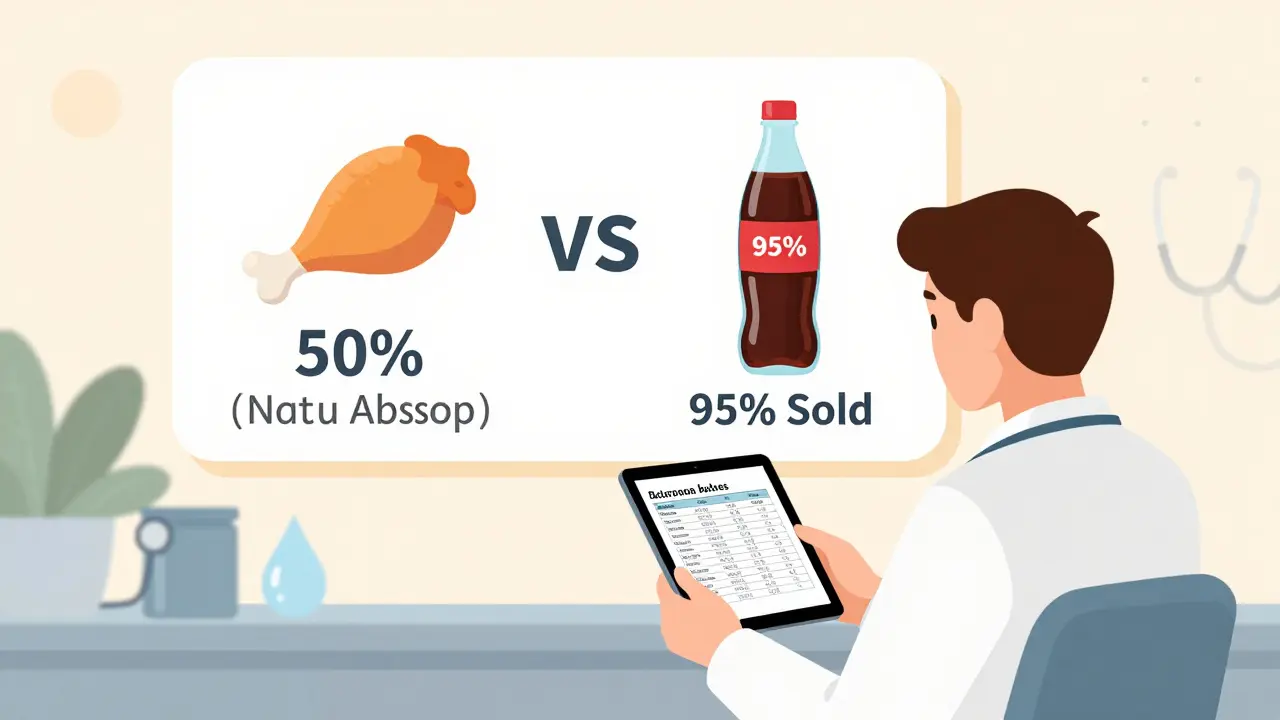
Phosphorus is everywhere in your body-bones, teeth, energy. But when kidneys fail, phosphorus builds up. That leads to weak bones, itchy skin, and hardening of the arteries. The KDOQI guidelines say non-dialysis CKD patients should aim for 800-1,000 mg per day. Sounds low? It is. But here’s the real problem: not all phosphorus is the same.Natural phosphorus in foods like chicken, eggs, or milk? Your body only absorbs about 50-70% of it. But add phosphorus additives-common in colas, processed cheese, deli meats, and packaged baked goods-and absorption jumps to 90-100%. That’s why a 12-ounce cola can have 450 mg of phosphorus, and one slice of processed cheese has 250 mg. You don’t even need to eat much to go over your limit. The fix? Avoid anything with "phos" in the ingredient list. Skip colas. Choose fresh meats over processed. Swap white bread (60 mg phosphorus per slice) for whole grain (150 mg). Drink water instead of flavored beverages. And if you’re on medication, your doctor may prescribe a phosphate binder to help block absorption.
What to Eat: Real Food Swaps That Work
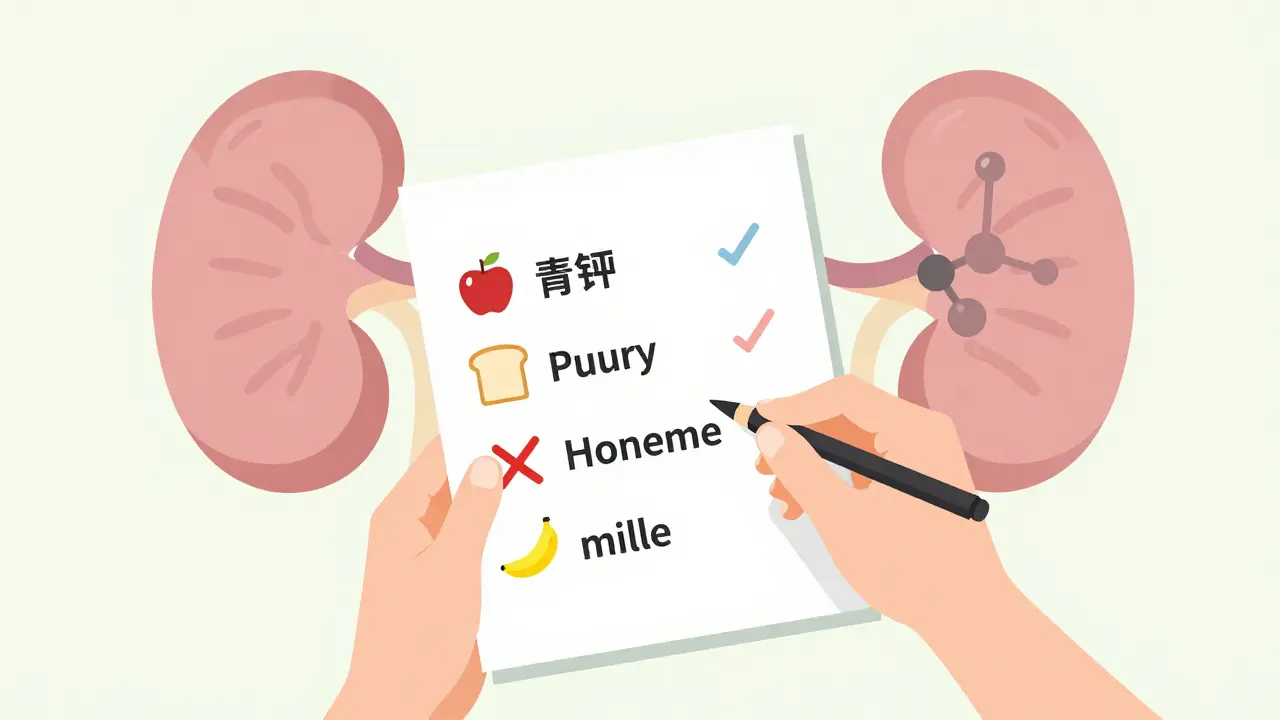
You don’t have to give up flavor or satisfaction. You just need to swap out the wrong choices for better ones. Here are simple swaps that make a big difference:- Instead of: Whole grain bread (150 mg phosphorus) → Try: White bread (60 mg)
- Instead of: Banana (422 mg potassium) → Try: Apple (150 mg)
- Instead of: Canned soup (1,000+ mg sodium) → Try: Homemade chicken broth with no salt added
- Instead of: Processed cheese (250 mg phosphorus) → Try: Fresh mozzarella (100 mg per slice)
- Instead of: Orange juice (496 mg potassium per cup) → Try: Cranberry juice (under 100 mg per cup)
Fish like cod, halibut, or salmon are great protein sources-low in sodium and moderate in potassium if you stick to 2-3 ounce portions a few times a week. Eggs are another solid option. And dairy? It’s tricky. Milk has 125 mg of phosphorus per half cup. If you need to cut back, try unsweetened rice milk or almond milk (check labels-some have added phosphorus).
Fluids and Other Hidden Triggers
Fluids often go hand-in-hand with electrolyte control. If your kidneys can’t make enough urine-say, less than 1 liter a day-you’ll need to limit fluids to about 32 ounces (1 liter). That includes water, coffee, tea, soup, ice cream, even gelatin. It’s tough, especially in hot weather. But drinking too much can lead to swelling, shortness of breath, and high blood pressure. Use small cups. Suck on ice chips instead of sipping water. And remember: sugar-free popsicles count as fluid too.Another thing people forget: some medications and supplements have hidden sodium, potassium, or phosphorus. Antacids? Some contain aluminum or calcium phosphate. Salt substitutes? Many are made with potassium chloride. Always check with your doctor or dietitian before taking anything new.
It Gets Easier-But You Need Support
Most people struggle in the first few months. The food tastes bland. Meal planning feels overwhelming. You miss your favorite snacks. But studies show it gets easier. The University of California San Francisco found that patients typically adapt within 3-6 months. And the payoff is real. Dr. Linda Fried at Columbia University says proper diet can delay dialysis by 6 to 12 months in stage 4 CKD patients. That’s half a year of living without needles, machines, and restrictions.Medicare now covers 3-6 sessions per year with a renal dietitian for stage 4 patients. That’s because every dollar spent on nutrition saves about $12,000 a year in avoided dialysis costs. Apps like Kidney Kitchen help track nutrients. Some hospitals now use AI tools that adjust recommendations based on your latest blood work. And new research is exploring how prebiotic fibers-like inulin in chicory root-might reduce phosphorus absorption by 15-20%.
What’s Changing in 2026
The old idea was "eat as little as possible." Now, experts say: "eat the right things." The European Renal Association argues that overly strict phosphorus limits (below 1,000 mg) don’t improve survival in non-dialysis patients. The new focus is on food quality over extreme restriction. A 2023 review in JAMA Internal Medicine found that people who ate more whole foods-even with moderate potassium or phosphorus-had better outcomes than those who ate ultra-processed low-nutrient foods.The FDA approved Keto-1 in 2023-the first medical food designed for CKD. It gives your body essential amino acids without the phosphorus or potassium overload. And the NIH launched the PRIORITY study in early 2024 to test whether genetic testing can predict how your body handles potassium and phosphorus. Soon, your diet might be personalized based on your DNA.
Common Mistakes to Avoid
- Thinking "natural" means safe. Fresh fruits and veggies can be high in potassium and phosphorus.
- Using salt substitutes. Many are pure potassium chloride-dangerous for kidney patients.
- Skipping meals or eating too little protein. Too little protein (under 0.55g per kg of body weight) increases muscle loss and malnutrition risk.
- Not checking labels. Phosphorus additives are everywhere-check for "phos," "phosphate," or "E numbers" like E338, E340.
- Assuming "low-fat" is kidney-friendly. Many low-fat products add sugar and sodium to compensate for flavor.
The key isn’t perfection. It’s awareness. You don’t have to eliminate every risky food. Just know which ones are troublemakers and how to manage them. A small apple instead of a banana. White bread instead of whole grain. Water instead of soda. These choices add up.
Can I still eat fruits and vegetables on a renal diet?
Yes-but you need to choose wisely and prep them right. Low-potassium options include apples, berries, cabbage, cauliflower, and green beans. Leaching (soaking and boiling) can cut potassium by up to 50% in starchy veggies like potatoes and carrots. Portion size matters: half a cup of cooked spinach is fine; one full cup is not.
Is dairy allowed on a renal diet?
Dairy has both potassium and phosphorus, so it’s limited. Half a cup of milk has about 125 mg of phosphorus and 150 mg of potassium. Unsweetened almond or rice milk (without added phosphorus) can be better alternatives. Cheese should be fresh and unprocessed-avoid processed slices or spreads, which are loaded with phosphorus additives.
Why are phosphorus additives worse than natural phosphorus?
Your body absorbs nearly all the phosphorus from additives (90-100%) compared to only 50-70% from natural sources like meat or beans. Additives are used in processed foods to preserve, flavor, or texture-and they’re not listed as "phosphorus" on labels. Look for words like "phosphate," "phosphoric acid," or "E338/E340"-these are red flags.
Can I use salt substitutes if I’m on a low-sodium diet?
No. Most salt substitutes are made with potassium chloride. For someone with kidney disease, this can spike potassium levels dangerously. Instead, use herb blends like Mrs. Dash, garlic powder, lemon juice, or vinegar to add flavor without sodium or potassium.
How much protein should I eat on a renal diet?
The current guideline is 0.55 to 0.8 grams of high-quality protein per kilogram of body weight per day. For a 70 kg person, that’s about 40-55 grams daily. Too little protein leads to muscle loss and weakness. Too much increases waste buildup. Stick to lean meats, eggs, and fish. Avoid excessive protein powders or supplements.
Do I need to limit fluids if I still urinate?
It depends on how much urine you make. If you’re making less than 1 liter per day, fluid restriction is usually needed to prevent swelling and high blood pressure. Your doctor or dietitian will give you a personalized limit. Even if you urinate, fluids from soup, ice cream, or even fruits count toward your daily total.
Managing a renal diet isn’t about restriction-it’s about empowerment. You’re not giving up food. You’re choosing foods that protect your body. With the right tools, support, and a little patience, you can eat well, feel better, and keep your kidneys working longer.





It’s funny how we treat food like a math problem when it’s really about rhythm. I used to think "low sodium" meant bland, but then I started using smoked paprika and lemon zest-suddenly, my meals felt like they had a heartbeat again. The real win? Not having to panic every time I see a label. It’s not about perfection, it’s about noticing. And yeah, I still eat a banana sometimes. Life’s too short for zero-risk diets.
Still, I wonder: if we focused more on food joy than food fear, would people stick with it longer? Maybe the real kidney hack is not the diet-it’s the mindset.
Also, typo: "E338/E340" should probably be "E338, E340". Just saying.
So… you’re telling me I can’t have my 12-pack of Coke and my 3lbs of deli ham anymore… and I’m supposed to be *grateful*?
Bro, this is actually super helpful. I’ve got a cousin on dialysis and I was clueless. Now I know why she’s always asking for apple slices instead of oranges. And the leaching trick? Mind blown. I’m trying it on her sweet potatoes this weekend.
Also, white bread > whole grain?? Wild. But I’ll trust the science. 🙌
Proper nutrition is not a luxury-it is a cornerstone of dignity in chronic illness. The discipline required to adhere to a renal diet reflects not limitation, but profound self-respect. Each choice, however small, is an act of courage. The body does not lie. When we honor its needs, it responds with resilience.
Let us not confuse restriction with deprivation. We are not losing food-we are gaining life.
And yes, the data supports this. Every dollar invested in dietitian care saves twelve in avoided hospitalization. This is not opinion. This is evidence.
This whole post is a joke. People with CKD are just lazy. If they just stopped eating carbs and drank more water, they wouldn’t need a "diet."
Also, "phos" in ingredients? That’s just how food is made. You think nature gives you "clean" phosphorus? LOL. Get real. Your kidneys are weak because you ate too much pizza as a teen. Fix your life, not your food labels.
Interesting. The shift from absolute phosphorus restriction to food matrix prioritization aligns with recent metabolic flux modeling. The bioavailability differential between organic and inorganic phosphate sources is well-documented in JASN 2022, but the clinical translation has been slow due to adherence metrics. Still, the FDA’s Keto-1 approval is a paradigm shift-finally, a pharmacologic adjunct that doesn’t just bind, but *replaces*. I’m curious if the PRIORITY study will stratify by APOE genotype. That’s the next frontier.
I’ve been on this diet for two years. It was brutal at first. I cried over my first meal of boiled zucchini and white toast. But now? I make these little herb-crusted cod fillets with lemon and thyme-I feel like a gourmet chef. And I’m not just surviving. I’m thriving.
To anyone starting out: you don’t have to do it all today. One swap. One day. That’s enough. You’re not failing. You’re learning.
And yes, I still have ice chips. They count. But they’re my little treats.
While I appreciate the thoroughness of this article, I must point out that the KDIGO guidelines are not universally applicable. The 2,300 mg sodium limit is based on population-level hypertension data, not renal outcomes. In fact, a 2021 meta-analysis in The Lancet found no mortality benefit below 3,500 mg in non-dialysis CKD patients. And the potassium restriction? Completely arbitrary. Many patients with stage 3 CKD tolerate 4,000 mg without issue. The fear-based messaging here is not just outdated-it’s harmful.
Also, why are you recommending white bread? It has a higher glycemic index. Are we trading phosphorus for insulin spikes? This is nutritional pseudoscience dressed as expertise.
Y’all are overthinking this. I’m a 52-year-old mechanic with CKD. I don’t read labels. I don’t soak potatoes. I just eat like I used to… but less of it.
Here’s my hack: skip the processed junk. No canned soup. No frozen pizza. No soda. Eat real food-eggs, chicken, rice, apples. If it comes in a bag with 17 ingredients, leave it. That’s it. Done.
Also, I use Mrs. Dash like it’s my personal DJ. "Savory Blend, baby!"