
You wake up with a cough. It’s dry and tickly, or maybe it’s deep and wet with phlegm. You grab the nearest bottle from the medicine cabinet-probably something with ‘DM’ on the label-and take a dose. But what if that’s the wrong choice? Taking a cough suppressant when you need an expectorant won’t just waste your money-it could make things worse.
What’s the Difference Between a Suppressant and an Expectorant?
Not all coughs are the same. And not all OTC cough medicines work the same way. There are two main types: cough suppressants and expectorants. They target completely different problems.
Cough suppressants, like those with dextromethorphan a non-narcotic ingredient that acts on the brain’s cough center to reduce the urge to cough, are meant for dry, hacking coughs that don’t bring up mucus. Think of it like turning down the volume on a loud alarm. The alarm (your cough) is still there, but you’re not hearing it as much.
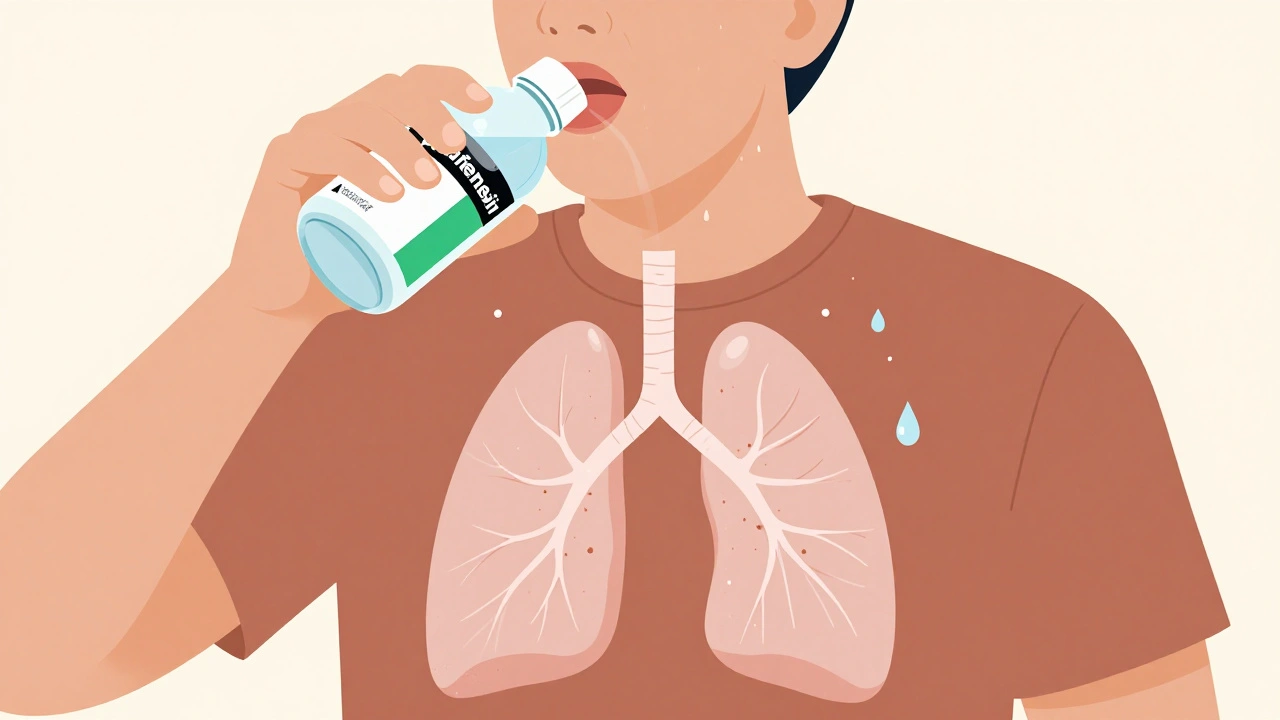
Expectorants, on the other hand, do the opposite. The only OTC expectorant approved by the FDA is guaifenesin a mucoactive agent that thins and loosens mucus in the airways to make it easier to cough up. It doesn’t stop your cough-it helps your body cough more effectively. If you’ve got a chest full of thick mucus, guaifenesin makes it less sticky so you can clear it out.
How Do They Actually Work?
Dextromethorphan works in your brain. It doesn’t numb your throat or kill germs. It just quiets the signal that tells you to cough. You’ll feel less of that irritating tickle, especially at night. Typical doses are 15-30 mg every 4 to 8 hours. Extended-release versions like Delsym last up to 12 hours.
Guaifenesin works in your lungs. It increases fluid in your airways, thinning out thick mucus so it’s easier to expel. Clinical studies show it can increase respiratory fluid volume by about 26% within 30 minutes. But here’s the catch: it only works if you drink enough water. Without at least 64 ounces (about 2 liters) of fluids a day, guaifenesin won’t do much. That’s why many people think it’s ineffective-they’re not hydrating.
Which One Should You Use?
Simple test: When you cough, do you bring up mucus?
- If YES-your cough is productive (wet), use an expectorant like Mucinex or a generic guaifenesin product.
- If NO-your cough is dry, scratchy, or keeps you awake at night, use a suppressor like Delsym or Robitussin DM (but only if it’s just dextromethorphan, not a combo).
Here’s what happens when you mix them up:
- Using a suppressant for a wet cough? You’re trapping mucus in your lungs. That’s like sealing a leak with duct tape instead of fixing the pipe. It can lead to longer infections or even pneumonia.
- Using an expectorant for a dry cough? You might end up coughing more. Your body’s trying to clear something that isn’t there.
According to a 2022 Kaiser Permanente survey, 43% of people used combination products (suppressor + expectorant) for the wrong type of cough. That’s more than 4 in 10 people. And it’s not just a mistake-it’s risky.
Common Products and What’s in Them
Not all cough medicines are created equal. Look at the active ingredients on the label. Here’s what to watch for:
| Brand Name | Active Ingredient | Type | Typical Dose |
|---|---|---|---|
| Mucinex | Guaifenesin | Expectorant | 600-1200 mg every 12 hours |
| Delsym | Dextromethorphan | Suppressant | 30 mg every 12 hours |
| Robitussin Chest Congestion | Guaifenesin | Expectorant | 200-400 mg every 4 hours |
| Robitussin Maximum Strength | Dextromethorphan | Suppressant | 15-30 mg every 4-8 hours |
| Robitussin DM | Dextromethorphan + Guaifenesin | Combination | Varies |
Watch out for combination products like Robitussin DM. They’re convenient, but if you don’t know what kind of cough you have, you’re taking both a suppressant and an expectorant at once. That’s like turning on the AC while opening the windows. You’re working against yourself.
What Experts Say
Pulmonologists and pharmacists are clear: don’t suppress a productive cough.
Dr. David Cutler, a family physician, puts it bluntly: “Using a suppressant for a productive cough is like putting a rock in your shoe then taking painkillers instead of removing the rock.”
The American College of Chest Physicians recommends expectorants for acute bronchitis (a common cause of wet coughs) but advises against suppressants in those cases. Their guidelines are based on solid evidence-grade 1B for avoiding suppressants, grade 2C for using expectorants.
Dr. Sumita Khatri from Cleveland Clinic adds: “Expectorants don’t treat the infection, but they help your body do its job better-like adding oil to a stiff hinge instead of silencing the squeak.”
The American Lung Association warns against using suppressants if you’re coughing up colored mucus (yellow, green, or bloody). That’s a sign your body is fighting an infection, and you need to clear it out-not stop the cough.
What Users Are Saying
Real people are sharing their experiences online. On Amazon and CVS, Mucinex (guaifenesin) has a 4.1/5 average rating. Most users who got it right say: “I finally slept through the night,” or “I could breathe easier after 24 hours.”
But the complaints are telling: 32% of negative reviews say it took too long to work. That’s usually because they didn’t drink enough water.
Delsym (dextromethorphan) has a 3.8/5 rating. People love how it stops the cough, but 27% report drowsiness. And on Reddit, users are constantly posting: “I used DM for my phlegmy cough… why did I feel worse?”
Pharmacists report that 40% of OTC cough medicine consultations are from people who picked the wrong type. It’s not a small issue-it’s the #1 mistake people make.
How to Use Them Right
Here’s how to avoid the common traps:
- Check your cough type-wet or dry? Use the CDC’s 3-question tool if you’re unsure.
- Drink water-at least 8 oz every hour when taking guaifenesin. No water? No effect.
- Read the label-look for “guaifenesin” or “dextromethorphan.” Ignore the brand names.
- Avoid combos-unless you’re sure you need both. Most people don’t.
- Wait 48 hours-if you’re not sure if your cough is wet or dry, wait. Sometimes it starts dry and turns wet.
- Don’t use suppressants at night if you have mucus-you’ll choke on it.
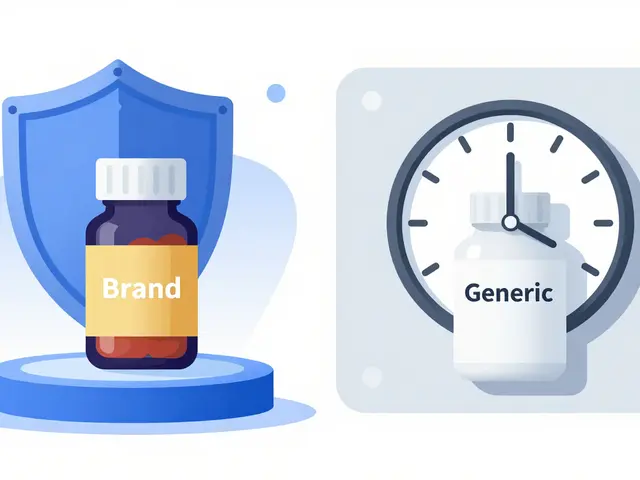
And here’s one more thing: store-brand guaifenesin is just as effective as Mucinex. The difference? Price. Mucinex costs about 3x more. A generic bottle of 600 mg tablets costs less than $5.
What’s New in 2025?
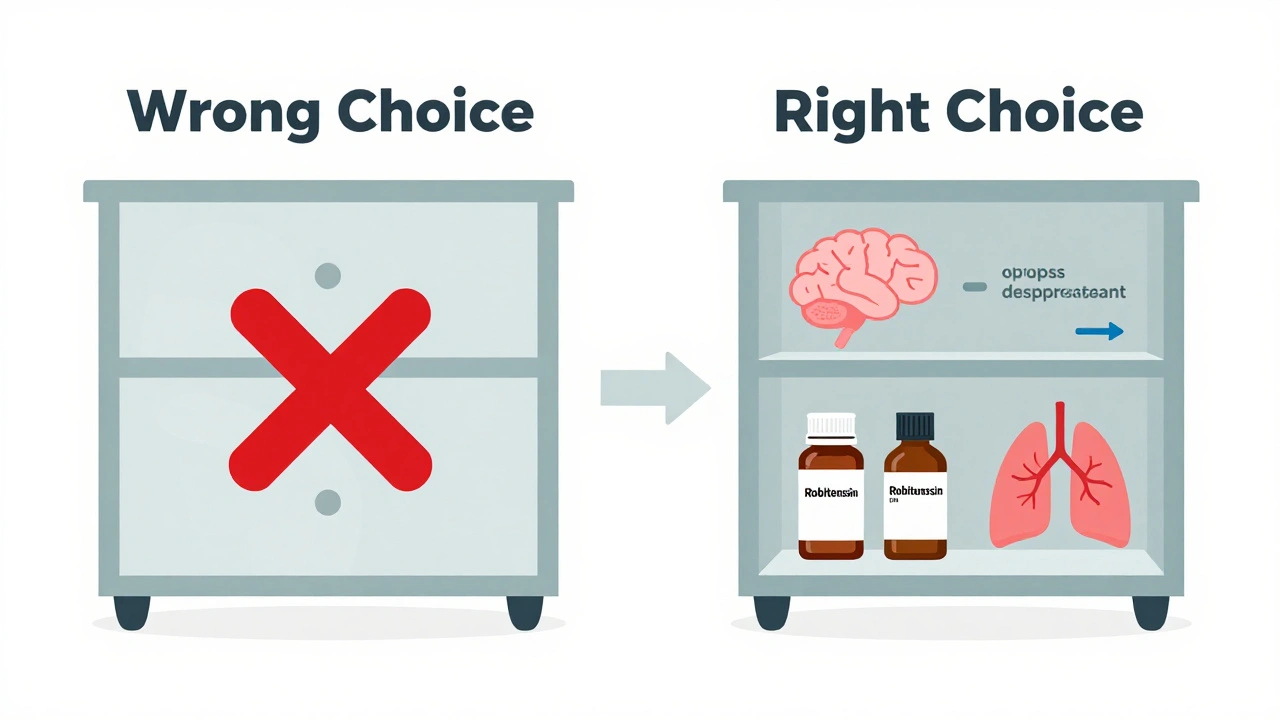
The FDA is making changes to reduce confusion. Starting in 2024, all OTC cough medicine labels will include pictograms: a brain icon for suppressants, a lung icon for expectorants. This is based on pilot studies showing a 35% drop in misselection.
There’s also a new version of Mucinex called MoistureLock, launched in March 2023, that releases hydration-boosting agents slowly to help guaifenesin work longer.
And researchers are testing a new dextromethorphan formula with naloxone to block misuse. High doses of dextromethorphan can cause hallucinations or dissociation-something teens and young adults have abused for years.
Who Should Avoid These Medicines?
Not everyone can use them safely.
- Children under 4-FDA advises against all OTC cough medicines. For kids 4-6, only use if a doctor says so.
- People on MAOIs-antidepressants like phenelzine or selegiline. Mixing with dextromethorphan can cause serotonin syndrome, a dangerous condition.
- People with COPD or asthma-suppressants can trap secretions and make breathing harder.
- Anyone with liver disease-both ingredients are processed by the liver.
If you’re on other meds, check with a pharmacist. It’s free, fast, and could save you from a bad reaction.
Final Takeaway
OTC cough medicines aren’t one-size-fits-all. The difference between a suppressant and an expectorant isn’t just chemistry-it’s about listening to your body.
Wet cough? Use guaifenesin. Drink water. Let your body clear the mucus.
Dry, sleepless cough? Use dextromethorphan. Just don’t use it for more than a few days.
And never, ever use a combination product unless you know exactly why you’re taking it. Most of the time, you don’t need both.
Next time you reach for that cough syrup, pause. Ask yourself: Am I trying to stop the cough-or help my body get rid of what’s causing it?
Can I take a cough suppressant and expectorant together?
You can, but you shouldn’t unless you’re sure you need both. Most people who take combination products like Robitussin DM are using them incorrectly. If you have a wet cough, the suppressant will trap mucus. If you have a dry cough, the expectorant won’t help and may make you cough more. Stick to single-ingredient products unless a pharmacist or doctor recommends otherwise.
Why doesn’t my guaifenesin seem to work?
Chances are you’re not drinking enough water. Guaifenesin needs fluid to thin mucus. Without at least 64 ounces (2 liters) of water a day, it won’t do much. Try drinking a full glass of water every time you take it. Also, give it time-it can take 24 to 48 hours to notice improvement.
Is dextromethorphan addictive?
At recommended doses (15-30 mg every 4-8 hours), no. But at high doses-usually 100 mg or more-dextromethorphan can cause hallucinations, dizziness, and dissociation. This is a known abuse issue, especially among teens. That’s why some new formulations are being tested with naloxone to block the high. Always follow the label.
Can I use these if I have asthma or COPD?
Be very careful. Cough suppressants can trap mucus in your airways, making breathing harder. Expectorants may help if you’re producing thick mucus, but only if you’re also using your inhalers correctly. Always talk to your doctor before using any OTC cough medicine if you have chronic lung disease.
What’s the best OTC cough medicine?
There’s no single ‘best’-it depends on your cough. For wet coughs, generic guaifenesin (like the store brand) is just as good as Mucinex and costs far less. For dry coughs, Delsym (extended-release dextromethorphan) lasts longer and works well. Avoid multi-symptom products unless you have multiple symptoms and know exactly what you need.
How long should I use these before seeing a doctor?
If your cough lasts more than 7-10 days, gets worse, or you’re coughing up blood, yellow/green mucus, or have a fever, see a doctor. OTC medicines only treat symptoms-they don’t cure infections. A persistent cough could be bronchitis, pneumonia, or even acid reflux.
Are children’s cough medicines safer?
No. The FDA doesn’t recommend any OTC cough or cold medicines for children under 4. For kids 4-6, only use if a doctor says so. Most pediatricians recommend honey (for kids over 1) and fluids instead. Many ‘children’s’ products still contain dextromethorphan or guaifenesin, just in lower doses-but they’re not proven to work better than home care.





Oh my GOD, I can't believe people still don't get this!! I had pneumonia last year because I took Robitussin DM for my wet cough-YES, I KNOW NOW-I was just trying to sleep, but NO, the mucus just sat there like a toxic swamp!! I nearly ended up in the ER!! This post is LIFE-SAVING!!
man i just learned something today 😅 i always thought cough meds were just "whatever works" but now i get it-like, if your lungs are full of sludge, you don't want to mute the alarm, you wanna fix the pipe!! also, guaifenesin + water = magic, not magic = guaifenesin alone 🤓💧
Why are we even using American OTC meds? In Germany they have proper herbal expectorants that actually work without needing you to chug a bathtub of water. And dextromethorphan? That’s just a party drug with a prescription label. We’re so backwards here.
I’ve been using generic guaifenesin for years. Always with water. Always at night. Always works. No brand name needed. Just science.
Wait… so the FDA is adding pictograms? That’s not a solution-that’s a cover-up. Who’s really controlling what’s on these labels? Big Pharma? The CDC? They’ve been hiding the truth about dextromethorphan for decades-now they’re just putting a brain icon on it like that makes it safe? I’ve seen the data-this is all about profit, not health.
Interesting breakdown. One thing I’d add-people forget that cough reflex is a protective mechanism. Suppressing it in bronchitis isn’t just ineffective-it’s physiologically counterproductive. The cilia need to move mucus out, and if you silence the cough, you’re essentially disabling the clearance system. Also, hydration isn’t optional-it’s pharmacokinetic. Without it, guaifenesin is just a sugar pill with a fancy label.
The entire OTC cough medicine industry is a textbook case of pharmaceutical misdirection. The fact that combination products dominate the shelves while single-ingredient options are relegated to the back of the aisle speaks volumes about marketing over medical logic. And the 43% misselection rate? That’s not consumer ignorance-it’s systemic design. They want you confused. They want you buying more. The FDA’s new pictograms? A PR stunt. The real fix would be to ban combination products outright, but that would cost them billions.
i live in india and we use tulsi and honey for cough… but i tried guaifenesin last winter when i had cold and it worked good with water 🤗
Just read this after taking Robitussin DM yesterday… yeah, i feel like a dummy. Wet cough, took suppressant. Now i’m coughing more. Time to grab some Mucinex and drink a gallon of water. Thanks for the wake-up call.