Imagine being told your cancer is aggressive. That was the reality for patients with HER2-positive breast cancer is a specific subtype of breast cancer characterized by an overexpression of the HER2 protein on cancer cells, which drives rapid tumor growth and metastasis. About 15% to 20% of all breast cancer cases fall into this category. For decades, this diagnosis meant a tougher fight and lower survival rates. But then came a breakthrough that changed everything: targeted therapies.
These drugs don't just blast away at cells like traditional chemotherapy; they hunt down the specific machinery fueling the cancer. Today, HER2-positive breast cancer has gone from one of the most dangerous forms to one with some of the best treatment outcomes in oncology. If you or a loved one are navigating this diagnosis, understanding these tools is key. Here is what you need to know about how these therapies work, the options available, and what to expect.
How Targeted Therapies Work Against HER2
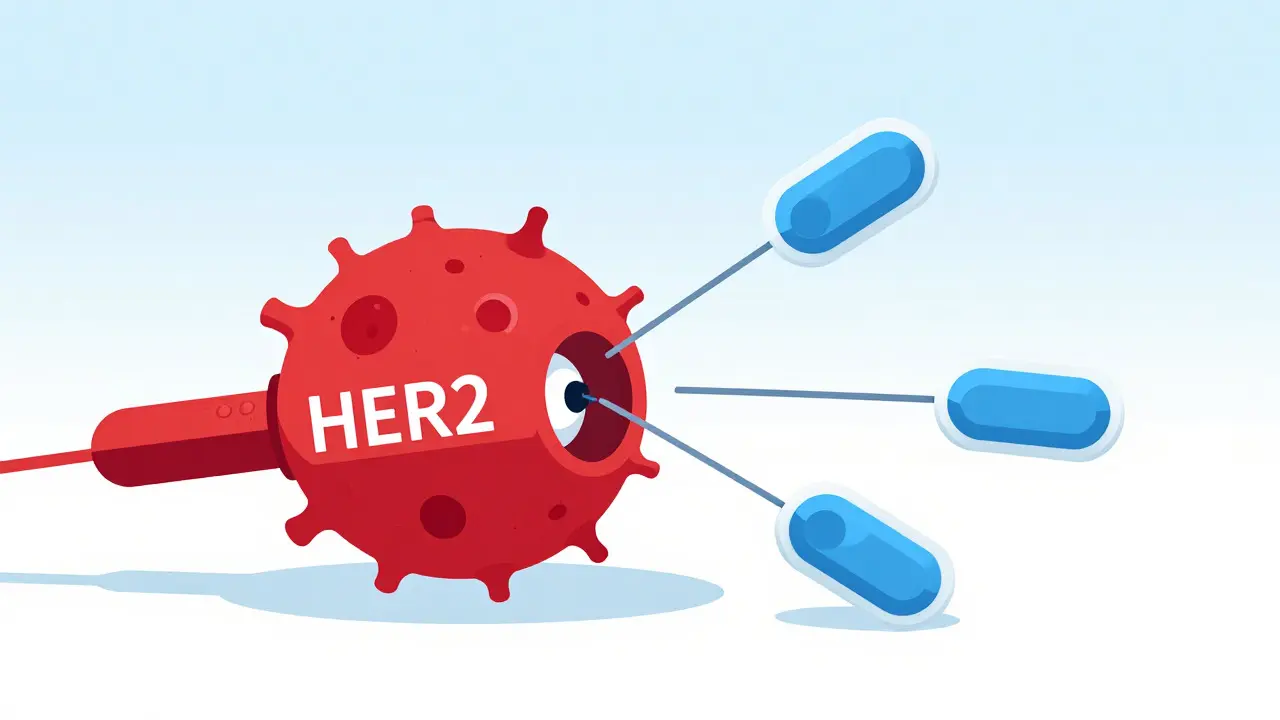
To understand the treatment, you have to understand the enemy. The HER2 protein (human epidermal growth factor receptor 2) sits on the surface of certain breast cancer cells. In healthy cells, it helps with growth. In HER2-positive cancer, there are too many of these receptors-sometimes hundreds of times more than normal. They act like gas pedals stuck to the floor, telling the cell to divide uncontrollably.
Targeted therapies are medications designed to block these signals. Instead of killing all fast-growing cells (which causes hair loss and nausea), they specifically attach to the HER2 receptors. This blocks the signal, stops the cell from multiplying, and often flags the cell for destruction by your immune system. It’s precision medicine in action.
The Backbone: Monoclonal Antibodies
The first line of defense involves monoclonal antibodies. These are lab-made proteins that bind to the HER2 receptor. The gold standard here is Trastuzumab is a monoclonal antibody originally marketed as Herceptin, approved in 1998, which revolutionized the treatment of HER2-positive breast cancer by significantly improving survival rates.
- Trastuzumab (Herceptin): This drug has been the cornerstone of treatment for over two decades. It can be given through an IV infusion or as a subcutaneous injection under the skin. Biosimilars like Kanjinti, Ogivri, and Ontruzant are now widely available, offering the same efficacy at a lower cost.
- Pertuzumab (Perjeta): This drug works differently than trastuzumab. While trastuzumab binds to one part of the HER2 receptor, pertuzumab binds to another area, preventing the receptor from pairing up with other proteins. This "dual blockade" is often used together with trastuzumab for larger tumors or advanced disease.
- Phesgo: This is a fixed-dose combination of pertuzumab and trastuzumab. It’s administered as a single subcutaneous injection, cutting treatment time from hours to minutes-a huge quality-of-life improvement for patients undergoing long-term therapy.
Antibody-Drug Conjugates (ADCs): Precision Bombs
If monoclonal antibodies are the scouts, ADCs are the special forces. An antibody-drug conjugate attaches a powerful chemotherapy drug to a monoclonal antibody. The antibody guides the chemo directly to the HER2-positive cell, releasing the toxin inside while sparing healthy tissue.
Two major ADCs have reshaped the landscape:
- T-DM1 (Kadcyla): Often used after trastuzumab-based treatments stop working. It delivers a cytotoxic agent called DM1 directly to the cancer cell.
- T-DXd (Enhertu): This newer agent has shown remarkable results. In the DESTINY-Breast03 trial, T-DXd reduced the risk of disease progression or death by 72% compared to T-DM1. It is now a preferred option for many patients with metastatic disease. However, it carries a boxed warning for interstitial lung disease (ILD), a serious side effect affecting the lungs, so monitoring is critical.
Tyrosine Kinase Inhibitors (TKIs): Small Molecules with Big Impact
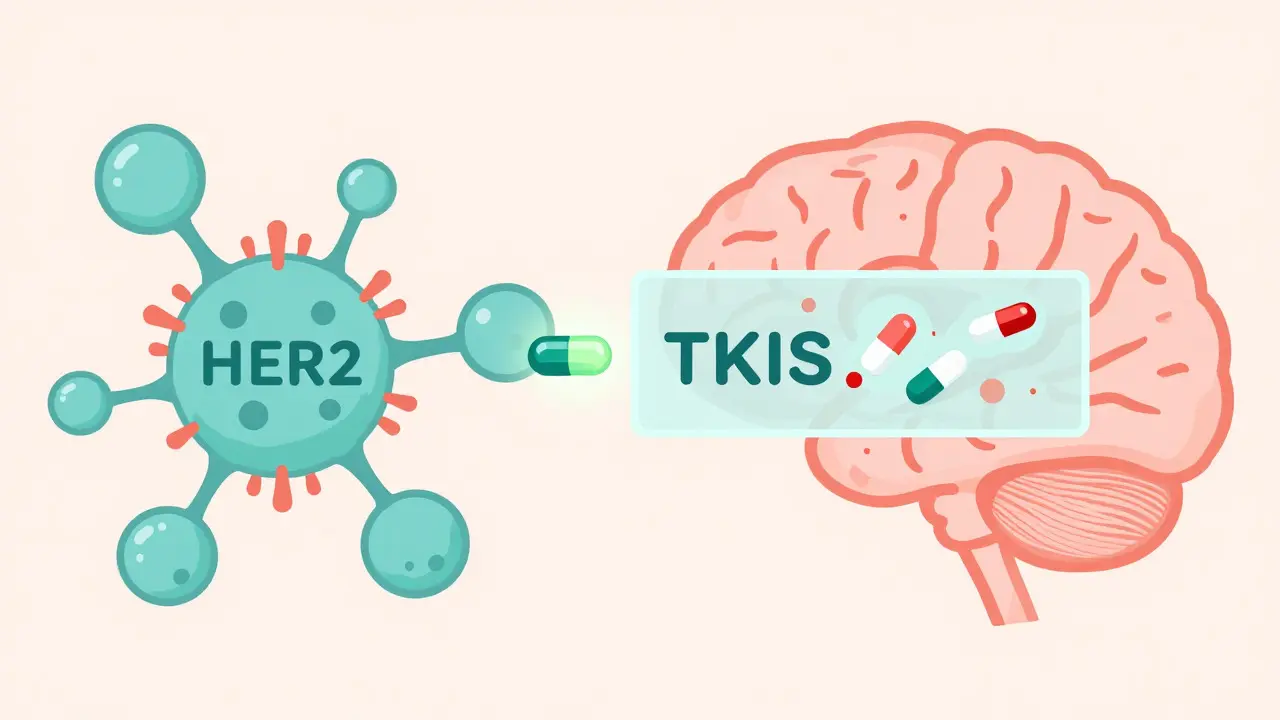
While antibodies are large molecules that stay mostly in the blood, tyrosine kinase inhibitors are small pills that can penetrate tissues more easily-including the brain. This makes them crucial for patients with brain metastases.
Tucatinib is a tyrosine kinase inhibitor approved in 2020, notable for being the first oral medication proven effective against brain metastases in HER2-positive breast cancer patients.
- Tucatinib (Tukysa): Clinical trials showed that when combined with trastuzumab and capecitabine, tucatinib improved overall survival for patients with brain metastases. It crosses the blood-brain barrier effectively, addressing a historical weakness in HER2 treatment.
- Neratinib (Nerlynx) and Lapatinib (Tykerb): These older TKIs are still used in specific scenarios. Neratinib is often used as extended adjuvant therapy to prevent recurrence. However, they come with significant gastrointestinal side effects, particularly diarrhea, which requires proactive management with medications like loperamide.
Side Effects and Monitoring: What to Watch For
Targeted therapies are generally easier to tolerate than traditional chemo, but they are not without risks. Knowing what to look for helps you stay safe and comfortable.
| Therapy Class | Key Drug Examples | Primary Side Effects | Monitoring Required |
|---|---|---|---|
| Monoclonal Antibodies | Trastuzumab, Pertuzumab | Infusion reactions, fatigue, mild heart issues | Echocardiogram every 3 months to check heart function (LVEF) |
| Antibody-Drug Conjugates | T-DXd (Enhertu), T-DM1 | Interstitial lung disease (T-DXd), low platelets (T-DM1) | Lung scans/symptoms checks, blood counts |
| Tyrosine Kinase Inhibitors | Tucatinib, Neratinib | Diarrhea, hand-foot syndrome, liver enzyme changes | Blood tests for liver function, hydration status |
Cardiotoxicity is the big concern with trastuzumab and pertuzumab. About 2-7% of patients develop symptomatic heart failure. Regular echocardiograms are non-negotiable. If your ejection fraction drops, your doctor might pause treatment temporarily. For TKIs, diarrhea is the main hurdle. Don’t wait until it’s severe-start anti-diarrheal meds at the first sign of loose stools.

The Rise of HER2-Low Breast Cancer
Here is a game-changer: the definition of HER2-positive has expanded. Previously, only tumors with high levels of HER2 protein qualified for these drugs. Now, thanks to the DESTINY-Breast04 trial, we recognize "HER2-low" breast cancer (IHC 1+ or 2+/FISH negative). This group represents about 50-60% of all metastatic breast cancer patients.
T-DXd (Enhertu) is now recommended for HER2-low patients who haven’t responded well to other treatments. This means millions more people who were previously told they had "no target" now have a highly effective option. It’s a massive shift in how we classify and treat the disease.
Living Through Treatment: Practical Tips
Dealing with HER2-positive breast cancer is a marathon, not a sprint. Here is how to make the journey smoother:
- Ask about subcutaneous injections: If you’re on trastuzumab/pertuzumab, ask if Phesgo or subcutaneous formulations are right for you. Saving hours in the clinic adds up over a year of treatment.
- Manage expectations with your care team: Be honest about side effects. If diarrhea is ruining your day, tell your oncologist. There are protocols to manage it before it becomes dangerous.
- Stay informed but avoid doom-scrolling: Read reputable sources like the American Cancer Society or Breast Cancer Research Foundation. Avoid forums that focus only on worst-case scenarios.
- Protect your heart: Keep up with those echo appointments. A healthy heart means you can stay on the life-saving drugs longer.
Future Directions: What’s Next?
Research isn’t stopping. Scientists are developing bispecific antibodies that target two parts of the HER2 receptor at once, aiming to overcome resistance. Trials are testing combinations of ADCs with immunotherapy to boost the body’s natural defenses. And efforts are underway to create even safer drugs that spare the heart and lungs while maintaining potency.
The goal is clear: turn HER2-positive breast cancer into a manageable chronic condition, or better yet, cure it completely. With new agents entering the pipeline every year, the outlook continues to improve.
What is the difference between HER2-positive and HER2-low breast cancer?
HER2-positive breast cancer has high levels of the HER2 protein (IHC 3+ or FISH positive), making it eligible for all HER2-targeted therapies. HER2-low breast cancer has lower levels (IHC 1+ or 2+/FISH negative). Until recently, HER2-low patients didn't qualify for targeted drugs, but now T-DXd (Enhertu) is approved for this group, expanding treatment options significantly.
Can HER2-targeted therapies cause heart problems?
Yes, particularly trastuzumab and pertuzumab. They can weaken the heart muscle, leading to a drop in left ventricular ejection fraction (LVEF). This is why regular echocardiograms are required during treatment. In most cases, the heart function recovers if treatment is paused or stopped, but close monitoring is essential.
Which therapy is best for brain metastases?
Tucatinib (Tukysa) is currently the leading oral option because it crosses the blood-brain barrier effectively. Clinical trials have shown it improves survival in patients with brain metastases when combined with trastuzumab and capecitabine. Traditional antibodies like trastuzumab do not cross the barrier well on their own.
What is T-DXd (Enhertu) and why is it important?
T-DXd is an antibody-drug conjugate that delivers a potent chemotherapy drug directly to HER2-expressing cells. It is highly effective for both HER2-positive and HER2-low metastatic breast cancer. It has shown superior results compared to older ADCs like T-DM1, reducing the risk of disease progression by 72% in key trials. However, it requires careful monitoring for lung inflammation.
Are biosimilars of Herceptin as effective as the original drug?
Yes. Biosimilars like Kanjinti, Ogivri, and Ontruzant are rigorously tested to ensure they have no clinically meaningful differences from the original trastuzumab. They offer the same safety and efficacy profiles but are often less expensive, increasing access to this vital treatment.