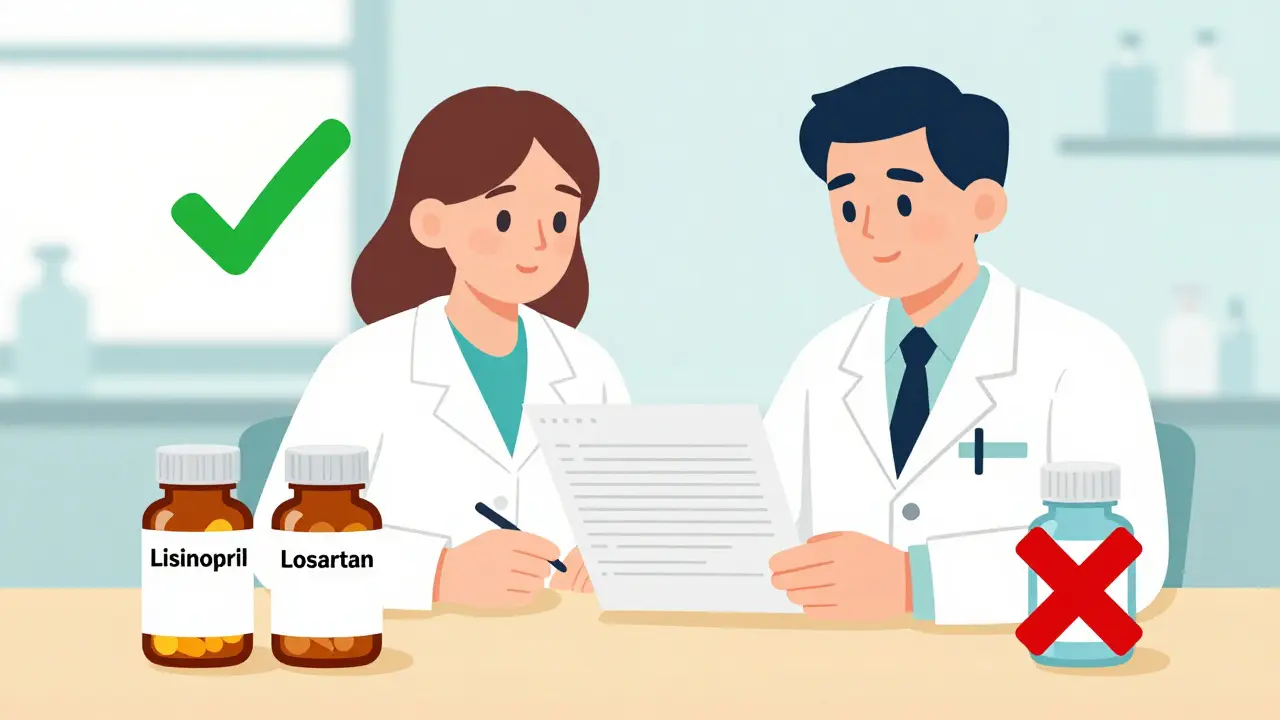
Let’s cut through the confusion right away: therapeutic interchange does not mean switching from one drug class to another. That’s a common misunderstanding - even among some healthcare workers. When a provider talks about therapeutic interchange, they’re not replacing a blood pressure pill with a diabetes drug. They’re swapping one medication for another in the same class - like switching from lisinopril to losartan, both ACE inhibitors or ARBs. The goal? Keep the same clinical outcome, but save money, reduce side effects, or improve adherence.
This isn’t a new idea. Since at least 2002, over 80% of U.S. hospitals have used therapeutic interchange programs. It’s not a loophole. It’s a structured, evidence-based process. And it’s not something a pharmacist just does on their own. There are rules. There are committees. And there are legal boundaries that vary from state to state.
What Therapeutic Interchange Actually Is (And Isn’t)
Therapeutic interchange is when a pharmacist substitutes a prescribed drug with another drug from the same therapeutic class that has been pre-approved as clinically equivalent. It’s not generic substitution - that’s when you swap a brand-name drug for its exact chemical copy. Therapeutic interchange is more nuanced. You’re trading one chemically different drug for another that does the same job.
For example:
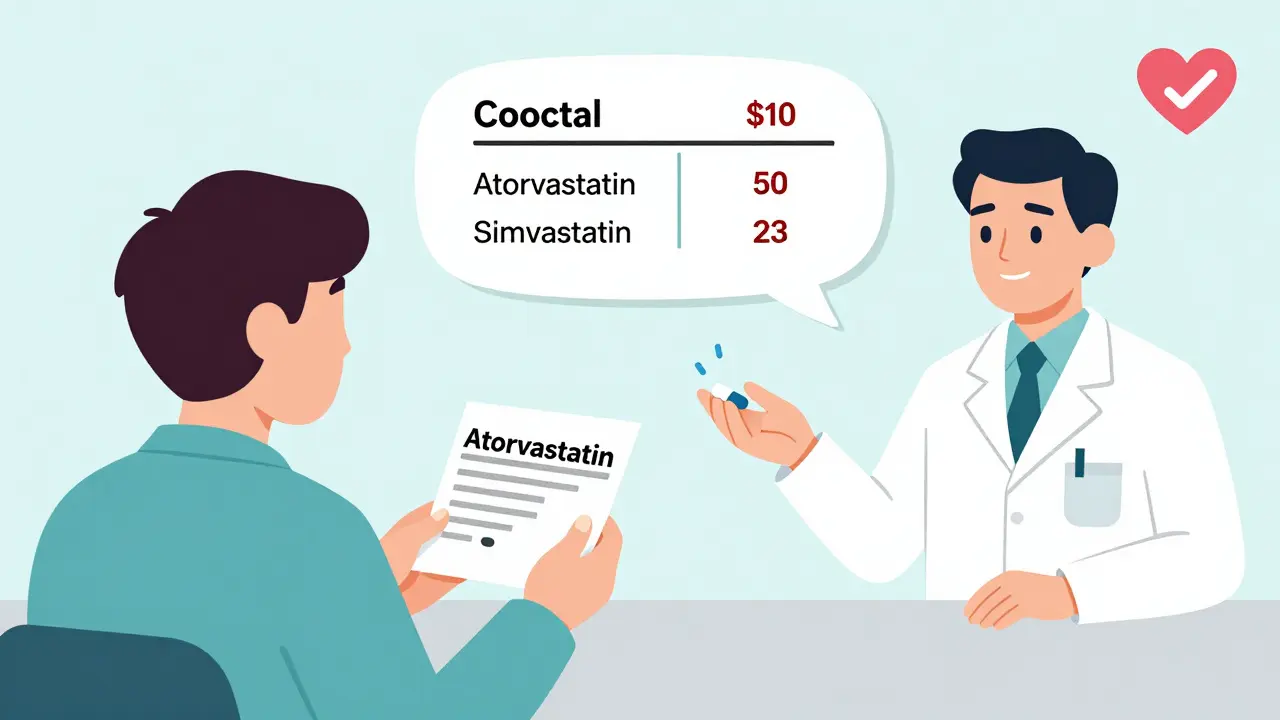
- Prescribed: Atorvastatin a statin used to lower LDL cholesterol
- Interchanged with: Simvastatin a different statin with similar lipid-lowering effects
But if a patient is prescribed Metformin a biguanide used for type 2 diabetes and someone tries to switch them to Losartan an ARB used for high blood pressure, that’s not therapeutic interchange. That’s a dangerous mistake.
The American College of Clinical Pharmacy (ACCP) a professional organization that sets standards for clinical pharmacy practice is clear: therapeutic interchange only applies to drugs within the same class. The Pharmacy and Therapeutics (P&T) Committee a multidisciplinary group that manages a hospital’s formulary and drug policies at every major hospital reviews the evidence - effectiveness, safety, cost - before approving any substitution.
Who Decides What Gets Substituted?
It’s not the pharmacist. It’s not the doctor alone. It’s a team.
Every hospital or long-term care facility with a therapeutic interchange program has a P&T Committee. This group includes pharmacists, physicians, nurses, and sometimes even patients or family advocates. They don’t just pick drugs based on price. They look at clinical trials, real-world outcomes, side effect profiles, and how well patients stick with the medication.
Take a skilled nursing facility in Georgia. They used to prescribe Warfarin a vitamin K antagonist used as an anticoagulant for stroke prevention. But warfarin requires frequent blood tests, has dozens of food and drug interactions, and is expensive. After reviewing data from the American Heart Association a leading organization that sets cardiovascular treatment guidelines and local outcomes, the P&T Committee approved switching to Rivaroxaban a direct oral anticoagulant (DOAC) that doesn’t need monitoring for stable patients. The change cut lab costs by 60% and reduced hospital readmissions due to bleeding.
But here’s the catch: they didn’t just flip the switch. They created a TI letter - a formal document signed by every prescriber in the facility. That letter says: "I approve substituting warfarin with rivaroxaban for patients meeting these criteria." Without that, the substitution can’t happen legally.
Why It Works - And Where It Fails
Therapeutic interchange saves money. A lot of it.
SRX Technologies reports skilled nursing facilities can save tens of thousands of dollars per month just by using approved interchange programs. In one case, a facility switched 300 residents from brand-name Alendronate a bisphosphonate used to treat osteoporosis to generic Risedronate another bisphosphonate with similar efficacy and lower cost. The annual savings? $187,000. No drop in bone density, no increase in fractures. Just better financial management.
But it doesn’t work everywhere. In community pharmacies? Almost never. Why? Because state laws are all over the place. Some states allow pharmacists to initiate interchange if the prescriber has signed a blanket authorization. Others require a new prescription every time. In South Carolina, a pharmacist can’t change a patient’s Metoprolol a beta-blocker used for hypertension and arrhythmias to Atenolol another beta-blocker without calling the doctor. In California? If the prescriber has a TI letter on file, they can.
The biggest failure? When the substitution doesn’t match the patient’s needs. A diabetic with kidney disease might do fine on Metformin, but if you swap them to Sitagliptin a DPP-4 inhibitor without checking kidney function, you could miss a critical contraindication. That’s why P&T Committees build in exceptions. If a patient has allergies, renal issues, or history of adverse reactions - the interchange doesn’t apply.

The Role of Formularies - The Backbone of Interchange
Every therapeutic interchange program lives and dies by its formulary. A formulary isn’t just a list of approved drugs. It’s a living document, updated quarterly, based on new evidence, cost data, and patient outcomes.
At a large hospital in Atlanta, the P&T Committee reviews new data every three months. When a study came out showing Empagliflozin an SGLT2 inhibitor for type 2 diabetes with cardiovascular benefits reduced heart failure hospitalizations in high-risk patients, they added it to the formulary - even though it was more expensive. Why? Because it saved money long-term by preventing costly ER visits.
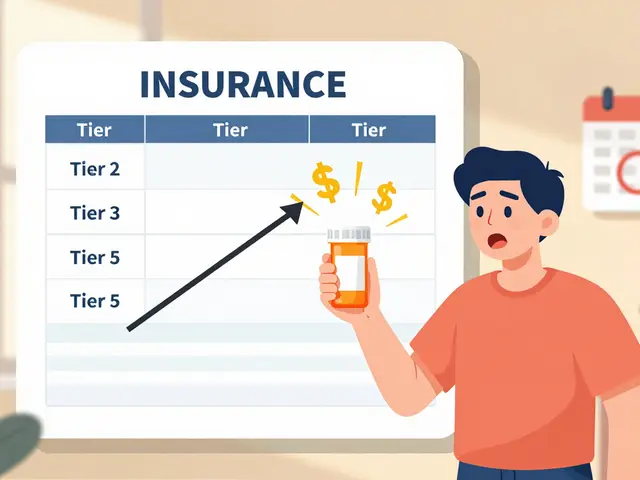
Formularies also include "tier" systems. Tier 1: low-cost, high-efficacy drugs. Tier 2: slightly more expensive but still preferred. Tier 3: only used if the first two don’t work. Therapeutic interchange typically only moves patients between Tier 1 and Tier 2 drugs - never down to a less effective option.
And yes, patients are involved. The American Heart Association insists that therapeutic interchange must include patient input. If a patient says, "I tried that other drug before - it gave me terrible nausea," the pharmacist doesn’t push it. The formulary has exceptions built in.
What Providers Need to Know
If you’re a provider, here’s what you need to do:
- Know your facility’s formulary. If you don’t, ask the pharmacy department for a copy.
- Sign the TI letter if requested. It’s not paperwork - it’s a clinical decision.
- Don’t assume all drugs in a class are the same. Fluoxetine an SSRI antidepressant and Paroxetine another SSRI both treat depression, but paroxetine has more side effects in older adults.
- Document why you chose a specific drug. If a patient has a history of falls, avoid Clonazepam a benzodiazepine used for anxiety and seizures even if it’s on the formulary.
- Be ready to explain the change to your patient. Many think "switching drugs" means they’re getting a worse treatment. Show them the data.
Why This Matters Now
Drug prices keep rising. In 2018, the average drug price jumped 8%. In 2026? It’s worse. For hospitals, nursing homes, and clinics operating on thin margins, therapeutic interchange isn’t optional - it’s survival.
But it’s not about cutting corners. It’s about smart, safe, evidence-based care. A 2021 study in the Journal of Pharmacy Practice showed that facilities with strong P&T Committees had 30% fewer adverse drug events than those without.
Therapeutic interchange is one of the few tools in healthcare that actually improves outcomes while reducing costs. It’s not magic. It’s method. And it only works when everyone - pharmacists, prescribers, and patients - understands what it really means.
Is therapeutic interchange the same as generic substitution?
No. Generic substitution means replacing a brand-name drug with its exact chemical duplicate - like switching from Lipitor to atorvastatin. Therapeutic interchange means swapping one drug for another in the same class that’s chemically different but clinically similar - like switching from lisinopril to losartan. One is about chemical identity; the other is about therapeutic equivalence.
Can a pharmacist initiate therapeutic interchange without the prescriber’s approval?
In most cases, no. While some states allow pharmacists to make substitutions under a blanket prescriber authorization (called a TI letter), the vast majority require direct approval from the prescriber. In community pharmacies, pharmacists almost always have to call the doctor first. It’s not a decision they make alone.
Why don’t all drugs in the same class work the same way?
Even within the same class, drugs can vary in how they’re absorbed, how long they last, and what side effects they cause. For example, all statins lower cholesterol, but simvastatin is more likely to cause muscle pain than rosuvastatin. All beta-blockers reduce heart rate, but propranolol can worsen asthma, while atenolol is safer. That’s why formularies are so detailed - they account for these differences.
Does therapeutic interchange affect patient outcomes?
When done correctly, it improves outcomes. Studies show patients on interchange programs have fewer hospital readmissions, lower rates of adverse events, and better medication adherence. Why? Because cost savings mean patients are more likely to fill their prescriptions. A cheaper drug that’s taken regularly is always better than an expensive one that’s skipped.
Are there any drugs that should never be interchanged?
Yes. Drugs with narrow therapeutic indexes - like digoxin, warfarin, or lithium - are rarely interchanged because small changes in dose or formulation can lead to serious toxicity. Also, drugs used for specific conditions - like insulin for type 1 diabetes - are almost never substituted, even within class, because of how tightly dosed they need to be.
Next Steps for Providers
If you’re a clinician, start by asking your pharmacy department: "What’s our current formulary? How does therapeutic interchange work here? Can I see the TI letter template?" Don’t wait for a crisis. Get informed now.
If you’re in a facility without a P&T Committee, push for one. It’s not bureaucracy - it’s patient safety. And if you’re a patient, ask your pharmacist: "Is this substitution based on a formulary? Has my doctor approved it?" You have the right to know.
Therapeutic interchange isn’t about cutting costs at the expense of care. It’s about delivering the same care - better, safer, and more sustainably. And that’s something every provider should understand.






This is exactly why I love pharmacy teams. Not just the meds, but the thought behind them. Swap lisinopril for losartan? Sure. But only if the patient's kidneys are okay and they're not on a potassium diet. It's not about saving a buck-it's about keeping people out of the ER.
In India we dont have this luxury. Most patients cant even afford the brand name. Generic substitution is the only option. But the principle is the same: same effect, lower cost. We just dont have the committees to formalize it. Still, it works.
They're just hiding cost cuts under fancy words. Therapeutic interchange? More like pharmacy-driven rationing. What happens when the cheaper drug causes a stroke because someone didn't read the fine print? This is how people die in hospitals. And they call it 'evidence-based' like that makes it okay.
Oh honey, you're talking about the pharmaceutical equivalent of swapping a Ferrari for a Honda Civic and calling it 'therapeutic equivalence.' Sure, both have four wheels and an engine. But one makes you feel like a god on the highway. The other? You're just trying not to get road rage. And don't get me started on the P&T committees-they're basically corporate focus groups with lab coats.
I've seen this work firsthand. A patient on warfarin was getting monthly INRs, missing appointments, and still having clots. Switched to rivaroxaban-no more labs, better adherence, zero bleeds. It's not magic. It's medicine. And if you're still skeptical, ask the patient who didn't have to take a 6 a.m. blood draw every 2 weeks.
You know who benefits most from these 'interchange' programs? The insurance companies. And the pharmacy benefit managers. And the hospital administrators. Not the patient. Ever wonder why the same drug costs $3 in Canada and $120 here? This isn't about care. It's about profit margins dressed up as clinical wisdom.
I appreciate the nuance, but let's be real-this is just a backdoor for formulary restrictions. Providers don't have time to review every substitution. So they sign the TI letter without reading it. Then, when the patient develops rhabdomyolysis from simvastatin + grapefruit juice? Suddenly it's 'off-label' and the pharmacist gets blamed. It's a liability lottery.
🚨 BIG RED FLAG 🚨 This whole system is a Trojan horse for Big Pharma. They design the formularies. They fund the P&T committees. They push the 'equivalent' drugs that have patent extensions. And then they laugh all the way to the bank while patients get stuck on a $400/month drug that's 'clinically equivalent' to a $10 generic. Wake up, people. This isn't healthcare-it's a rigged game.
I've been in this field for 20 years. I've seen therapeutic interchange save lives and I've seen it nearly ruin one. The difference? Communication. When the pharmacist explains why they switched, and the provider supports it, and the patient understands-magic happens. When it's silent? Disaster. Always document. Always ask. Always listen.
The entire premise is flawed. You cannot equate pharmacokinetic profiles across molecules. Even within the same class, the binding affinities, half-lives, and CYP interactions vary significantly. To suggest interchangeability without pharmacogenomic screening is not just irresponsible-it is statistically indefensible. The ACCP standards are outdated and underpowered. This is not evidence-based medicine. It is algorithmic negligence.
I just want to say thank you to the pharmacists who do this right. You're the unsung heroes. You're the ones catching the drug interactions, checking renal function, calling the prescriber when something doesn't add up. This system works because of you. Not because of the paperwork. Because of your judgment.
I had a patient once who got switched from atorvastatin to simvastatin. No one told her. She showed up with a muscle biopsy. Turned out she had undiagnosed McArdle’s. The pharmacist didn’t know. The doctor didn’t know. The formulary didn’t care. Don’t let 'evidence-based' make you blind to the person on the other side of the script.
In Indonesia, we don't have formularies. We have pharmacies that sell whatever the patient can afford. Sometimes that's a generic. Sometimes it's a neighbor's leftover pill. But we still try to match the class. It's messy. It's imperfect. But it's care. And sometimes, that's all we have.
The notion that therapeutic interchange is a standardized, clinically rigorous process is a myth perpetuated by academic institutions with grant funding. Real-world adherence to these protocols is negligible. Most community pharmacies operate under time constraints and regulatory ambiguity. The P&T committee is a symbolic gesture. The real decision-maker? The pharmacy technician under pressure to fill 50 scripts before lunch.
lol so we're just gonna swap out drugs like trading baseball cards now? 🤡 'Oh sweetie, you had a nice statin? Here's a cheaper one that might turn your muscles into Jell-O!' 🍹💊 #PharmaGamble #TherapeuticInterchangeMyAss