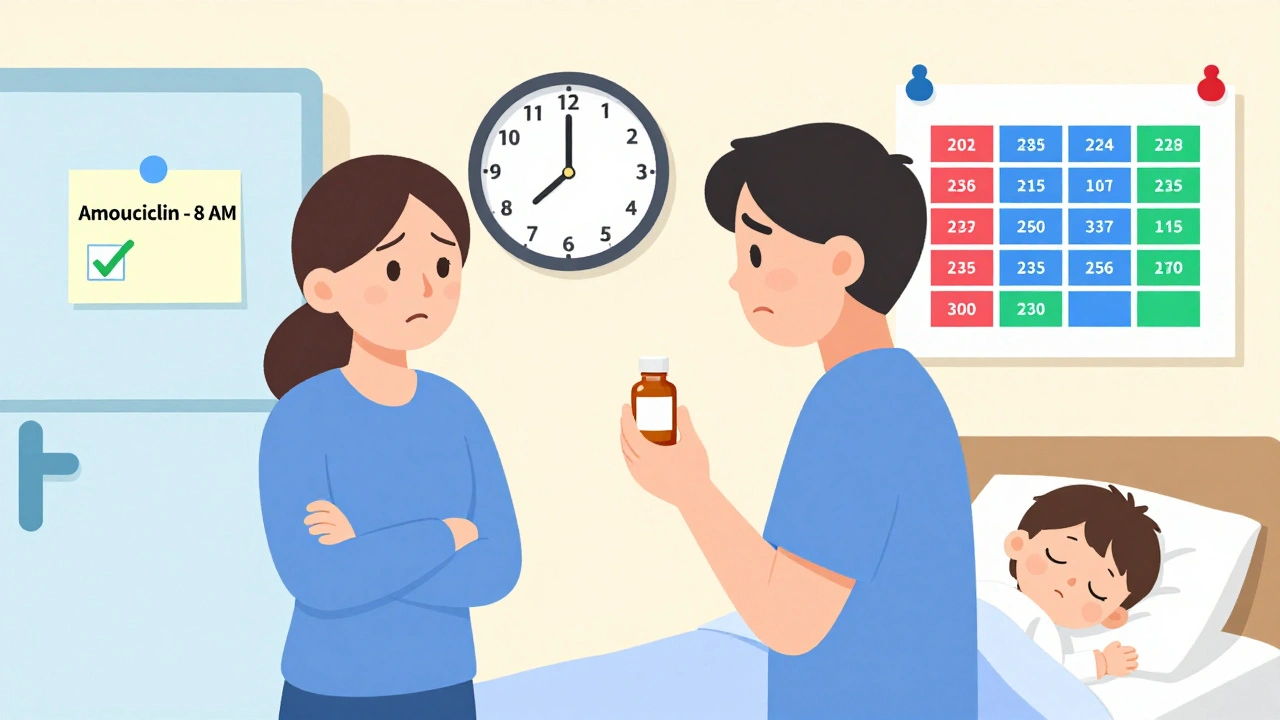
When your child misses a dose of medicine, panic is normal. But reacting the wrong way-like giving a double dose to make up for it-can be dangerous. Kids aren’t small adults. Their bodies process medications differently, and even a small overdose can lead to serious harm. The good news? There’s a clear, safe way to handle missed doses, and it depends on how often the medicine is given and how long it’s been since the missed dose.
Don’t Double Up-Ever
This is the most important rule. Never give two doses at once, even if you think your child will be worse off without it. Doubling a dose increases the risk of severe side effects by 278% in children under 12, according to pediatric safety experts. Their livers and kidneys are still developing, and they can’t clear drugs as quickly as adults. A single extra dose of antibiotics, seizure meds, or pain relievers can cause vomiting, drowsiness, breathing problems, or even organ damage.Follow the Time-Based Rules
Most hospitals and pediatricians use time thresholds to decide whether to give a missed dose or skip it. These aren’t arbitrary-they’re based on how long the medicine stays active in the body. Here’s what to do based on dosing frequency:- Once daily: If you remember within 12 hours of the missed time, give it. If it’s been more than 12 hours, skip it. Don’t give it the next morning unless your doctor says so.
- Twice daily (every 12 hours): If you remember within 6 hours of the missed dose, give it. If it’s been longer than 6 hours, skip it and wait for the next scheduled dose.
- Three times daily (every 8 hours): Give the missed dose only if you remember within 3 hours. After that, skip it. Don’t try to squeeze in a third dose too close to the next one.
- Four times daily (every 6 hours): Give the missed dose only if it’s been less than 2 hours. If it’s been longer, skip it. Giving doses too close together can cause drug buildup.
- Every 2-4 hours (like some pain or seizure meds): If you miss a dose by more than 2 hours, skip it. These are often short-acting drugs, and giving them too close together can be dangerous.
These rules come from guidelines used by Children’s Wisconsin, Cincinnati Children’s Hospital, and other top pediatric centers. They’re designed to keep the drug level in your child’s body steady-too little and it won’t work; too much and it can hurt them.
High-Risk Medications Need Special Care
Some medications are more dangerous if missed or doubled. These are called “high-alert” drugs. If your child takes any of these, call the doctor or pharmacist right away if a dose is missed:- Chemotherapy drugs
- Antiseizure medications (like levetiracetam or valproic acid)
- Heart medications (like digoxin)
- Insulin or other diabetes drugs
- Strong painkillers (like morphine or fentanyl)
For these, even one missed dose can affect treatment success. A 2023 review found that 25% of high-risk medications don’t even list missed dose instructions on their labels. That’s why you can’t rely on the bottle-you need to ask your provider.
What About Liquid Medicines?
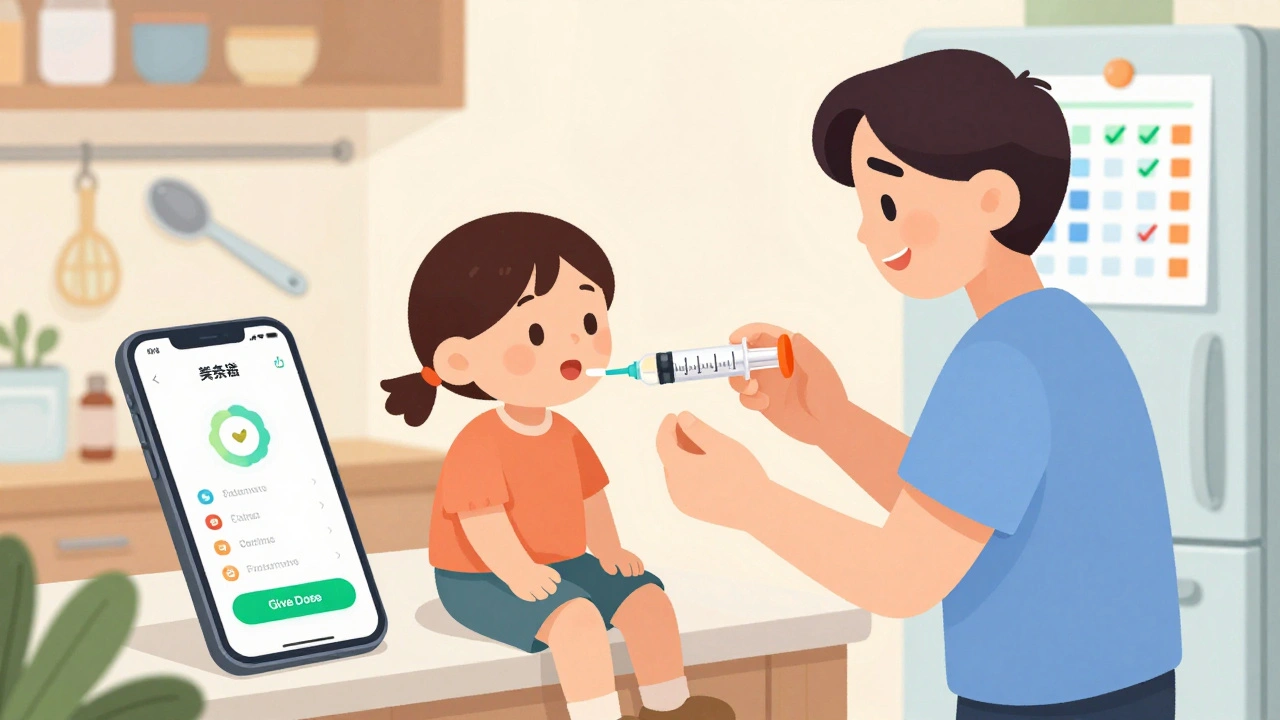
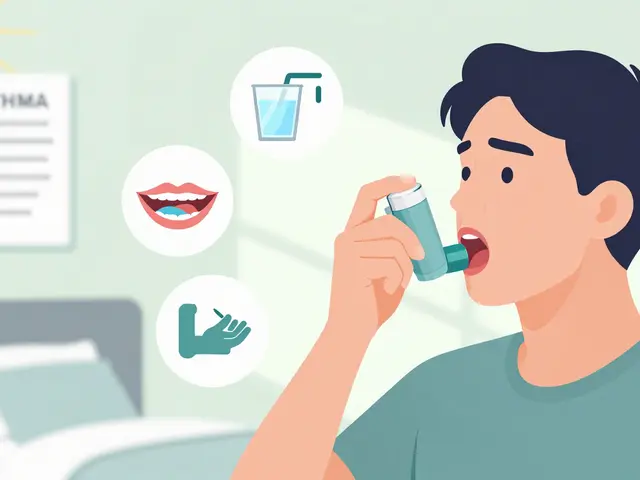
If your child takes liquid medicine, measuring it correctly matters just as much as timing. A 2021 FDA warning found that using kitchen spoons instead of oral syringes led to 22% fewer dosing errors after the warning went out. Household spoons vary wildly in size-a teaspoon can be anywhere from 3 to 7 milliliters. Oral syringes, on the other hand, are marked in precise milliliters.Always use the syringe that came with the medicine. If you lost it, ask the pharmacy for a new one. They’re free. And never guess the dose-even if you think you remember it. Write down the exact amount (e.g., “5 mL”) on the bottle or your phone.
Complex Cases: Multiple Medications
Children with chronic conditions like epilepsy, asthma, or cancer often take four or more medications a day. That increases the chance of a missed dose by 300%, according to the Canadian Pediatric Society. A messy schedule makes mistakes easy.Use a color-coded chart. Boston Children’s Hospital reduced missed doses by 44% by giving families charts with different colors for each medication and time of day. You can make your own: use red for morning, blue for afternoon, green for evening. Tape it to the fridge. Check off each dose as it’s given.
Apps like the American Academy of Pediatrics’ Pediatric Medication Safety Calculator can help too. It asks for the drug name, dosing schedule, and how late you are-and gives you a clear “give” or “skip” answer. Beta users saw an 83% improvement in correct decisions.
Why Do People Double Doses?
Parents often double doses because they feel guilty or anxious. They think, “I missed it-I should fix it.” But this mindset is dangerous. In online parenting forums, 63% of caregivers admitted to doubling doses at least once to “stay on schedule.” Many didn’t realize how risky it was.Another problem? Instructions are confusing. One parent on MedHelp wrote: “The chemo team said 12 hours for once-daily meds, but the antibiotic just said ‘take as soon as remembered.’ Which one do I follow?” The answer: Always follow the doctor’s specific instructions. If the label is vague, call the pharmacy. Don’t guess.
How to Prevent Missed Doses
Prevention is better than correction. Here’s what works:- Set phone alarms for each dose. Label them clearly: “Amoxicillin - 8 AM.”
- Use a pill organizer with separate compartments for morning, afternoon, evening. Fill it weekly.
- Teach-back method: After your doctor explains the schedule, have you or your partner repeat it back. If you can’t explain it clearly, you didn’t understand it.
- Keep a log: Write down each dose given and the time. Even a simple notebook helps.
- Ask for help: If you’re overwhelmed, ask a family member or friend to be your “medication buddy.” They can remind you or double-check if you’re unsure.
Studies show that using these simple tools cuts missed doses by up to 37%. It’s not about being perfect-it’s about being prepared.
When to Call the Doctor
You don’t need to call for every missed dose. But call immediately if:- Your child took a double dose by accident
- The missed dose was for a high-alert medication
- Your child shows signs of side effects: extreme sleepiness, trouble breathing, rash, vomiting, or seizures
- You’re unsure whether to give the dose or skip it
Don’t wait to see what happens. In pediatric emergencies, early action saves lives. The American Academy of Pediatrics says communication failures cause 65% of medication errors. A quick call can prevent a hospital visit.
What’s Changing in Pediatric Medication Safety
The system is improving. In 2022, the FDA started requiring drug makers to include clear missed dose instructions on pediatric labels. Before, 25% of high-risk meds had no guidance at all. Now, labels are starting to include pictograms-simple pictures showing “skip if more than 3 hours late.”Smart dispensers are also becoming more common. In clinical trials, they reduced missed doses by 68%. They beep, flash lights, and even text caregivers when a dose is missed. The market for these tools is growing fast-expected to hit over half a billion dollars by 2027.
But the biggest change? Doctors are finally listening. More clinics now use weight-based dosing with length-based tapes instead of guessing by age. That alone cuts dosing errors by 42%. And with AI tools like PediMedAI in early testing, we’re moving toward systems that predict when a dose is likely to be missed-and send a reminder 30 minutes before.
Final Takeaway
Handling a missed pediatric dose isn’t about perfection. It’s about knowing the rules, staying calm, and never doubling up. Use time thresholds. Use oral syringes. Use alarms. Ask questions. And when in doubt-call your doctor. Your child’s safety depends on it, not on your guilt or guesswork.What should I do if I accidentally gave my child a double dose?
Call your pediatrician or poison control immediately. Do not wait for symptoms. Even if your child seems fine, some drugs build up slowly in the body. Have the medication bottle ready when you call-note the name, dose, and time given. In the U.S., call Poison Control at 1-800-222-1222. They can guide you on whether to monitor at home or go to the ER.
Can I give the missed dose the next day if I forgot it last night?
No. Giving a missed dose the next day throws off the entire schedule and can lead to overdose or underdosing. For example, if you forget a once-daily antibiotic at night and give it the next morning, you’ve created a 36-hour gap instead of 24. This reduces the drug’s effectiveness and increases resistance risk. Always return to the regular schedule-even if you missed one dose. Skip the missed one and continue as normal.
Why do some meds say ‘take as soon as remembered’ while others have time limits?
It depends on how the drug works in the body. Some medicines, like antibiotics, need steady levels to kill bacteria. If you wait too long, the drug level drops too low and the infection can come back. Others, like pain relievers, have a short window of effectiveness. If it’s been more than 2-4 hours, giving more won’t help-and could hurt. The label’s wording is often vague because manufacturers aren’t required to give clear instructions. Always follow your doctor’s specific guidance over the bottle’s general advice.
Is it safe to use a kitchen spoon if I don’t have an oral syringe?
No. Kitchen spoons are not accurate. A teaspoon can hold anywhere from 3 to 7 milliliters-far from the standard 5 mL. This leads to underdosing (if the spoon is too small) or overdosing (if it’s too big). The FDA estimates that 22% of dosing errors in children come from using spoons. Always use the oral syringe that came with the medicine. If you lost it, ask your pharmacy for a free replacement. They have them in stock.
My child is on four different meds. How do I keep track?
Use a color-coded chart. Assign a color to each time of day: red for morning, blue for afternoon, green for evening. Write each medication name and dose under the right color. Tape it to the fridge. Check off each dose as it’s given. Some families use apps like Medisafe or MyTherapy, which send reminders and let you log doses. If your child has a complex condition, ask the hospital’s care team for a personalized schedule. Many pediatric hospitals offer free printed charts designed for kids on multiple meds.
Can I skip a dose if my child is vomiting or sick?
It depends on the medication. For antibiotics, skipping doses can lead to resistant infections. For pain or fever meds, if your child vomits within 15-20 minutes of taking it, you can usually give another dose. If they vomit after 20 minutes, wait for the next scheduled dose. For seizure meds, never skip without calling the doctor-even one missed dose can trigger a seizure. Always check with your provider before skipping any dose during illness.
Are there tools that help remind me to give doses?
Yes. Smart pill dispensers like Hero or MedMinder beep, flash lights, and text caregivers when a dose is missed. They’re especially helpful for kids on multiple meds. In clinical trials, they reduced missed doses by 68%. Apps like the AAP’s Pediatric Medication Safety Calculator also give real-time advice when you input the time missed. Even simple phone alarms labeled with the drug name and time work well. The key is consistency-not the tool itself.




OMG this is so helpful!! I totally doubled my kid's antibiotic dose last week and felt like a terrible mom. 😭 Now I know never to do it again. Thank you for laying it out so clearly!
It's fascinating-really, profoundly unsettling-how the medical-industrial complex has normalized parental guilt as a regulatory mechanism... The fact that we're expected to memorize time-based pharmacokinetic thresholds for pediatric dosing, while pharmaceutical labels remain deliberately vague, speaks to a systemic abandonment of caregiver autonomy. We're not just managing meds-we're performing invisible labor under algorithmic coercion.
Wait-so the FDA only started requiring clear instructions in 2022? And before that, 25% of high-risk meds had NO guidance? That’s not negligence-that’s criminal. Who’s really benefiting from this? Big Pharma? The hospitals? Someone’s making money off parents panicking over missed doses. I’m calling my senator.
This is very good information. Thank you for sharing. In India, many parents use spoons because syringes are not always available. It is important to educate them gently but clearly.
I appreciate how thorough this is, but I wonder if we’re overcomplicating it for everyday parents. I get the science behind the time thresholds, but when you’re up at 3 a.m. with a crying kid, fever, and a half-empty bottle of amoxicillin-do you really have the mental bandwidth to calculate whether it’s been 2.7 hours or 3.1? Maybe the real solution isn’t more rules, but better systems-like smart dispensers that auto-adjust based on time and dosage history. The fact that these tools reduce missed doses by 68% suggests we’re putting the burden on the wrong person. The system should adapt to the parent, not the other way around.
so like… if you miss a dose of levetiracetam by 4hrs… u just skip it? no like… what if they have a seizure? i mean… the article says call the doc but like… what if u can’t reach em? this feels like a trap.
While the article is commendably structured, it lacks academic rigor. The 278% increase in side effects from doubling doses? Source? The 83% improvement from the AAP calculator? Was this peer-reviewed? Where’s the meta-analysis? I’m not saying the advice is wrong-I’m saying it’s presented as gospel without citation. This is how misinformation spreads, even when the intent is good.
Y’all, I use a color-coded chart taped to my fridge and it’s a GAME CHANGER. 🌈 I even let my 5-year-old put stickers on the boxes when they take their meds. Now they beg me to check them off! 💪 Also-get the free syringes from the pharmacy. They’re literally free. I got 10. I have extras. Bring your own bag. You’re welcome.
As a pediatric nurse in Mumbai, I see this daily. Parents give half doses because they think ‘less is safer’ or double because they think ‘more is better.’ The real issue? No one explains the WHY. This post nails it-time thresholds, not guesswork. I’m printing this for my clinic.
Smart dispensers are the future. I got a Hero device for my kid on 5 meds. It texts me if I miss a dose, and even locks the compartment until the next window. No more guessing. No more guilt. Just peace. 🤖💙 Also-yes, use the syringe. I used a spoon once. My kid threw up. I cried. Don’t be me.