Every year, the FDA issues over 1,200 drug safety alerts - some about contaminated pills, others about hidden side effects, and a few about life-threatening shortages. If you’re a patient, caregiver, pharmacist, or healthcare provider, missing one of these alerts could mean taking a risky medication without knowing it. The good news? You can get these alerts delivered straight to your inbox - for free. The catch? Most people don’t know how to sign up, or worse, they sign up for the wrong system and still miss critical updates.
Why FDA Drug Safety Alerts Matter
In 2018, a contaminated batch of valsartan - a common blood pressure drug - ended up in pharmacies across the U.S. Over 100,000 people were exposed before the recall was fully acted on. That delay cost lives. Since then, the FDA overhauled its alert systems to cut response time from weeks to hours. Today, when a drug is pulled or a new risk is confirmed, the FDA pushes out an alert within 4.2 hours on average - faster than most commercial services. But speed only matters if you’re signed up. A 2022 government report found only 38% of healthcare workers even knew all three FDA alert systems existed. That’s not just a gap - it’s a danger zone.The Three FDA Alert Systems (And What Each One Does)
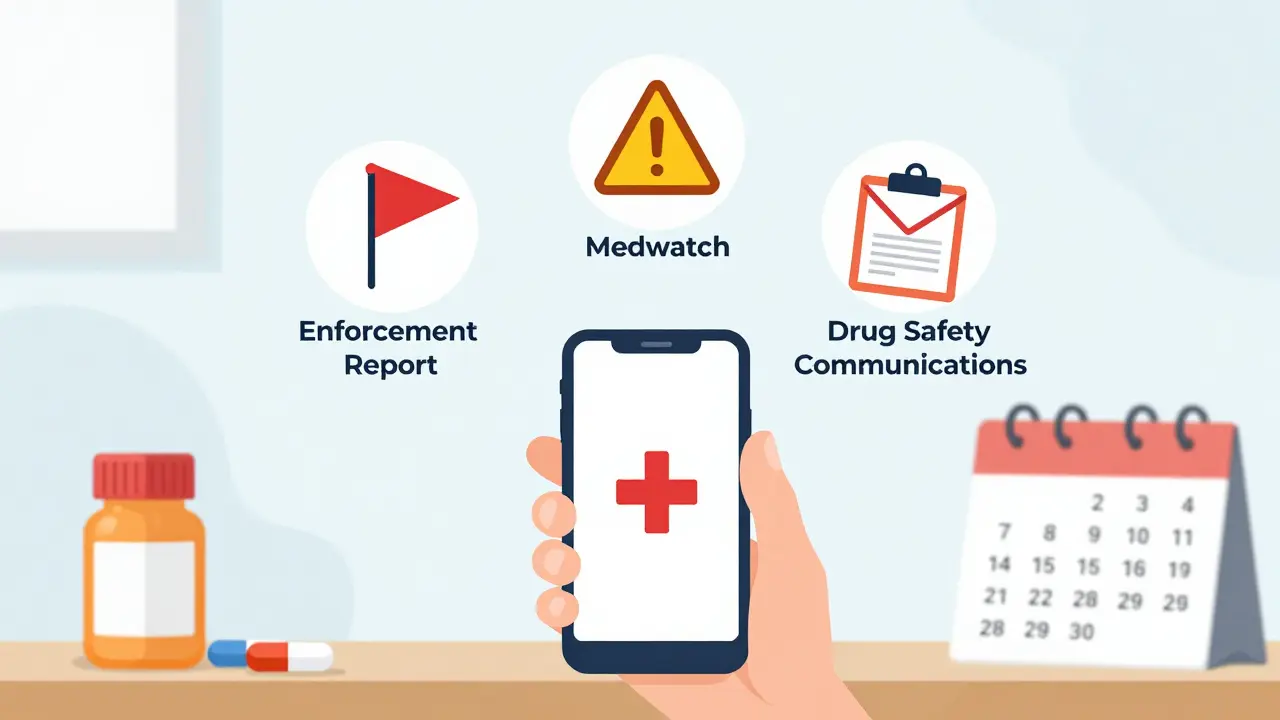
The FDA doesn’t have one alert system. It has three, each serving a different purpose. Confusing them is the number one reason people miss critical updates.- Enforcement Report Subscription Service - This is for recalls. If a drug is pulled from shelves because of contamination, mislabeling, or manufacturing defects, this system tells you. It covers prescription meds, over-the-counter drugs, biologics, and even medical devices. You can pick ‘Drugs’ as a category and add up to five custom keywords - like ‘insulin’ or ‘peanut’ - to get only the alerts that matter to you.
- MedWatch Safety Alerts - This is the FDA’s oldest system, dating back to 1993. It covers serious safety issues that aren’t necessarily recalls - like sudden heart rhythm problems linked to a drug, or new warnings about interactions. You can subscribe via email (MedWatch E-list), Twitter (@FDAMedWatch), or RSS feed. It’s the go-to for real-time safety signals from the FDA’s adverse event database.
- Drug Safety Communications - This one is tailored for clinicians and patients who want updates on specific drug classes. Think: ‘new warnings for GLP-1 weight loss drugs’ or ‘safety update on SSRIs in adolescents.’ It’s less about recalls and more about evolving risk profiles. You’ll get detailed explanations, clinical guidance, and sometimes recommendations to avoid certain patients from using the drug.
Here’s the key: Enforcement Report = recalls. MedWatch = urgent safety signals. Drug Safety Communications = deep-dive clinical updates. You need all three if you want full coverage.
How to Subscribe - Step by Step
Signing up takes less than five minutes per system. No login, no fees, no credit card.1. Enforcement Report Subscription
Go to fda.gov/enforcement-report-subscription.- Enter your email address.
- Check ‘Drugs’ under Product Categories. (Most users pick this - 87% in 2023.)
- Under ‘Keyword Filters,’ type up to five terms. Examples: ‘metformin,’ ‘levothyroxine,’ ‘peanut,’ ‘lactose.’
- Choose ‘Daily’ or ‘Weekly’ delivery. Daily is better if you handle prescriptions daily.
- Click ‘Submit.’
You’ll get one email per day with new recalls. No spam. No fluff. Just the facts.
2. MedWatch E-list
Visit fda.gov/medwatch-email-list.- Fill in your name and email.
- Check the box for ‘MedWatch Safety Alerts’ - this is the main one.
- Optional: Check ‘MedWatch Product Problem Reports’ if you want to see what others are reporting.
- Click ‘Subscribe.’
You’ll get alerts 2-5 times a week. These are often the first signs of a problem before it becomes a recall.
3. Drug Safety Communications
Go to fda.gov/drugs/drug-safety-and-availability/drug-safety-communications.- Scroll to the bottom.
- Click ‘Sign up for email alerts’.
- Enter your email and confirm.
You’ll get these alerts less often - maybe once a week or every few weeks. But when you do, they’re packed with clinical context. For example, an alert might say: ‘Avoid use in patients with severe kidney disease - new data shows increased risk of lactic acidosis.’
What You Won’t Get - And What You Should Know
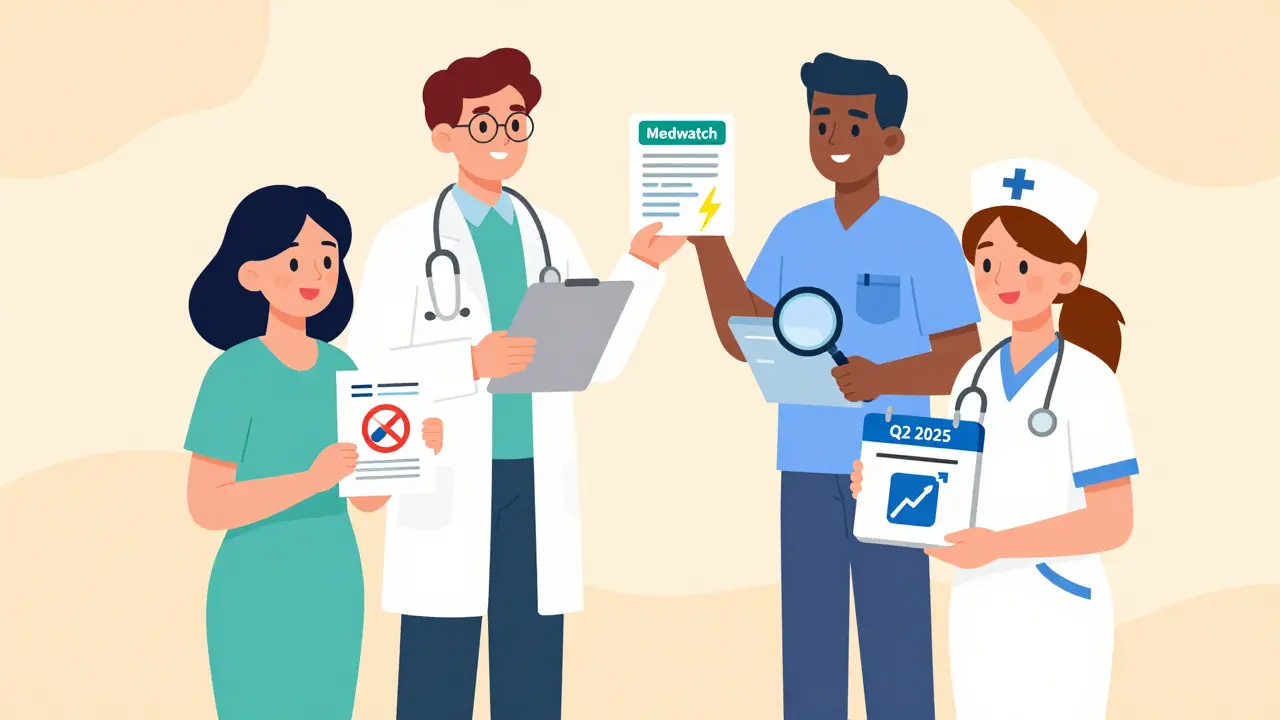
The FDA system is powerful, but it’s not perfect.- No mobile app - Not yet. The FDA plans to launch one in Q2 2025. Until then, rely on email or Twitter.
- No personalized risk scoring - Unlike commercial services that say ‘Your 72-year-old patient on this drug has a 12% higher stroke risk,’ the FDA just says ‘This drug may increase stroke risk.’ You still need to interpret it.
- No push notifications - You won’t get a bell ding on your phone. If you’re on call, this is a real gap.
- Only in English - Right now, only 12% of non-English speakers get alerts. Spanish-language alerts are coming in Q3 2025.
Also, don’t confuse FDA alerts with pharmacy recall notices. Pharmacies get the same info - but they often wait days to update their systems. If you’re a patient, don’t wait for your pharmacist to tell you. Sign up yourself.
Who Should Subscribe - And Who’s Already Doing It
You might think this is only for doctors. It’s not.- Patients with chronic conditions - If you take insulin, blood thinners, or antidepressants, you’re at higher risk for drug interactions or recalls. One Reddit user said an insulin recall alert saved their facility from dispensing a contaminated batch.
- Parents of kids with allergies - Keyword alerts for ‘peanut’ or ‘soy’ in medications can prevent accidental exposure. OTC meds sometimes contain hidden allergens.
- Pharmacists and nurses - 72% of physicians who subscribe say they change treatment plans based on these alerts. That’s not just caution - that’s better care.
- Home caregivers - If you manage meds for an elderly relative, you’re the last line of defense. A single alert could stop a dangerous mix-up.
Here’s the data: 68% of hospitals with 200+ beds subscribe to at least one FDA alert system. Only 29% of retail pharmacists do. And only 17% of consumers. That’s backwards. The people who need it most - patients - are the least likely to be signed up.
Pro Tips to Avoid Alert Fatigue
The FDA sends a lot of alerts. Too many, some say. In a 2023 survey, 63% of users complained about overload. Here’s how to stay informed without drowning:- Use keywords wisely - Don’t use ‘drug’ or ‘medication.’ Use specific names: ‘metformin,’ ‘warfarin,’ ‘lisinopril.’
- Set delivery to weekly - If you’re not in a hospital, daily emails are overkill. Weekly gives you a snapshot without noise.
- Bookmark the FDA Drug Safety page - Visit fda.gov/drugs/drug-safety-and-availability/drug-safety-communications weekly. It’s the cleanest way to scan new updates.
- Don’t ignore MedWatch on Twitter - @FDAMedWatch posts urgent alerts faster than email. Follow it. Turn on notifications for tweets from that account.
One hospital pharmacist told us: ‘I only get the weekly Enforcement Report and check MedWatch on Twitter. That’s enough. I don’t need three emails a day.’
What’s Coming in 2025
The FDA is fixing its biggest flaws.- One unified alert system - By Q3 2025, the three separate systems will merge into one dashboard. No more confusion about which system does what.
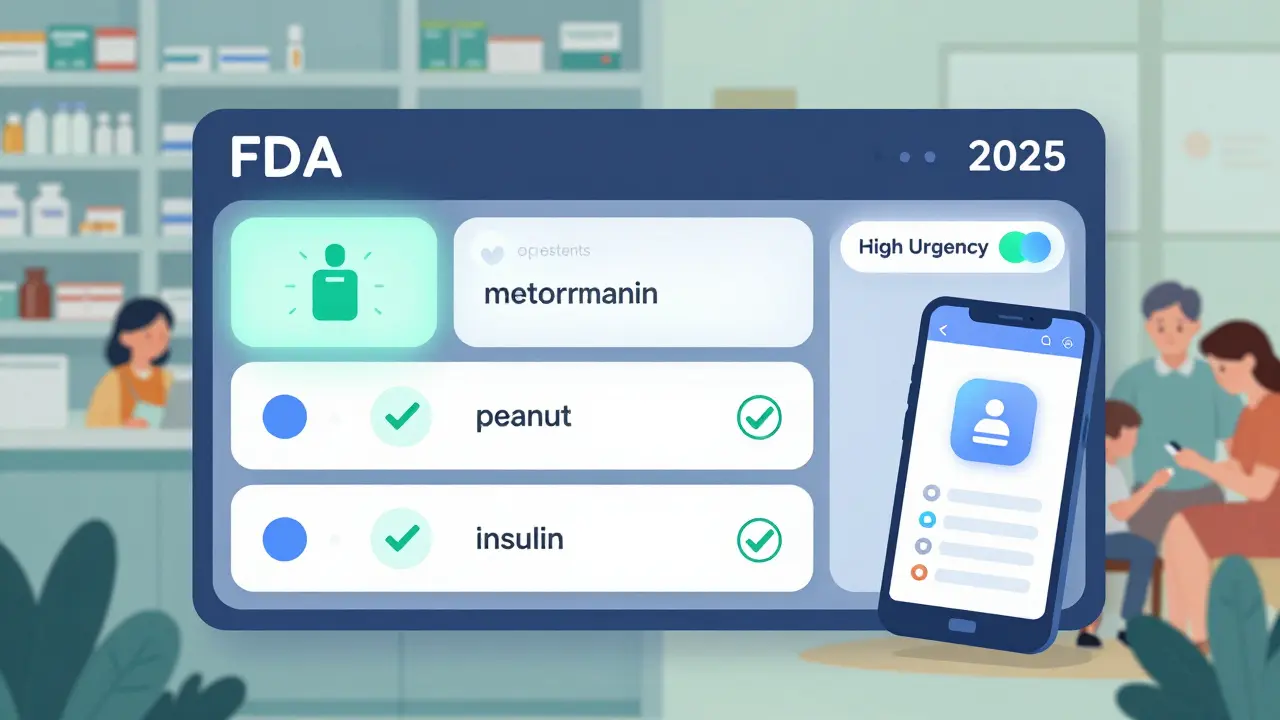
- 10 keywords per account - Up from 5. More control over what you see.
- Mobile app - Launching Q2 2025. Push notifications. Offline access. Real-time alerts.
- Spanish-language alerts - Coming Q3 2025. A major step toward equity.
- AI-powered prioritization - The system will start tagging alerts as ‘High,’ ‘Medium,’ or ‘Low’ urgency based on clinical impact. Pilot tests cut alert fatigue by 32%.
These changes aren’t just nice-to-haves. They’re necessary. The FDA’s goal is to go from ‘informing’ to ‘protecting’ - and the tools are finally catching up.
Final Thought: Don’t Wait for Someone Else to Tell You
Drug safety isn’t something you should rely on pharmacies, doctors, or insurance companies to handle for you. It’s your health. If you take any medication - even aspirin - you deserve to know when something goes wrong. Signing up takes 10 minutes. The payoff? Peace of mind. A saved life. A missed reaction. A recalled pill you didn’t take.Do it today. Not tomorrow. Not next week. Today.
Are FDA drug safety alerts free?
Yes, all FDA drug safety alert subscriptions are completely free. You only need an email address. There are no hidden fees, no premium tiers, and no credit card required.
What’s the difference between MedWatch and Drug Safety Communications?
MedWatch alerts cover urgent safety issues - like sudden side effects or product defects - and are often the first warning before a recall. Drug Safety Communications are deeper, clinical updates that explain risks, recommend changes in use, and are often based on new studies. MedWatch is about ‘what happened.’ Drug Safety Communications are about ‘what it means for you.’
Can I get alerts in Spanish?
Not yet, but it’s coming. The FDA plans to launch Spanish-language versions of all three alert systems in Q3 2025. Until then, you can use browser translation tools on the FDA website, but signed-up email alerts will remain in English.
Do I need to subscribe to all three systems?
For full protection, yes. The Enforcement Report tells you about recalls. MedWatch tells you about new safety signals. Drug Safety Communications give you clinical context. If you only sign up for one, you’re missing critical pieces. Most healthcare professionals subscribe to all three.
What if I get too many alerts?
Use keywords to filter. Only select the drug names or conditions you care about. Switch from daily to weekly delivery. And check the FDA’s Drug Safety Communications page once a week - it’s a clean, organized list of all recent updates. You don’t need every email to stay safe.
Can I get alerts for medical devices too?
Yes. The Enforcement Report Subscription Service covers medical devices, including insulin pumps, pacemakers, and glucose monitors. Just check ‘Medical Devices’ when signing up. You’ll get alerts about recalls or safety notices for those devices.
How do I know if an alert is real?
Only trust alerts that come from official FDA channels: fda.gov domains, @FDAMedWatch on Twitter, or the FDA’s Drug Safety Communications page. Never trust alerts sent via text, Facebook, or unsolicited emails claiming to be from the FDA. The FDA never asks for personal info or payment.
Will I be added to marketing lists if I subscribe?
No. The FDA’s alert systems are strictly for public health notifications. Your email is never sold, shared, or used for marketing. The system is run on secure government servers with strict privacy controls.
For more details, visit the FDA’s official Drug Safety page: fda.gov/drugs/drug-safety-and-availability.