
When you take a generic medication, you expect the same results as the brand-name version. But what if something unusual happens? A rash that won’t go away. A sudden dizziness. An unexpected reaction that doesn’t match the label? These aren’t just bad luck - they could be rare adverse events, and reporting them matters more than you think.
Generics aren’t second-class drugs - but their side effects still need tracking
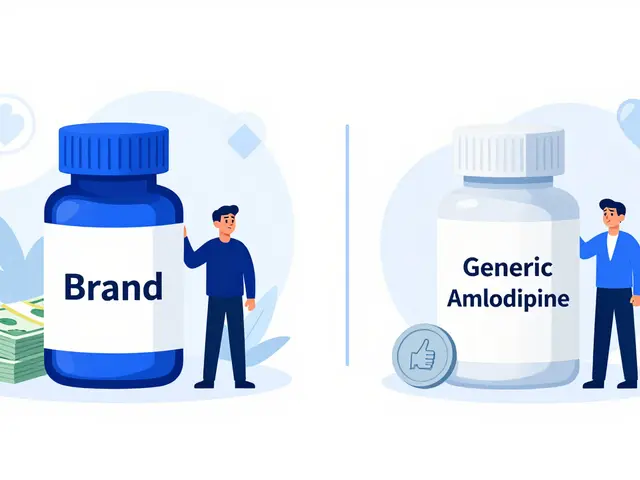
There’s a myth that generic drugs are less safe because they’re cheaper. That’s not true. The FDA requires generics to have the same active ingredient, strength, dosage form, and route of administration as the brand-name drug. They must also meet the same strict manufacturing standards. In fact, 98.7% of adverse event reports in the FDA’s database don’t even distinguish between generic and brand-name versions - because the active ingredient is identical.
But here’s the catch: rare side effects often show up only after thousands or millions of people start using a drug. Clinical trials involve a few thousand patients. Real life? Millions. That’s where reporting comes in.
Let’s say you start taking a generic version of levetiracetam for seizures. After two weeks, you develop painful joint swelling - arthralgia - that wasn’t listed as a possible side effect. You didn’t have this before. No other meds changed. You’re not sick with anything else. That’s not just a coincidence. That’s a signal.
What counts as a rare adverse event?
The FDA defines rare adverse events as reactions occurring in fewer than 1 in 1,000 people. But post-marketing data often finds even rarer reactions - 1 in 10,000 or less. These are the ones that slip through clinical trials.
Examples:
- Stevens-Johnson Syndrome with generic lamotrigine - clinical trials showed 1 in 1,000 risk, but real-world data later found 1.8 cases per 10,000 person-years.
- QT prolongation with generic citalopram - 17 reports led to updated labeling limiting the dose to 20 mg/day for people over 60.
- Acute liver injury from generic statins - appearing within 1-6 weeks of starting the drug.
- Angioedema with generic ACE inhibitors - known mechanism, but still needs reporting if unexpected.
These aren’t common. But when they happen, they can be life-changing - or life-threatening. That’s why they need to be reported, even if you’re not sure it’s the drug.
When to report - even if you’re unsure
You don’t need to be 100% certain a generic drug caused the reaction. The FDA says: report it anyway.
According to their 2023 guidance, 68.4% of major safety findings started with reports where causality was uncertain. That means if you see something strange, and you can’t think of another explanation - report it.
Use these three triggers to decide:
- No other explanation - Did you start the generic right before the reaction? Did anything else change? If not, it’s worth reporting.
- Timing fits - Did the reaction happen within a biologically plausible window? For example, liver injury from statins usually shows up within 1-6 weeks. If it’s day 200, it’s less likely.
- Matches known mechanisms - If the drug is an ACE inhibitor and you get swelling in your throat, that’s a known class effect. But if you’ve never had swelling before and it’s the first time you’ve taken this generic version? Report it.
Don’t wait for proof. Don’t assume it’s just "one of those things." Your report could help someone else avoid the same problem.
Who should report - and how
Anyone can report - patients, caregivers, pharmacists, doctors. But the quality of the report matters.
Healthcare providers use MedWatch Form 3500. Consumers use Form 3500B. Both are free and available online at fda.gov/medwatch or by calling 800-FDA-1088.
Here’s what to include:
- Your age, weight, and any chronic conditions (like kidney disease or diabetes)
- Exact drug name - generic or brand
- Lot number - this is critical. Only 12.4% of consumer reports include it, but it’s the key to tracking which batch caused the issue
- Start and stop dates for the drug
- Dosage and how often you took it
- Other medications you’re on - including supplements
- Lab results if you had any (like liver enzymes or potassium levels)
- What happened - symptoms, how long they lasted, if they got better after stopping the drug
Providers get it right more often. In 2022, 63.2% of professional reports had enough detail for analysis. Only 28.7% of consumer reports did. That gap isn’t because patients don’t care - it’s because they don’t know what to include.

Why lot numbers matter more than you think
Not all generic versions are made the same way. Different manufacturers use different inactive ingredients - fillers, dyes, binders. These aren’t just "inert" substances. Some people react to lactose, corn starch, or certain dyes.
Only 15.3% of reports mention inactive ingredients. That’s a huge blind spot.
Imagine two people take the same generic metformin. One gets severe diarrhea. The other feels fine. Same active ingredient. But one version uses a different binder that causes gut irritation in sensitive people. Without the lot number, regulators can’t tell if it’s a batch issue or a class effect.
That’s why the FDA’s 2024 action plan is pushing for better lot number collection. By December 2025, all manufacturers must report electronically - and include lot numbers.
What happens after you report?
Your report goes into the FDA’s Adverse Event Reporting System (FAERS), which holds over 25 million reports. It’s not just a filing cabinet - it’s a detection system.
AI tools now scan FAERS for patterns. Since 2020, machine learning has flagged potential safety issues 4.8 months faster than human reviewers. That’s how they found the QT prolongation risk with citalopram.
If enough similar reports pile up, the FDA can:
- Update the drug label to add new warnings
- Require a Risk Evaluation and Mitigation Strategy (REMS)
- Issue a Drug Safety Communication
- Ask the manufacturer to change the formulation
And yes - this happens with generics too. In 2021, 17 reports of QT prolongation with generic citalopram led to a label update. In 2022, the FDA found 7 new safety signals for generic medications using its Sentinel Initiative, which tracks data from 300 million patients.
What you shouldn’t do
Don’t stop your medication without talking to your doctor. Some reactions are scary, but stopping abruptly can be dangerous - especially with blood pressure meds, seizure drugs, or antidepressants.
Don’t assume it’s "just a side effect" and move on. If it’s rare, unusual, and unexplained, it needs to be documented.
Don’t wait for someone else to report it. If you’re the one who experienced it, you’re the best source of accurate details.

Consumers are underreporting - and that’s a problem
Only 8.3% of all adverse event reports come from patients. Even worse, only 22.7% of those reports meet minimum quality standards.
Why? Most people don’t know how. They think reporting is complicated. Or they assume the doctor will do it. Or they think generics aren’t "important enough."
But here’s the truth: your report could prevent a death. Or a hospitalization. Or a permanent disability.
It takes 10 minutes. It’s free. You don’t need a medical degree. You just need to write down what happened - clearly and honestly.
What’s changing in 2025
The FDA is making reporting easier. By the end of 2025, all manufacturers must submit reports electronically, with lot numbers included. That’s thanks to the FDASIA Section 715 mandate.
They’re also rolling out new tools for patients - simplified online forms, smartphone apps, and clearer instructions in pharmacies.
And they’re training providers to ask patients: "Have you noticed anything new since starting this medicine?" - not just about side effects, but about rare or unusual ones.
This isn’t about blaming generics. It’s about making sure every drug - brand or generic - is as safe as possible for everyone.
Final reminder: Your voice matters
Generic drugs save billions of dollars every year. They’re essential. But safety doesn’t come from regulations alone. It comes from people noticing, speaking up, and reporting.
If you take a generic and something strange happens - a new rash, strange fatigue, heart palpitations, confusion, swelling - don’t ignore it. Don’t assume it’s "just you." Write it down. Call 800-FDA-1088. Go to fda.gov/medwatch. Include the lot number if you have it.
One report might not change anything. But 100? 1,000? That’s how safety gets improved. That’s how labels get updated. That’s how the next person doesn’t have to go through what you did.


So we’re just supposed to trust that the filler in my generic metformin isn’t secretly plotting against my gut? Cool. I’ll just keep swallowing the little chalky pills and hoping for the best.
STOP. Just stop. You think this is about generics? It’s about lazy pharma companies cutting corners and the FDA looking the other way while people get hospitalized. I’ve seen three cases of liver failure from the same batch of generic lisinopril-lot number 8842B-and NO ONE cared until it was too late. REPORT THE LOT NUMBER. OR STOP WHINING.
Thank you for writing this. I had a severe allergic reaction to a generic amoxicillin-hives, swelling, barely made it to the ER. The pharmacist didn’t even know I was on the generic version. I reported it with the lot number, and two weeks later, the FDA issued a warning for that specific batch. It saved someone else’s life. Don’t underestimate your report. Even if you feel like a tiny voice-you’re not.
Man, I used to think generics were sketchy too-until my dad switched from brand-name Lipitor to the generic and saved $200/month with zero side effects. But then my cousin had that weird joint pain after a new batch of generic levetiracetam. Turned out it was the corn starch. So yeah, not all generics are the same. Report the lot. Tell your doctor. It’s not paranoia-it’s just being smart.
Let me tell you something real quick: I’m a pharmacist in rural Ohio. I see this every day. Grandmas taking five generics, no idea what’s in them, no idea what the lot number even means. I’ve had patients cry because they didn’t know they could report. So I sit with them. I help them fill out the form. I tell them: ‘This isn’t about blaming anyone. It’s about making sure the next grandma doesn’t end up in the ER because someone didn’t speak up.’ You don’t need a degree. You just need to care enough to write it down. And if you’re reading this? You already care. That’s half the battle.
Oh wow, another ‘report your lot number’ PSA. Because clearly, the real problem is that people don’t know how to read a pill bottle. Meanwhile, the FDA approved 1,200 new generics last year with zero new safety studies. Who’s really responsible here? Not the patient. Not even the manufacturer. It’s the system that lets $0.03 pills be sold as ‘equivalent’ while people die from binders they never tested. This whole post is just corporate PR with a side of guilt-tripping.
so like… if a generic drug has the same active ingredient, but a different filler that makes me feel like my soul is being slowly sucked out by a toaster… is that still ‘the same drug’? or is it just the same chemistry with a side of existential dread? i mean… we call it ‘bioequivalent’ but what if my body doesn’t feel equivalent? what if my body feels… betrayed? 🤔
Just to clarify: the FDA’s FAERS database is passive surveillance-it doesn’t prove causation, only signals. That’s why lot numbers are critical. A single report with a lot number can trigger a batch recall. Without it, you’re just adding noise. Also, 78% of patient reports lack dosage info. If you’re taking 500mg twice daily but report ‘I took it once,’ it’s useless. Be precise. Include start/stop dates. List every supplement. Even the turmeric. That’s how we find patterns. This isn’t about fear-it’s about precision.
Why are we even talking about this? America spends $1.2 trillion on healthcare and we’re worried about a $0.10 difference in pill filler? If you can’t afford the brand-name drug, you shouldn’t be taking it at all. The system is broken. Stop pretending reporting a lot number fixes anything. Go protest the price of insulin instead. Or just move to Canada. 🇨🇦