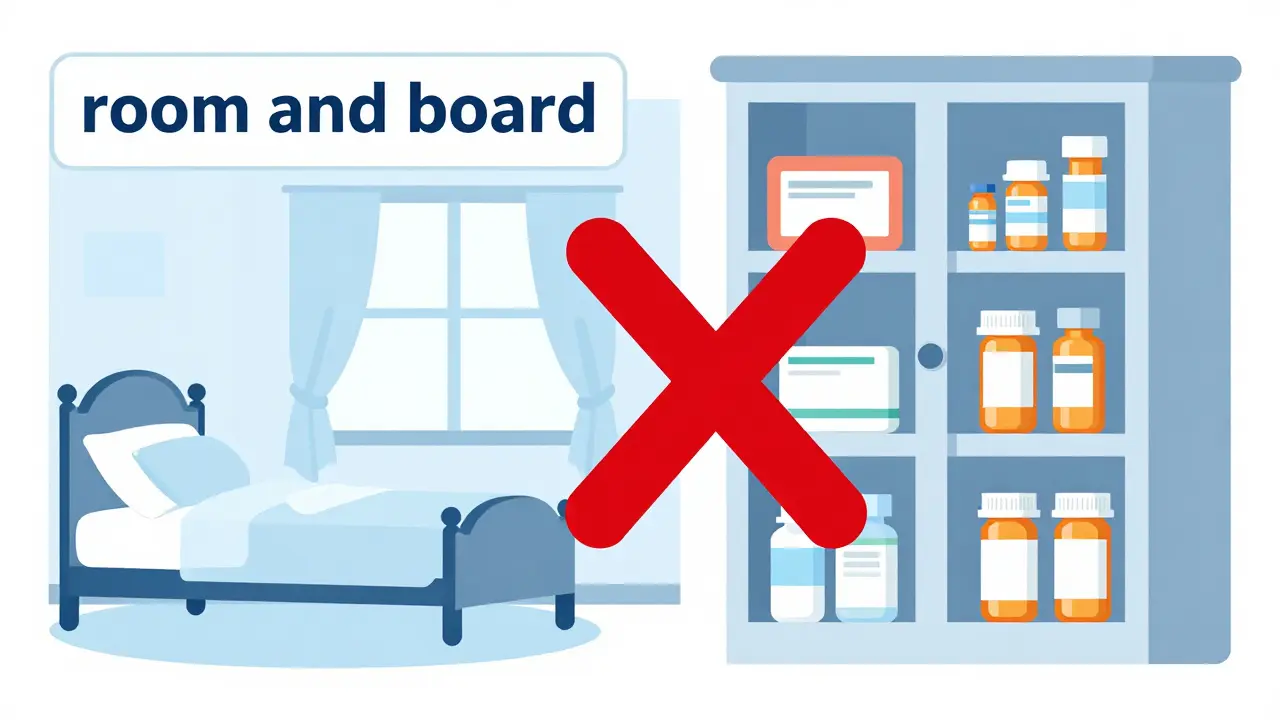
This means if you are residing in a facility covered by your long-term care policy, you cannot look to that policy to pay for your prescriptions. Instead, you need a separate health insurance mechanism to handle your meds. This distinction has been the industry standard since the 1970s, and it creates a bit of a puzzle for families trying to coordinate care. To get the full picture, you have to look at who actually pays for the drugs in these settings.
Who Actually Pays for Nursing Home Medications?
Since long-term care insurance is out of the picture for pharmacy bills, the burden shifts to other programs. For the vast majority of residents, the heavy lifting is done by Medicare Part D is the federal program that provides prescription drug coverage to Medicare beneficiaries. According to data from 2020, Part D covers about 82.4% of prescriptions for Medicare enrollees in nursing facilities. It has essentially become the primary engine for drug access in long-term care.
But not everyone is on Part D. Some residents rely on private insurance, which covers about 8.5% of prescriptions, while a tiny fraction uses the Veterans Administration. The most worrying statistic is that nearly 9% of long-stay Medicare enrollees have no detectable drug coverage at all. These individuals end up paying entirely out-of-pocket, which can be financially devastating given the volume of medications often required in senior care.
For those who don't qualify for Medicare, Medicaid is a joint federal and state program that helps with medical costs for some people with limited income and resources. Medicaid typically pays for drugs at the acquisition cost plus a dispensing fee. If a resident is "dual-eligible" (meaning they have both Medicare and Medicaid), Medicare Part D usually takes the lead on prescriptions.
Understanding the Role of the Insurance Formulary
Having a drug plan is one thing; getting the specific drug you need is another. This is where the insurance formulary is a list of prescription drugs covered by a health insurance plan. Every Part D plan has its own list. If your doctor prescribes a generic drug that isn't on your plan's formulary, the plan might refuse to pay for it.
This creates a significant administrative hurdle for nursing homes. Facilities have to play a guessing game with every new resident: Which plan are they on? Does that plan work with the facility's contracted pharmacy? Is the required medication on the list? If a drug is missing from the formulary, the facility or the family must navigate an "exceptions process" to get the insurance to cover it. This isn't just a minor inconvenience; some facilities report spending over 10 hours a week just managing these drug coverage headaches.
| Coverage Type | Estimated Share | Primary Focus | Generic Drug Handling |
|---|---|---|---|
| Medicare Part D | 82.4% | Broad outpatient drug access | Strong coverage, lower copays |
| Private Insurance | 8.5% | Employer or individual plans | Varies by specific policy |
| Medicaid | ~11% | Low-income assistance | Paid at acquisition cost |
| Out-of-Pocket | 8.9% | Self-funded | Full retail cost |
The Generic Drug Advantage and the "Donut Hole"
Generic drugs are the backbone of nursing home care. They make up roughly 90% of all prescriptions in these facilities, yet they only account for about 25% of the total spending. Because they are so cost-effective, most insurance formularies prioritize generics over brand-name drugs. If a brand-name drug is available as a generic, the insurance company will almost always require the generic version unless a doctor provides a strong medical reason why it won't work.
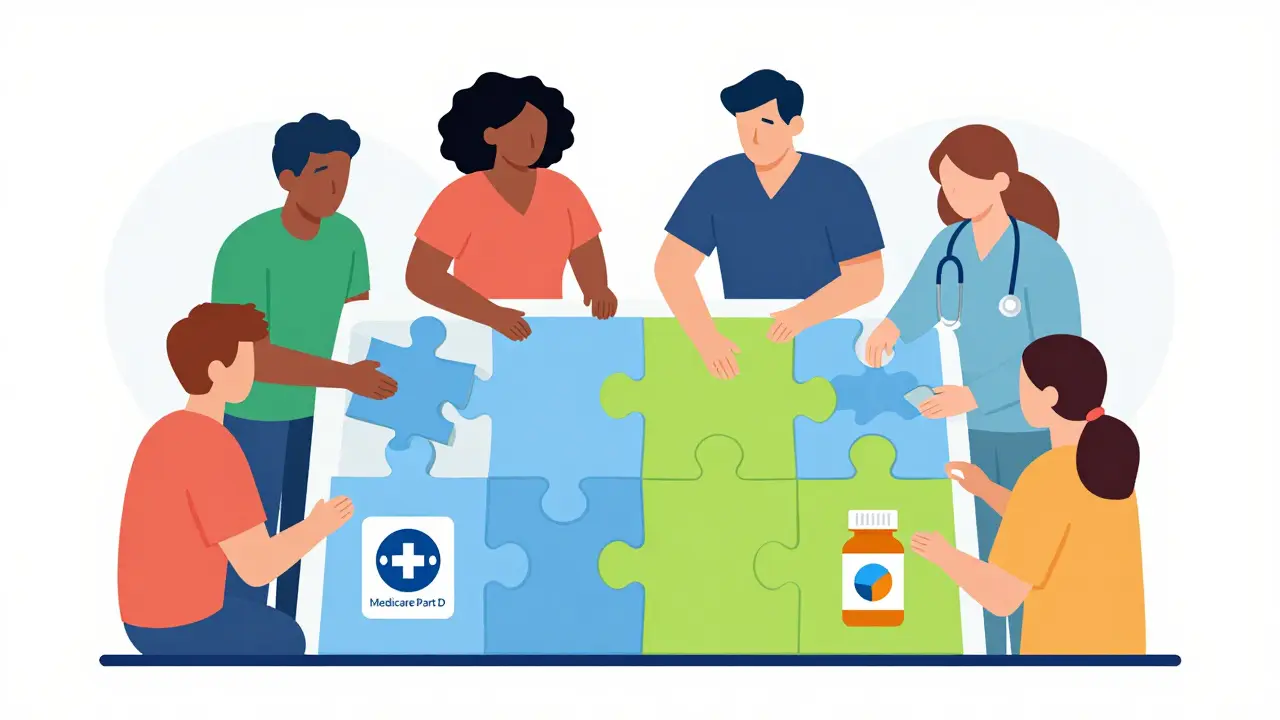
However, even with generics, residents can hit the "donut hole." This is a gap in Medicare Part D coverage where, after a certain amount of spending is reached, the beneficiary must pay a larger percentage of their drug costs out-of-pocket until they reach the catastrophic coverage limit. For a senior on a fixed income, this gap can be a huge financial barrier, even if they are mostly taking generic medications.
Practical Steps for Families and Facilities
To avoid medication delays-which can average over three days in poorly managed facilities-families should take a proactive approach. Don't wait until the day of admission to figure out the drug plan. You can start by auditing your current medications and checking them against the Medicare Part D formulary of your chosen plan.
Here is a checklist to ensure smooth medication transitions:
- Verify Plan Compatibility: Confirm that the nursing home's contracted pharmacy is "in-network" for your specific Part D plan.
- Review the Formulary: List every single medication and check if it's listed as a "covered drug."
- Request Generic Substitutions: Talk to the physician about whether a generic equivalent can be used to lower copayments.
- Set Up the Exceptions Process: If a critical drug is non-formulary, start the appeal or exception request immediately to avoid a gap in treatment.
- Monitor Out-of-Pocket Limits: Keep track of spending to anticipate when the "donut hole" or the annual out-of-pocket cap (which is becoming more favorable due to recent legislation like the Inflation Reduction Act) will hit.
Looking Ahead: Changes in 2025 and Beyond
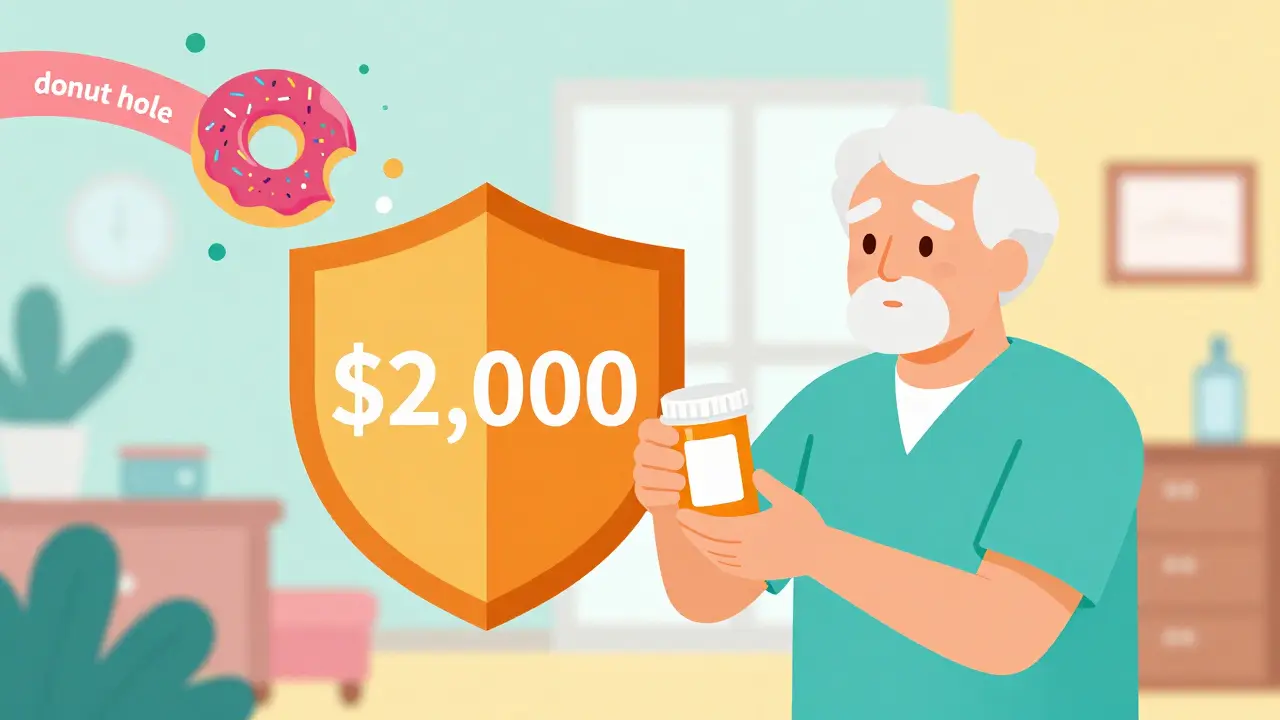
The landscape is shifting slightly in a direction that favors the resident. Starting in 2025, the Inflation Reduction Act is a law aimed at reducing the cost of prescription drugs for Medicare beneficiaries. This law introduces a critical cap: Medicare Part D beneficiaries will pay no more than $2,000 out-of-pocket for prescription drugs annually. This effectively kills the most punishing part of the "donut hole" and provides much-needed predictability for nursing home budgets.
Furthermore, we are seeing more pressure on Part D plans to process non-formulary requests within 72 hours for nursing home residents. This is a direct response to the fact that people in long-term care cannot simply drive to a different pharmacy if their medication is denied; they are dependent on the facility's system.
Does my long-term care insurance cover my generic medications in a nursing home?
No. Long-term care insurance is designed for custodial care (room, board, and personal care). It does not cover prescription drugs, whether they are brand-name or generic. You will need a separate plan, such as Medicare Part D, to cover these costs.
What happens if the nursing home pharmacy doesn't cover my specific generic drug?
If a drug isn't on the plan's formulary, the facility must file a "formulary exception" request. This is a process where the doctor proves that the drug is medically necessary. If approved, the insurance will cover the drug even if it's not on the standard list.
How does Medicare Part D differ from Medicaid in a nursing home setting?
Medicare Part D is a federal prescription drug benefit that most seniors use, involving various private plan options and formularies. Medicaid is a needs-based program that typically pays for drugs at acquisition cost and is used by those who don't qualify for Medicare or have very low income.
What is the "donut hole" and does it affect generic drugs?
The donut hole is a coverage gap in Medicare Part D where the user pays a higher percentage of drug costs after a certain spending limit. While generic drugs are cheaper, they still count toward this limit, and once the gap is hit, even generics can become more expensive until the catastrophic limit is reached.
Are there any recent changes to how medications are paid for in 2025?
Yes. Thanks to the Inflation Reduction Act, starting in 2025, there is a hard cap of $2,000 per year on out-of-pocket prescription drug costs for Part D beneficiaries, which significantly reduces the financial risk for nursing home residents.