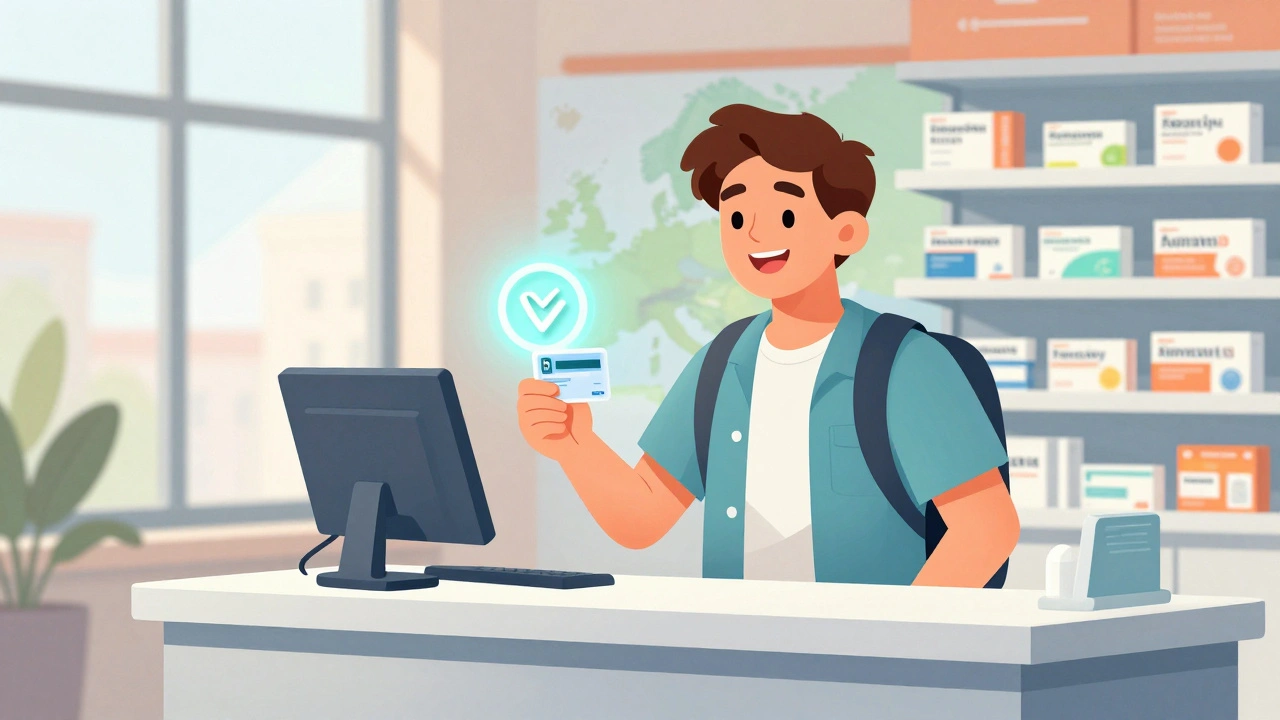
Imagine needing your regular blood pressure medication while on vacation in Italy, but your local pharmacy back home is closed. In the EU today, you don’t have to panic. Thanks to the ePrescription system, you can walk into a pharmacy in Rome, show your digital ID, and get the exact generic drug you’ve been taking for years - no paper script, no delays, no hassle. This isn’t science fiction. It’s real, and it’s changing how millions of Europeans access medicine.
How the EU Makes Cross-Border Pharmacy Services Work
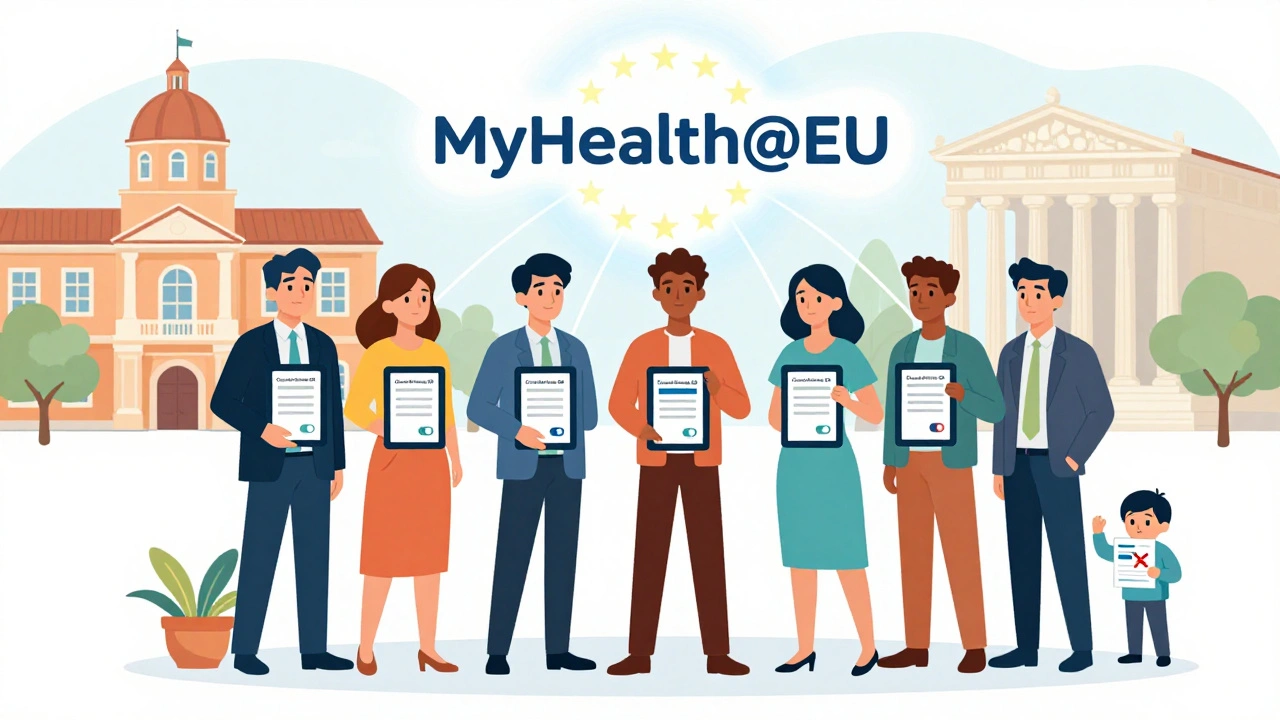
The foundation is simple: your prescription travels electronically. Since 2011, Directive 2011/24/EU gave EU citizens the legal right to get healthcare - including medicines - in any other EU country. But for years, that right was hard to use. You needed a paper prescription, a translator, and luck. Now, the eHealth Digital Service Infrastructure (eHDSI), branded as MyHealth@EU, connects 27 EU and EEA countries through secure digital channels. When your doctor sends your prescription electronically, it doesn’t stop at your national border. It flows to pharmacies across the bloc.This system works in two key ways. First, the ePrescription and eDispensation service lets a pharmacist in another country fill your prescription just like your local one. Second, the Patient Summary gives the pharmacist your allergies, current meds, and past conditions - all translated into their language. No more guessing if that green pill you took last week is the same as the blue one here.
Which Countries Are Actually Using This?
Not every country is on the same page. The system is live in 27 countries, including Germany, France, Austria, Spain, and the Netherlands. But adoption varies. Countries with strong digital health systems - like Estonia or Portugal - have seamless access. Others are still catching up.Italy made a big change in February 2025: they replaced old paper stickers on prescriptions with GS1 DataMatrix codes. These scannable barcodes hold all the prescription data electronically. If you’re in Italy now, your prescription is already digital - no more handwritten notes or lost slips.
Meanwhile, Iceland is finishing its integration by August 31, 2025. Once done, every EU citizen will be able to use the system from the northernmost tip of Europe to the southern coast of Greece.
Why Generic Drugs Are the Backbone of This System
The real win here isn’t just convenience - it’s cost. Generic drugs are the same active ingredients as brand-name versions, but they cost up to 80% less. In countries like Germany or Sweden, where generics dominate the market, patients pay less and health systems save billions. Cross-border mobility means you can buy your generic medication where it’s cheapest.For example, a 30-day supply of metformin (a common diabetes drug) might cost €5 in Poland but €18 in Ireland. Under the new system, an Irish patient can legally get the same generic from a Polish pharmacy via ePrescription and have it shipped home - saving €13 per month. That adds up fast for chronic conditions.
But here’s the catch: not every generic is available everywhere. A drug approved in France might not be registered in Hungary. Pharmacists must check national formularies before dispensing. That’s why the European Shortages Medicines Platform (ESMP), launched in 2025, is so important. It tracks drug availability across borders in real time, helping pharmacies find alternatives when a medicine is out of stock locally.

The Big Hurdles: Regulations, Language, and Confusion
The system works well - when it works. But there are still big problems.First, UK prescriptions don’t count in Ireland or the EU. Even if you got your prescription from a UK telehealth service, Irish pharmacists are legally required to reject it. The same goes for prescriptions from non-EU countries. You need an EU-issued ePrescription to use the system.
Second, language barriers still exist. While Patient Summaries are translated, not all pharmacists are fluent in every language. In border towns like Aachen (Germany) and Maastricht (Netherlands), this is less of an issue - locals often speak multiple languages. But in rural areas, it’s a real barrier.
Third, consent is complicated. To access your health data abroad, you must log into your national portal - like island.is in Iceland or MyKela in Finland - and manually approve data sharing for specific countries or time periods. Many users don’t know this step exists. One 2025 survey found only 38% of EU citizens even knew they had the right to get medicine across borders.
Who’s Getting Left Behind?
The biggest gap isn’t technology - it’s awareness. People in non-border regions are far less likely to use the system. A 2025 Copenhagen Economics survey found 78% of patients in border areas successfully filled cross-border prescriptions. In non-border areas? Only 42%.Why? Because they don’t know it’s possible. Or they’re afraid it won’t work. Or they’ve heard horror stories - like the Reddit user who drove 150 kilometers to a pharmacy in Belgium only to be told their German prescription couldn’t be processed because the prescriber’s ID wasn’t verified.
Pharmacists are also struggling. Many need 40 hours of training just to handle cross-border workflows. They have to check if the prescriber is licensed in the issuing country, verify the prescription format, and confirm the medication is approved locally. That’s a lot for a busy pharmacy.
What’s Changing in 2025 and Beyond
The EU is pushing hard to fix these issues. The Critical Medicines Act now forces drugmakers to report supply and demand data across borders. If a generic drug is running low in Spain, the system alerts pharmacies in Portugal and Italy so they can prepare.By 2027, the MyHealth@EU platform will expand to include lab results, medical images, and hospital discharge summaries. That means if you have a heart attack in Austria, your emergency room in Vienna can instantly see your full medical history from your home country in Romania.
The goal? Reduce medication access disparities by up to 35% by 2030, according to IQVIA. But that won’t happen without political will. Right now, countries like Ireland and the UK have conflicting rules. The General Pharmaceutical Council in the UK still treats distance services as local matters - not EU-wide rights. That kind of fragmentation is exactly what the system was built to end.
What You Need to Do Right Now
If you take regular medication and travel within the EU:- Ask your doctor to send your prescription electronically. Make sure it’s an ePrescription, not a paper one.
- Check if your country is connected to MyHealth@EU. Most are.
- Log into your national health portal and enable cross-border data sharing for the countries you plan to visit.
- Carry your EU digital ID or national e-identification card. You’ll need it to authenticate at foreign pharmacies.
- Know your generic drug’s name. It might be sold under a different brand abroad.
And if you’re a chronic illness patient? Use this system. It’s cheaper, faster, and safer than flying back home for a refill. The infrastructure is ready. The question is: are you?
Can I get my EU prescription filled in a non-EU country like the UK or Switzerland?
No. The ePrescription system only works between EU and EEA countries. The UK is no longer part of the system after Brexit. Switzerland is not an EU member, so its pharmacies can’t process EU ePrescriptions. You’ll need a local prescription or to carry enough medication for your trip.
Are all generic drugs available across every EU country?
No. Each country has its own list of approved medicines. A generic drug approved in Germany might not be registered in Bulgaria. Pharmacists check national formularies before dispensing. If your drug isn’t available locally, they can offer an alternative with the same active ingredient - but you should confirm it’s safe with your doctor first.
Do I need to pay extra for cross-border pharmacy services?
Not for the service itself. The ePrescription system is free to use. But you still pay the local pharmacy’s price for the medication. If you’re covered by your home country’s health insurance, you may be reimbursed after the fact - but only up to the amount your home country would pay for the same drug. Always check with your insurer before traveling.
What if a pharmacy refuses to fill my ePrescription?
They can only refuse if the prescription is invalid - for example, if it’s from a non-EU country, lacks required data, or the prescriber isn’t registered. If you believe it’s an error, ask to speak with the pharmacist’s supervisor or contact your country’s national contact point for digital health. They can help resolve the issue.
Can I use this system for emergency medications like insulin or epinephrine?
Yes. The system supports all prescription medications, including those for chronic or emergency conditions. Your Patient Summary includes allergies and current meds, so pharmacists can act safely. However, for true emergencies, always go to a hospital or clinic first - pharmacies are not emergency care providers.



So let me get this straight - I can get my blood pressure meds in Rome like I’m ordering a coffee, but if I try to do it in London? Nope. Thanks, Brexit. 🙃
Meanwhile, my grandma in Ohio still thinks ‘ePrescription’ is a new kind of yoga.
At least we’re not stuck with paper scripts that look like alien hieroglyphs. Small wins, folks.
Guys, I’ve been using this system since 2022 when I was in Bangalore and needed my insulin - yes, I’m Indian, but I travel a lot for work. The system works ONLY if your doctor actually sends the eScript correctly. Most Indian docs still print and hand you a slip. I had to call the pharmacy in Vienna twice because their system didn’t recognize my German ePrescription - turns out, the prescriber ID was missing a digit. Also, the Patient Summary translation for ‘hypertensive urgency’ came out as ‘high blood pressure but not too high’ - so I had to explain it myself. 😅
Pro tip: Always carry a screenshot of your prescription in English + your native language. And yes, I’m a doctor. I know what I’m talking about. You’re welcome.
Hey, just wanted to say this is actually really cool. I’m from India and I never thought I’d see something like this work so well across borders. I’ve seen how hard it is for people in rural areas to get meds - even within one country. So seeing this work in the EU? It gives me hope.
Maybe one day, we can do something similar in South Asia. Not everyone needs fancy tech - just clear systems and trust. And yeah, generics saving money? That’s huge. My cousin in Nepal pays 3x for the same drug just because it’s branded. This system could change lives - if we make it simple for everyone, not just the tech-savvy.
One must pause and consider the epistemological implications of pharmaceutical sovereignty in a post-national healthcare architecture. Is the ePrescription not merely a technological artifact, but a symptom of the neoliberal erasure of the nation-state’s duty to protect the corporeal integrity of its citizenry? The fact that one may procure metformin in Poland at a discount while a fellow EU citizen languishes in Ireland paying €18 speaks not to efficiency, but to the commodification of biological necessity.
And yet - we are told to celebrate this as progress. How quaint.
Meanwhile, the Patient Summary, translated by algorithm, reduces the lived experience of chronic illness to a CSV file. The body, once sacred, is now a data point in a bureaucratic symphony.
Are we truly liberated - or merely better indexed?
Let me be crystal clear: If you’re an American and you think this system is ‘easy’ or ‘accessible,’ you’re delusional. This only works if you’re European, have a digital ID, speak at least two languages, and your doctor knows how to use a computer. I’ve seen people in rural Nebraska try to use this - they got laughed out of the pharmacy. The EU didn’t build this for you. It was built for Germans who’ve had eIDs since they were toddlers.
And don’t even get me started on the UK exclusion. That’s not policy - that’s pettiness dressed up as bureaucracy.
Stop pretending this is a humanitarian win. It’s a luxury for the digitally privileged.
This whole thing is a mess. I tried to use it in Spain last year. My German prescription was ‘invalid’ because the pharmacist didn’t like the font on the barcode. I had to wait 45 minutes while they called three different EU help desks. Meanwhile, my insulin was sitting in my bag, getting warm.
And now you want me to ‘enable cross-border data sharing’? No thanks. I don’t trust some EU server to have my medical history. What if it gets hacked? What if they sell it? I’d rather pay more and carry my own pills.
This isn’t freedom. It’s surveillance with a pharmacy receipt.
There’s a critical gap here that’s being overlooked: interoperability between national formularies. Just because a drug is approved in France doesn’t mean its salt form, excipients, or dosage form are considered therapeutically equivalent in Croatia. Pharmacists are doing manual cross-referencing using EMA databases and national formulary PDFs - which is unsustainable.
The ESMP is a step forward, but it’s reactive, not predictive. We need AI-driven substitution algorithms trained on real-world prescribing patterns across borders - not just static formulary lists. Also, the Patient Summary needs to include pharmacogenomic markers. A patient who’s a CYP2D6 poor metabolizer needs that flagged - not just ‘allergies.’
This isn’t just about convenience. It’s about clinical safety at scale.
So… this exists? And I didn’t know? I’ve been flying to Germany every year for my meds because I thought it was the only way. 😑
Guess I’ll be saving €13/month now. Thanks for the info, I guess.
OMG I just tried this in Portugal last month and it was a GAME CHANGER 🙌
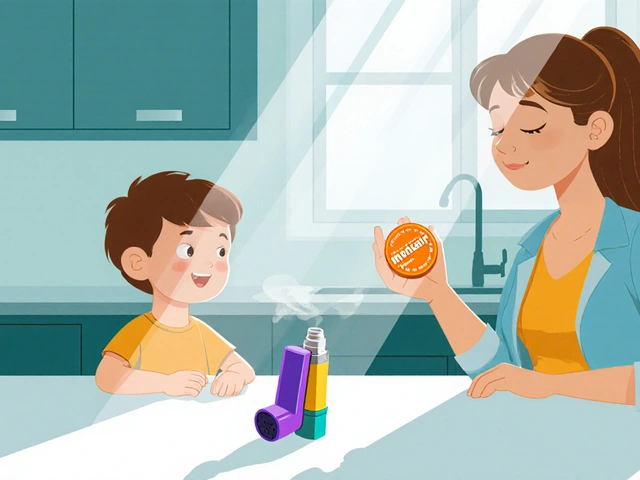
I had my asthma inhaler from the UK (before Brexit, so it was legit) and the pharmacy there scanned my ePrescription and handed me the exact same one for half the price. No drama, no paperwork. I cried a little. Seriously.
If you’re even thinking about using this - DO IT. Your future self will high-five you. And if your doc says ‘we don’t do eScripts’ - just ask for a different one. They can do it. I did.
Why should I, an American taxpayer, care about some EU pharmacy app? We have our own system. Why are we letting foreigners dictate how we do healthcare? This is just another EU power grab disguised as ‘freedom.’
And generics? Please. They’re cheap because they’re inferior. My doctor says so. I don’t trust foreign pills. I want the American-made ones. Even if they cost more.
Also, why are we even talking about this? It’s not our problem.
One might observe that the EU’s ePrescription architecture represents a Hegelian synthesis of bureaucratic rationality and market-driven healthcare - yet the dialectic remains incomplete. The system resolves the contradiction between national sovereignty and supranational mobility, but only superficially. The Patient Summary, while technically elegant, functions as a commodified avatar of the patient - stripped of context, reduced to algorithmic inputs.
And yet - the cost differential between Poland and Ireland is not merely economic; it is moral. The system does not heal. It redistributes. And redistribution, in a neoliberal framework, is not equity - it is efficiency disguised as compassion.
Still. I suppose I’ll take the metformin from Kraków. 😐
Okay but imagine this: you’re in Greece, your stomach is acting up, you pull out your phone, scan your eScript, and boom - you’ve got your probiotics in 10 minutes. No passport stamp, no translator, no panic. Just… medicine.
That’s magic. Real, quiet, unglamorous magic.
I used to think tech was cold. This? This feels human. Like the world’s trying to be a little kinder. And I’m here for it. 🌍💙
While the technological infrastructure of the MyHealth@EU initiative is commendable from a systems design perspective, one must interrogate the underlying ontological assumptions of its deployment. The assumption that health data is a transnational public good - rather than a culturally and legally contingent private asset - risks eroding the epistemic authority of national medical jurisprudence.
Furthermore, the implicit valorization of generic pharmaceuticals as inherently superior may inadvertently undermine patient trust in the therapeutic efficacy of brand-name formulations, particularly in contexts where bioequivalence is not universally validated.
One must ask: Are we facilitating access - or normalizing pharmaceutical homogenization?