Oral Thrush Treatment Decision Tool
Select Your Situation
Your Recommendation
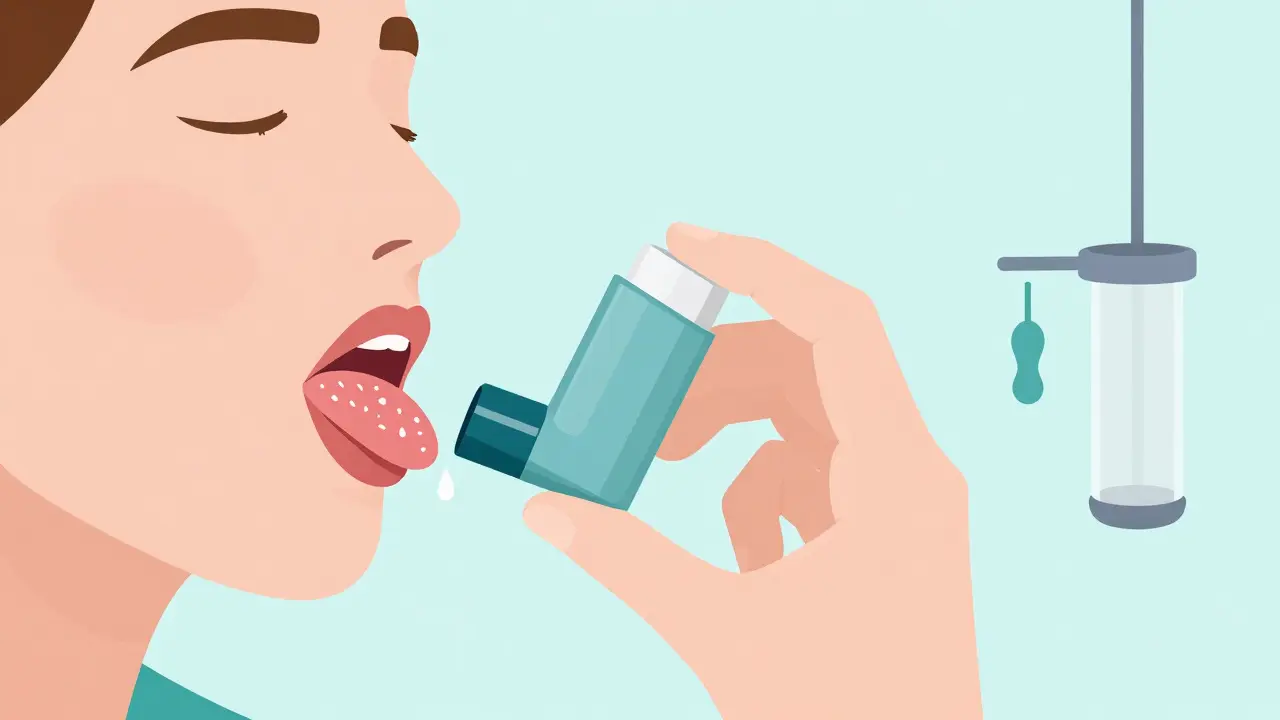
Many people don’t realize that common medications like inhalers for asthma or antibiotics for infections can trigger a painful fungal infection in the mouth. This isn’t just a minor annoyance-it’s oral thrush, caused by an overgrowth of Candida yeast. If you’re on long-term steroids, antibiotics, or immune-suppressing drugs, your risk goes up significantly. The good news? It’s treatable. And with the right steps, you can stop it from coming back.
Why Medications Cause Oral Thrush
Your mouth is home to hundreds of types of bacteria and fungi. Normally, they keep each other in check. But when you take certain drugs, that balance gets thrown off. Inhaled corticosteroids-used for asthma and COPD-leave a residue in your mouth that creates a perfect environment for Candida to grow. Antibiotics kill off the good bacteria that usually keep yeast under control. Immunosuppressants, often taken after organ transplants or for autoimmune diseases, weaken your body’s ability to fight off infections. Cancer treatments like chemotherapy do the same.According to the NHS, about 5% of people get oral thrush at some point. But for those using inhaled steroids, that number jumps to 20%. In the U.S., over 12 million people use these inhalers annually. That means hundreds of thousands are at risk-not because they’re unhealthy, but because the very drugs saving their lungs are making their mouths vulnerable.
What Oral Thrush Looks and Feels Like
You’ll usually notice it first as white patches on your tongue, inner cheeks, or roof of your mouth. These patches look like cottage cheese and can’t be wiped off easily. If you try, you might see red, raw skin underneath. It often hurts. Swallowing becomes uncomfortable. Some people say their mouth feels dry or burned. Others lose their sense of taste. In severe cases, the infection spreads down the esophagus, making it hard to eat or drink anything without pain.It’s not contagious in the way a cold is, but if you wear dentures, the fungus can cling to them and keep coming back unless you clean them daily. Diabetics with poorly controlled blood sugar are also more prone-high glucose levels feed the yeast. And if you’re over 65 or have a baby under 12, your risk is higher. That’s why over 8 million nystatin prescriptions in the U.S. last year went to adults over 65 or children under 12.
Nystatin: The First-Line Treatment
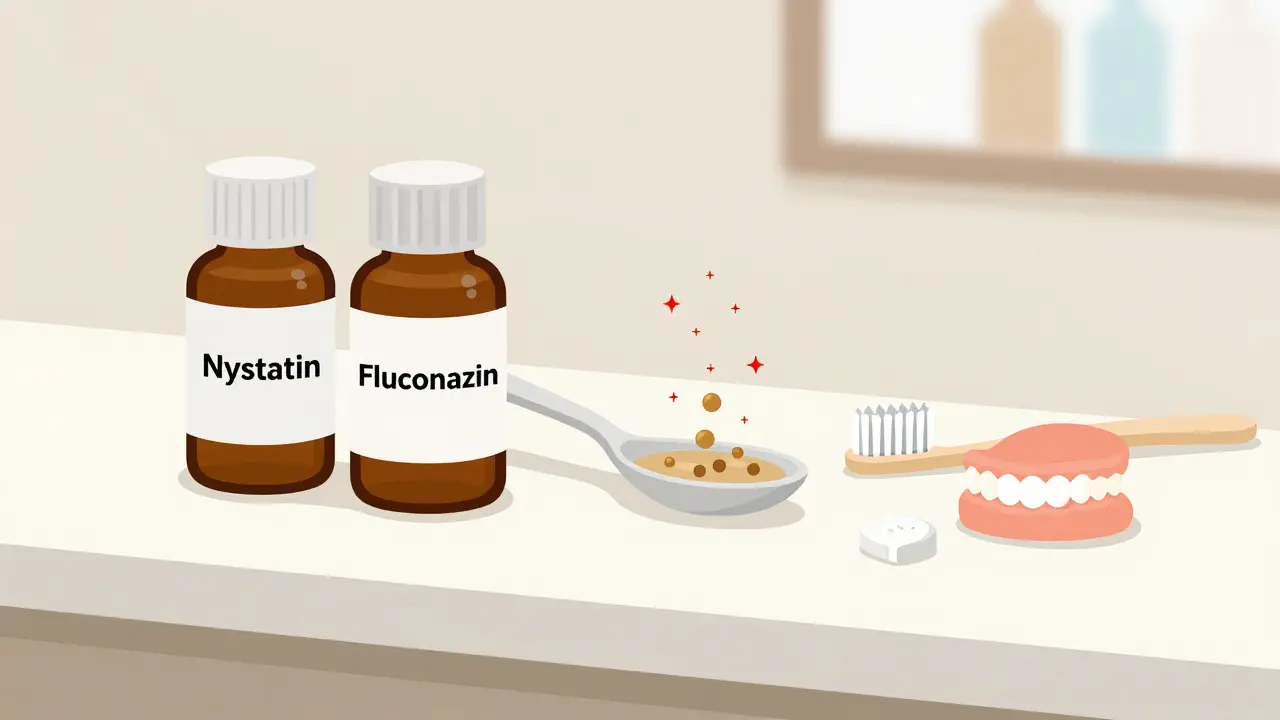
For most people, especially those with mild cases and no other major health issues, nystatin is the go-to treatment. It’s been around since the 1950s and still works because it doesn’t get absorbed into your bloodstream. It stays right where you need it-in your mouth.You get it as a liquid suspension. The instructions are simple but easy to mess up: swish 4 to 6 milliliters around your mouth for at least two minutes, then spit it out. Do this four times a day, after meals. Don’t swallow it. Don’t rinse with water right after. Let it sit. That’s how it kills the yeast on contact.
Studies show nystatin cures 92% of mild to moderate cases when used correctly. But here’s the catch: nearly half of people who fail treatment don’t follow the swishing rule. They swallow it like medicine, thinking that’s how it works. It doesn’t. It needs to coat the infected areas. One Reddit user, "AsthmaWarrior42," said the chalky taste made it hard to stick with it-but they cleared the infection after 10 days of sticking to the schedule.
It’s cheap, too. Generic nystatin costs about $16 for a 30-day supply. And because it doesn’t enter your bloodstream, it’s safe for pregnant women, babies, and people on multiple medications. No drug interactions. No liver stress. Just a little inconvenience.
Fluconazole: For Tougher Cases
When nystatin doesn’t cut it-or if the infection has spread to your throat or you’re immunocompromised-doctors turn to fluconazole. This is a pill you swallow. It works systemically, meaning it circulates in your blood to kill yeast wherever it is.It’s more effective than nystatin: 95% cure rate versus 89% in clinical trials. It’s also easier-you take one pill a day for 7 to 14 days. No swishing. No measuring. Just pop a tablet.
But it’s not without risks. Fluconazole can interact with over 30 common medications, including blood thinners like warfarin, seizure drugs like phenytoin, and diabetes pills. It can cause headaches, stomach pain, and in rare cases, liver damage. One patient on PatientsLikeMe was hospitalized after developing fluconazole-induced liver toxicity. The FDA has issued warnings about this. It’s also not safe if you have severe liver problems or are allergic to azole antifungals.
Another concern: resistance. Ten years ago, only 3% of Candida strains resisted fluconazole. Now it’s 12%. That’s why doctors are more cautious. If thrush keeps coming back, they may send a swab to the lab to check which strain you’re dealing with before prescribing it again.
Cost and Accessibility
Nystatin is cheaper and safer. Fluconazole is more convenient and more powerful. But cost matters. Generic fluconazole runs about $23 for a 14-day course. Brand-name Diflucan? Over $340. That’s why most U.S. doctors start with nystatin. In Europe, fluconazole is used more often-55% of cases-but in the U.S., it’s only 38%. Why? Because doctors here prioritize safety for older adults and kids.Insurance often covers both. But if you’re paying out of pocket, nystatin wins. And with the FDA approving a new mucoadhesive nystatin tablet in March 2023, things are getting better. This new form sticks to your mouth for up to four hours, so you only need to take it twice a day. Early trials show 94% effectiveness. It’s not everywhere yet, but it’s coming.
How to Prevent It From Coming Back
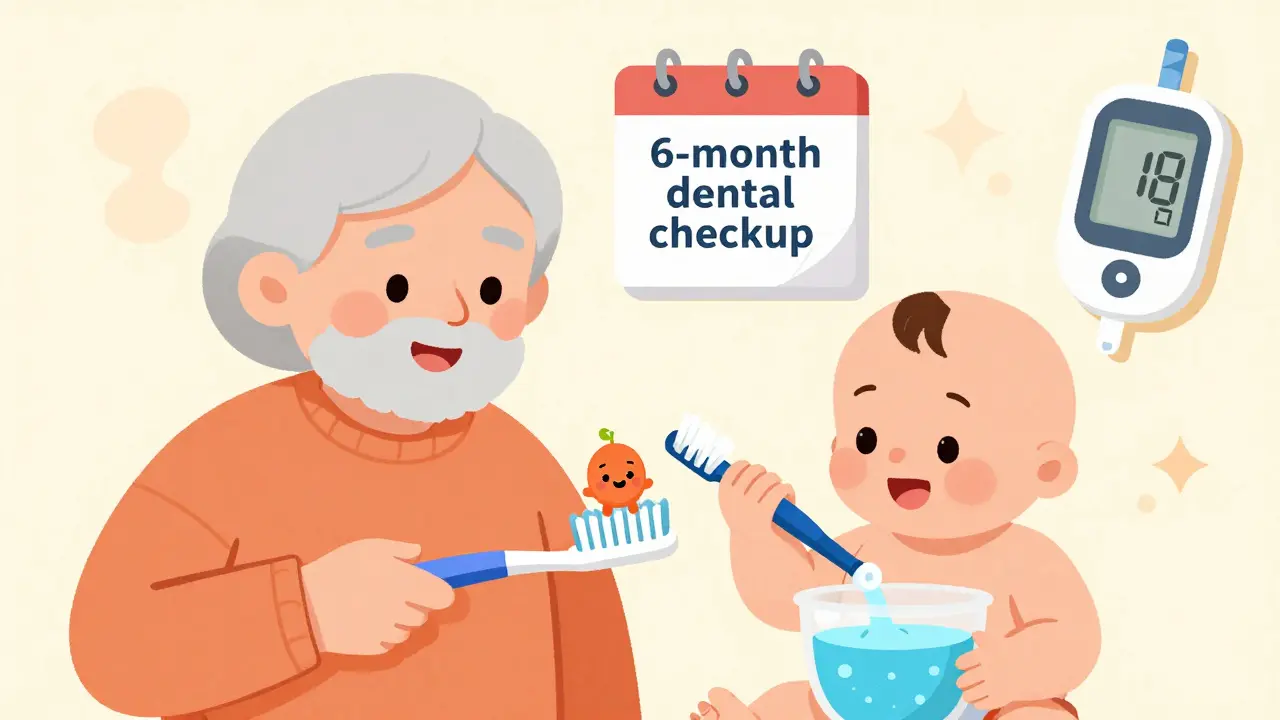
Treatment is only half the battle. If you don’t prevent it, it’ll return. Especially if you’re on steroids.The NHS says rinsing your mouth with water right after using an inhaler cuts your risk by 65%. Do it every single time. Don’t skip it because you’re in a hurry. Use a spacer device if you have one-it helps deliver the medicine to your lungs instead of your mouth.
Brush your teeth twice a day. Floss. Clean dentures daily with a disinfectant. Avoid sugary foods and drinks-yeast loves sugar. If you have diabetes, keep your HbA1c below 7%. High blood sugar is a yeast buffet.
Consider xylitol. It’s a natural sweetener that doesn’t feed Candida. Chewing gum or mints with xylitol can reduce yeast colonization by 40%, according to a study in the Journal of Dental Research. Probiotics might help too. Research published in Nature Microbiology found that taking Lactobacillus reuteri strains alongside antifungal treatment lowered recurrence by 57%.
Regular dental checkups every six months are non-negotiable. Your dentist can spot early signs before they become painful. And if you’re on long-term antibiotics or immunosuppressants, talk to your doctor about preventive antifungal rinses. Some clinics now prescribe them for high-risk patients.
What to Do If It Doesn’t Go Away
If you’ve finished your nystatin or fluconazole course and the white patches are still there, don’t assume it’s stubborn. It might be something else-lichen planus, leukoplakia, or even a sign of undiagnosed HIV. Or it could be a resistant strain of Candida.Go back to your doctor. They may take a swab and send it for culture. If fluconazole didn’t work before, they might try another antifungal like itraconazole or isavuconazole. These are newer, with fewer resistance issues. Three are currently in Phase II trials, so better options are on the horizon.
Don’t ignore it. Left untreated, oral thrush can spread to your esophagus, lungs, or bloodstream-especially if you’re immunocompromised. That’s when it becomes life-threatening.
Can oral thrush go away on its own without treatment?
Sometimes, yes-especially in healthy people with mild cases. But if you’re on steroids, antibiotics, or have a weakened immune system, it won’t go away on its own. Waiting can let it spread to your throat or digestive tract. Treatment is faster, safer, and prevents complications.
Is nystatin safe for babies and toddlers?
Yes. The European Medicines Agency confirms nystatin is safe for infants from birth. Pediatric dosing is based on weight, and since it doesn’t enter the bloodstream, there’s no risk of systemic side effects. It’s the preferred treatment for thrush in babies, especially those on antibiotics or with diaper rash caused by the same yeast.
Why does my nystatin taste so bad?
Nystatin has a chalky, bitter taste because it’s made from a natural fungal compound. It’s not meant to be pleasant-it’s meant to work. Some people mix it with a little apple sauce or yogurt to make it easier to swallow, but that reduces effectiveness. The best trick is to swish and spit quickly, then rinse your mouth with water afterward. The taste fades fast.
Can I use mouthwash to treat oral thrush?
Regular alcohol-based mouthwashes can make it worse by killing good bacteria and drying out your mouth. Antifungal mouthwashes like nystatin are designed for this purpose. Some dentists recommend chlorhexidine rinses for short-term use, but they’re not a substitute for antifungal treatment. Don’t self-treat with over-the-counter rinses unless your doctor says so.
How long does it take for fluconazole to work?
Most people start feeling better within 2 to 3 days. The white patches begin fading by day 5. But you still need to finish the full 7-14 day course. Stopping early can lead to a rebound infection or drug-resistant yeast. Even if you feel fine, keep taking it.
Can I get oral thrush from kissing someone who has it?
It’s unlikely. Candida is already present in most people’s mouths. Thrush happens when your body’s balance is disrupted-not from catching it from someone else. But if you’re immunocompromised, avoid sharing utensils or toothbrushes with someone who has active thrush, just to be safe.



Okay but can we talk about how nystatin tastes like chalk dipped in regret? I swear I thought I was swallowing a science experiment. But I stuck with it-four times a day, no rinsing, no swallowing-and after 10 days, my tongue didn’t feel like a desert anymore. Worth every gross second. Also, xylitol gum? Game changer. I chew it after every meal now. My dentist noticed the difference.
And if you’re on an inhaler? RINSE. JUST. RINSE. Even if you’re late for work. Even if you’re tired. Even if you think ‘it’s just a little residue.’ It’s not. It’s yeast condo. Don’t let it rent out your mouth.
Also, probiotics. I started taking Lactobacillus reuteri and my thrush hasn’t come back in 8 months. Not magic. Just science. And maybe a little discipline.
You got this. It’s annoying, yeah, but it’s not a life sentence. You’re not broken. Your body’s just confused. Fix the environment, not the person.
One sentence: Rinse your mouth after every inhaler use. Seriously. It’s the single most effective prevention step, and 80% of people skip it because they’re in a rush. Don’t be one of them.
Why are we still using nystatin like it’s 1957? It’s a glorified mouthwash with zero absorption. Fluconazole is faster, more effective, and doesn’t require you to play dentist with a syringe. The fact that doctors still push this chalky nonsense is lazy. If you’re immunocompromised or on steroids, you deserve better than a $16 relic. Stop glorifying inconvenience. This isn’t a virtue.
Oral thrush is a predictable consequence of systemic medication use. The medical community must prioritize patient education on post-inhaler hygiene. Studies show rinsing reduces incidence by 65%. This is not optional. It is standard of care. Additionally, xylitol and probiotic supplementation are evidence-based adjuncts. Dentists should screen high-risk patients biannually. Early detection prevents esophageal dissemination. Treatment failure is typically noncompliance not resistance. Document adherence. Counsel. Repeat.
Fluconazole resistance is rising. I’ve seen three cases in the last year where nystatin worked when fluconazole didn’t. Lab confirmation matters. Don’t assume it’s the same strain. And if you’re on long-term antibiotics, talk to your doctor about prophylactic rinses. It’s not overkill. It’s prevention.
I’m from Nigeria and we don’t have easy access to nystatin here. But I learned from my cousin who lives in the US that rinsing after inhalers is the key. I told my uncle who uses asthma inhalers and he started doing it. No more white patches. Simple things work. Maybe we don’t need fancy pills if we just rinse.
😂😂😂 nystatin tastes like a chalkboard that cried after a breakup. I spit so hard I nearly launched it into the next room. But hey, at least I didn’t swallow it like a chump. Also fluconazole? My liver is still mad at me. Don’t be me. Swish and spit. That’s the mantra. 🙏
There’s a deeper truth here: we treat symptoms without addressing systems. We give you a pill for thrush but don’t ask why your mouth’s ecosystem collapsed. It’s not just the meds-it’s sugar, stress, sleep, even your toothpaste. Your body isn’t broken. It’s signaling. Nystatin fixes the yeast. But what fixes the imbalance? That’s the real question.
I used to think it was just about medicine. Then I started tracking my sugar intake, sleeping 7+ hours, and using alcohol-free mouthwash. The thrush didn’t just go away-it stopped coming back. The pill was a bandage. The lifestyle was the cure.
We need to stop treating infections like accidents and start seeing them as mirrors. Your mouth is a map. What’s it telling you about your life?