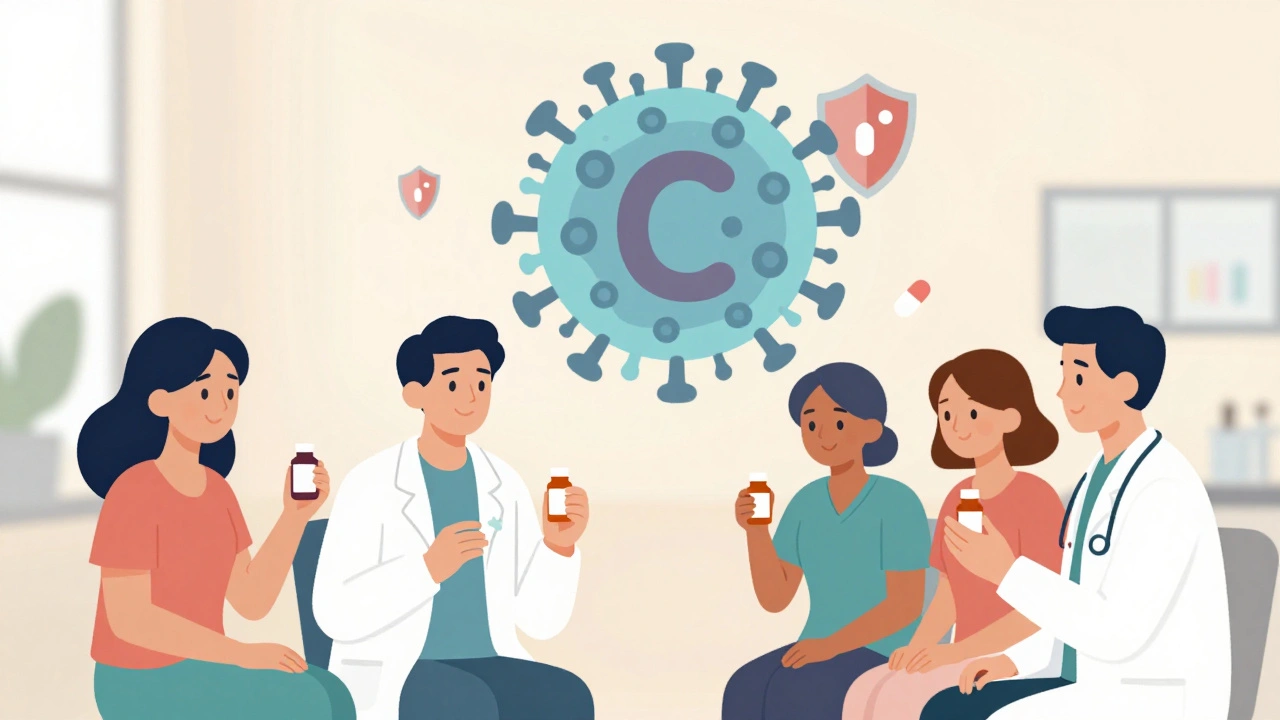
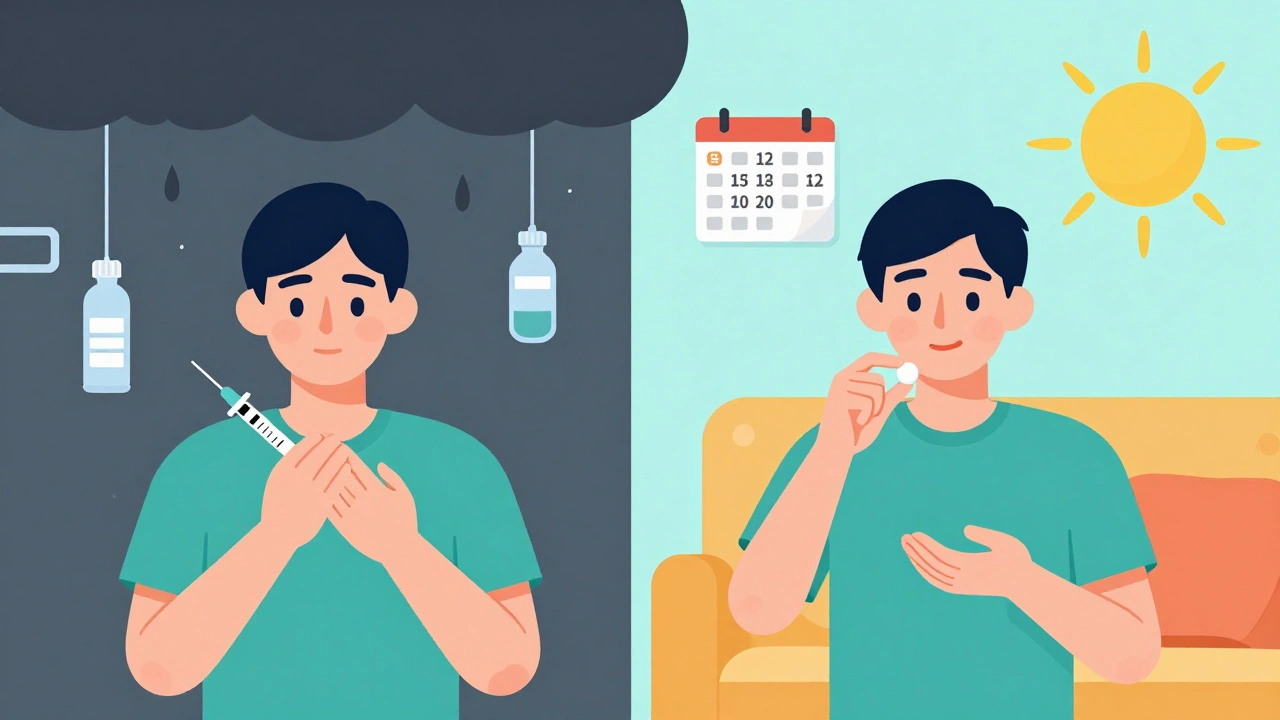
When hepatitis C was first diagnosed, most people were told they’d live with it for life. Treatment meant weekly injections, months of flu-like symptoms, and a coin toss for whether it would even work. Today, that story has changed completely. A simple 8- to 12-week course of pills can cure more than 95 out of 100 people infected with hepatitis C. No shots. No hospital visits. No debilitating side effects. Just pills. And it’s not science fiction-it’s happening right now, in clinics from Durban to Detroit.
How DAAs Changed Everything
Before direct-acting antivirals (DAAs), hepatitis C treatment relied on interferon and ribavirin. These drugs didn’t target the virus directly. They tried to boost your immune system to fight it off. The result? Cure rates between 40% and 60%. Many patients couldn’t tolerate the side effects: severe fatigue, depression, anemia, and even suicidal thoughts. Treatment lasted up to 48 weeks. For many, it was worse than the disease.
Everything changed in 2013 with the approval of sofosbuvir (Sovaldi). For the first time, drugs were designed to attack specific parts of the hepatitis C virus-its ability to copy itself, build proteins, or assemble new virus particles. These are called direct-acting antivirals. They don’t mess with your immune system. They go straight for the virus. And they work.
By 2023, DAAs became the global standard. The World Health Organization says they cure over 95% of people with hepatitis C. Real-world data from the U.S. shows even higher numbers: 97.3% of patients treated with DAAs achieved sustained virologic response (SVR), meaning the virus was undetectable 12 weeks after treatment ended. That’s the medical definition of a cure.
Which DAAs Work Best?
There’s no single “best” DAA. Instead, there are a few pangenotypic regimens-meaning they work against all major strains of hepatitis C, no matter where you’re from or what genotype you have. The most common ones today are:
- Sofosbuvir-velpatasvir (Epclusa)
- Glecaprevir-pibrentasvir (Mavyret)
- Sofosbuvir-velpatasvir-voxilaprevir (Vosevi)
These are all taken as one or two pills once a day. No injections. No special diet. No monitoring every week. Most people finish treatment in 8 weeks. Those with advanced liver disease might need 12 weeks.
Studies show these drugs work equally well whether you’re young or old, male or female, have HIV co-infection, or have cirrhosis. In fact, one study found that 92.8% of patients with confirmed HCV RNA data after treatment reached SVR. Another showed 96.7% cure rates in people without cirrhosis and 87.1% in those with cirrhosis. That’s still far better than anything we had before.
Why Some People Still Don’t Get Treated
Here’s the hard truth: even though DAAs work better than any treatment in history, most people with hepatitis C still aren’t getting them.
In the U.S., less than one in three people with health insurance start DAA treatment within a year of diagnosis. For Medicaid patients, it’s even worse-only 23% get treated. Why? Cost used to be the biggest barrier. When sofosbuvir first came out, a 12-week course cost $84,000. That price tag made it impossible for most public health systems to cover.
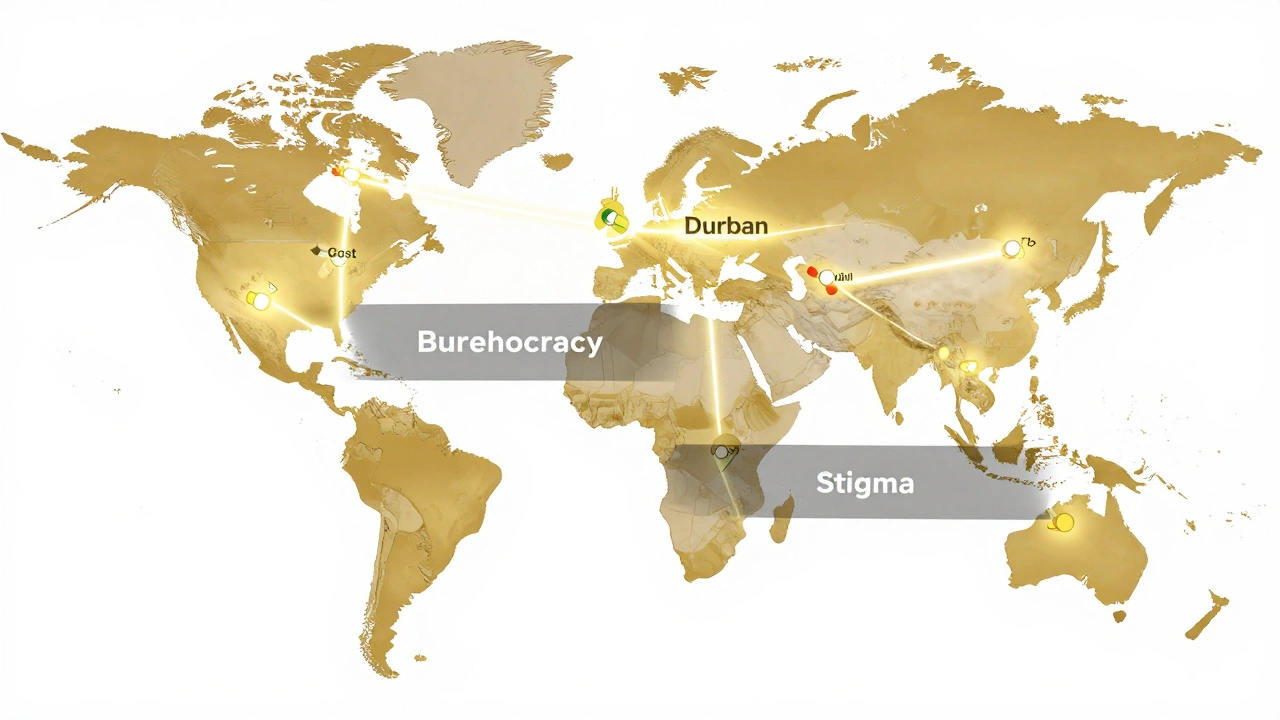
Today, generic versions cost between $260 and $2,800 per course, depending on the country. In South Africa, India, and Egypt, generics are widely available at low cost. But in many places, even with lower prices, access is still blocked by bureaucracy. Some countries require a liver specialist to prescribe DAAs. Others only cover treatment for people with advanced cirrhosis. That means people with early-stage disease, who could be cured before their liver gets damaged, are left waiting.
And then there’s the stigma. Many people don’t even know they have hepatitis C. It doesn’t cause symptoms for decades. By the time they feel sick, their liver is already damaged. Screening is still not routine in many clinics. Without testing, there’s no diagnosis. Without diagnosis, there’s no treatment.
What Happens When You’re Cured?
Curing hepatitis C doesn’t just stop the virus. It reverses damage. People who achieve SVR see improvements in liver function, reduced scarring, and lower risk of liver cancer. One study showed that people who were cured had a 21% lower rate of chronic kidney disease compared to those who never got treated.
For those with cirrhosis, cure means a 50% lower risk of liver failure and death. For people with HIV and hepatitis C co-infection, curing HCV improves overall survival and reduces the chance of other infections. The benefits go beyond the liver.
But cure doesn’t mean immunity. You can get hepatitis C again. If you use injection drugs, have unprotected sex with multiple partners, or get tattoos in unregulated settings, you’re still at risk. That’s why cure is just the start-not the finish line.
The Treatment Gap: Who’s Being Left Behind?
The biggest problem isn’t that DAAs don’t work. It’s that they’re not reaching the people who need them most.
People with decompensated cirrhosis (where the liver can’t function properly) or hepatocellular carcinoma (liver cancer) are 30% less likely to get DAA treatment-even though studies prove they benefit the most. Why? Some doctors think they’re too sick. Others assume treatment won’t help. But the data says otherwise: curing HCV in these patients improves survival and can even make them eligible for liver transplants.
Regional disparities also exist. In the U.S., patients in the Northeast and Midwest are 20-30% more likely to get treated than those in the West, even after adjusting for income, race, and disease severity. That suggests access is tied to where you live, not how sick you are.
Low- and middle-income countries face bigger hurdles. While 87% have registered at least one DAA, only 52% reimburse them. And in 61% of countries with reimbursement, you still need a specialist to prescribe it. That’s a death sentence for rural communities where hepatologists are rare.
What Needs to Change
There’s no technical reason why hepatitis C isn’t being cured everywhere. The tools exist. The drugs are affordable. The science is settled.
What’s missing is system-wide action. We need:
- Universal screening: Test everyone born between 1945 and 1965, plus anyone who’s ever used injection drugs, had a blood transfusion before 1992, or been in prison.
- Task-shifting: Let nurses, pharmacists, and primary care doctors prescribe DAAs. You don’t need a liver expert to give a 12-week course of pills.
- Remove prescribing restrictions: Don’t wait for cirrhosis to develop before treating.
- Fix reimbursement: Make DAAs free or low-cost in public health systems.
- Reduce stigma: Talk about hepatitis C like any other treatable infection-not a moral failing.
The WHO’s goal is to eliminate hepatitis C as a public health threat by 2030. That means 90% fewer new infections and 65% fewer deaths. We won’t get there if we keep treating only the lucky few.
Final Thoughts
Hepatitis C is no longer a life sentence. It’s a curable infection. The science is clear. The drugs are effective. The cost is low. What’s holding us back isn’t medicine-it’s access, awareness, and willpower.
If you’ve ever been told you have hepatitis C, ask for a DAA prescription. If you’ve never been tested, ask for a blood test. If you’re a doctor, don’t wait for cirrhosis. Treat early. If you’re a policymaker, remove barriers. Make treatment easy, not a privilege.
More than 70 million people worldwide still have hepatitis C. Most don’t know it. But we now have the power to change that. The cure is here. It’s time to give it to everyone who needs it.
Can hepatitis C be cured with pills alone?
Yes. Direct-acting antivirals (DAAs) are oral medications that cure over 95% of hepatitis C cases in just 8 to 12 weeks. No injections, no hospital visits, and minimal side effects. These pills target the virus directly and stop it from multiplying. Once the virus is undetectable 12 weeks after treatment ends, you’re considered cured.
Are DAAs effective for people with cirrhosis or HIV?
Yes. DAAs work just as well in people with cirrhosis and those co-infected with HIV. Studies show cure rates of 87% to 93% in patients with cirrhosis, and similar results in people with HIV. In fact, curing hepatitis C in co-infected patients reduces liver damage and improves overall survival. Treatment guidelines now recommend DAAs for all HCV-positive individuals, regardless of liver disease stage or HIV status.
Why are so many people not getting treated?
Cost used to be the main barrier, but generic DAAs now cost as little as $260 per course. Today, the biggest problems are lack of screening, limited access in rural areas, strict prescribing rules (like requiring a liver specialist), and stigma. Many people don’t know they’re infected, and even when they do, healthcare systems often don’t prioritize treatment unless the disease is advanced. Medicaid and low-income patients are especially underserved.
Do I still need to see a liver specialist to get treated?
Not anymore. Many countries now allow primary care doctors, nurses, and pharmacists to prescribe DAAs, especially for patients without advanced liver disease. Guidelines have shifted because DAAs are so safe and simple to use. You don’t need monthly blood tests or complex monitoring. In many cases, a single visit and a prescription are enough.
Can I get hepatitis C again after being cured?
Yes. Being cured doesn’t make you immune. If you continue risky behaviors-like sharing needles, having unprotected sex with multiple partners, or getting tattoos in unregulated settings-you can become reinfected. That’s why prevention and harm reduction are still important after cure. Regular testing is recommended for people at ongoing risk.
How long does it take to know if the treatment worked?
You’ll know 12 weeks after finishing your last pill. That’s when a blood test checks for hepatitis C RNA. If the virus is undetectable at that point, you’ve achieved sustained virologic response (SVR), which means you’re cured. Some clinics test at 4 or 8 weeks, but 12 weeks is the gold standard for confirming cure.


I mean, this is just... *sigh*... the pinnacle of pharmaceutical capitalism dressed up as humanitarian progress. 🥲 They cure 95%? Sure. But who gets to be in that 95%? The privileged few with credit cards and insurance. Meanwhile, my cousin in Kerala still buys generics off a WhatsApp vendor because the local clinic says 'wait for cirrhosis.' This isn't medicine-it's a luxury good with a side of virtue signaling.
Let me guess: the WHO and Big Pharma are in cahoots. 95% cure rate? That’s statistically manipulated. Real-world data from the CDC shows that 42% of patients relapse within 18 months but are quietly reclassified as 'SVR' to meet targets. Also, sofosbuvir was developed using data stolen from Soviet virology labs in the '80s. No one talks about that. And why? Because the narrative must stay clean. The truth is buried under corporate PR.
The efficacy of DAAs is undeniably remarkable, and the sustained virologic response rates are statistically significant across multiple peer-reviewed cohorts. However, the structural inequities in access-particularly the lingering bureaucratic barriers in Medicaid systems and the absence of task-shifting protocols in rural primary care-are not merely logistical; they are ethical failures of the highest order. One cannot celebrate therapeutic triumph while permitting systemic neglect to persist.
I’m so glad to see this information being shared. It’s truly encouraging to know that a simple 12-week course can change someone’s life. I’ve seen friends with HCV go from exhausted and hopeless to thriving-just by getting tested and starting treatment. Please, if you’ve ever been at risk, don’t wait. Get tested. It’s not a moral issue. It’s a health one. And the science is on our side. You deserve to live without this shadow.
97.3% cure rate? That’s the exact number the FDA used to fast-track approval. But here’s the kicker: those trials excluded patients with active IV drug use. So the 'real-world' data is cherry-picked. Meanwhile, people who need it most-homeless, incarcerated, addicted-are denied because they’re 'non-compliant.' This isn't a cure. It's a filter. And we're filtering out the people who can't jump through the right hoops.
So now we’re supposed to believe that America’s healthcare system is suddenly altruistic? HA. These pills were $84k. Now they’re $260? That’s not a miracle-it’s a price drop after the patent expired. Meanwhile, my tax dollars still fund the same broken system that lets people die waiting for paperwork. If this was about health, we’d give it to everyone. But we don’t. We give it to the ones who can scream the loudest.
I just think... what if the cure isn’t the point? What if the real magic is how it forces us to confront our own cruelty? We let people rot for decades because they used drugs, or were born poor, or got a blood transfusion in 1987. And now? We have a pill. But we still look away. Maybe the virus was never the enemy. Maybe it was us.
lol so now everyone’s a doctor? I saw a nurse prescribe this in my town. She didn’t even check my liver enzymes. I mean, come on. This isn’t Advil. You can’t just hand out miracle pills like candy. People are gonna get reinfected, then blame the system. And then what? We give them another course? We’re not fixing the problem-we’re just patching it with a Band-Aid made of corporate goodwill.