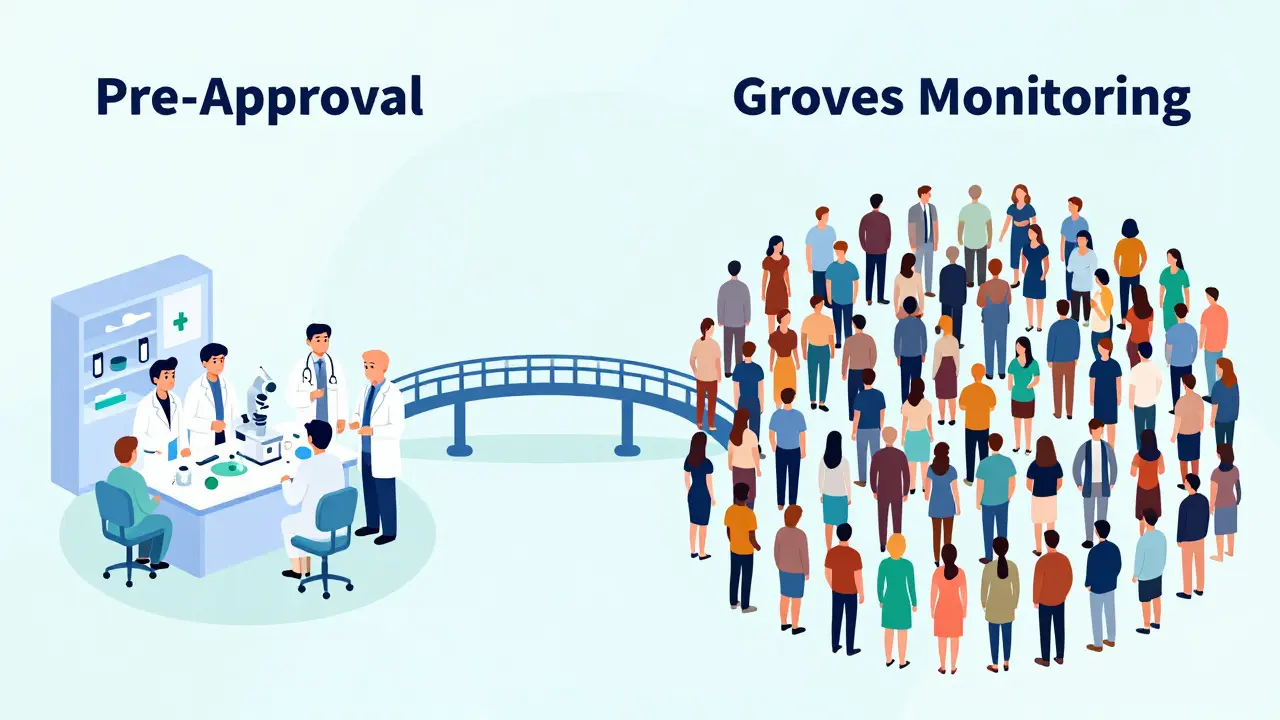
You might assume that once a generic drug gets the green light from the government, the hard part is over. But for the FDA is the federal agency responsible for protecting public health by ensuring the safety, efficacy, and security of human and veterinary drugs, the approval is just the beginning. While a generic is tested to be bioequivalent to the brand-name version, a small study with 30 people can't predict how a drug will behave in millions of different bodies over ten years. That is why post-market surveillance exists: to catch the "rare" events that only show up when a drug hits the real world.
| Phase | Primary Focus | Typical Sample Size | Goal |
|---|---|---|---|
| Pre-Approval | Bioequivalence | 24-36 Healthy Volunteers | Prove it works like the brand |
| Post-Approval | Real-world Safety | Millions of Patients | Detect unexpected side effects |
The Brains Behind the Operation
The heavy lifting happens within the Center for Drug Evaluation and Research (CDER). Specifically, the Office of Generic Drugs (OGD) acts as the central hub. They don't just wait for phone calls about bad reactions; they coordinate with the Office of Pharmaceutical Quality to make sure the chemical makeup of the drug stays consistent.
To make this work, the FDA uses a multidisciplinary approach. The OGD Clinical Safety and Surveillance Committee brings together doctors, chemists, and scientists. These experts meet regularly to debate "safety signals"-patterns in data that suggest a drug might be causing an issue. Because generics often have different inactive ingredients (fillers) than the brand name, the FDA has to figure out if a side effect is caused by the active drug or a specific filler used by one manufacturer.
How the FDA Spots Red Flags
The FDA uses two main styles of monitoring: passive and active. Passive monitoring is like a suggestion box-it relies on people telling the FDA when something goes wrong. The primary tool here is FAERS, which is the FDA Adverse Event Reporting System, a database that stores and analyzes safety reports from healthcare professionals and consumers. Every year, this system processes roughly 2 million reports. You can contribute to this via MedWatch, the FDA's voluntary reporting program.
However, relying on people to report issues has a flaw: underreporting. Some experts suggest that only 1% to 10% of adverse events ever make it into the system. To fix this, the FDA launched the Sentinel Initiative. This is active surveillance. Instead of waiting for a report, the FDA proactively mines electronic health records and insurance claims from over 100 million patients. This allows them to spot a trend in real-time across different healthcare systems before it becomes a widespread crisis.
Checking the Factory Floor
Safety isn't just about how the drug reacts in the body; it's about how it's made. The FDA enforces cGMP, or Current Good Manufacturing Practices, which are the baseline regulations for ensuring drugs are produced consistently and safely. If a factory's air filtration fails or a chemical impurity leaks into a batch, the drug's safety profile changes.
The agency conducts about 1,800 inspections annually-roughly 1,200 domestic and 600 foreign. These inspectors check everything from how materials are stored to how the lab tests the final product. When the FDA finds a problem, they don't just send a stern letter. They can trigger voluntary product recalls or, in extreme cases, pull the drug from the market entirely.
The Challenge of Complex Generics
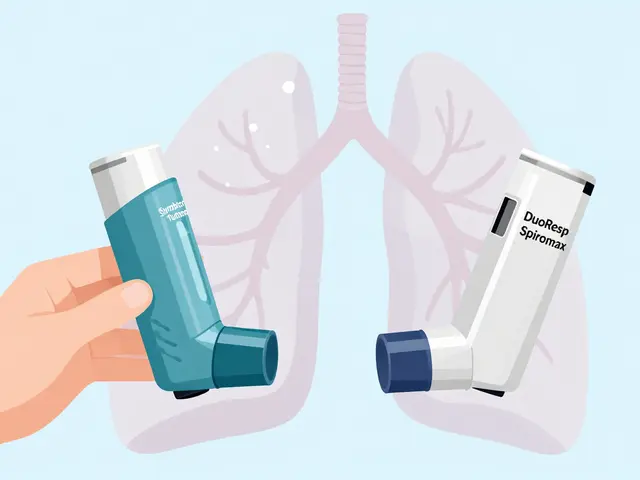
Not all generics are created equal. A simple tablet is easy to monitor, but "complex generics"-like nasal sprays, inhalers, or modified-release patches-are a different story. These products rely on sophisticated delivery mechanisms. If a nasal spray doesn't deliver the exact dose because of a nozzle flaw, the patient might not get enough medicine, or they might get too much.
This is where the Generic Drug User Fee Amendments (GDUFA) come into play. By collecting fees from manufacturers, the FDA has more resources to hire specialized reviewers for these complex products. Under GDUFA III, the agency has stepped up its game, implementing bi-weekly screenings of adverse event data to catch issues with these high-risk delivery systems faster.
What Happens When a Signal is Confirmed?
When the data shows a clear problem, the FDA has a toolkit of responses. It rarely starts with a total ban. Usually, the first step is updating the labeling. If a generic drug is found to cause a rare but serious reaction in people with kidney disease, the FDA will require a label change to warn doctors.
In more urgent cases, the FDA issues a "Dear Healthcare Provider" letter. This is essentially a high-priority alert sent to doctors and pharmacists to warn them about a specific risk. If the issue is tied to a bad batch at a specific plant, a recall is issued. The goal is always to mitigate risk without cutting off a patient's access to an affordable, necessary medication.
Do generic drugs have more side effects than brand-name drugs?
Generally, no. Because generics must be bioequivalent to the brand-name drug, they contain the same active ingredient and should work the same way. However, some people may react differently to the inactive ingredients (like dyes or fillers), which can vary between manufacturers.
How can I report a problem with a generic medication?
The best way is through the MedWatch program. You can submit a report online via the FDA website. This information goes directly into the FAERS database and is reviewed by safety evaluators to see if a pattern is emerging.
What is a "safety signal"?
A safety signal is a reported information on a possible causal relationship between an adverse event and a drug. It isn't a proven fact yet, but a "hint" in the data that warrants a deeper investigation by epidemiologists.
Why does the FDA inspect foreign factories?
A huge portion of generic drug ingredients are manufactured outside the U.S. To ensure that these facilities follow the same strict cGMP standards as domestic plants, the FDA conducts thousands of international inspections to prevent contaminated or impure drugs from entering the supply chain.
Are all generics monitored the same way?
No. The FDA uses a risk-based approach. Complex generics, such as those with narrow therapeutic indices (where a tiny change in dose can be dangerous), receive more intense scrutiny and more frequent data screening than a standard over-the-counter generic.
Next Steps for Patients and Providers
If you are a patient, the most important thing you can do is keep a record of the specific manufacturer of your generic drug. Since different companies use different fillers, knowing the exact brand of generic helps doctors identify if a reaction is specific to one manufacturer's version.
For healthcare providers, staying tuned to the FDA's safety communications and utilizing the Sentinel-based data insights helps in making more informed prescribing decisions. If you notice a patient reacting poorly to a generic after switching from a brand-name version, don't assume it's just "in their head"-reporting that through MedWatch provides the data the FDA needs to protect other patients.


everyone knows the fillers are the real problem 🙄
The sheer arrogance of the FDA to imply that foreign factories are somehow less reliable! India is the pharmacy of the world, providing high-quality generics that keep the global population alive while the US just focuses on its own bureaucratic red tape. This article completely glosses over the superior manufacturing capabilities of Indian pharmaceutical hubs, opting instead for a Western-centric narrative of 'inspection' and 'surveillance' as if we cannot manage our own quality control. It is absolutely disgraceful that the global community is forced to adhere to these specific American standards when our output is what actually saves millions of lives every single day across the planet!
Imagine actually trusting a government agency to 'mine' your health records without selling the data to the highest bidder. It's a total joke. The whole 'Sentinel Initiative' sounds like a nightmare for privacy masquerading as public health. Truly pathetic that people just swallow this without questioning where the data goes. :-)
Exactly! Privacy is a joke in this country. The FDA is just another arm of the surveillance state pretending to care about our 'safety' while they strip away every bit of medical confidentiality we have left. It's honestly disgusting how we just accept this as 'innovation'.
Wow, it's so great to see how much work goes into keeping us safe! 🌟 I really love that there are ways for us as patients to help out through MedWatch. It makes me feel so empowered to know we can actually contribute to the safety of others! Keep spreading the knowledge everyone! ✨😊
It is truly heartening to see the multidisciplinary approach taken by the OGD. The collaboration between chemists and doctors ensures a comprehensive safety net for all patients. (^_^)
I must express my complete agreement with the necessity of these protocols, as the rigorous application of cGMP standards is the only viable way to ensure that the pharmaceutical integrity of a generic medication is maintained across diverse manufacturing environments, and while some may find the inspection process tedious, it is an absolute imperative for the protection of the global patient population who rely on these affordable alternatives to maintain their quality of life without fear of contamination or dosage inconsistency.
typical goverment waste. they probably miss half the bad stuff anyway cuz they're too busy takin bribes from the big pharma companies lol. totaly useless system if u actually look at how many bad batches still hit the shelves in america