Vilazodone Diarrhea Management Calculator
Personalized Management Plan
Your Personalized Management Plan
Starting vilazodone (brand name Viibryd) for depression can feel like a step forward-until the diarrhea hits. If you’re one of the 26 to 29% of people who get it, you’re not alone. It’s not rare. It’s not a sign you’re doing something wrong. It’s just how your body reacts to the way vilazodone works. The good news? For most people, it doesn’t last. And there are real, practical ways to make it bearable-without giving up on the medication.
Why Vilazodone Causes Diarrhea
Vilazodone isn’t your typical SSRI. It’s a SPARI-serotonin partial agonist and reuptake inhibitor. That means it does two things: it boosts serotonin by blocking its reabsorption, and it gently activates certain serotonin receptors in your brain and gut. That second part is what trips up your digestive system. Serotonin isn’t just a mood chemical. About 95% of it lives in your intestines, where it controls how fast food moves through your system. When vilazodone floods those receptors, your gut goes into overdrive. Result? Loose stools, cramps, urgency. It’s not an infection. It’s pharmacology.It Usually Goes Away-Here’s When to Expect It
Most people who get diarrhea on vilazodone feel it within the first 3 to 5 days. The worst of it? Usually over by day 7. A 2017 study in Dove Press found that 94% of cases were mild to moderate, and 68% of users reported the diarrhea was gone by week 3. That’s the pattern: peak in week one, fading by week two, mostly gone by week three. If you’re still having it after 14 days, it’s time to talk to your doctor-but don’t panic. A small number of people (about 10%) do need to switch meds, but most just need time and the right tweaks.The #1 Thing That Helps: Take It With Food
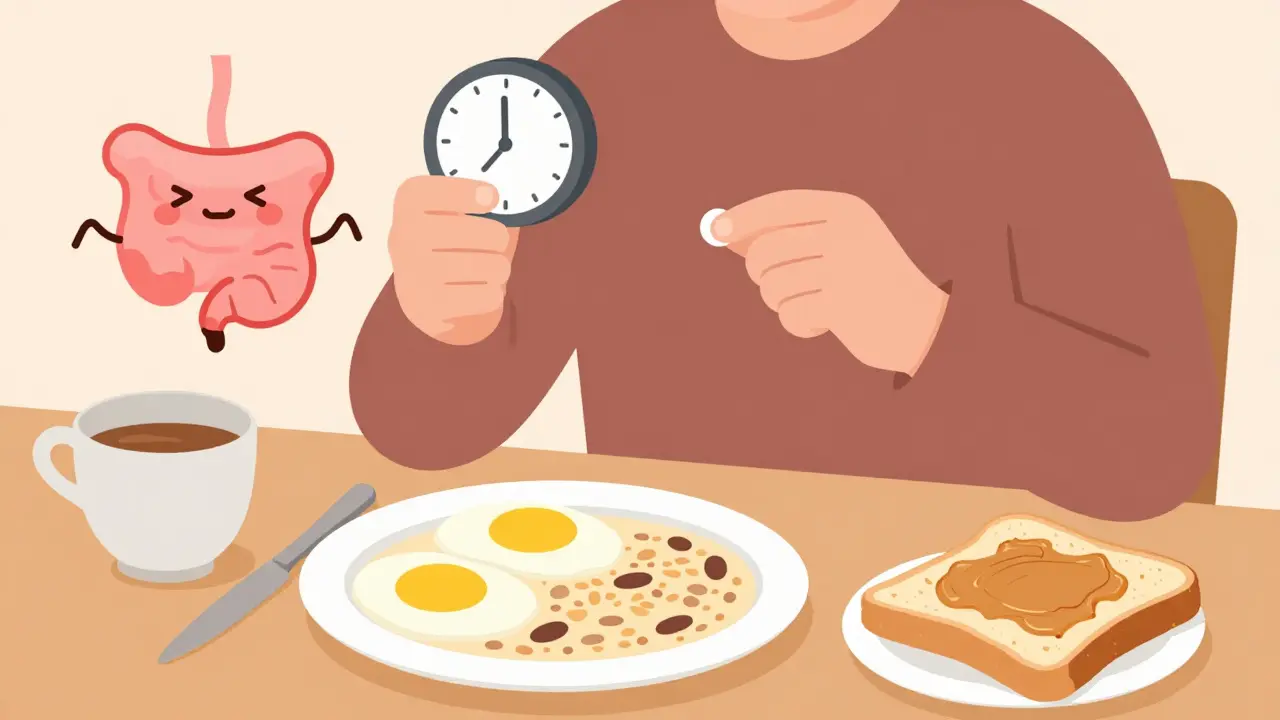
This isn’t a suggestion. It’s a requirement. The FDA label says vilazodone must be taken with food. Not a snack. Not a banana. At least 500 calories-think a full meal with protein, fat, and complex carbs. Why? Because food slows down how fast the drug gets absorbed. Without food, vilazodone hits your bloodstream like a sprinter. With food, it’s more like a slow jog. That small delay cuts diarrhea risk by up to 35%, according to the Journal of Clinical Psychiatry. A study from 2023 found that 74% of people who managed their diarrhea did so by sticking to meals. Skip the breakfast smoothie. Eat eggs, oatmeal, toast with peanut butter. Lunch? Chicken, rice, veggies. Dinner? Salmon, sweet potato, broccoli. Consistency matters. Take it at the same meal every day. Don’t skip it. Don’t take it on an empty stomach, even once.Diet Tweaks That Actually Work
Beyond food timing, what you eat matters. Avoid the usual triggers: spicy food, fried stuff, caffeine, and artificial sweeteners like sorbitol or aspartame. They all make diarrhea worse. Instead, focus on soluble fiber. Think oats, bananas, applesauce, psyllium husk. Soluble fiber soaks up water in your gut and firms up stool. Aim for 10 to 15 grams a day. That’s about 1.5 cups of cooked oats or a banana plus a tablespoon of ground flaxseed. Probiotics help, too. Look for strains like Lactobacillus rhamnosus GG or Bifidobacterium longum. The 2023 VIVALDI study showed combining vilazodone with a probiotic cut diarrhea rates from 28% to 15%. You don’t need fancy supplements-plain yogurt with live cultures works. Just check the label.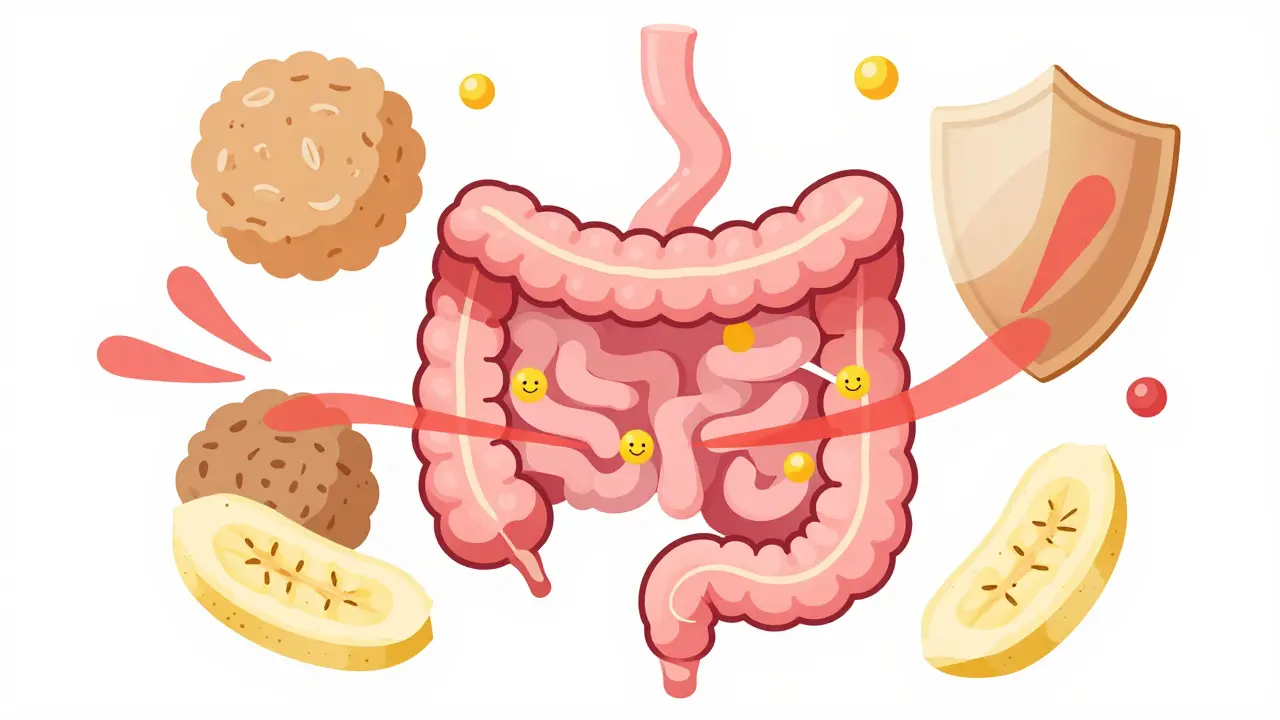
When to Use Loperamide (Imodium)
If you’re stuck at home, in class, or at work because you can’t control it, loperamide is a short-term fix. It slows gut movement. Take 2 mg (one tablet) only when you need it-up to four times a day. Don’t use it daily for more than a few days. It’s not a cure. It’s a bridge. Use it while you wait for your body to adjust. But talk to your doctor first. If you have a fever, blood in stool, or more than six bowel movements a day, stop loperamide and call your provider. Those aren’t normal side effects-they could be something else.What Doesn’t Work (And Why)
Don’t try to tough it out by skipping meals or cutting calories. That makes absorption worse and diarrhea worse. Don’t switch to another SSRI thinking it’ll be easier. Sertraline causes diarrhea in 18% of people. Escitalopram? Only 6%. But vilazodone’s real advantage isn’t fewer GI issues-it’s fewer sexual side effects. If you’ve struggled with low libido or trouble reaching orgasm on other antidepressants, vilazodone might still be worth it. But if your main problem is digestion, it’s not the best fit. Also, don’t assume it’s “just anxiety.” Diarrhea from vilazodone is physical, not psychological. You can’t think your way out of it.When to Consider Switching
Most people adapt. But not everyone. If after 3 weeks you’re still having 4+ loose stools a day, losing weight, feeling dehydrated, or just can’t function, it’s time to talk about alternatives. Bupropion (Wellbutrin) is a common switch-it rarely causes diarrhea. SSRIs like escitalopram or sertraline might be better tolerated if sexual side effects aren’t your main concern. The decision isn’t about weakness. It’s about finding a treatment that works for your whole body, not just your mood.
The Bigger Picture: Why Vilazodone Still Matters
Vilazodone isn’t the first choice for most doctors. It’s not the cheapest. It’s not the easiest on the gut. But for some people, it’s the only one that doesn’t wreck their sex life or pack on pounds. Studies show only 2-3% of people on vilazodone report sexual side effects-compared to 25-70% on older SSRIs. That’s huge for people who’ve tried everything else. And now that the patent expired, generic vilazodone is cheaper than ever. In 2023, prescriptions jumped 37% because more people are learning how to manage the side effects. It’s not perfect. But it’s useful-when used right.Real Stories, Real Results
One Reddit user, ‘AnxiousEngineer,’ started at 10 mg and got terrible diarrhea the first week. His doctor told him to keep going. By week 3, it was gone. He’s been on 40 mg for six months now with no issues. Another user on Drugs.com, ‘DepressedMom,’ lasted three weeks before switching to bupropion. Said it was a “life-changing” difference. Neither was wrong. One found a solution. The other found a better fit. Both kept treating their depression.What to Do Next
If you’re on vilazodone and getting diarrhea:1. Make sure you’re eating at least 500 calories with every dose.
2. Avoid caffeine, spicy food, and artificial sweeteners.
3. Add soluble fiber (oats, bananas, flax) and a probiotic daily.
4. Use loperamide only if you need to get through a tough day.
5. Give it 14 days. If it’s still bad, call your doctor.
6. Don’t quit without talking to someone. There are options.
How long does vilazodone diarrhea last?
For most people, diarrhea starts within the first week and fades by week 2 or 3. About 68% of users report it’s gone by day 14. A small number (10-15%) may need more time or a medication change. If it lasts longer than 2 weeks, talk to your doctor.
Can I take loperamide with vilazodone?
Yes, but only short-term and under medical guidance. Loperamide (Imodium) can help control symptoms while your body adjusts. Don’t use it daily for more than a few days. Avoid if you have a fever, bloody stools, or more than six bowel movements a day-those need medical evaluation.
Does vilazodone cause weight gain?
No, vilazodone is less likely to cause weight gain than many other antidepressants. Unlike paroxetine or mirtazapine, it doesn’t typically increase appetite or slow metabolism. For people concerned about weight, this is one of vilazodone’s biggest advantages.
Why do I have to take vilazodone with food?
Vilazodone is poorly absorbed on an empty stomach. Taking it with at least 500 calories of food boosts absorption by 60% and reduces GI side effects by up to 35%. A full meal slows how fast the drug enters your system, which prevents the sudden serotonin spike that triggers diarrhea.
Is vilazodone better than other antidepressants?
It’s not better for everyone. It has higher diarrhea rates than most SSRIs. But for people who struggle with sexual side effects or weight gain on other meds, vilazodone can be the best option. It’s not first-line, but it’s valuable for those who’ve tried others and need something different.
Can probiotics help with vilazodone diarrhea?
Yes. A 2023 study found that adding a probiotic with Bifidobacterium longum reduced diarrhea from 28% to 15% in people taking vilazodone. Look for products with Lactobacillus rhamnosus GG or Bifidobacterium strains. Plain yogurt with live cultures works too.


lol so vilazodone is just the gov't's way to test our bowel control? 🤡 I bet the FDA got paid off by Big Pharma to make us all poop our pants so they can sell us Imodium by the truckload. #DeepStateDiarrhea
food? why not just take pill with water like normal people? this is dumb. all drugs should work without eating. who made this rule? aliens?
Taking medication with food is basic common sense. If you can't follow that, maybe you shouldn't be on antidepressants at all.
Okay, so... food = 500 calories? That’s... a lot? Like, I eat a banana and call it breakfast, and now I’m a medical rebel? 🤔 Also, probiotics? I just ate yogurt last week... is that enough? Or do I need to start a cult? 🤷♂️
YOU GOT THIS!! 🙌 I was on vilazodone for 3 months and thought I was dying from diarrhea-then I started eating eggs and oatmeal like clockwork. Week 2? Better. Week 3? Gone. You’re not broken-you’re just adjusting. Keep going, warrior! 💪
This post literally saved my life 😭 I was about to quit until I tried the probiotic + food combo. Now I’m on 40mg and my gut is chill. Also, I just started eating bananas every morning-so simple, so effective 🍌❤️
Hey, just wanted to say thanks for laying this out so clearly. I’ve been on vilazodone for 6 weeks now, and honestly? The diarrhea was rough at first, but the food thing really helped. I started taking it with dinner-chicken, rice, broccoli-and now I barely notice it. Just wanted to add my two cents. 😊
So let me get this straight... you're telling me that a drug that's 'better for sex' causes diarrhea in 30% of users, and the solution is to eat a whole damn Thanksgiving dinner every morning? Bro. This isn't medicine. This is a scam. Who designed this? A nutritionist on acid? 🤡
You people are making this way too complicated. Just take the pill with a big glass of water and stop complaining. If your gut can't handle it, you're weak. I've been on 10 meds and never had diarrhea. You're just lazy.
Hey, I get it-your gut’s screaming. But you’re not alone. I was on vilazodone for 4 months. Started with 10mg, took it with peanut butter toast and eggs every morning. Week 2: better. Week 4: zero issues. Probiotics? I used plain yogurt with live cultures. No fancy pills. Just consistency. You got this. One meal at a time.
The FDA label explicitly requires vilazodone to be administered with a meal containing at least 500 calories. This is not anecdotal. It is pharmacokinetic. Your body absorbs the drug inefficiently on an empty stomach, leading to higher peak plasma concentrations and increased serotonergic stimulation in the GI tract. This is science, not opinion.
It is deeply concerning to witness the casual dismissal of medical science in these comments. Vilazodone's gastrointestinal side effects are well-documented, peer-reviewed, and clinically managed. To suggest that dietary compliance is a matter of personal weakness is not only inaccurate-it is dangerous. We must treat mental health with the same rigour as physical health. This is not a suggestion. It is a protocol.