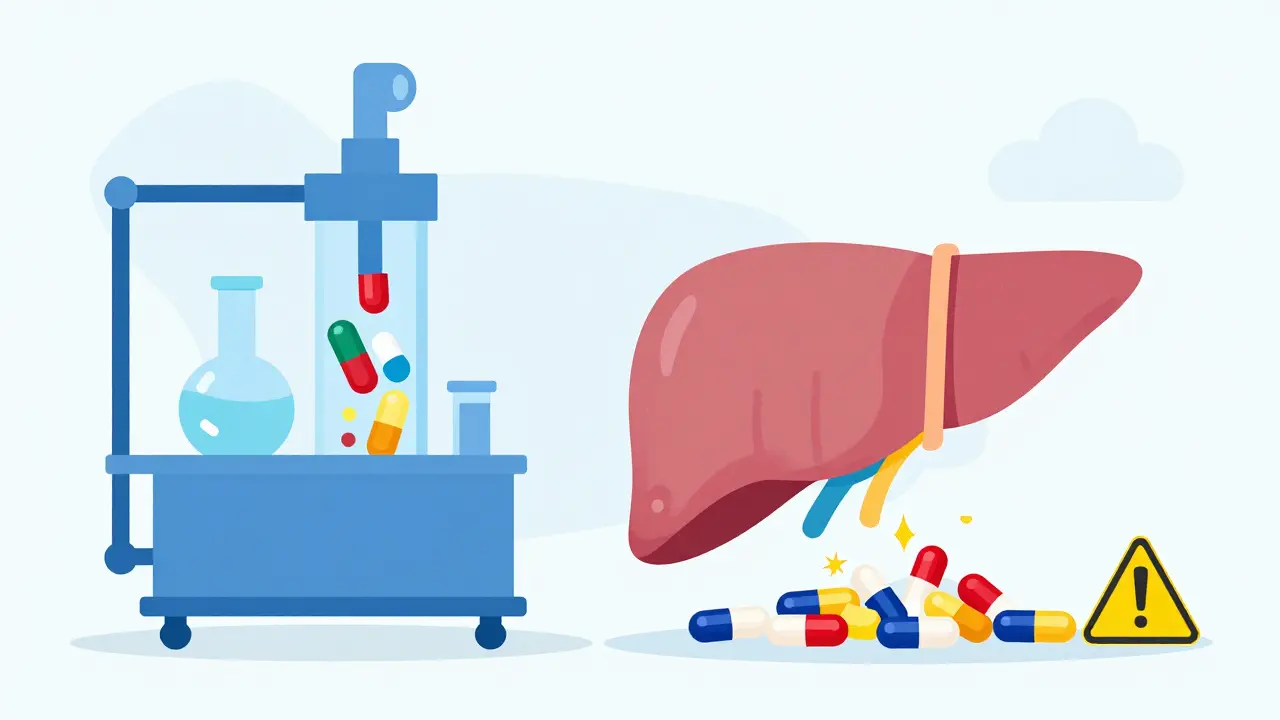
Taking medication to clear up a stubborn fungal infection seems straightforward, but for some people, the cure can be harder on the body than the infection itself. While antifungals are lifesavers-especially for people with weakened immune systems-some of these drugs carry a significant risk of causing antifungal liver safety issues. We are talking about drug-induced liver injury (DILI), which can range from a slight bump in enzyme levels to total liver failure.
If you've been prescribed a systemic antifungal, you might be wondering why your doctor is ordering blood tests or why they're asking about your alcohol habits. It isn't just routine paperwork; it's a necessary precaution because the liver is the primary site where these drugs are processed. When the liver struggles to break these chemicals down, they can build up and cause damage to hepatic cells.
| Drug Class | Common Examples | Liver Risk Level | Key Safety Concern |
|---|---|---|---|
| Azoles | Fluconazole, Voriconazole | High | Significant DILI risk; requires frequent monitoring |
| Polyenes | Amphotericin B | Moderate | Toxicity varies by formulation (lipid vs. aqueous) |
| Echinocandins | Caspofungin, Micafungin | Moderate to Low | Mixed data; some show high mortality in rare DILI cases |
| Allylamines | Terbinafine | Low | Low absolute risk (0.1%) but carries a black box warning |
The High-Risk Players: Understanding the Azoles
When doctors talk about liver risks, they usually focus on the azole class. Azoles is a class of antifungal medications that work by inhibiting the synthesis of ergosterol, an essential component of fungal cell membranes. While they are incredibly effective, they aren't all the same. For instance, fluconazole is generally seen as the "safer" option for the liver, while others are much more aggressive.
Take Ketoconazole, for example. This drug is now largely a second-line treatment because its risk profile is so severe. The FDA has issued strict warnings because it can cause acute liver injury in about 1 in 500 patients. In some cases, it has even led to liver transplants. Because of this, it's been almost entirely phased out in Europe.
Then there are Voriconazole and Itraconazole. These are heavy hitters used for serious systemic infections. However, they are more likely to cause liver enzyme elevations than fluconazole. In real-world reports, patients using itraconazole for something as simple as nail fungus have reported bilirubin levels spiking to over 12 mg/dL-far above the normal 1.2 mg/dL limit-leading to emergency hospitalizations.
The "Quiet" Risks: Terbinafine and Echinocandins
You might be taking Terbinafine for a foot or nail infection. On the surface, it looks safe-only about 0.1% of patients experience liver injury. But here is the catch: it carries a black box warning. If liver injury happens, it usually strikes within the first six weeks. This is why the timing of your blood tests matters; a test at week one doesn't tell you if you'll react at week five.
The Echinocandins (like caspofungin and micafungin) were long thought to be the "safe" alternative. However, recent data suggests a more complex story. While they are often used in patients who already have liver issues, certain ones, like anidulafungin, have shown a surprisingly high mortality rate in the rare cases where liver injury actually occurs. If you want the safest profile in this group, micafungin generally shows the least amount of liver function impairment.

Spotting the Red Flags: Symptoms and Monitoring
The scariest part about antifungal-induced liver injury is that the early signs are incredibly vague. You might just feel "off." Common symptoms include:
- Unusual fatigue or extreme tiredness
- Nausea or a loss of appetite
- Pain in the upper right side of your abdomen (where the liver sits)
- Yellowing of the skin or eyes (jaundice)
- Dark-colored urine
Because these symptoms mimic a flu or general stress, many patients ignore them until their liver enzymes are dangerously high. This is why monitoring protocols are non-negotiable. If you are on a high-risk agent like voriconazole, your doctor should be checking your liver function weekly during the first month. For others, a baseline test before starting and a follow-up a few weeks in is the standard.
Clinicians usually look for "ULN" or Upper Limit of Normal. A common rule of thumb is to stop the drug if your ALT or AST levels hit 3x the normal limit if you have symptoms, or 5x the limit if you feel fine. Waiting until you look yellow in the mirror is often too late.
Dangerous Combinations: Drug Interactions and Lifestyle
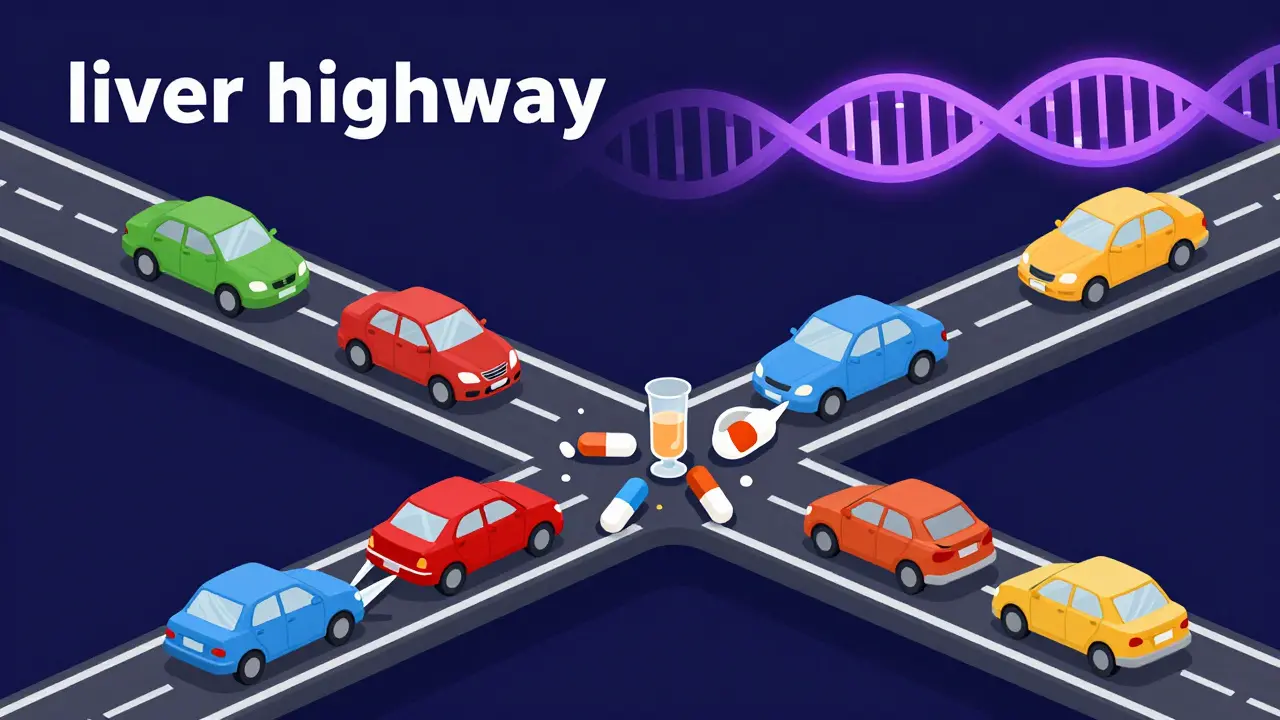
Your liver is like a busy highway. When you add too many "cars" (drugs) to that highway, things jam up. Antifungals, especially azoles, interfere with the Cytochrome P450 system, which is the liver's main engine for processing medications. This means they can stop other drugs from being cleared, leading to toxic levels of those medications in your blood.
Alcohol is the most obvious culprit. Drinking while on these medications is like throwing gasoline on a fire; it puts extra stress on the liver and significantly increases the chance of DILI. Additionally, if you are taking other hepatotoxic drugs (medications known to hurt the liver), the cumulative effect can be devastating. Always give your pharmacist a full list of every supplement and pill you take, even the "natural" ones, as some herbal supplements can also trigger liver stress.
The Future of Antifungal Safety
We are moving away from a "one size fits all" approach. We now know that genetics play a role. For example, certain variations in the CYP2C19 gene can make some people nearly four times more likely to suffer liver toxicity from voriconazole. In the near future, a simple genetic screen before you start the medication could tell your doctor exactly which drug is safest for your specific body.
Newer drugs currently in development, such as olorofim and ibrexafungerp, are being built from the ground up with liver safety as a priority. Early trials suggest these new options could reduce the rate of liver enzyme spikes by nearly 80% compared to the old-school azoles. This means we are heading toward a world where we can kill the fungus without risking the liver.
Do all antifungal drugs cause liver damage?
No, not all of them. The risk varies wildly by class. For example, Terbinafine has a very low absolute risk (0.1%), while certain azoles like Ketoconazole have a much higher risk profile. However, because the potential for damage is serious, most systemic antifungals require some level of liver monitoring.
Why do I need blood tests while taking these meds?
Blood tests measure liver enzymes (like ALT and AST). Since liver injury often doesn't show physical symptoms until it's advanced, these tests act as an early warning system, allowing doctors to stop the medication before permanent damage occurs.
Is it safe to drink alcohol while on antifungals?
Generally, no. Alcohol puts significant stress on the liver, and since many antifungals are processed by the liver, combining the two increases the risk of drug-induced liver injury (DILI). Always consult your doctor, but avoiding alcohol is the safest bet.
Which antifungal is the safest for the liver?
Among the azoles, fluconazole is typically associated with lower liver risk than voriconazole or itraconazole. In the echinocandin class, micafungin often shows a more favorable safety profile. However, the "safest" drug depends on your specific infection and medical history.
What should I do if I notice yellowing of my eyes?
Jaundice (yellowing of the eyes or skin) is a serious sign of liver dysfunction. You should contact your healthcare provider immediately and seek urgent medical attention, as this can indicate severe liver injury that requires immediate intervention.
Next Steps and Troubleshooting
If you are starting a new antifungal treatment, don't just take the pills-take control of the process. First, ask your doctor for a baseline liver function test (LFT) before the first dose. If you are on a high-risk azole, schedule your follow-up blood work in your calendar so you don't miss the critical window in the first month.
For those with preexisting liver disease, you may need an alternative drug entirely. If your doctor suggests an echinocandin, be aware that while they are often easier on the liver, they are usually administered via IV in a clinical setting. If you experience sudden, unexplained fatigue or nausea, don't assume it's just the infection; report it to your clinic immediately to rule out hepatic stress.






Oh sure, let's just trust the "genetic screening" and the FDA's apathetic warnings. It's almost like they wait until a few hundred people have actual liver failure before they decide a drug is "second-line." Imagine thinking a blood test is a safety net when the system is designed to keep you in a cycle of medication and monitoring. Truly revolutionary stuff here.
It really makes you think about the balance between healing one part of the body while potentially harming another... It's such a delicate dance!!! I wonder if we ever truly understand the full cost of these chemical interventions on our spirits and physical wellbeing... Just so scary to think our liver is doing all that heavy lifting without us even noticing until it's almost too late!!!
they just want you on the meds forever so they can sell you more tests and screens
The hepatotoxicity profile of the azoles is genuinely concerning when you look at the cytochrome P450 interactions 💊 The way they inhibit the CYP3A4 isoenzyme basically turns your liver into a bottleneck for any other meds you're on. It's a total nightmare for polypharmacy patients! 😱 Always check those contraindications!
Idk why everyone is stressing. I took terbinafine for my toes and I'm fine. Probably just a way for doctors to make us come back for more appointments.
It's really important to remember that everyone's body reacts differently. If you're feeling a bit off, just be honest with your healthcare provider and don't feel bad about asking for a baseline test. We've all got to look out for our own health and advocate for ourselves in the clinic. Stay safe everyone.
Wow this is actually super helpful info 🌟 I had no idea nail fungus meds could even touch the liver. Thanks for breaking it down so simply! 🌈✨