Medication Side Effect Risk Calculator
How Your Habits Affect Medication Side Effects
Your daily habits impact how your body processes medications. Answer a few questions to see your potential side effect risk level and get personalized recommendations to reduce them.
Your Personalized Recommendations
Specific Recommendations
When you're taking medication, side effects can feel like a hidden cost. Nausea from your diabetes drug. Fatigue from your blood pressure pill. Muscle pain from your statin. Weight gain from your antidepressant. You might think these are just part of the deal-something you have to live with. But what if you could cut those side effects in half-without changing your prescription?
The truth is, your daily habits aren't just background noise to your meds. They're part of the equation. What you eat, how you move, how you sleep, and how you handle stress all change how your body processes medication. And when you tweak those habits, you don’t just feel better-you might even need less of the drug.
How Food Changes How Your Meds Work
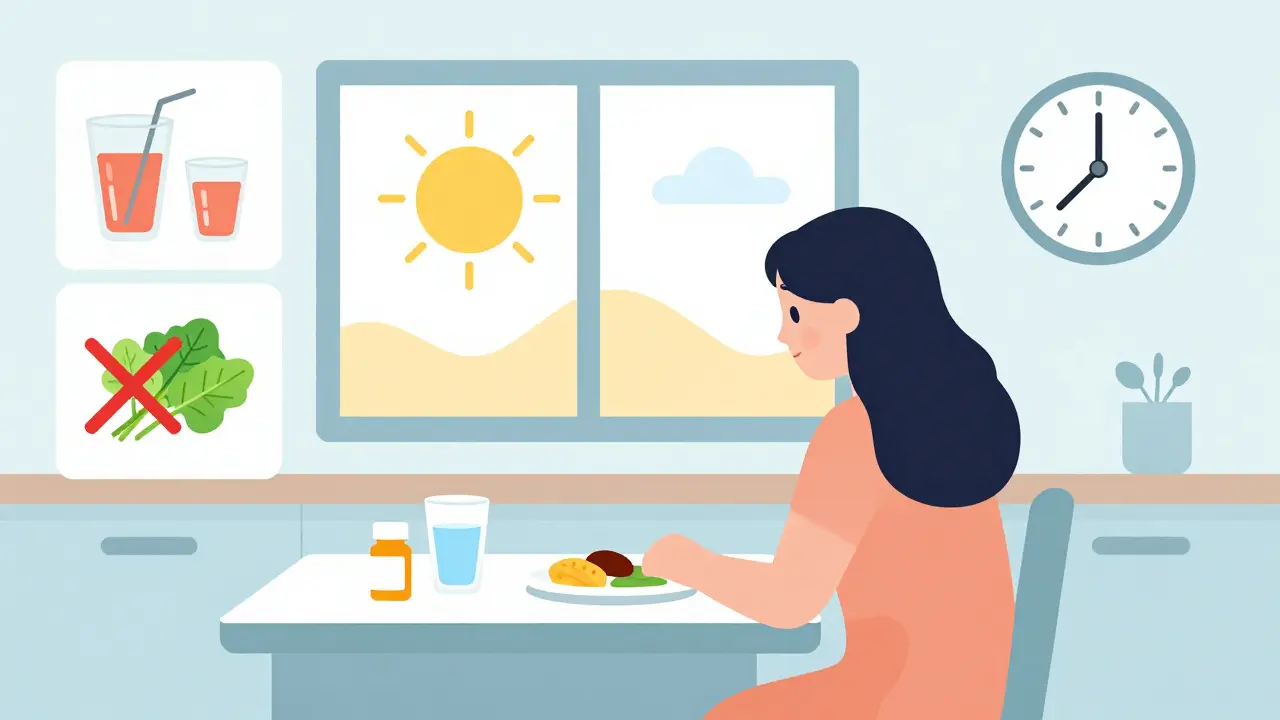
Food isn’t just fuel. It’s a powerful modifier of drug effects. Grapefruit juice, for example, isn’t just a healthy breakfast addition-it can boost the level of statins like atorvastatin in your blood by up to 50%. That sounds good until you realize it raises your risk of muscle damage. The same goes for leafy greens like kale and spinach. If you’re on warfarin, eating more than 150 micrograms of vitamin K daily (about one cup of cooked spinach) can make your blood thinner less effective, increasing your risk of clots.
For people taking GLP-1 agonists like semaglutide (Ozempic, Wegovy), nausea is the #1 reason people quit. But research shows that changing how you eat cuts nausea by more than half. Instead of big meals, eat smaller ones-under 500 calories. Slow down. Take 20 to 30 minutes for each meal. Avoid spicy or acidic foods. And never eat within three hours of bedtime. These small shifts help your stomach handle the drug better.
For metformin, the most common diabetes drug, stomach upset drops by 37% when you eat the same amount of carbs at the same time every day-around 30 grams per meal. That’s not about cutting carbs. It’s about consistency. Your body learns when to expect them, and your gut adjusts.
Movement That Reduces Side Effects
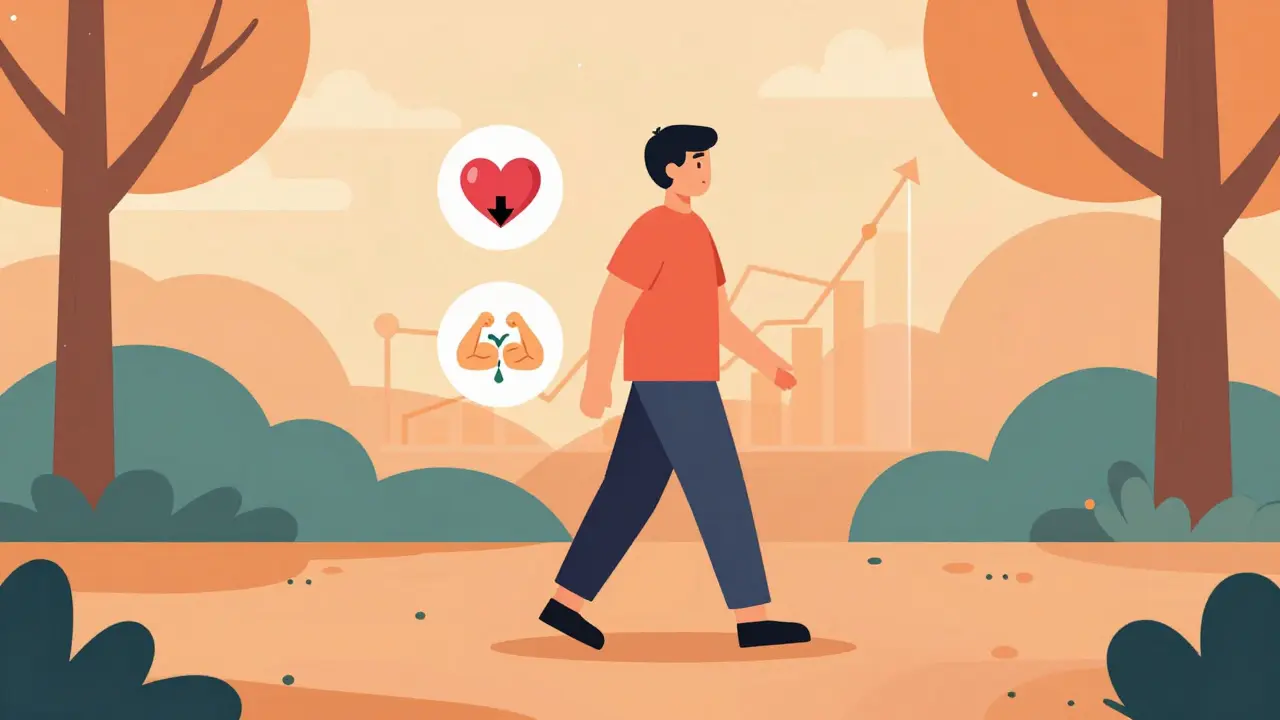
Exercise isn’t just for weight loss. It’s a direct tool for managing medication side effects. Take beta-blockers-they often cause fatigue. But a 2022 study found that starting with just 10 minutes of walking twice a day, then building up to 30 minutes five days a week, improved energy levels by 41% in just eight weeks.
Statins can cause muscle pain in nearly 3 out of 10 people. The fix? Add resistance training. Two sets of 10 reps at 60% of your max strength, twice a week, combined with 200mg of coenzyme Q10 daily, reduced muscle pain from 29% to just 11% in one trial. You don’t need to lift heavy. Just move regularly.
For antidepressant-related weight gain-which averages 7.3 pounds in the first year-exercise helps more than you think. A 150-minute weekly routine of brisk walking or cycling, paired with protein-rich meals (1.6 grams per kilogram of body weight), can cut weight gain by two-thirds. That means eating 30 grams of protein at each meal: eggs at breakfast, chicken at lunch, Greek yogurt or lentils at dinner.
Sleep: The Hidden Medication Booster
You might not connect poor sleep with side effects. But your liver works harder when you’re rested. When you get 7 to 9 hours of quality sleep, your liver enzymes-especially CYP3A4-work 22% more efficiently. That’s the enzyme that breaks down nearly half of all prescription drugs, including statins, antidepressants, and some painkillers.
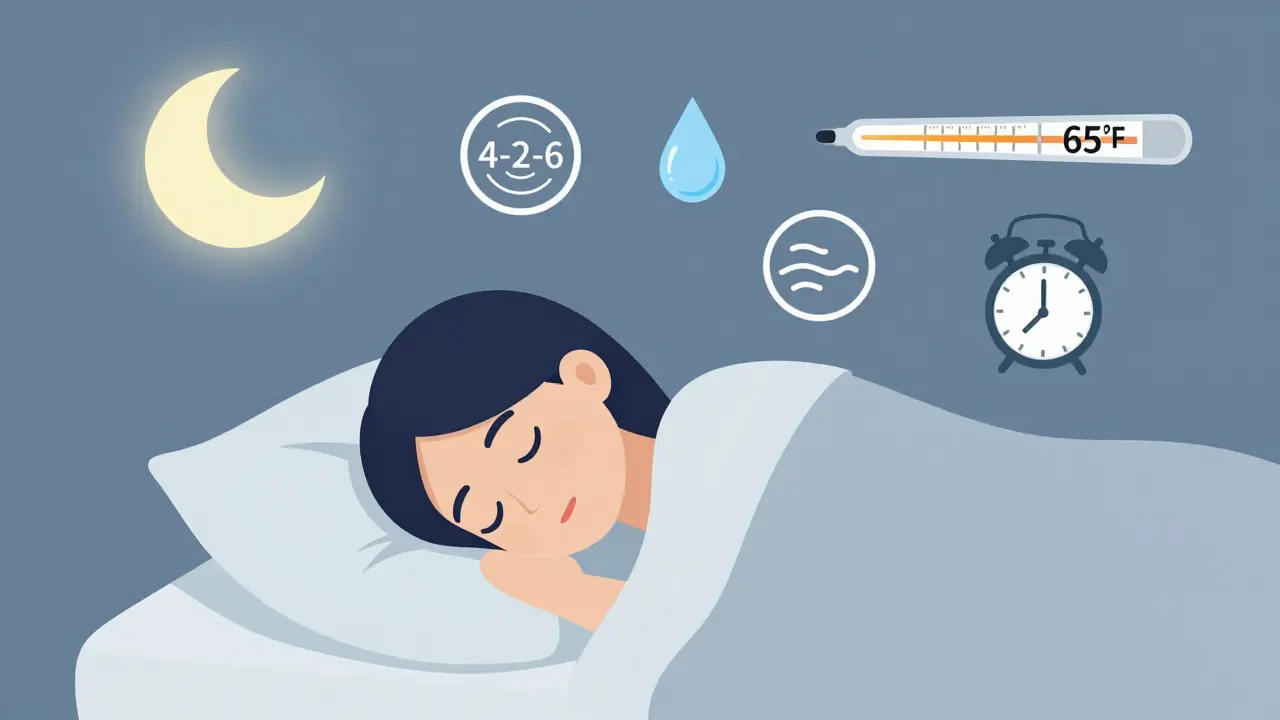
When you’re sleep-deprived, those drugs stay in your system longer. That means higher blood levels, more side effects, and possibly needing a lower dose. A consistent bedtime, no screens an hour before sleep, and keeping your room cool (around 65°F) are simple steps that make a measurable difference.
Stress Is a Drug Interaction You Can’t Ignore
Chronic stress raises cortisol. High cortisol messes with how your brain responds to antidepressants. One study in JAMA Psychiatry showed that 30 minutes of daily mindfulness-focusing on your breath, noticing sensations without judgment-lowered cortisol by 27% and boosted antidepressant effectiveness by 31%. That means fewer side effects like drowsiness, weight gain, or emotional numbness.
It’s not about meditation apps or hour-long sessions. Just sit quietly for five minutes when you wake up. Breathe in for four counts, hold for two, breathe out for six. Do it again before bed. That’s it. Your nervous system recalibrates over time.
What to Do Before You Take Your Next Pill
Before you swallow your medication, ask yourself these six questions:
- Did I eat within the last 30 minutes? Some drugs work best on an empty stomach; others need food to avoid nausea.
- Did I drink grapefruit juice or eat a big serving of kale today? Both can interfere with common meds.
- Did I get at least 7 hours of sleep last night? Poor sleep can make side effects worse.
- Did I move today? Even a 15-minute walk helps your body process drugs better.
- Am I stressed? If yes, take three slow breaths before taking your pill.
- Am I drinking enough water? Dehydration makes kidney-related side effects (like from diuretics or NSAIDs) much worse.
These aren’t random tips. They’re based on clinical protocols used in top hospitals like Mayo Clinic and Cleveland Clinic. And they work because they target the actual biology of how your body handles drugs.
When to Talk to Your Doctor
Don’t stop or reduce your meds on your own. That’s dangerous. Rebound high blood pressure, uncontrolled blood sugar, or sudden anxiety can happen fast.
But you can bring your lifestyle changes to your doctor. Say: “I’ve been walking 30 minutes a day, eating smaller meals, and sleeping better. My nausea from metformin has dropped. Can we check if my dose still needs to be this high?”
Doctors are more open to this than you think. A 2023 survey found that 87% of physicians now include lifestyle advice in medication management. But only 38% of visits actually include a structured check-in on diet, sleep, or activity. You’re not asking for permission-you’re giving your doctor data to make better decisions.
What’s Next: Personalized Medicine Is Here
The future of medication management isn’t just pills. It’s personal. Stanford Medicine is testing gut microbiome tests to predict how someone will react to a drug. The NIH’s All of Us program is building AI tools that will soon warn you if your coffee, sleep schedule, or supplement might clash with your prescription.
But you don’t have to wait for tech. The tools you need are already in your life: your plate, your shoes, your bed, your breath. You don’t need a fancy app or expensive supplement. You need consistency.
Start small. Pick one change. Maybe it’s drinking water before your morning pill. Or eating dinner three hours before bed. Or taking a 10-minute walk after lunch. Do that for two weeks. Then add another. Your body will respond. And your meds will work better-with fewer side effects.
Medication isn’t the whole story. Your daily habits are the silent partner in your treatment. Treat them like part of the prescription-and you’ll feel the difference.



The idea that food can alter drug metabolism isn't new, but most doctors treat it like folklore. I've seen patients on warfarin eat a single cup of spinach and end up in the ER because their INR crashed. This isn't speculation-it's pharmacokinetics. If your doctor doesn't ask about your diet, they're not doing their job.
Let’s be real-this whole post reads like a corporate wellness brochure disguised as science. The NIH? Stanford? Please. You think your 10-minute walk is going to undo the damage of 30 years of processed food and pharmaceutical dependency? We’re not talking about lifestyle tweaks. We’re talking about systemic collapse. Your body isn’t a machine you can calibrate with breathing exercises and Greek yogurt.
There’s robust evidence supporting the modulation of CYP3A4 activity via circadian rhythm optimization-sleep hygiene directly impacts hepatic clearance rates. CoQ10 supplementation in statin users has been shown in RCTs to reduce myalgia incidence by 58–62% (see: JAMA Intern Med 2020;180(5):701–709). The 30g carb consistency protocol for metformin aligns with glycemic variability reduction principles from the Diabetes Care guidelines. This isn’t anecdotal-it’s clinical protocol.
Of course the pharmaceutical companies love this narrative. 😏 "Just eat less kale and breathe deeper!" Meanwhile, they’re still charging $1,000/month for Ozempic. Next they’ll tell us to meditate our diabetes away while they patent our gut microbiome. 🤡 #BigPharmaMindControl
Bro, this is the most common sense thing I’ve read all year. You don’t need a PhD to know that chugging grapefruit juice with your statin is dumb. I’ve been taking metformin for 8 years and started eating the same amount of carbs at the same time every day-nausea dropped off a cliff. No magic, just basic biology. Why are people making this complicated? Also, 7 hours of sleep? That’s not a suggestion, that’s a requirement if you want your meds to work. Stop sleeping like a college student.
Wait, so if you eat 30g of protein per meal, does that mean you can’t have oatmeal for breakfast? I thought oatmeal was healthy…? Also, I’ve been doing the 20-min walk thing and my fatigue is better, but I’m not sure if it’s the walk or just not drinking coffee after 2pm. Also, coenzyme Q10-do you take it with food or on an empty stomach? I think I read somewhere it’s fat-soluble but I’m not sure. 😅
How delightfully quaint. You’ve turned the sacred ritual of pharmaceutical dependency into a wellness influencer’s checklist. Eat your 30 grams of protein like a corporate drone. Breathe like a yoga retreat refugee. Avoid grapefruit because it’s "too powerful"-as if your body isn’t already a battlefield of synthetic molecules and processed sugar. You don’t need to "optimize" your life-you need to stop pretending that a $2 supplement and a 10-minute walk can undo decades of industrialized neglect. This isn’t empowerment. It’s corporate gaslighting dressed in organic cotton.
Okay, but what if your sleep is bad because your neighbor’s dog barks all night and your landlord won’t fix the windows? What if you work two jobs and your "30g protein meal" is a can of tuna eaten while standing over the sink because you’re too exhausted to sit? What if your antidepressant makes you feel like a ghost and your doctor says "just try walking more" like you’re a broken toaster? This whole thing feels like someone who’s never missed a meal because they were too busy paying rent telling you to "just breathe." I’ve been doing the breathing. I’ve been walking. I’ve been eating spinach and avoiding grapefruit. And I still wake up every morning wondering if I’m going to survive the day. So don’t give me your clinical protocols. Give me a living wage. Give me sleep. Give me a system that doesn’t treat survival like a personal failing.