Rapid Desensitization Dosing Simulator
This tool simulates a standard Rapid Drug Desensitization (RDD) protocol using the common "doubling every 15 minutes" method (12 steps). Enter your target therapeutic dose to see how the process works from minute zero.
Total Time
--
First Dose
--
Steps Required
--
| Step | Elapsed Time | Dose Amount | Cumulative Dose | % of Target |
|---|
Imagine being told you can’t take the one antibiotic that actually works for your infection because of a past rash. Or missing out on a life-saving chemotherapy drug because your body reacts badly to it. For many patients, this isn't just an inconvenience; it’s a medical dead end. drug desensitization is the clinical technique used to break this deadlock. It doesn't cure the allergy, but it temporarily tricks your immune system into accepting the medication so you can complete your treatment course.
This process is highly specialized and not a first-line fix for every bad reaction. It is reserved for specific situations where the benefits of taking the drug outweigh the risks of another reaction. Understanding when doctors choose this path helps you make sense of complex medical decisions and know what to expect during the procedure.
What Is Drug Desensitization?
Drug Desensitization is the induction of temporary clinical unresponsiveness to drug antigens to which patients have presented severe hypersensitivity reactions. Developed in the 1960s, this technique allows patients to receive essential medications like antibiotics, chemotherapeutics, and monoclonal antibodies that would otherwise be contraindicated due to prior hypersensitivity reactions.
The core concept is simple: give the drug in tiny, gradually increasing amounts until the full therapeutic dose is reached. This prevents the immune system from triggering a massive release of histamine or other inflammatory markers. The result is a state of tolerance that lasts only as long as you keep taking the medication. If you stop the drug for even a few days, the tolerance disappears, and you must go through the process again for the next cycle.
It is crucial to distinguish this from "immunotherapy" (like allergy shots for pollen). Immunotherapy aims to change your immune response permanently. Desensitization is a temporary bridge. It buys you time to finish a course of treatment while keeping you safe under close observation.
Rapid vs. Slow: The Two Main Approaches
Not all desensitization looks the same. Clinicians primarily use two types of protocols based on how quickly your body reacts to the drug.
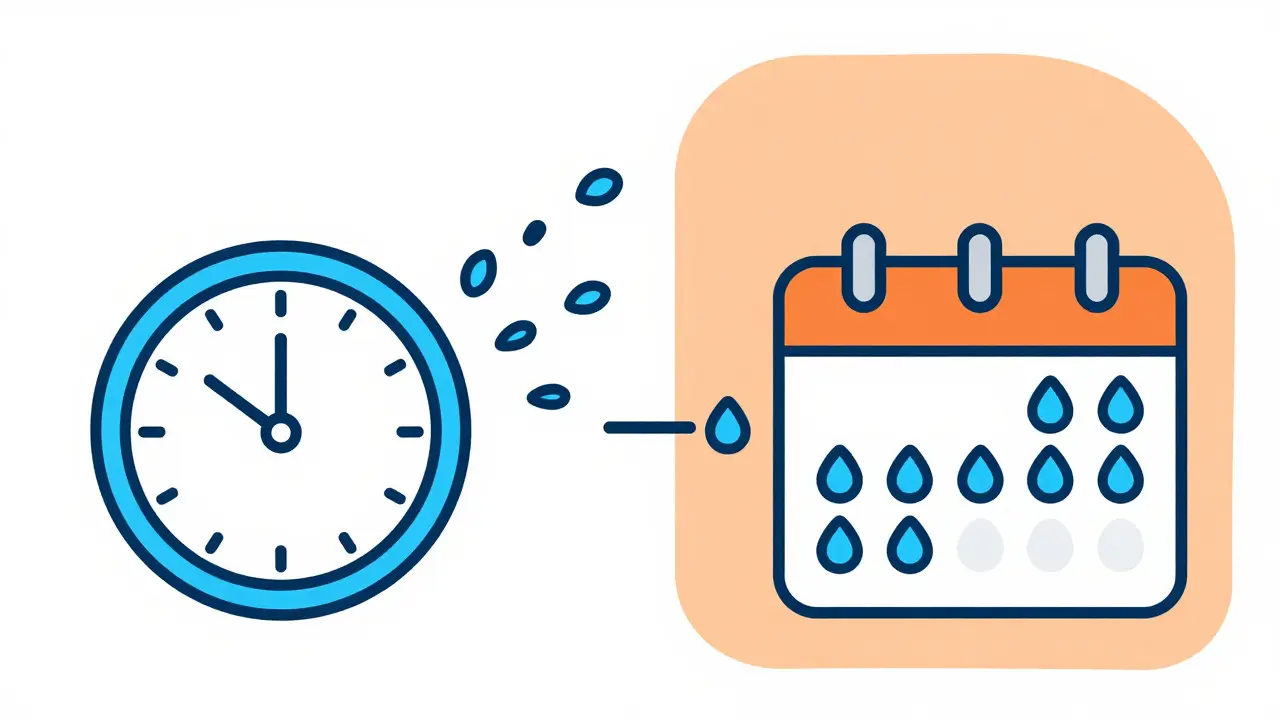
- Rapid Drug Desensitization (RDD): This is the standard for immediate reactions, such as hives, itching, or anaphylaxis that happen within minutes or hours of exposure. RDD typically involves doubling the dosage every 15 minutes until the full dose is achieved. A common protocol, such as the one standardized at Brigham and Women's Hospital, involves administering 12 incremental doses over 4 to 6 hours. The first dose is incredibly small-often 1/10,000th of the therapeutic amount-and each subsequent dose is geometrically larger.
- Slow Drug Desensitization (SDD): This approach is used for delayed hypersensitivity reactions, often involving T-cells, where symptoms appear days after exposure. SDD can be administered orally or intravenously. Because the reaction timeline is slower, the intervals between doses are longer, sometimes requiring 2-3 days to complete the full protocol. There is less consensus on the exact dosing intervals for SDD compared to RDD, so protocols may vary more by institution.
| Feature | Rapid Drug Desensitization (RDD) | Slow Drug Desensitization (SDD) |
|---|---|---|
| Reaction Type | Immediate (IgE-mediated or non-allergic) | Delayed (Type IV, T-cell mediated) | Typical Duration | 4-6 hours | 2-3 days | Dosing Interval | 15-30 minutes | Hours to days | Common Route | Intravenous (70% of cases) | Oral or Intravenous | Success Rate | 95-100% | Variable (lower for severe cases) |
When Do Doctors Actually Use It?
Desensitization isn't used for minor rashes or mild stomach upset. It is a resource-intensive intervention reserved for high-stakes scenarios. You will likely be considered for desensitization if:
- No Alternative Exists: The specific drug is the only option that effectively treats your condition. For example, certain penicillins might be the only antibiotics effective against a resistant bacterial infection.
- Superior Efficacy: The culprit drug works significantly better than any alternative. In oncology, a first-line chemotherapy agent might offer a much higher survival rate than second-line options, making the risk of desensitization worth the potential benefit.
- Antibiotic Resistance: With rising resistance rates, doctors face pressure to use specific antibiotics even in patients with a history of adverse reactions. Desensitization achieves success rates of up to 98% for penicillin administration, whereas substitution approaches fail in 15-20% of cases due to cross-reactivity.
If you have a severe delayed hypersensitivity reaction like Stevens-Johnson syndrome or toxic epidermal necrolysis, desensitization is generally contraindicated. In these cases, the risk of a life-threatening skin reaction is too high, and alternative therapies should be prioritized.
The Procedure: What to Expect
Undergoing desensitization is a monitored medical event, not a quick visit. Here is what the process typically involves:
- Preparation: Your medical team prepares dilution kits with precise concentrations of the drug. Errors in preparation are a common challenge, so standardized kits are used to reduce mistakes.
- Monitoring Setup: You will be connected to monitors for continuous blood pressure tracking, pulse oximetry, and respiratory function. An allergist or immunologist and nursing staff will supervise the entire process in a facility equipped to manage anaphylaxis.
- Incremental Dosing: The first dose is given. You wait for a set interval (e.g., 15 minutes for IV). If no reaction occurs, the next, larger dose is given. This repeats until the full therapeutic dose is reached.
- Maintenance: Once the full dose is reached, you continue receiving the medication at regular intervals. If you miss a dose beyond a specific window (often 24-48 hours depending on the drug), you may need to restart the desensitization process from the beginning.
For IV antibiotics, the average procedure takes about 4.7 hours. Anxiety is common, reported by 63% of patients in pre-procedure surveys, but the structured environment and constant monitoring help manage this stress.

Success Rates and Risks
Is it safe? For properly selected patients in supervised settings, yes. Clinical evidence shows that desensitization achieves 95-100% success rates for immediate hypersensitivity reactions. In a study of 42 patients undergoing rapid penicillin desensitization at Brigham and Women's Hospital, there were no deaths or anaphylactic events. Only 8% experienced mild side effects like pruritus (itching) or flushing.
However, risks exist. Severe reactions occur in fewer than 2% of properly monitored cases. The biggest risk comes from inappropriate application. If desensitization is attempted without proper monitoring equipment or by non-specialists, complication rates can triple. That’s why the American Academy of Allergy, Asthma & Immunology (AAAAI) gives desensitization a strong recommendation (Grade 1A) for IgE-mediated reactions but warns against it for severe cutaneous adverse reactions.
Compared to premedication strategies (using antihistamines and steroids before giving the drug), desensitization is far more reliable. Premedication failed in 10% of taxene chemotherapy patients in one study, whereas desensitization has a near-perfect track record for immediate reactions.
Challenges and Future Directions
Despite its effectiveness, desensitization faces hurdles. It is resource-heavy, requiring 4.2 nursing hours and 1.8 physician hours per procedure. This makes it impractical for widespread use in resource-limited settings. Adoption rates are high in academic medical centers (over 85%) but drop to 35% in community hospitals.
Looking ahead, the field is moving toward precision. New biomarker-guided approaches, such as basophil activation tests, can predict who will respond well to desensitization with 89% accuracy. Additionally, home-based protocols for stable patients are in phase 2 trials, showing promising results. As antibiotic resistance continues to rise, with 35,000 annual US deaths linked to resistant infections, the role of desensitization in preserving access to critical drugs will only grow.
Does desensitization cure my drug allergy?
No. Desensitization induces temporary tolerance. If you stop taking the medication for a period defined by your doctor (usually 24-48 hours), the tolerance wears off, and you will need to undergo the desensitization process again for the next treatment cycle.
How long does a typical desensitization session last?
For rapid IV desensitization, the initial loading phase usually takes 4 to 6 hours. Subsequent maintenance doses are given at regular intervals throughout the treatment course. Oral desensitization, such as for aspirin, can take 2-3 days to complete.
Who performs drug desensitization?
The procedure requires direct supervision by an allergist or immunologist. It is best performed in academic medical centers or specialized clinics equipped to manage anaphylaxis, as complication rates are significantly higher in community settings without specialized training.
Is desensitization safe for everyone?
It is safe for most patients with immediate hypersensitivity reactions. However, it is generally contraindicated for patients with severe delayed hypersensitivity reactions like Stevens-Johnson syndrome or toxic epidermal necrolysis, where the risk of a severe skin reaction is too high.
What happens if I react during the procedure?
Mild reactions like itching or flushing are common and manageable. If a severe reaction occurs, the infusion is stopped, and emergency treatments like epinephrine are administered. Because the procedure is done under close monitoring with emergency equipment nearby, severe outcomes are rare (<2%).