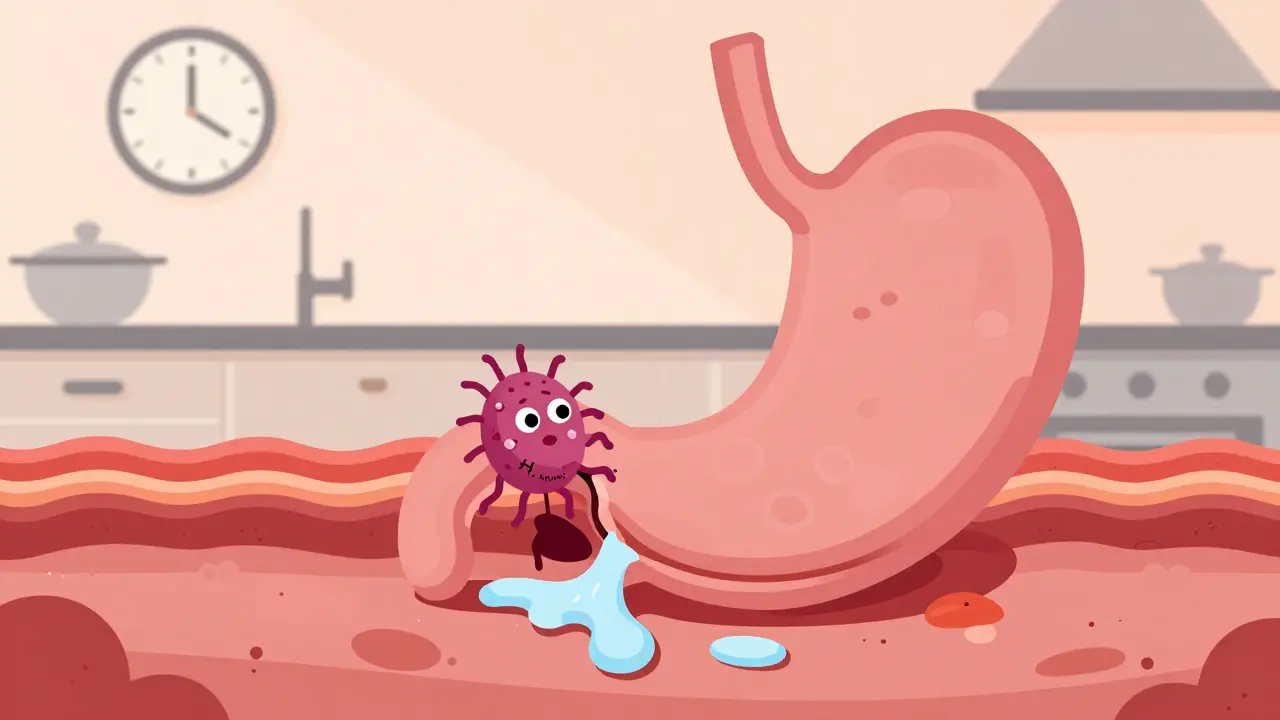
When your stomach feels like it’s on fire-burning, bloated, or achy after eating-it’s easy to blame spicy food or stress. But if the discomfort keeps coming back, you might be dealing with gastritis: inflammation of the stomach lining. It’s not just a bad case of indigestion. For many people, especially those over 40, this isn’t a one-time glitch. It’s a sign that something deeper is going on. And in most cases, the culprit is a tiny, stubborn bacteria called Helicobacter pylori.
What Exactly Is Gastritis?
Your stomach has a protective mucus layer that keeps its own digestive acids from eating through its walls. When that layer gets damaged, the acid starts to irritate the tissue underneath. That’s gastritis. It’s not one disease-it’s a spectrum. Some people get sudden, sharp pain after drinking too much alcohol or popping a handful of ibuprofen. That’s acute gastritis. Others have a slow, silent burn that creeps up over years. That’s chronic gastritis.
The real difference? Erosive vs. nonerosive. Erosive means there are actual breaks in the lining-you might see blood in vomit or black, tarry stools. Nonerosive looks normal on the surface but has cellular damage underneath. That’s the kind often tied to H. pylori. About 70% to 90% of people with stomach ulcers have this bacteria living in their gut. And here’s the thing: most of them don’t even know it.
H. pylori: The Silent Saboteur
Before 1982, doctors thought stress and diet caused most ulcers. Then two Australian researchers, Barry Marshall and Robin Warren, proved otherwise. Marshall even drank a culture of H. pylori to prove it caused gastritis-then got sick. He won a Nobel Prize for it. Today, we know H. pylori infects nearly half the world’s population. In places like South Africa, India, or parts of Southeast Asia, up to 80% of adults carry it. In the U.S. and Europe, it’s lower-around 10% to 15%-but still common.
This bacteria doesn’t just sit there. It burrows into the stomach lining, weakens the mucus barrier, and tricks the immune system into causing long-term inflammation. Over time, that inflammation can lead to thinning of the stomach wall (atrophic gastritis), reduced acid production, and even changes that increase cancer risk. The good news? Treating it cuts your risk of stomach cancer in half.
Symptoms: Not Always Obvious
You might think gastritis means constant pain. But here’s the twist: up to half of people with chronic gastritis feel nothing at all. Others have vague symptoms that get dismissed as "just stress."
- Upper belly pain or burning (70-80% of cases)
- Nausea (60%)
- Bloating or feeling full fast (50%)
- Vomiting (40%)
- Loss of appetite
Red flags? Don’t ignore these:
- Black, tarry stools (melena)-a sign of internal bleeding
- Vomiting blood or material that looks like coffee grounds
- Fatigue, dizziness, or shortness of breath-signs of anemia from slow blood loss
If you’ve had any of these for more than a few days, see a doctor. Waiting won’t make it go away. It might make it worse.
Diagnosis: How Do You Know for Sure?
Doctors can’t diagnose gastritis by symptoms alone. You need tests.
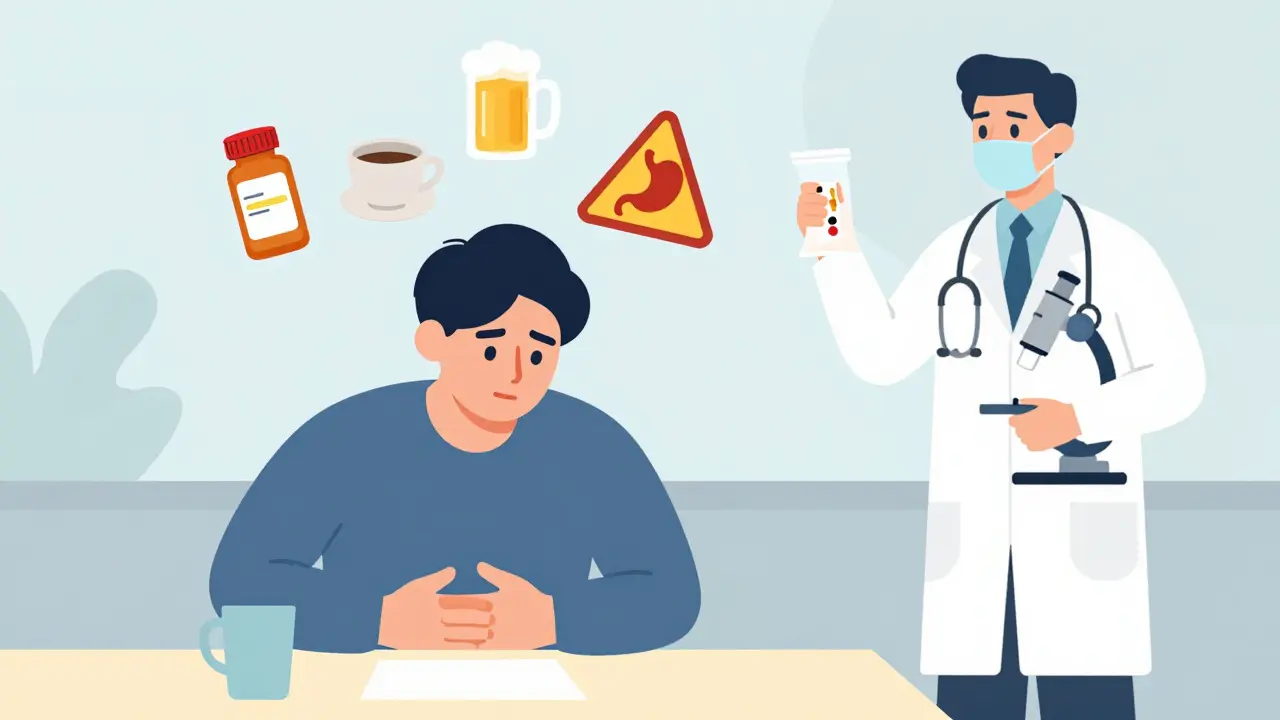
The gold standard is an endoscopy. A thin camera goes down your throat, lets the doctor see the lining, and take tiny tissue samples (biopsies). These samples can confirm H. pylori, check for inflammation, and rule out cancer. It sounds scary, but it’s quick and done under light sedation.
There are also non-invasive options:
- Urea breath test: You drink a special liquid, then breathe into a bag. If H. pylori is there, it breaks down the urea and releases carbon dioxide you exhale. It’s 95% accurate.
- Stool antigen test: Checks for H. pylori proteins in your poop. Simple, cheap, reliable.
- Blood test: Looks for antibodies. But it can’t tell if the infection is current or past. So it’s not used for diagnosis anymore.
Most doctors start with breath or stool tests. If they’re positive, they’ll confirm with endoscopy if symptoms are severe or if you’re over 50.
Treatment: Eradicating H. pylori
If you have H. pylori, you’re not just treating symptoms-you’re fighting an infection. And you need a combo approach.
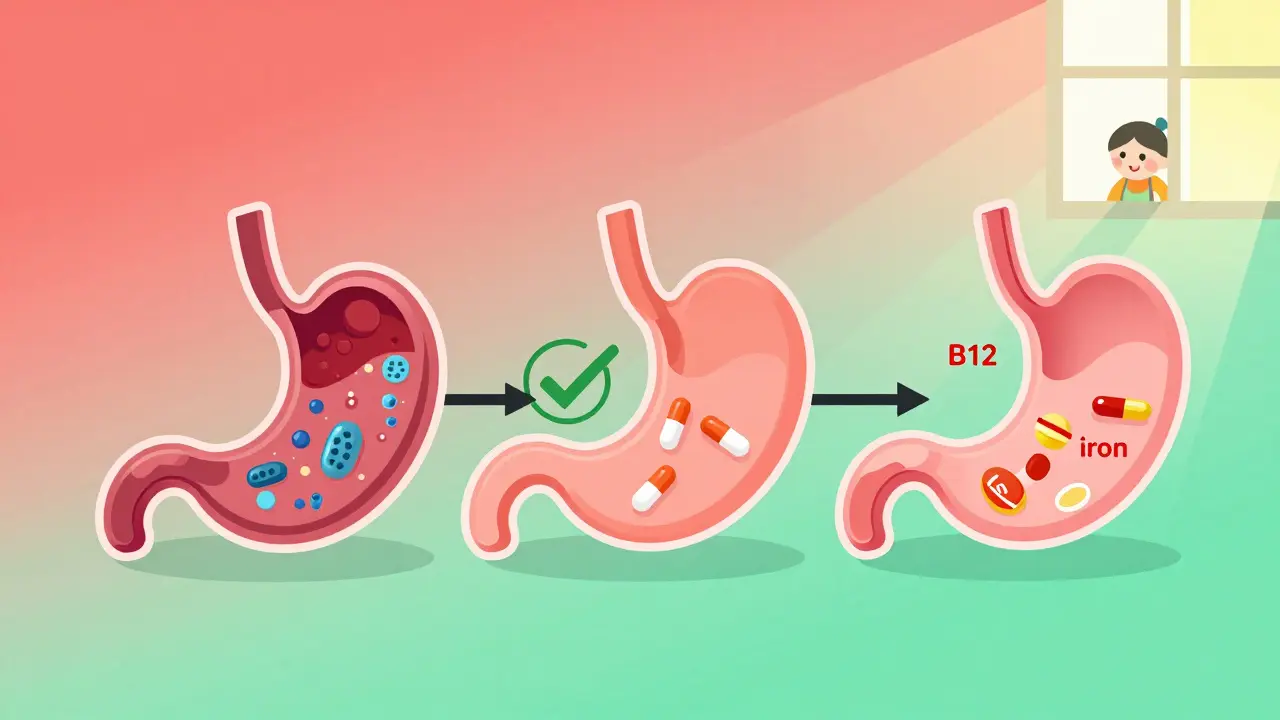
Standard treatment is triple therapy: a proton pump inhibitor (PPI) like omeprazole or esomeprazole, plus two antibiotics-usually amoxicillin and clarithromycin-for 10 to 14 days. It works in 80-90% of cases… if you take it exactly right.
Here’s the catch: antibiotic resistance is rising. In the U.S., clarithromycin resistance jumped from 10% in 2000 to over 35% today. That means in some areas, the classic triple therapy fails more often than it works.
That’s why newer guidelines recommend:
- Bismuth quadruple therapy: PPI + bismuth + metronidazole + tetracycline. Used in places with high clarithromycin resistance. Success rate: 85-92%.
- Concomitant therapy: All four drugs given together for 10 days. Easier to follow than sequential regimens.
- Vonoprazan: A newer acid blocker approved in 2022. It works better than PPIs and is now used in first-line therapy in Japan and the U.S. Studies show 90%+ eradication rates-even after two failed treatments.
Side effects? Common. Diarrhea, metallic taste, nausea, or headaches during treatment. About 62% of patients report them. But they usually fade after you stop the meds. The key? Don’t quit early. Missing doses is the #1 reason treatment fails.
After treatment, you need a follow-up test-usually a breath or stool test-4 weeks later to confirm the bacteria is gone. Don’t skip this. If it’s still there, you’ll need a second round with different antibiotics.
Other Causes of Gastritis
H. pylori is the big one, but it’s not the only one.
- NSAIDs: Ibuprofen, naproxen, aspirin-even low-dose daily aspirin-can irritate the stomach lining. About 25-30% of cases are linked to these drugs.
- Alcohol: Heavy drinking (more than 30g/day) doubles your risk. Cutting back can reduce symptoms by 60% in just two weeks.
- Autoimmune gastritis: Your immune system attacks your own stomach cells. It’s rare (affects 0.1% of people) but common in those with thyroid disease or type 1 diabetes. It leads to vitamin B12 deficiency and needs lifelong B12 shots.
- Stress: Severe physical stress-like from burns, surgery, or ICU stays-can cause acute erosive gastritis. Not common in everyday life.
If you’re on long-term NSAIDs and have gastritis, your doctor might switch you to acetaminophen or prescribe a PPI alongside them.
Lifestyle Changes That Actually Help
Treatment isn’t just pills. Your daily habits matter.
- Quit smoking: Smoking slows healing. Quitting improves healing rates by 35%.
- Limit alcohol: Even moderate drinking can keep inflammation going.
- Avoid trigger foods: Spicy, acidic, or fried foods won’t cause gastritis, but they can make symptoms worse. Everyone’s different-track what bothers you.
- Eat smaller meals: Less pressure on your stomach means less burning.
- Don’t lie down after eating: Wait 2-3 hours before lying down or going to bed.
And here’s a myth: milk doesn’t soothe your stomach. It might feel good at first, but it later triggers more acid. Skip it.
The Long Game: What Happens After Treatment?
Getting rid of H. pylori doesn’t mean you’re done. If you had chronic gastritis, your stomach lining may still be damaged. Healing takes months. Some people develop atrophic gastritis, where the lining thins and stops making acid. That can lead to nutrient malabsorption-especially vitamin B12 and iron.
Long-term PPI use is another issue. Many people feel better and stop their meds… only to get rebound acid reflux. Up to 40% of long-term users experience this. The fix? Taper slowly, not cold turkey. Talk to your doctor about switching to H2 blockers (like famotidine) or using them only when needed.
And don’t assume you’re immune. Reinfection is rare in places like the U.S. but common in areas with poor sanitation. If you live in or travel to high-risk zones, be cautious with untreated water or street food.
When to Worry
Most gastritis isn’t dangerous. But some signs mean you need urgent care:
- Blood in vomit or black stools
- Unexplained weight loss
- Difficulty swallowing
- Severe, persistent pain that doesn’t improve
If you’re over 50 and have new stomach symptoms, get checked. Cancer risk increases with age, and early detection saves lives.
Final Thoughts
Gastritis isn’t something you just live with. It’s a treatable condition-with a clear path forward if you have H. pylori. The biggest mistake? Ignoring symptoms or quitting antibiotics early. The second biggest? Thinking it’s just "bad digestion." It’s not.
Take the test. Get the treatment. Follow up. Your stomach will thank you.
Can gastritis go away on its own?
Sometimes, yes-if it’s caused by a one-time trigger like alcohol or NSAIDs and you stop using them. But if H. pylori is the cause, it won’t go away without treatment. Left untreated, chronic gastritis can lead to ulcers, bleeding, or even stomach cancer.
Is H. pylori contagious?
Yes. It spreads through contaminated food, water, or close contact with an infected person’s saliva or vomit. It’s most common in childhood, especially in areas with poor sanitation. In developed countries, transmission is rarer but still possible through household sharing.
Do I need to repeat the H. pylori test after treatment?
Yes, if you were diagnosed with H. pylori. The treatment works 80-90% of the time, but not always. A follow-up breath or stool test 4 weeks after finishing antibiotics confirms whether the bacteria is gone. If it’s still there, you’ll need a different antibiotic combo.
Can I take antacids instead of antibiotics?
Antacids (like Tums or Maalox) or PPIs (like omeprazole) can relieve symptoms, but they don’t kill H. pylori. If you have the bacteria, you need antibiotics. Skipping them means the infection stays-and so does the risk of ulcers or cancer.
Are there natural remedies for H. pylori?
Some studies suggest honey, garlic, or probiotics may help reduce H. pylori levels, but none can replace antibiotics. They might support healing, but they won’t cure the infection. Don’t delay proper treatment for unproven remedies.
Why do some people with H. pylori never get sick?
About 80% of people infected with H. pylori never develop symptoms or complications. It depends on the bacterial strain, your genetics, diet, and immune system. Experts now recommend treating only those with symptoms, ulcers, or a family history of stomach cancer-not everyone who tests positive.



Thanks for laying this out so clearly. I’ve been dealing with vague stomach issues for years and always thought it was just stress. Learning that H. pylori could be the silent culprit is eye-opening. I’m scheduling a breath test this week.
Oh, so you're telling me that the entire medical establishment was wrong for decades because two Australians decided to drink a bacterial broth like it was a dare? How quaint. Meanwhile, in Nigeria, we’ve known for generations that stomach issues stem from colonial diets and over-reliance on processed grains. The real cure? Fermented millet, ancestral fasting, and avoiding Western pharmaceuticals altogether. Your triple therapy is a Band-Aid on a severed artery.
So let me get this straight… you’re telling me I should take FOUR drugs at once, with side effects that feel like a bad hangover, just to kill a tiny bacteria that 80% of people carry without ever knowing? And the real tragedy? I’ve been taking omeprazole for years thinking it was helping… but it was just masking the problem. Thanks for the wake-up call. Also, I just Googled "vonoprazan" and it looks like a Marvel villain’s name. Who approved this?
I had gastritis for 7 years. I tried everything: acupuncture, lemon water, cold showers, juicing kale, even a spiritual cleanse led by a woman who channeled "stomach spirits." Nothing worked. Then I got tested-H. pylori. Positive. Triple therapy? I vomited for 10 days. My tongue turned metallic. I cried in the shower. But I did it. And now? I can eat pizza again. I didn’t just heal my stomach-I reclaimed my life. Don’t give up. Even if it feels impossible, the pills are worth it. I’m rooting for you.
While the clinical data presented is largely accurate, one must consider the sociohistorical context of H. pylori transmission. In pre-industrial societies, this organism was not merely a pathogen but a symbiotic component of the human microbiome. The abrupt eradication of H. pylori in modern populations may contribute to the rise in autoimmune disorders, asthma, and esophageal reflux. One might argue that the real issue is not the bacterium itself, but the erosion of microbial diversity due to sanitation, antibiotics, and processed diets. A more nuanced approach may be warranted.
If you’re not taking antibiotics, you’re just letting cancer grow. Stop being lazy and get tested.
Okay but like… have y’all seen the study from Kyoto where they used probiotics + vonoprazan and got 97% success? 😍 I’m so glad we’re finally moving past the "drink this weird liquid and breathe" thing. Also, I started eating fermented kimchi daily after treatment and my digestion is *chef’s kiss* 🌈✨
Why are we even treating this? In my family we just drank whiskey and ate salted pork. Problem solved. If your stomach is weak you shouldn’t be eating food. Just sayin'. 🇺🇸💪
It is imperative to note that the prevalence of H. pylori in India exceeds 85% among the rural population, yet the incidence of gastric cancer remains comparatively low. This suggests that host genetic factors, dietary antioxidants, and the presence of other commensal microbes may confer protective effects. Therefore, blanket eradication protocols may not be universally applicable. A stratified, evidence-based approach is required.
Bro, I had this for years and thought I was just "sensitive to food." Then I did the breath test and boom - H. pylori. Did the quadruple therapy. Felt like death for two weeks. But now? I can eat spicy noodles without crying. Don’t overthink it. Just get tested. Your future self will high-five you. 🙌
OMG I JUST DID THE BREATH TEST AND IT WAS POSITIVE!! I’M SO SCARED BUT ALSO SO RELIEVED BECAUSE NOW I KNOW WHAT’S GOING ON!! I’M GOING TO DO THE TREATMENT I PROMISE!! 😭🙏
One thing people don’t talk about enough: the emotional toll. I felt guilty for "neglecting" my stomach. Like it was my fault. But it’s not. It’s a bacterial infection. Not laziness. Not stress. Not bad habits. Just biology. And it’s treatable. You’re not broken. You’re infected. And that’s okay.
My uncle in Bihar had this and he just ate raw garlic every morning. Said it "cleansed the gut." He lived to 92. Maybe we’re overcomplicating things?
Let’s be real - H. pylori is a bioweapon. The CDC and Big Pharma are hiding the truth. The real cause of gastritis? 5G radiation, glyphosate in your water, and the fact that your phone is spying on your digestion. They want you to take antibiotics so they can sell you more proton pump inhibitors. The test? It’s a trap. Don’t fall for it. Eat organic turmeric. Sleep in a Faraday cage. And never, ever trust a doctor who wears a tie.
I’ve been a nurse for 20 years. I’ve seen patients ignore this until they’re bleeding into their stool. I’ve seen people quit antibiotics because they "felt better." Then they come back six months later with cancer. Please - if you have symptoms, get tested. If you’re told to take antibiotics - take them. Don’t be the person who says "I thought it would go away." It won’t. And your stomach doesn’t get a second chance.