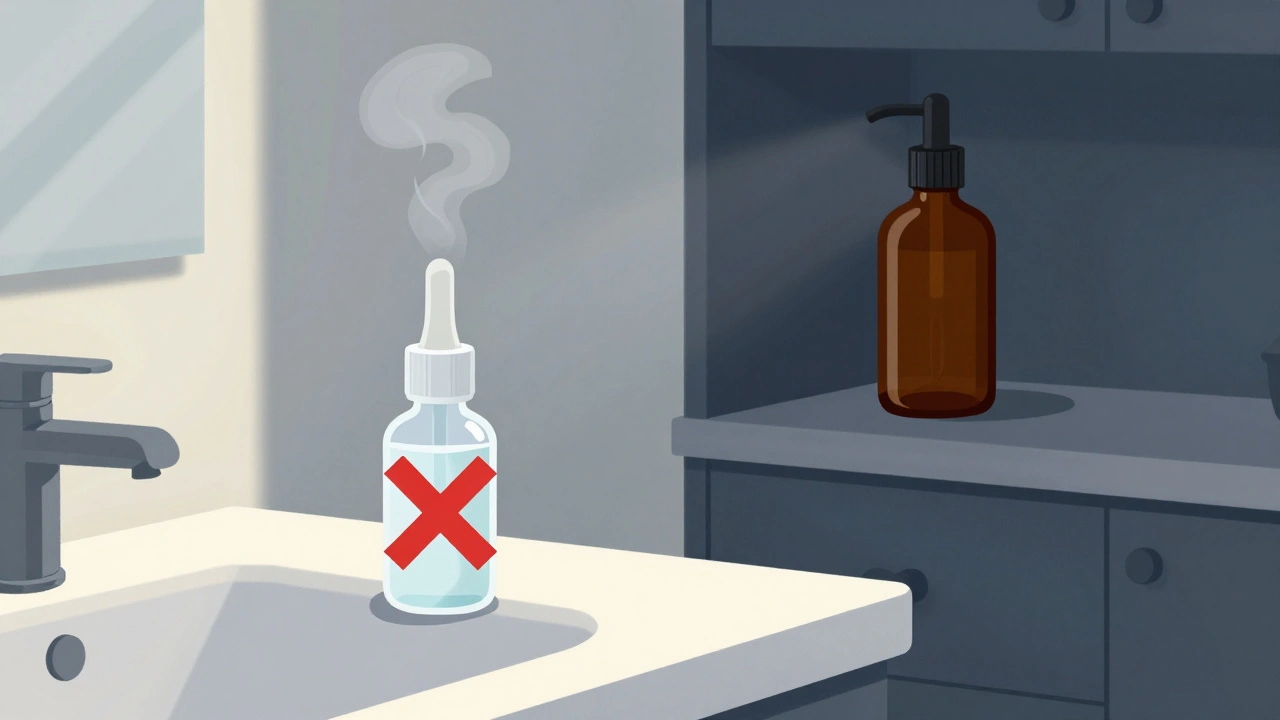
Have you ever opened a bottle of eye drops and noticed the liquid looks cloudy or has changed color? Or maybe your cream turned yellow after sitting on the bathroom counter? You’re not alone. Light exposure can quietly ruin medications-sometimes before you even realize it. And when that happens, your treatment doesn’t work as it should. For light-sensitive drugs like eye drops, antibiotics, or chemotherapy agents, improper storage isn’t just inconvenient-it’s dangerous.
Why Light Matters More Than You Think
Not all medications are created equal when it comes to light. Some can handle a little sun. Others? One hour of direct sunlight can cut their effectiveness in half. This isn’t theory-it’s science. The pharmaceutical industry has known this since the 1900s, when pharmacists noticed nitroglycerin and tetracycline losing potency in clear bottles left near windows. Today, over 470 injectable drugs require light protection, according to the U.S. Pharmacopeia (USP). Eye drops are especially vulnerable because they’re liquid, exposed to air, and often used daily. A 2021 study by Alcon showed that eye drops stored in clear containers lost 35% of their potency in just 14 days. That’s not a small drop-it’s enough to make glaucoma treatment fail. Dr. Emily Chew from the National Eye Institute says it plainly: "Ophthalmic solutions are particularly vulnerable to light degradation." Some formulations lose 40% of their strength after only seven days in the wrong container. If your eye drops aren’t working like they used to, light exposure might be why.What Counts as Light-Sensitive?
You won’t always know just by looking. But there are clear signs to watch for:- Amber, brown, or opaque bottles (these aren’t just for style-they’re required)
- Labeling that says "Protect from Light," "Store in Original Container," or "Do Not Transfer"
- Medications that change color: white cream turning yellow, clear liquid turning cloudy or brown
- Drugs with strong smells: aspirin smells like vinegar when it breaks down
- Eye drops (latanoprost, bimatoprost, timolol)
- Antibiotics (tetracycline, doxycycline)
- Chemotherapy agents
- Birth control pills and hormone therapies
- Anti-seizure drugs (phenytoin)
- Some vitamins and supplements (like vitamin D drops)
How to Store Eye Drops Correctly
Eye drops are among the most commonly misused medications. Many people transfer them to smaller containers, leave them on the counter, or store them in the bathroom. All of these are bad ideas. Here’s what you should do instead:- Keep them in their original amber or opaque bottle. Never pour them into a clear container, even if it looks clean.
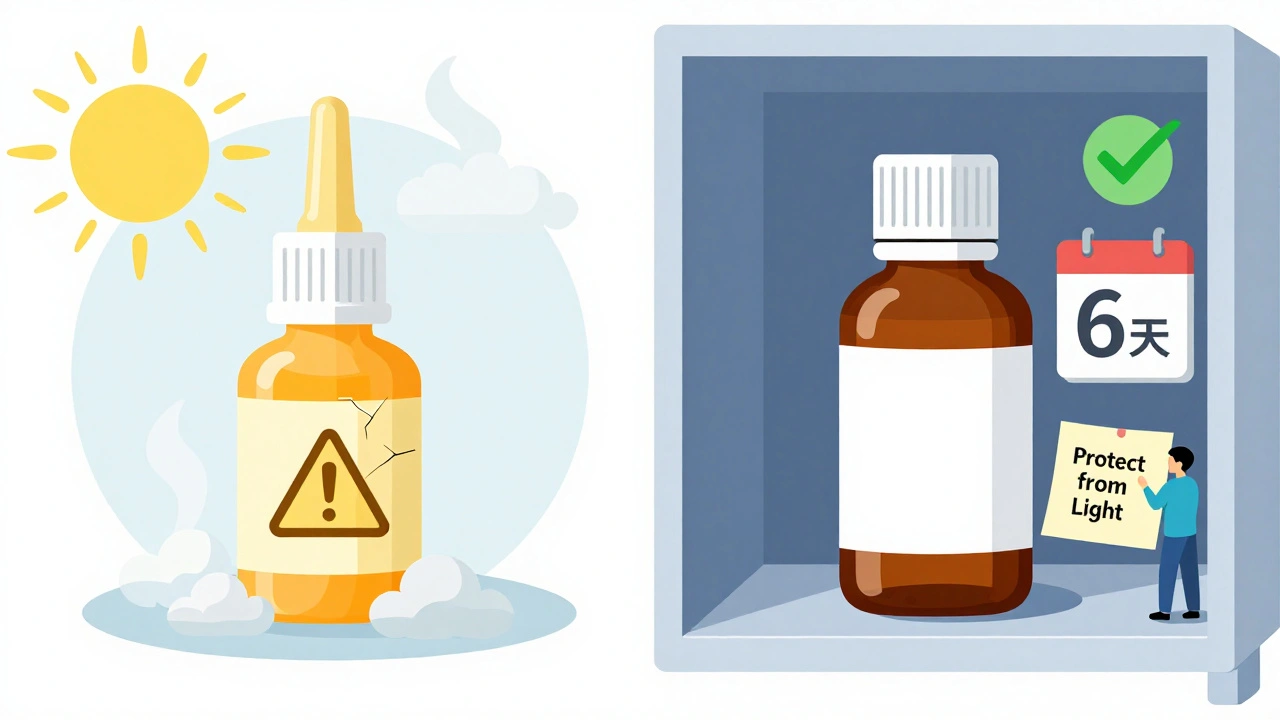
- Store them between 40°F and 77°F (4°C to 25°C). Most don’t need refrigeration unless the label says so. Once opened, some need to be thrown away after 4-6 weeks-check the box.
- Avoid the bathroom. Heat, steam, and humidity from showers degrade medications faster. A kitchen cabinet away from the stove is better.
- Don’t leave them in the car, on a windowsill, or near a lamp. Even indirect sunlight can do damage over time.
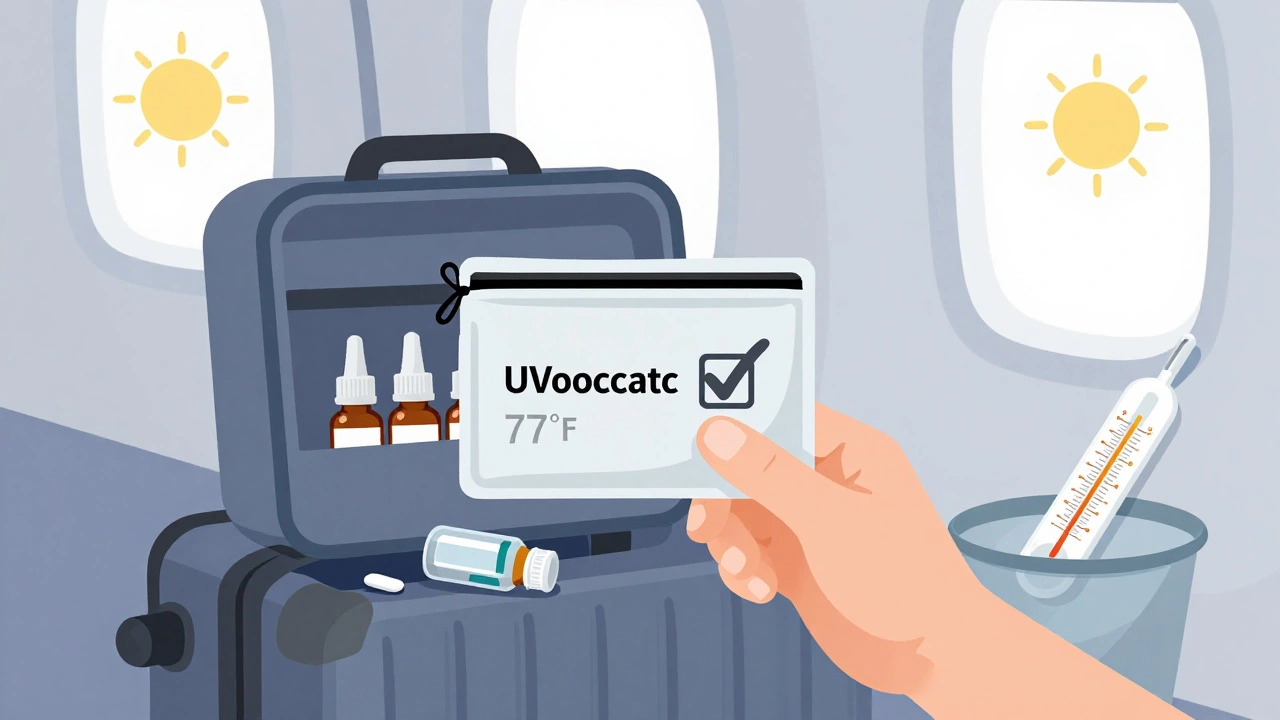
- If you travel, use a UV-blocking medication bag. These cost under $30 and keep drops cool and dark for up to 12 hours.
Storage Options Compared
Not all containers are equal. Here’s what works best:| Option | Light Protection | Temperature Stability | Cost per Unit | Convenience |
|---|---|---|---|---|
| Amber Glass Bottle | 98% UV blocked | Good | $0.08-$0.20 | High-no extra steps |
| Opaque Plastic Bottle | 85% UV blocked | Good | $0.15-$0.35 | High |
| Aluminum Foil Pouch | 100% UV blocked | Poor-requires removal | $0.25-$0.50 | Low-messy, inconvenient |
| UV-Blocking Storage Box | 95% UV blocked | Good (with cooling pack) | $19.99-$59.99 | Medium-good for travel |
| Smart Container (beta) | 99% UV blocked + alerts | Good | $50-$120 | Medium-requires phone app |
What Happens When You Get It Wrong
Improper storage doesn’t just make drugs weaker-it can make them unsafe. When medications break down from light or heat, they can form new chemicals that irritate your skin, eyes, or lungs. One Reddit user, "MedTechRN," threw out $120 worth of compounded tretinoin cream after it turned yellow from being stored in a steamy bathroom. That’s not just money lost-it’s a treatment interrupted. The FDA’s MedWatch system recorded over 1,800 adverse events in 2022 linked to improper storage, with 327 specifically mentioning light exposure. The American Society of Health-System Pharmacists found that 37% of medication efficacy complaints were due to light or heat damage. And it’s not rare. A 2022 survey found that 68% of people store meds in the bathroom-even though it’s the worst place in the house for them. Heat, moisture, and light all team up to destroy pills and liquids.Traveling With Light-Sensitive Meds
Traveling doesn’t mean you have to risk your meds. Here’s how to keep them safe:- Use a small insulated bag with UV-blocking lining. These are designed for insulin and eye drops.
- Keep them in your carry-on, not checked luggage. Temperatures in cargo holds can drop below freezing or rise above 120°F.
- Bring the original container. Even if it’s bulky, it’s your best protection.
- If you’re flying, ask your pharmacist for a letter explaining the medication and storage needs. Some TSA agents aren’t familiar with amber bottles.
- For long trips, consider a portable cooler with a reusable gel pack. Don’t freeze eye drops unless instructed.
Signs Your Medication Is Degraded
If you notice any of these, stop using the medication and call your pharmacist:- Color change: white to yellow, clear to cloudy or brown
- Texture change: cream separates, becomes grainy, or smells oily
- Unusual odor: aspirin smells like vinegar; some antibiotics smell metallic
- Particles or sediment: not supposed to be there
- Expiration date passed-even if it looks fine
Where to Store Them at Home
Forget the medicine cabinet. That’s the #1 mistake. The best spot is a cool, dry, dark place-like a kitchen cabinet away from the stove, sink, or window. Avoid:- Bathrooms (too humid)
- Windowsills (direct sun)
- On top of the fridge (heat rises)
- Car glove compartment (can hit 140°F in summer)
What to Do With Expired or Unused Meds
Never flush them down the toilet or throw them in the trash. Light-sensitive drugs can leach into water supplies or be accidentally ingested by kids or pets. Use a drug take-back program. Many pharmacies, hospitals, and police stations offer free disposal bins. If none are nearby, mix the meds with coffee grounds or cat litter in a sealed bag before tossing. This makes them unappealing and unusable. The FDA’s Medication Disposal Guide says: "When in doubt, dispose of it safely. Better safe than sorry."Final Tips
- Always read the label. If it says "Protect from Light," treat it like a warning sign. - Don’t rely on memory. Write down storage rules on a sticky note and put it on the bottle. - Keep a list of your light-sensitive meds and their storage needs. Share it with caregivers. - If you’re unsure, call your pharmacist. They’ve seen this before-and they’ll tell you what to do. - Don’t wait for it to break. Prevention is cheaper than replacement. Light-sensitive medications aren’t just about convenience. They’re about safety, effectiveness, and your health. A few simple steps can make all the difference.Can I store eye drops in the refrigerator?
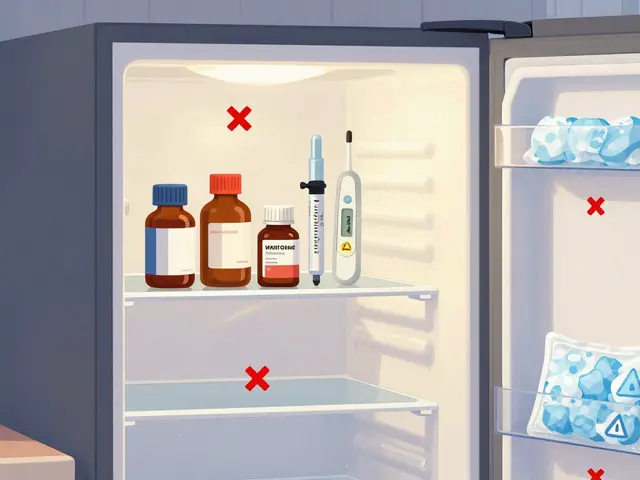
Some eye drops, like certain glaucoma medications, can be stored in the fridge after opening to extend their shelf life. But always check the label first. Refrigeration isn’t required for all, and freezing can damage them. If you do refrigerate, keep them in their original amber bottle and let them sit at room temperature for 15 minutes before use to avoid discomfort.
What if my medication came in a clear bottle?
If the label says "Protect from Light" but the bottle is clear, ask your pharmacist for a replacement in an amber or opaque container. Many pharmacies will swap it for free. Never transfer the medication to another container yourself-this increases the risk of contamination and light exposure.
Do I need to keep all medications away from light?
No. Only medications labeled "Protect from Light," "Store in Original Container," or those in amber/opaque bottles need special care. Most common pills like ibuprofen or acetaminophen are fine in a dark cabinet. But when in doubt, assume it’s light-sensitive.
How long do eye drops last after opening?
Most multi-dose eye drops last 4 to 6 weeks after opening, even if the bottle says "use by 2027." Once opened, bacteria can grow, and light exposure degrades the active ingredient. Always write the opening date on the bottle and throw it out after 6 weeks, or sooner if it looks cloudy or smells off.
Can I use a UV-blocking phone case to store my eye drops?
No. Phone cases aren’t designed for medication storage. They don’t block enough UV light consistently, and they’re not sterile. Stick to pharmacy-approved amber bottles or UV-blocking storage boxes made for medicines. Don’t improvise with household items.




Oh. My. GOD. I can’t believe people are STILL storing eye drops in the BATHROOM?!?!?!?! Like… are you trying to kill your vision?!?! I had a friend who did this-she used latanoprost for three months in a steamy bathroom, and guess what? Her IOP went through the roof! She ended up in emergency surgery. I’m not exaggerating. You think you’re saving space, but you’re just playing Russian roulette with your optic nerve. I’ve started leaving sticky notes on every medication bottle I own. JUST. DON’T. DO. IT.
fr tho why are we even talking about this like it’s a revelation?? everyone knows u dont leave meds in the sun or bathroom 😭 like i got my tetracycline from the vet for my dog and the bottle was black plastic lmao. america really out here acting like this is new info?? we got UV boxes and amber bottles since the 80s smh. also why is everyone so dramatic about a little color change? maybe your eyes are just tired??
While the general sentiment of the article is not without merit, the underlying statistical framing is misleading. The Alcon study cited-while methodologically sound-excludes critical variables such as ambient humidity, bottle material permeability, and batch-specific photodegradation kinetics. Furthermore, the 35% potency loss over 14 days is an aggregate mean; individual formulations exhibit bimodal degradation curves depending on excipient composition. The USP’s 470-drug threshold is also outdated; recent FDA filings suggest over 612 compounds now require photoprotection, with 19% classified as Class I light-sensitive (i.e., irreversible degradation within 72 hours of UV exposure). The recommendation to use amber glass as the ‘gold standard’ is technically accurate, but ignores emerging polymer technologies like polyethylene naphthalate with UV-absorbing chromophores, which offer comparable protection at 40% lower cost. In short: the article simplifies a complex pharmacokinetic issue into a lifestyle checklist, which, while accessible, risks fostering complacency among non-clinical users.
I’ve been a pharmacist for 22 years, and honestly? This is one of the clearest, most practical guides I’ve seen in a long time. I’ve watched too many people toss their glaucoma drops into a drawer next to the toothpaste and wonder why their vision’s getting worse. The part about the bathroom? Yeah, that’s the worst place in the house-humidity and heat are silent killers for meds. I always tell my patients: if it’s not in the original bottle, it’s not safe. And if you’re traveling? Just grab a ziplock with a note that says ‘eye drops-do not freeze’ and keep it in your coat pocket. Simple. No apps, no gadgets. Just common sense. Also, props to the person who shared that story about saving $80 by keeping it in amber. That’s the kind of real-life win we need more of.
Let’s be real-this isn’t about storage. It’s about our collective disregard for the invisible architecture of health. We treat medicine like a grocery item: buy it, toss it somewhere, forget it until the bottle’s empty. But eye drops? They’re liquid alchemy. Tiny molecules, meticulously engineered, vulnerable to photons like delicate stained glass. That amber bottle? It’s not packaging-it’s a cathedral. And when you pour it into a clear vial? You’re not just being lazy-you’re desecrating decades of pharmaceutical science. I keep mine in a velvet-lined box with a humidity sensor. Yes, it’s extra. Yes, it’s ‘overkill.’ But when your sight is on the line, ‘overkill’ is just called ‘care.’
TL;DR: Don’t store light-sensitive meds in the bathroom, and always check the label. If it says ‘Protect from Light,’ treat it like a biohazard. Amber glass > opaque plastic > foil pouch > smart container. Also, expiration dates are suggestions, not laws-cloudy = trash it. Pro tip: Write the opening date on the bottle with a Sharpie. Bonus points if you take a photo of the bottle next to your calendar for your meds app. This isn’t neurosurgery-it’s pharmacokinetics 101. Just don’t be the guy who blames his doctor when his doxycycline turns into a yellow sludge.