Generic drugs make up 90% of prescriptions in the U.S., yet they account for just 10% of total drug spending. That’s not a bug - it’s the system working as designed. But here’s the problem: if making affordable medicine is so crucial, why are so many generic manufacturers losing money? The answer isn’t simple. It’s a mix of price wars, regulatory costs, and shifting business models that are reshaping who survives - and who disappears.
The Profitability Crisis in Plain Terms
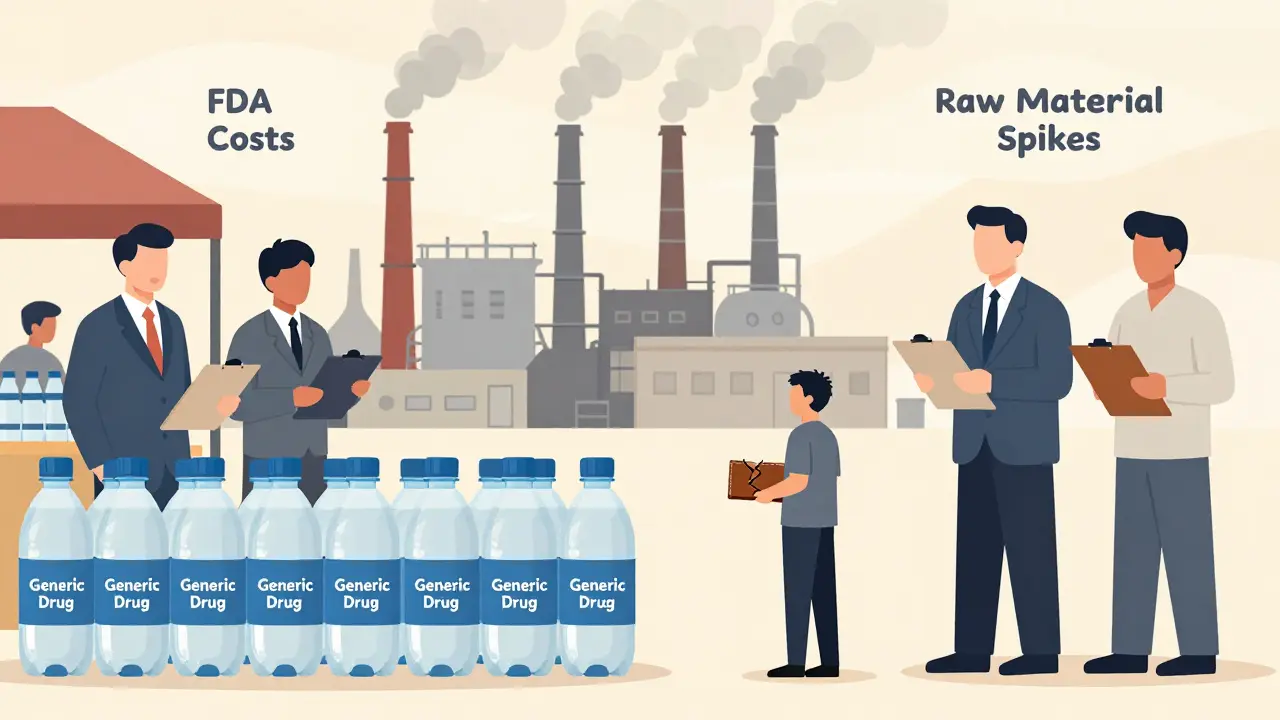
Imagine you’re selling bottled water. Everyone else is selling the exact same thing, at the exact same price. Now imagine your cost to produce each bottle keeps rising - because of stricter rules, more inspections, and wild swings in raw materials. Meanwhile, the big buyers - pharmacy benefit managers and hospitals - demand deeper discounts every year. That’s the reality for generic drug makers today.
In 2025, the U.S. generic drug market brought in $35 billion, down from $40 billion just five years earlier. That’s a 6.1% drop. Teva, once a giant in this space, lost $174 million in 2025. Meanwhile, Mylan (now part of Viatris) barely scraped by with a 4.3% profit margin. One company bleeding cash. Another barely staying afloat. Both making the same kind of pills.
Why? Because the old model - churn out thousands of simple, off-patent drugs like metformin or lisinopril - doesn’t work anymore. Margins have collapsed from 50-60% in the 2000s to under 30% today. Some products sell for pennies per pill. And with over 16,000 generic drugs on the market, competition is brutal. If one company cuts its price by 5%, the rest have to follow. No one wins.
Three Paths Out of the Dead End
Not all generic manufacturers are failing. Some are adapting. And they’re doing it in three very different ways.
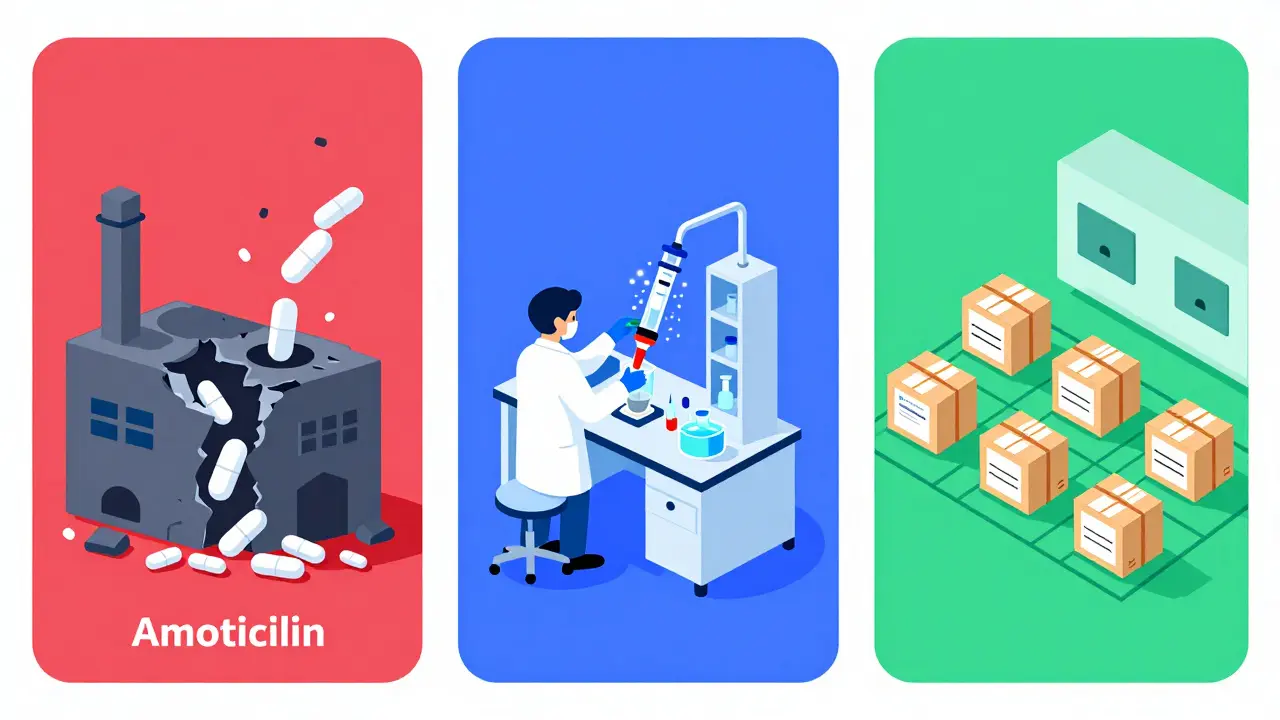
1. Commodity Generics: The Race to the Bottom
This is the classic model. Make a simple, high-volume drug - say, amoxicillin or atorvastatin - and sell it to the lowest bidder. It’s easy to enter: you file an ANDA (Abbreviated New Drug Application) with the FDA, build a basic plant, and start shipping. But here’s the catch: every other company in the world is doing the same thing. China, India, Eastern Europe - they all have cheaper labor, lower overhead, and government support. So when you try to compete on price alone, you lose.
And the costs are brutal. Each FDA application costs an average of $2.6 million. Building a compliant manufacturing facility? At least $100 million. And it takes 18 to 24 months just to get approved and listed on hospital formularies. For small players, it’s a gamble with a 65% failure rate. No wonder new entrants are vanishing.
2. Complex Generics: The High-Wire Act
This is where real opportunity lies. Not every generic is easy to copy. Some drugs require advanced formulations - think inhalers, injectables, patches, or combination pills with multiple active ingredients. These are called complex generics. They’re harder to replicate because of technical barriers: precise particle sizes, special delivery systems, or unstable chemistry.
Companies that master these can charge 2-5x more than simple generics. Margins jump to 40-60%. Teva’s turnaround in 2024 came from products like lenalidomide for multiple myeloma and Austedo XR for movement disorders. These aren’t just pills. They’re engineered solutions. And there aren’t many companies that can make them. That’s the sweet spot: less competition, higher value, and fewer players.
The FDA approved dozens of complex generics in 2023 and 2024. Demand is rising. And the next wave of patent expirations - including blockbuster drugs for diabetes, heart disease, and autoimmune conditions - will open the door for more of these high-margin products.
3. Contract Manufacturing: Be the Factory, Not the Brand
Why build your own brand when you can build other people’s?
Contract Manufacturing Organizations (CMOs) are booming. They don’t sell drugs. They make them - for big pharma, for startups, even for other generic companies. This segment is projected to grow from $51.96 billion in 2024 to $90.95 billion by 2030. That’s nearly a 75% increase.
Egis Pharmaceuticals launched its CMO division in late 2023 to serve partners across Europe and North America. Why? Because the margins are better. The demand is steady. And you don’t have to fight for formulary space or deal with price negotiations. You just deliver. A reliable CMO can operate with 20-30% margins - even when the generic market is tanking.
This model also reduces risk. Instead of betting everything on one drug, you spread your capacity across dozens of clients. It’s like running a restaurant that serves 20 different chefs - you don’t care who the customer is, as long as they pay on time.
Why This Matters Beyond the Balance Sheet
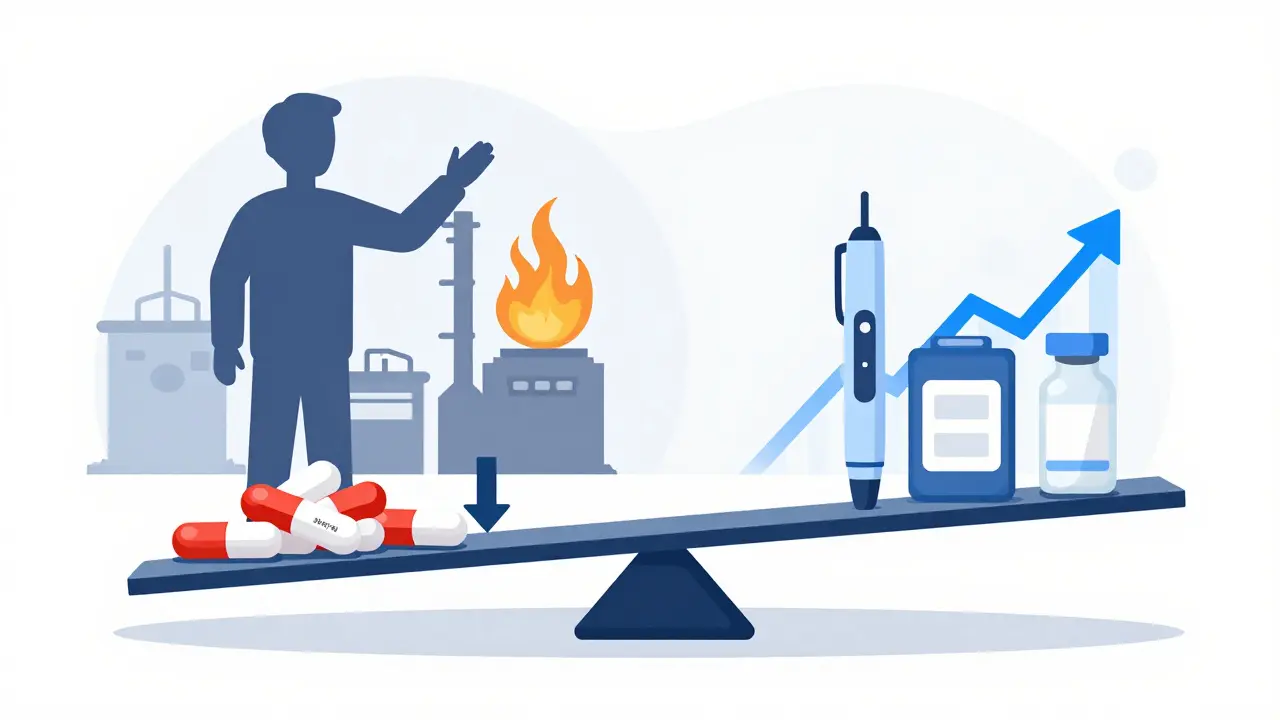
When generic manufacturers can’t make money, they stop making drugs. And that’s not just bad for business - it’s bad for patients.
Dr. Aaron Kesselheim from Harvard Medical School says price competition has created a market failure. We’re seeing shortages of essential medicines - antibiotics, insulin, seizure drugs - because no one can profitably produce them. In 2022, the U.S. had over 300 drug shortages. Many were generic injectables.
And yet, these drugs saved $408 billion in healthcare costs that same year. So society benefits enormously. But the people who make them? They’re getting squeezed. It’s a classic tragedy of the commons: everyone wins when the medicine is cheap - until no one can afford to make it.
Regional Differences: Not All Markets Are Equal
The U.S. isn’t the whole story. In Europe, drug prices are negotiated by governments. That means less chaos. Manufacturers know what they’ll get paid. Margins are steadier. In emerging markets like India and Brazil, demand is rising fast. But currency risks, regulatory delays, and supply chain fragility make it risky.
North America still leads in contract manufacturing - mostly because of the scale of demand and the complexity of the supply chain. But India and China dominate commodity production. The future won’t be won in one region. It’ll be won by companies that can operate across borders, shifting production where it makes sense.
What’s Next? The 2030 Forecast
The global generic market is expected to hit $600 billion by 2033. That sounds huge. And it is. But here’s the twist: most of that growth won’t come from aspirin or ibuprofen. It’ll come from complex generics, biosimilars, and contract manufacturing.
Patents on drugs like Humira, Enbrel, and Revlimid are expiring between 2025 and 2033. That’s billions in lost revenue for brand companies - and billions in opportunity for generics. But only those who can navigate the science, the regulation, and the supply chain will get a slice.
Companies that cling to the old model - low-cost, high-volume, simple pills - will keep shrinking. Those that invest in R&D, automation, and specialized manufacturing? They’ll survive. And maybe even thrive.
The Bottom Line
Generic drug makers aren’t dying. They’re evolving. The days of making a million pills a day for a few cents each are over. The future belongs to those who can do three things: build technically complex products, partner with others as a contract manufacturer, or move into high-value niches like biosimilars.
It’s not about being the cheapest anymore. It’s about being the most capable. And that’s a shift that could finally make this industry sustainable - not just for profits, but for patients.



Interesting breakdown. I’ve worked in pharma logistics for a decade, and what’s rarely discussed is how formulary placement eats up margins before a single pill is sold. Hospitals lock in contracts years in advance, and small manufacturers get stuck paying for ‘access fees’ just to get on the list. It’s not just about production cost-it’s about gatekeeping.
Let’s cut through the fluff. The real issue isn’t margin compression-it’s regulatory capture. The FDA’s 2.6M per ANDA fee? That’s a barrier to entry designed to protect Big Pharma’s oligopoly. Meanwhile, Indian and Chinese firms operate under state subsidies and lax environmental enforcement. This isn’t a market failure-it’s a rigged game. And don’t even get me started on PBMs.
India made this happen! We’ve been producing life-saving generics for decades, and now America is crying because they can’t compete? Look, I’m proud of our pharma industry-we don’t need 100 million dollar factories when our engineers can replicate a molecule with a 200k setup. You think Teva’s failing? That’s because they’re still stuck in 2005 thinking. We don’t just make metformin-we make it cheaper, faster, and better. And if the FDA wants to block us? Let them. The world doesn’t need their paperwork.
Oh my god. This is literally the most important thing no one is talking about. I’ve had a family member on insulin for 12 years. We paid $800 a vial until we switched to the generic-$12. TWELVE DOLLARS. And now? They’re running out. Why? Because the company making it went under last year. No profit, no production. No production, no medicine. This isn’t economics. This is a humanitarian crisis disguised as a business model. And we’re all just scrolling past it like it’s a meme.
soooo… i read this whole thing, and honestly? the contract manufacturing angle is the real win. like, why be the brand when you can be the factory? i work with a small startup that outsources all its production to a CMO in indiana-costs half, quality’s better, and we don’t have to worry about audits or inventory. it’s like, why be the chef when you can hire the kitchen? also, i think the FDA should just let foreign plants import more-why are we making this so hard? also, also, can we talk about how weird it is that we pay 10x more for the same pill just because it’s ‘made in usa’? 🤔
It is a moral failing of the first order that a society which professes to value life will permit the systematic dismantling of the infrastructure required to produce essential medicines. The profit motive, when applied to human survival, is not merely inefficient-it is ethically indefensible. The fact that we allow pharmacy benefit managers to extract rents from the sick, while manufacturers are driven into insolvency, reveals a profound decay in our institutional integrity. We are not merely failing as an economy-we are failing as a civilization.
Correction: The $2.6M FDA fee isn’t per application-it’s per product line, and it’s mostly legal/consulting overhead. The real cost driver is bioequivalence testing and stability studies. Also, 16,000 generics? That’s misleading-only ~1,200 are high-volume. The rest are niche or discontinued. And the 40-60% margins on complex generics? Those are gross margins. Net margins after capex and compliance are closer to 15-20%. Don’t confuse revenue with profitability. Also-biosimilars aren’t generics. They’re biologics. Different regulatory pathway. Different risk profile. Please stop conflating them.
They’re lying. All of them. The whole generic drug crisis? Manufactured. The shortages? Planned. Why? Because the same people who run the FDA also own stock in the big pharma companies that want to eliminate competition. The ‘complex generics’ narrative? That’s just a smokescreen. Real manufacturers are being pushed out so the FDA can push more drugs through their ‘priority review’ backdoor-for their corporate donors. You think Teva lost money? They’re part of the system. And don’t get me started on the ‘contract manufacturing’ angle-it’s just outsourcing to shell companies in Delaware. This isn’t capitalism. It’s a cartel. And they’re using patients as collateral.