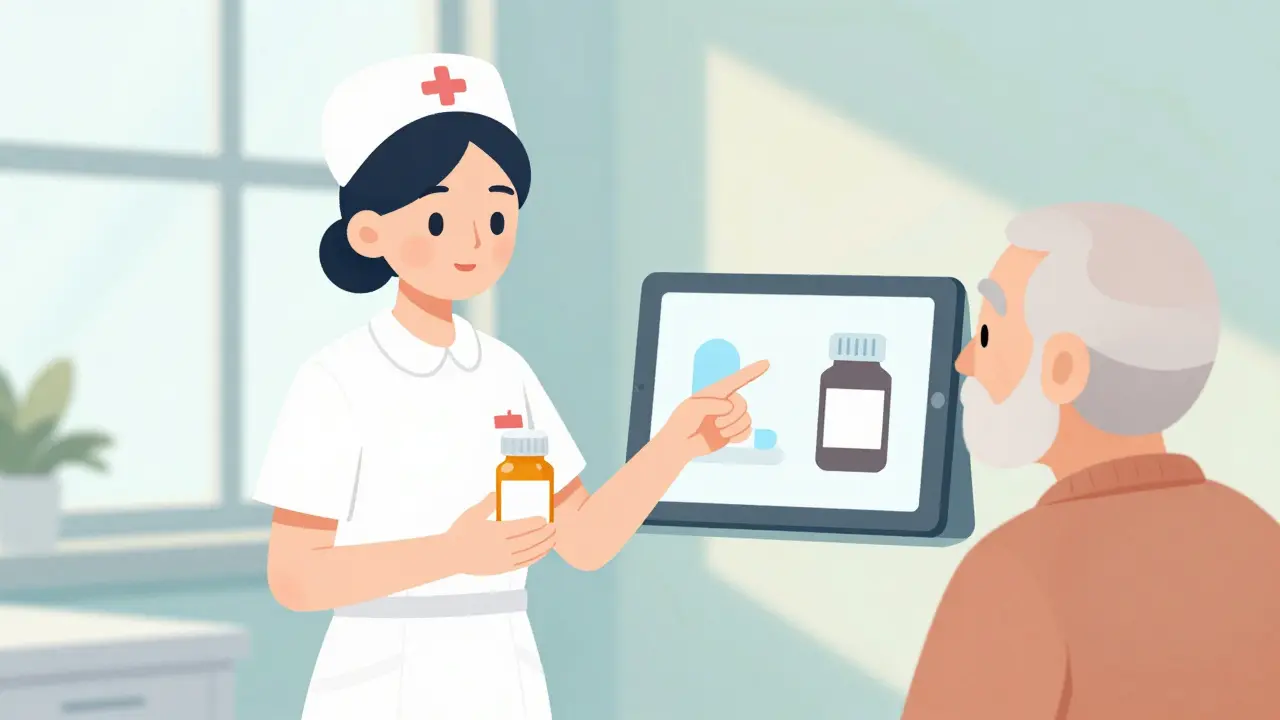
When a patient picks up a prescription and sees a pill that looks completely different from what they’re used to, their first question isn’t about dosage or timing-it’s usually: "Is this really the same?" For nurses, this isn’t just a routine question. It’s a critical moment that can make or break adherence, safety, and trust.
Generics make up 90% of all prescriptions filled in the U.S., and nurses are the ones who see them most-handing out pills during morning rounds, explaining changes in the ER, or answering questions during discharge. But here’s the thing: most patients still believe generics are inferior. A 2021 FDA survey found that 68% of patients think brand-name drugs work better, even when the science says otherwise. Nurses don’t just hand out pills. They fix misconceptions.
Why Nurses Are the Key to Generic Medication Success
Pharmacists explain generics at the counter. But nurses are the ones who stay with patients through the whole hospital stay, the transition home, and the first few days of a new regimen. That’s why nursing counseling has a unique edge: it’s not a one-time talk-it’s a relationship.
When a patient gets switched from a brand-name blood thinner like Coumadin to its generic version, warfarin, the change isn’t just about cost. It’s about consistency. A 2023 case study in the American Journal of Health-System Pharmacy showed a 68-year-old man stopped taking his generic levothyroxine because he didn’t trust the new pill. He developed myxedema, a life-threatening thyroid crisis. He wasn’t noncompliant-he was confused. A nurse could have prevented this.
Studies show that when nurses counsel patients on generics, adherence improves by 22% to 37%. Why? Because nurses don’t just recite facts. They listen. They notice the hesitation in a patient’s voice. They see the worried look when the pill color changes from blue to white. They know that a patient’s fear isn’t irrational-it’s based on real experiences: "Last time I switched, I felt worse."
What Nurses Actually Say (And How They Say It)
There’s no one-size-fits-all script. But the most effective nurses follow a simple, evidence-based structure:
- Assess what they already think ("Have you taken this medicine before? What did you hear about it?")
- Explain FDA standards plainly ("The FDA says this pill has the exact same active ingredient, in the same amount, and works the same way. It’s not a copy-it’s the same medicine.")
- Address appearance changes head-on ("I know it looks different. That’s because the company that makes it doesn’t have to use the same color or shape. But the medicine inside? Identical.")
- Use teach-back ("Can you tell me why we switched to this one?" Then listen. Correct gently if needed.)
- Document it (In 92% of Magnet hospitals, nurses must record proof the patient understood-no exceptions.)
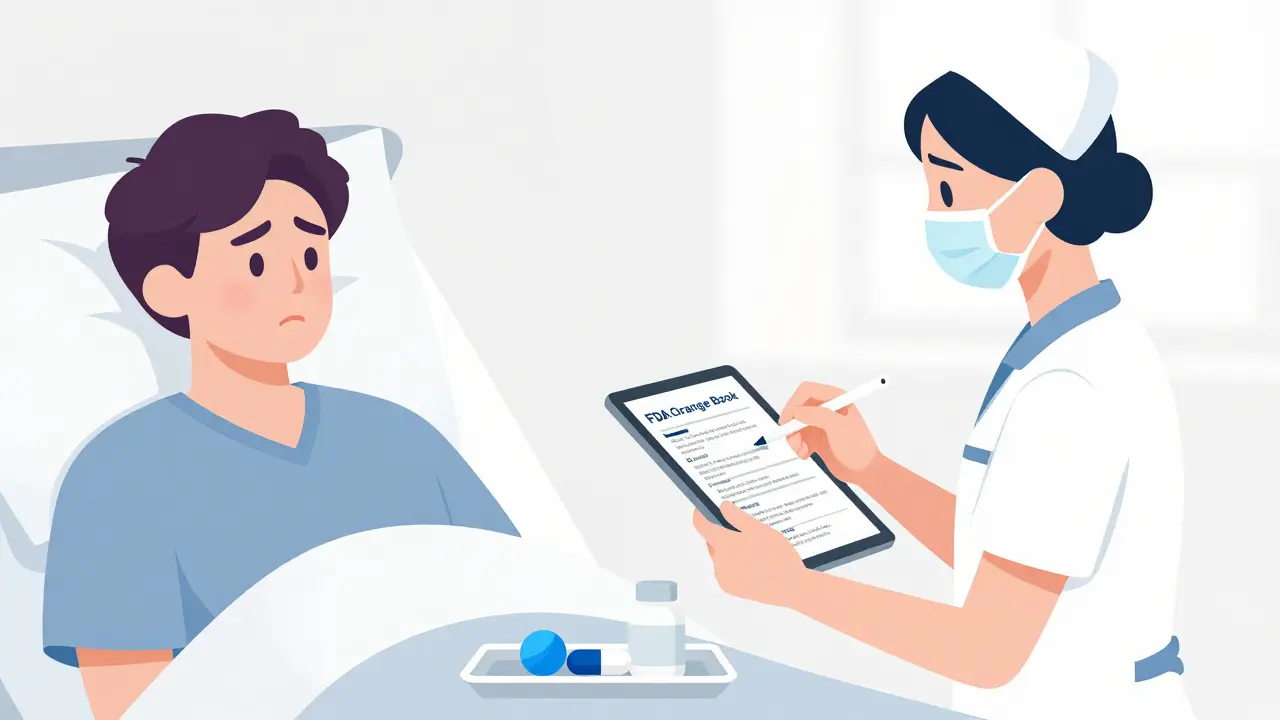
One nurse from Johns Hopkins shared on AllNurses.com: "I show patients the FDA Orange Book on my tablet. We scroll through the entries side by side-brand name, generic, manufacturer. When they see the same active ingredient listed twice, their face changes. They relax. That’s when the trust starts."
When Generics Are Riskier-And How Nurses Handle It
Not all generics are created equal in practice. Some drugs have a narrow therapeutic index-meaning the difference between a dose that works and one that’s dangerous is tiny. The FDA lists 15 of these, including warfarin, levothyroxine, lithium, and phenytoin.
When a patient on warfarin gets switched to a different generic, their INR levels can swing. That’s not because the generic is bad-it’s because small changes in absorption can matter. Nurses in ICUs have learned to be extra careful here.
As one ICU nurse on Nurse.org wrote: "I’ve spent 15 minutes explaining why we’re sticking with the same manufacturer-even if insurance pushes for a cheaper option. I don’t let them switch unless the pharmacy confirms it’s the exact same formulation. For these patients, consistency is safety."
Nurses don’t just follow policy. They advocate. They know that when a patient’s life depends on stable levels, the cheapest option isn’t always the safest.
The Training Gap and Why It Matters
Here’s the uncomfortable truth: 41% of new nurses say they weren’t properly trained to counsel on generics. A 2023 survey by the National Council of State Boards of Nursing found that many nursing programs still treat this as an afterthought.
But it’s not optional. The American Association of Colleges of Nursing made generic counseling a required competency in 2021. Every nursing graduate must now prove they can explain therapeutic equivalence, recognize high-risk drugs, and use FDA resources.
Hospitals are catching up. Most now require 8-10 hours of training during orientation. That includes:
- How to read the FDA Orange Book
- Which drugs require extra caution
- How to respond to "Is this as good as the brand?"
- Using visual aids-side-by-side photos of pills
- Scripted phrases approved by pharmacy committees
Without this training, nurses are flying blind. And patients pay the price.
Technology Is Helping-But Not Replacing
Electronic health records now have built-in prompts for generic counseling. Systems like Epic and Cerner ask nurses: "Did you explain why this generic is equivalent?" and require a checkbox before the medication is signed off.
Some hospitals are using AI tools that pull real-time FDA data at the bedside. A nurse taps a button, and a pop-up shows: "This generic is rated AB1-therapeutically equivalent to brand. No bioequivalence concerns."
But technology doesn’t replace the human touch. One nurse in Atlanta told me: "The system tells me what to say. But I have to read the patient. If they’re quiet, I know they’re scared. If they’re nodding too fast, they’re just trying to get me to stop talking. I adjust."
What’s Changing in 2026
The future of generic counseling is here. In 2024, the Nursing Generic Medication Education Collaborative launched across 500 hospitals. Their goal? Standardize how nurses talk about generics-so every patient gets the same clear, accurate message.
CMS is also moving toward a new rule in 2026: all Medicare patients must have documentation proving they understood their generic medication. That means nurses will be documenting more-not less.
And as biosimilars grow (they’re expected to triple by 2028), nurses will need to learn how to explain those too. These aren’t just cheaper versions of biologics-they’re complex, living molecules. Explaining them requires new skills, new tools, and new confidence.
Final Thought: It’s Not About the Pill. It’s About the Person.
Generics save billions of dollars each year. But they only work if patients take them. And patients won’t take them if they don’t trust them.
Nurses don’t just deliver medicine. They deliver reassurance. They answer the quiet fears behind the question: "Will this hurt me?" "Will it work?" "Did they cut corners?"
That’s why the best nursing counseling doesn’t start with a textbook. It starts with a pause. A look. A hand on the arm. "I know this looks different. Let me show you why it’s not."
Do generic medications work the same as brand-name drugs?
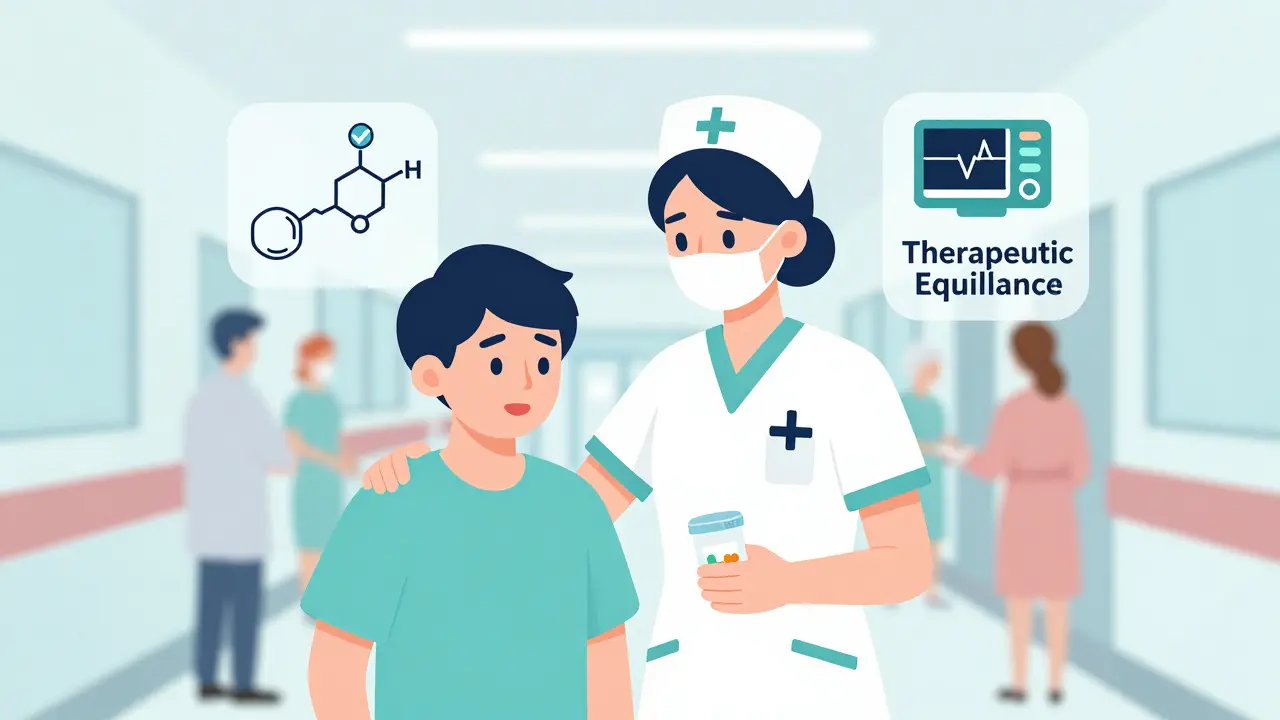
Yes. The FDA requires generics to contain the same active ingredient, in the same strength, and deliver the same therapeutic effect as the brand-name drug. They must also be bioequivalent-meaning they’re absorbed into the bloodstream within 80-125% of the brand’s rate. This isn’t a guess-it’s tested in clinical studies. Generics are not "imitations." They’re legally required to be identical in effect.
Why do generic pills look different?
The color, shape, and size of a pill are determined by inactive ingredients like dyes and fillers, which are not regulated the same way as the active drug. Manufacturers can change these to avoid trademark issues. But the medicine inside? Identical. Nurses often show patients side-by-side photos of the brand and generic to prove this difference is only cosmetic.
Can switching to a generic cause side effects?
Generally, no. But for drugs with a narrow therapeutic index-like warfarin or levothyroxine-small changes in how the body absorbs the drug can affect blood levels. That’s why nurses monitor these patients closely and often avoid switching manufacturers unless necessary. If a patient reports new side effects after a switch, it’s not because the drug is inferior-it may mean they need a lab test to check levels.
Why do some patients refuse generics?
Misinformation is the biggest reason. Many believe generics are "cheap" or "inferior," even though they’re made in the same FDA-inspected facilities as brand-name drugs. Some patients had bad experiences with a previous switch, or they’ve heard stories from others. Nurses address this by sharing facts, using visual aids, and validating the patient’s concern before correcting it.
What should I do if I’m unsure about my generic medication?
Ask your nurse or pharmacist. Don’t stop taking it. Keep the old and new pills side by side and compare them. Check the FDA’s Orange Book online (or ask your nurse to show you). If you notice changes in how you feel, get your blood levels checked-especially if you’re on a drug like thyroid medication, blood thinners, or seizure medicine. Your safety matters more than cost.




Love this breakdown. Nurses are the real MVPs when it comes to generic meds. I’ve seen patients panic because their pill went from blue to white-like it’s a betrayal. One time, I showed a grandma her old pill and the new one side by side, then pulled up the FDA page on my phone. She said, ‘So it’s just a different outfit?’ I said, ‘Yep. Same brain, different hat.’ She laughed and took it. 🙌
okay but like… why do we even have generics?? like i get it saves money but what if the fillers are sketch?? i read this one article that said some generics use talc from china?? and like… what if that’s why i felt weird after switching??
It’s wild how much trust plays into this. I used to think generics were ‘lesser’ too-until my mom got switched to generic levothyroxine and her TSH stayed perfectly stable for two years. The nurse showed us the FDA data. We cried. Not because it was emotional-it was because we finally understood. That’s the power of quiet, consistent education.
OMG YES. I work in a clinic. Last week, a guy refused his generic metformin because it was ‘yellow’ instead of ‘white.’ I showed him the FDA Orange Book. He said, ‘So… it’s the same?’ I said, ‘Yes.’ He said, ‘Then why does it cost $4?’ I said, ‘Because capitalism.’ He laughed. Took it. 😂💊
Also-side note: the color changes because of trademark laws. Not because the company is ‘cutting corners.’ They literally can’t use the same color or shape. It’s not a conspiracy. It’s a legal loophole.
And yes-I use emojis. Deal with it. 🤷♀️🫶
Been a nurse for 12 years. The biggest thing? Patients don’t trust the system. They think brand-name = better because that’s what ads tell them. I don’t argue. I say: ‘Let’s look at the data together.’ Then I show them the bioequivalence graphs. They usually go quiet. Then say: ‘Huh. So it’s not a scam.’
Also-typo: ‘bioequivalent’ not ‘bio-equivalent.’ But you get the point.
Generics save lives. Not just money. I’ve seen patients skip doses because they couldn’t afford the brand. Then they end up back in the ER. The nurse’s job isn’t to sell pills. It’s to stop cycles of fear and poverty. We’re not just giving meds-we’re giving dignity.
And yes, I’ve used the Orange Book on my tablet too. One kid said, ‘So this is like… the same song but a different cover?’ I said, ‘Exactly.’ He high-fived me. We all win.
Let’s be real-this whole generic thing is a pharma scam. The FDA is bought. The ‘same active ingredient’? Sure. But what about the fillers? The binders? The coatings? Who tests those? Who knows what’s really in there? I read a whistleblower report once-some generics are made in the same factories as Chinese counterfeit drugs. Same line. Same machine. Same guy. You think that’s coincidence? I don’t.
And don’t even get me started on the ‘FDA approval’-it’s a rubber stamp. They don’t retest every batch. They trust the manufacturer. Trust. In a system that’s been corrupted.
Nurses are just the front line of the lie.
Ugh. I hate when people act like generics are magic. My aunt took generic lisinopril and her BP went haywire. They said ‘it’s the same!’ But it wasn’t. She ended up in the hospital. Now she’s on brand-name and stable. Don’t tell me ‘it’s identical’ when real people are getting hurt. This isn’t theory-it’s trauma.
And nurses? They’re just following the script. They don’t have time to dig into the real science. So stop romanticizing them. They’re overworked and underpaid. That’s the real issue.
There’s a deeper philosophical layer here: identity and continuity in medication. We don’t just take pills-we attach meaning to them. The color, the shape, the brand-it becomes part of our daily ritual, our sense of control. When that changes, it’s not just pharmacology. It’s existential. The nurse’s role isn’t to inform. It’s to restore narrative coherence. To say: ‘The medicine hasn’t changed. You haven’t lost control. I’m still here.’ That’s not protocol. That’s care.
As someone from India where generics are the ONLY option, I can say this: they’re lifesavers. We don’t have brand-name drugs for most things. But we have good ones. The WHO prequalifies them. The Indian FDA is strict. I’ve seen my dad take generic insulin for 10 years-no issues. The fear? It’s mostly from Western ads. Real people? Real outcomes. Trust the science, not the marketing.
This is SO important. I’m a nurse in rural Texas. Last week, a lady cried because she couldn’t afford her brand-name seizure med. We switched her to generic. I spent 45 minutes with her-showed her the FDA chart, let her hold both pills, even called her pharmacist to confirm the manufacturer. She hugged me. Said, ‘I didn’t know I could ask.’
And yes-I use emojis. 🩺❤️📊
Also-documentation. Always. Because someone’s life depends on it.