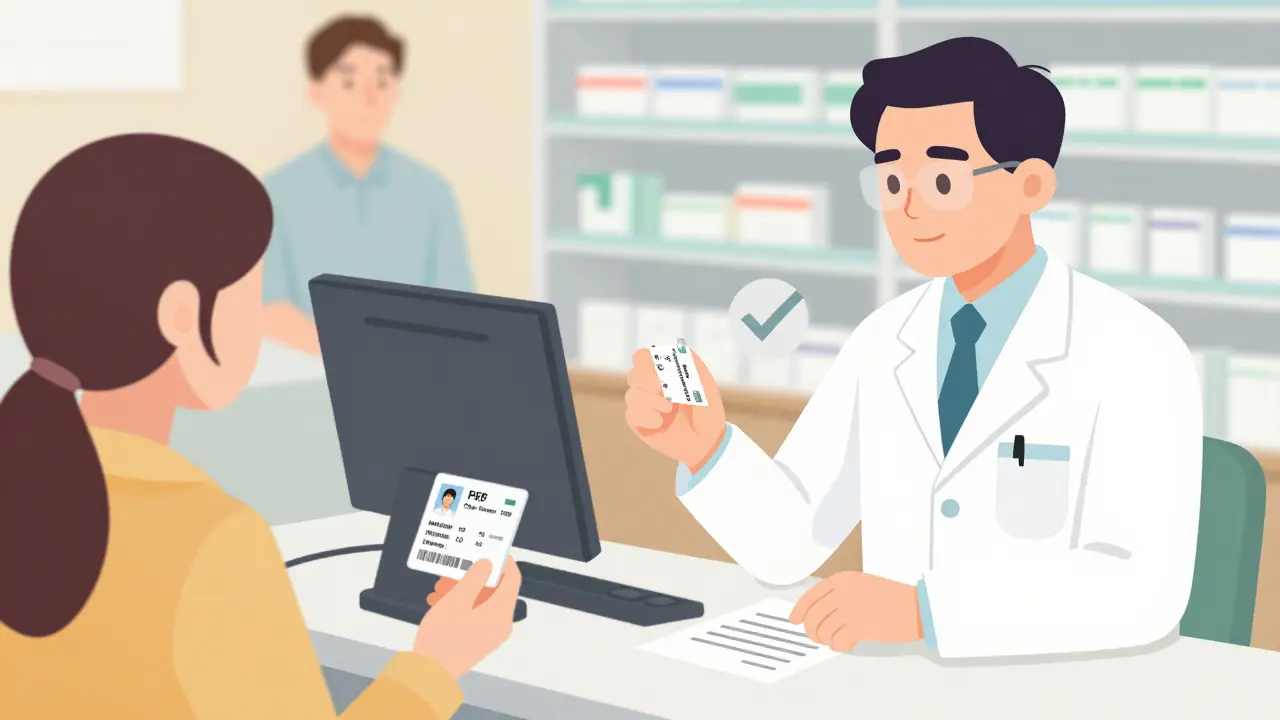
Every day, millions of prescriptions are filled at pharmacies across the country. But in the rush to serve patients, a dangerous mistake can happen: a medication is handed to the wrong person. This isn’t a rare glitch. It’s a preventable error that puts lives at risk. Wrong-patient errors happen when a pharmacist or technician gives someone else’s prescription to the person picking it up. The consequences? Allergic reactions, deadly drug interactions, or worse - a patient misses their life-saving medication entirely. The good news? These mistakes don’t have to happen. With the right systems, even the busiest pharmacy can stop them before they start.
Why Wrong-Patient Errors Are So Dangerous
A wrong-patient error might seem small - maybe the names sound similar, or two people picked up prescriptions at the same time. But the results can be catastrophic. Imagine a diabetic patient getting someone else’s blood pressure medication. Or a patient with severe allergies receiving a drug that triggers anaphylaxis. According to the Agency for Healthcare Research and Quality, medication errors send about 1.3 million people to emergency rooms every year in the U.S. And wrong-patient errors are among the top causes. The Institute for Safe Medication Practices (ISMP) calls these errors one of the most dangerous types because they’re silent. The patient might not even realize they got the wrong drug until it’s too late. That’s why prevention isn’t optional - it’s a necessity.The Two-Identifiers Rule: Your First Line of Defense
The most basic, proven way to stop wrong-patient errors? Ask for two pieces of identifying information before handing over any prescription. Not just the name. Not just the date of birth. Both. Pharmacies that use this method consistently see a 45% drop in errors. That’s huge. But here’s the catch: many pharmacies only ask for the name. Or they ask, but don’t verify. That’s not enough. Here’s how it works:- Staff ask: “Can you please confirm your full name and date of birth?”
- They compare what the patient says to the name and DOB on the prescription label.
- They double-check against the pharmacy’s digital record.
- If anything doesn’t match - even a typo - they stop. No exceptions.
Barcode Scanning: The Game-Changer
Manual checks help. But they’re not foolproof. People get tired. Rushed. Distracted. That’s where technology steps in. Barcode scanning isn’t just for groceries. In pharmacies, it’s a lifesaver. Here’s how it works:- The patient shows a photo ID, a pharmacy card, or even a smartphone QR code linked to their profile.
- The pharmacist scans the barcode on the card and the barcode on the prescription bottle.
- The system checks: Is this the right patient? Is this the right medication? Is the dosage correct?
- If anything doesn’t match, the system blocks the transaction. No override. No bypass.
RFID and Biometrics: The Future Is Here
Some pharmacies are already using RFID wristbands - the same tech hospitals use - to track patients from check-in to pickup. A 2023 study in the American Journal of Health-System Pharmacy showed a 78% drop in errors when RFID was paired with barcode scanning. And now, biometrics are entering the scene. In early 2025, Walgreens began testing fingerprint verification at 500 locations. Preliminary data showed 92% accuracy in matching patients to their records. But privacy concerns are slowing rollout. Patients want safety - but not at the cost of their personal data. For now, the best balance is simple: use the two-identifier rule + barcode scanning. That combo alone cuts errors by 89%, according to a 2023 study in the Journal of the American Pharmacists Association.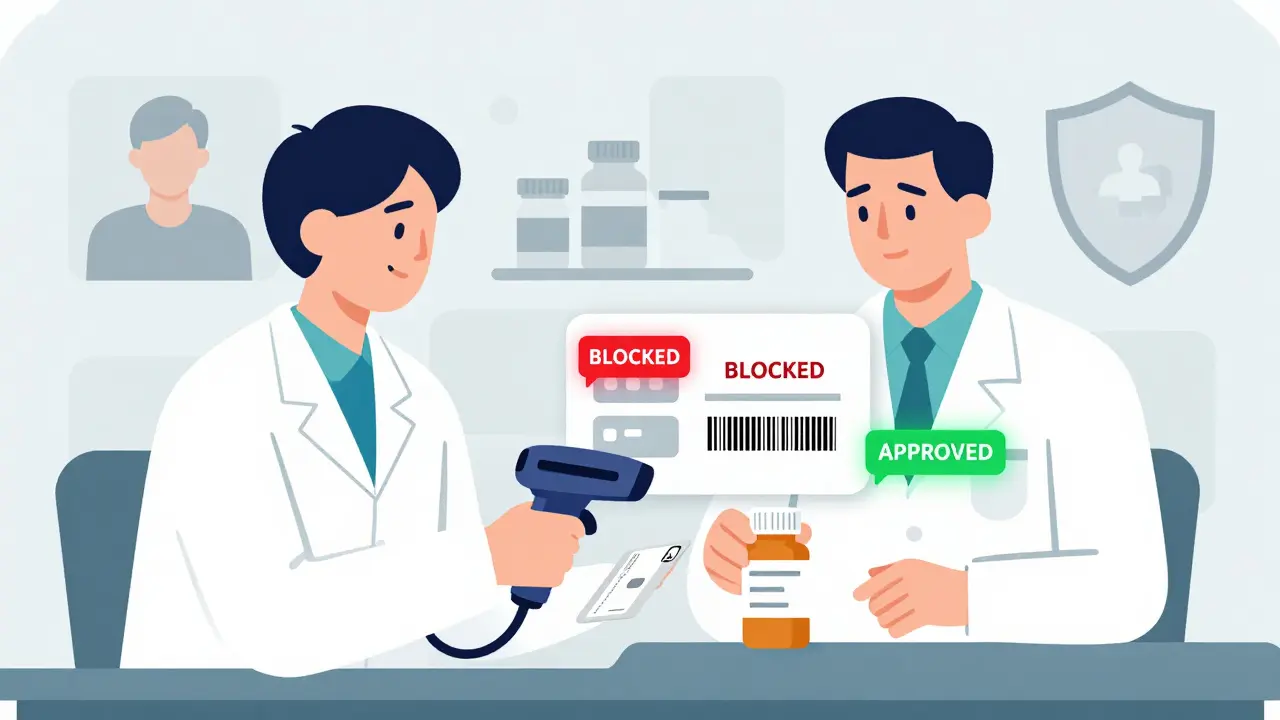
Staff Empowerment: The Human Element
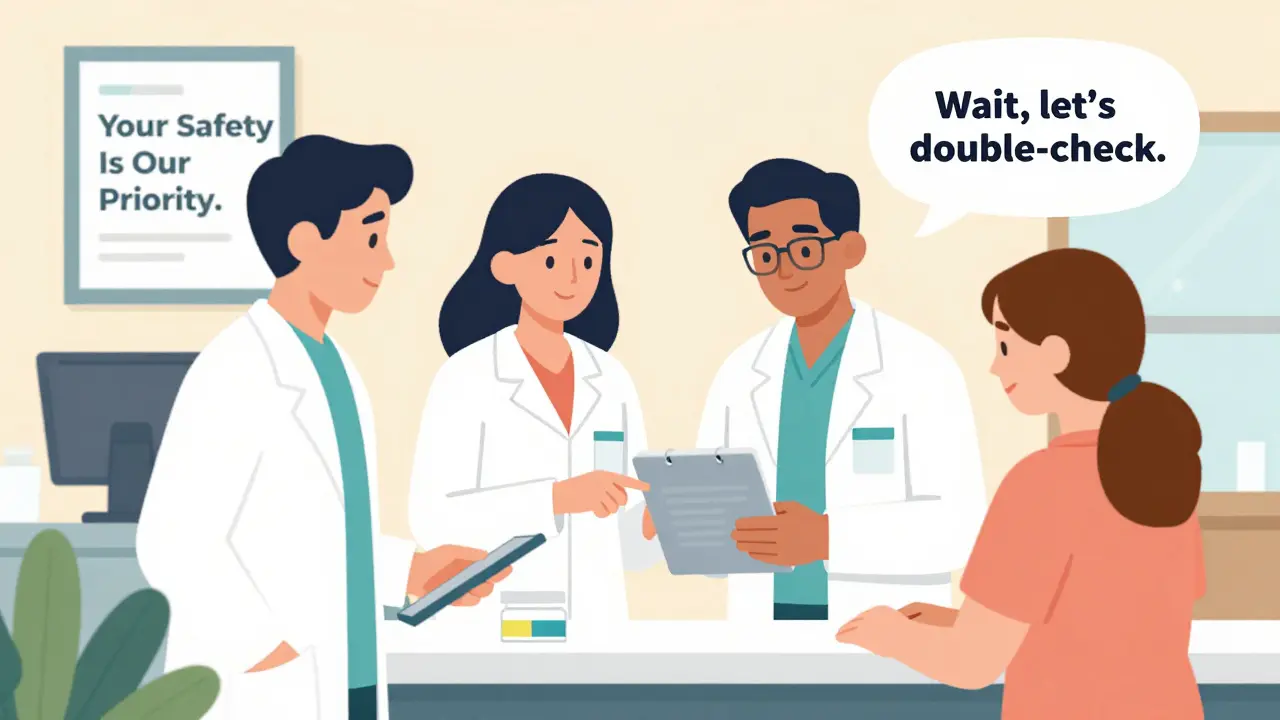
Technology helps. But people stop errors. The most successful pharmacies don’t just have systems - they have cultures. In these places, any staff member - from the cashier to the pharmacy tech - can say, “Wait. Something doesn’t look right.” And no one gets in trouble for it. Dr. Beth Kollisch from ECRI Institute says the top three practices in error-free pharmacies are:- Standardized identification protocols
- Technology-assisted verification
- A culture where anyone can stop the process
Training, Not Just Tools
You can buy the best barcode scanner in the world. But if your staff doesn’t know how to use it - or thinks it’s optional - it won’t help. Successful pharmacies invest in training:- 4-6 hours of hands-on training for every technician and pharmacist.
- Monthly refreshers, not just one-time sessions.
- Role-playing scenarios: “What if the patient says they forgot their DOB?”
- Designating a “safety champion” on each shift - someone trained to lead checks and answer questions.
What About the Patient?
Patients aren’t just passive recipients. They’re part of the safety team. Encourage them to:- Bring their own list of medications to every visit.
- Ask: “Is this my prescription?”
- Check the label: Does the name match? Does the dosage match what their doctor said?
Why Independent Pharmacies Struggle - And How They Can Catch Up
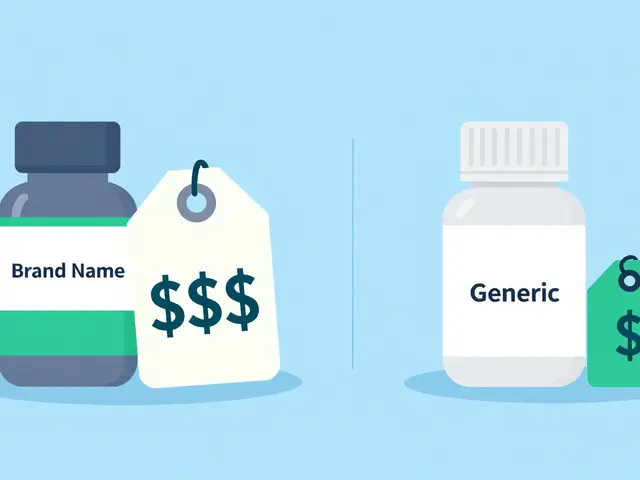
Big chains like CVS and Walgreens have the budget for scanners, software, and training. Independent pharmacies? Not so much. The cost of a full barcode system? $15,000-$50,000 per location. That’s a lot for a small pharmacy. But here’s the truth: wrong-patient errors cost even more. The National Community Pharmacists Association found that each error costs an independent pharmacy an average of $12,500 in lawsuits, lost business, and fines. The solution? Start small.- Start with the two-identifier rule. It costs nothing.
- Use free or low-cost software like PioneerRx or QS/1 - they now include mandatory dual-verification fields.
- Apply for grants. Some states offer safety grants for independent pharmacies.
- Partner with local hospitals or health systems. Share resources.
What’s Next? The Road to Zero Errors
The goal isn’t just to reduce wrong-patient errors. It’s to eliminate them entirely. The Pharmacy Quality Alliance has set a target: zero wrong-patient errors by 2030. How? Three things:- Mandatory use of technology in all pharmacies
- Standardized national protocols
- Stronger training and certification requirements
What are the most common causes of wrong-patient errors at pharmacies?
The most common causes include similar-sounding patient names (like "John Smith" and "Jon Smith"), rushed verification during peak hours, skipping the two-identifier check, and staff bypassing barcode scanning systems due to workflow pressure. In 2025, ECRI Institute reported that 22% of errors occur because of "sound-alike, look-alike" names. Human fatigue and lack of standardized protocols are the biggest underlying factors.
Can a patient refuse to give their date of birth at the pharmacy?
Yes, a patient can refuse. But pharmacies are legally and ethically required to verify identity before dispensing medication. If a patient refuses to provide their date of birth or another identifier, the pharmacy must stop the transaction. They may offer to call the prescribing doctor to confirm, hold the prescription, or ask the patient to return with proper ID. No medication should be released without verified identity - even if the patient insists.
Do I need to show ID every time I pick up a prescription?
Yes - especially if you’re picking up a new prescription or a controlled substance. Even if you’ve been there before, pharmacies must verify your identity each time. This isn’t about distrust - it’s about safety. A 2024 ECRI survey found that 68% of patients felt safer when asked for ID. Some pharmacies use loyalty cards or mobile QR codes to make this faster, but the verification step remains mandatory.
How effective is barcode scanning at preventing wrong-patient errors?
Barcode scanning reduces wrong-patient errors by 63% to 78%, depending on how it’s implemented. Walgreens saw a 63% drop after rolling it out nationwide. When combined with dual-identifier verification (name and DOB), the reduction jumps to 89%. The system works by matching the patient’s barcode (from their ID or card) with the prescription barcode. If they don’t match, the transaction is blocked. It’s one of the most reliable tools available.
Are wrong-patient errors more common in chain pharmacies or independent ones?
Independent pharmacies report higher rates of wrong-patient errors - not because staff are less careful, but because they’re less likely to have barcode systems or automated verification tools. As of 2024, 89% of hospital pharmacies and 76% of chain pharmacies use barcode scanning. Only 42% of independent pharmacies do, mostly due to cost. But even without high-tech tools, following the two-identifier rule can cut errors by nearly half.
What should I do if I think I got the wrong medication?
Don’t take it. Go back to the pharmacy immediately. Bring the medication and your prescription label. Ask to speak with the pharmacist. They’re trained to handle these situations. Most errors are caught during counseling - 83% of them, according to Pharmacy Times. If you’re unsure, call your doctor. Never guess. Taking the wrong medication can be life-threatening.
Can technology completely eliminate wrong-patient errors?
No - not alone. Technology like barcode scanning and RFID cuts errors dramatically, but human factors still play a role. Staff may bypass systems under pressure. Patients may give incorrect information. Systems can glitch. The most effective approach combines technology with strong protocols, staff training, and a culture where anyone can stop the process if something feels off. Experts agree: safety comes from people and systems working together.


Let me just say this outright: if your pharmacy isn't using barcode scanning with dual verification, you're not just negligent-you're putting lives at risk. I've seen it firsthand. My aunt got the wrong blood thinner because the tech 'assumed' the name was close enough. She ended up in the ICU. This isn't about convenience. It's about competence. If you're skipping steps because you're 'busy,' you don't belong in healthcare. Period. The data is clear: 89% reduction with proper systems. So why are we still having this conversation? Because too many places treat safety like an optional side quest. Wake up.
I love how this post breaks it down so clearly-no fluff, just facts. Seriously, the two-identifier rule is one of those things that seems obvious... until you realize how often it’s ignored. I pick up my meds weekly, and honestly? I appreciate when they ask for my DOB. It makes me feel like they actually care. Also, the barcode thing? Game-changer. My cousin works at a Walgreens, and she says the system literally won’t let her dispense if it doesn’t match. That’s the kind of rigidity we need. Keep pushing for standards. 👍
Oh great. Another tech solution. Next they’ll be scanning our retinas and forcing us to wear RFID chips. This whole thing is just another step toward the surveillance state. You want safety? Then stop letting bureaucrats tell you how to run your pharmacy. I’ve been going to my local pharmacy for 20 years. They know me by name. They know my meds. They don’t need scanners. They need trust. And now? Now we’re turning a simple human interaction into a TSA checkpoint. I’m not a criminal. I shouldn’t be treated like one.
This is so important!! 💯 I used to work at a pharmacy and we had zero tech-just name and address. We had TWO near-misses in one month where someone almost got the wrong meds because the names were super similar. After we started doing the two-identifier check + a quick verbal confirmation ('What’s this for?'), everything changed. Patients actually thanked us. Like, genuinely. So yes-yes to the rules, yes to training, yes to culture. Let’s make safety normal, not optional! 🙌
Let me ask you this-have you ever wondered who owns the data from those barcodes? Who’s tracking your medication history? Who’s selling it? The system says 'security,' but it’s really about control. The same companies that push these scanners are the ones lobbying for mandatory health IDs. And don’t get me started on the AI facial recognition trials. That’s not safety-that’s pre-crime. They’re building a database of every person who takes a prescription. And once they have it? They’ll use it. You think your 'privacy' matters? It doesn’t. They’ve already decided for you.
I just want to say… I’m so tired. I’ve spent years in this industry. I’ve watched pharmacies cut corners. I’ve seen technicians cry because they were yelled at for 'slowing things down.' And now we’re talking about RFID wristbands and biometrics like it’s progress? It’s not. It’s exhaustion dressed up as innovation. The real problem isn’t the tools-it’s the pressure. The endless quotas. The understaffing. The fact that no one ever asks: 'Why are we so rushed?' We’re not fixing the system-we’re just slapping more tech on top of a broken foundation. And I’m just… so tired.
Think about it: every time a pharmacy implements a new 'safety' protocol, they’re subtly saying: 'We don’t trust you.' And who are we? The patients? The staff? The system? We’re all just cogs. The real tragedy isn’t the wrong medication-it’s the erosion of autonomy. We’ve turned healthcare into a compliance theater. A ritual of verification that does nothing but make people feel powerless. And yet, we call it 'safety.' What if the real safety is in the relationship? In the pharmacist who remembers your kid’s name? In the quiet nod when you walk in? Technology can’t replicate that. And maybe… we’re losing something irreplaceable in the name of efficiency.
Man, I’ve been on both sides of this. I’m a pharmacy tech. And I’ve also been the guy picking up his mom’s meds. Let me tell you-when they ask for DOB and scan the barcode? I feel safer. I don’t feel judged. I feel protected. And honestly? If someone says 'I don’t like being asked,' I say: 'Good. That means it’s working.' You want to feel like a person? Then let the system do the heavy lifting so you don’t have to. It’s not about distrust. It’s about design. And if you’re against it? You’re not against safety-you’re against progress. Chill out. 🤝
Barcodes dont work. I seen it. Pharmacies use them but techs still mess up. Why? Because they skip the scan. Or they scan the wrong bottle. Or the barcode is smudged. So what? You think more tech fixes that? No. You need people. Real people. Not robots. Not scanners. You need someone who cares. Someone who looks you in the eye. Someone who knows your name. That’s what stops errors. Not a machine. People. Always people. Stop chasing gadgets and start hiring better staff. Thats the real fix.
I’ve been a patient for over 30 years. I’ve picked up meds from mom-and-pop shops and big chains. The difference? The small ones always asked me about how I was feeling. The big ones? They scanned, handed it over, and said 'have a nice day.' I don’t need more tech-I need more humanity. The two-identifier rule? Perfect. But don’t just ask for DOB like a robot. Make eye contact. Say 'Thanks for being careful with your health.' That tiny moment? That’s what builds trust. And trust? That’s what stops errors. Not a barcode. Not an algorithm. A human voice saying 'I’ve got you.'