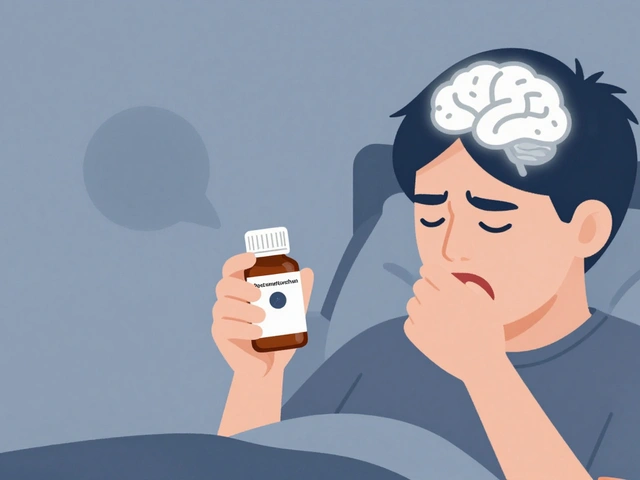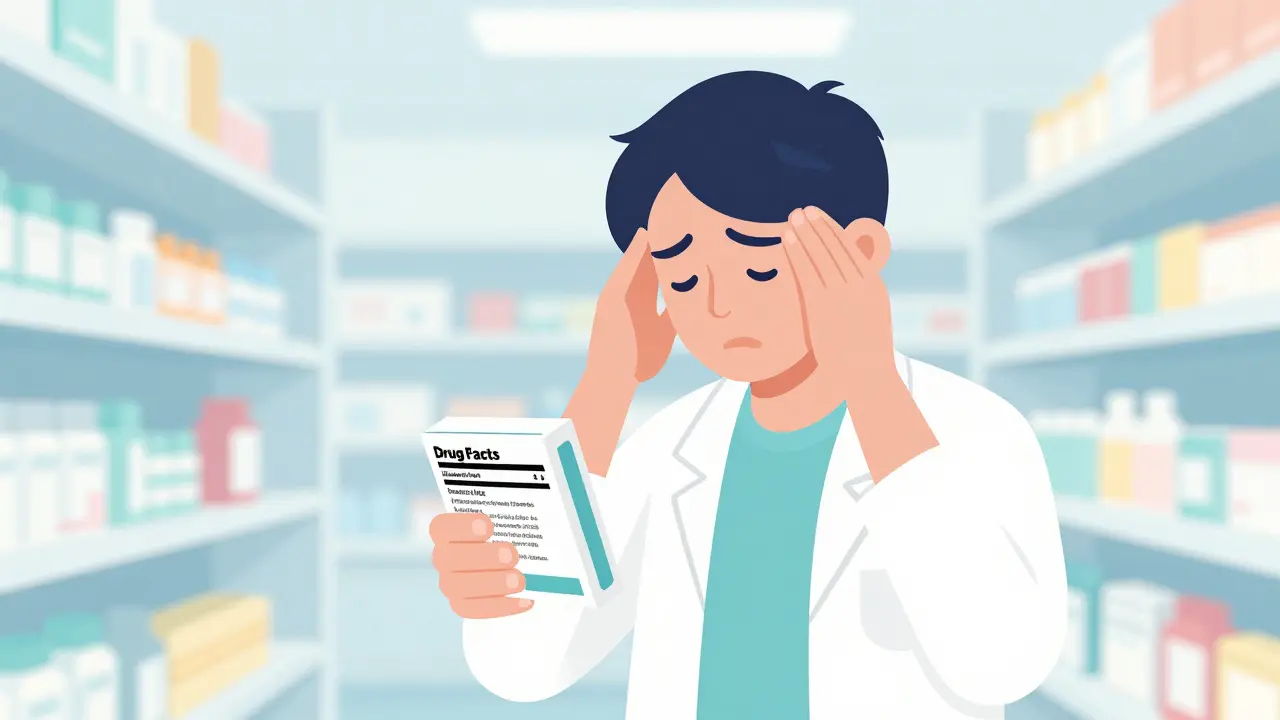
You grab a box of cold medicine from the shelf. You’re tired, your head is pounding, and you just want relief. But before you pop that pill, have you ever really stopped to read the back of the box? Most of us glance at the brand name or the front claim-"Fast Relief" or "12-Hour Sleep"-and assume we know what’s inside. That assumption can be dangerous. The OTC Drug Facts Label is a standardized information panel mandated by the U.S. Food and Drug Administration (FDA) that provides critical safety and usage data for nonprescription medications. It’s not marketing fluff; it’s a legal requirement designed to keep you safe.
In 2023 alone, the FDA received over 127,000 reports of errors related to over-the-counter medications. Many of these weren’t caused by bad drugs, but by confusion over how much to take, when to take it, or what else was in the bottle. Reading this label correctly isn’t just about following rules-it’s about taking control of your health. Let’s break down exactly how to decode this label so you can use these powerful tools with confidence, not fear.
The Anatomy of the Drug Facts Label
The label might look like a wall of text, but it follows a strict, logical structure established by the U.S. Food and Drug Administration is the federal agency responsible for protecting public health through regulation of drugs, medical devices, and food safety.. There are seven distinct sections, each serving a specific purpose. If you understand the order, you stop guessing and start knowing.
- Active Ingredients: This is the most important part. It lists the chemical names of the drugs working on your body.
- Purpose: What the active ingredient does (e.g., pain reliever, antihistamine).
- Uses: The specific symptoms the product is approved to treat.
- Warnings: When you should NOT use the product, and serious side effects to watch for.
- Directions: How much to take, how often, and for whom.
- Other Information: Storage instructions and other relevant details.
- Inactive Ingredients: Fillers, binders, and dyes that don’t treat symptoms but may cause allergies.
Notice that "Active Ingredients" is always at the top. Why? Because that’s where the power-and the risk-lies. If you skip straight to the Directions, you might miss a critical interaction hidden in the first line.
Decoding Active Ingredients: The Hidden Danger
This is where most people get tripped up. Brand names like Tylenol, Advil, or Motrin are easy to remember. But the label uses generic chemical names: Acetaminophen, Ibuprofen, Naproxen. You need to know which is which because these ingredients hide in unexpected places.
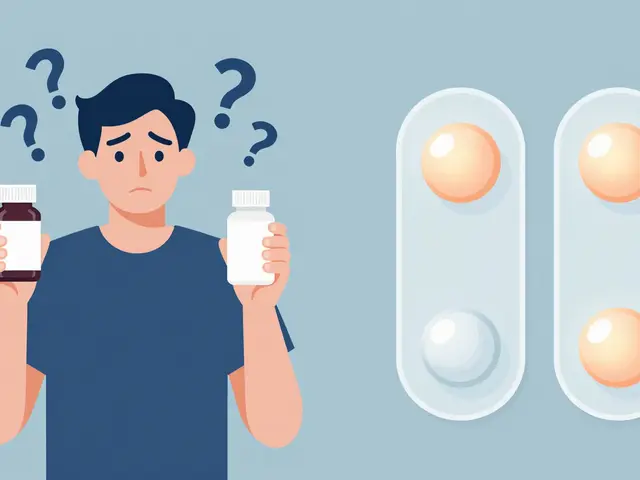
Imagine you have a headache and a runny nose. You take a dose of regular pain reliever, then grab a multi-symptom cold medicine an hour later. Without checking the Active Ingredients section, you might accidentally double-dose on Acetaminophen. Taking more than 4,000 mg of Acetaminophen in 24 hours can cause severe liver damage. The label doesn’t say "Tylenol"; it says "Acetaminophen." If you see that word in two different bottles, you’re taking twice the intended dose.
Here is a quick reference for common active ingredients:
| Brand Name Example | Generic Active Ingredient | Primary Purpose |
|---|---|---|
| Tylenol | Acetaminophen | Pain Reliever / Fever Reducer |
| Advil / Motrin | Ibuprofen | Pain Reliever / Anti-inflammatory |
| Aleve | Naproxen Sodium | Pain Reliever / Anti-inflammatory |
| Zyrtec / Claritin | Cetirizine / Loratadine | Allergy Relief (Antihistamine) |
| Sudafed | Pseudoephedrine | Nasal Decongestant |
When you see "Extra Strength," check the milligram count. Regular strength might be 250 mg, while extra strength could be 500 mg. Knowing the exact number helps you calculate if you’ve hit your daily limit.
The Warnings Section: Your Personal Safety Net
If there is one section you must read every single time, it is Warnings. This isn’t legal jargon; it’s a list of conditions that make this drug unsafe for you right now. For example, if you have high blood pressure, many decongestants will raise it further. The label will explicitly say: "Do not use if you have high blood pressure."
Pay close attention to "Ask a doctor before use if..." statements. These highlight interactions with other medications or health conditions. If you are taking blood thinners like warfarin, even a simple aspirin-containing product can be risky. The label warns you to check with a professional first. Ignoring this step turns a minor ailment into a potential emergency room visit.
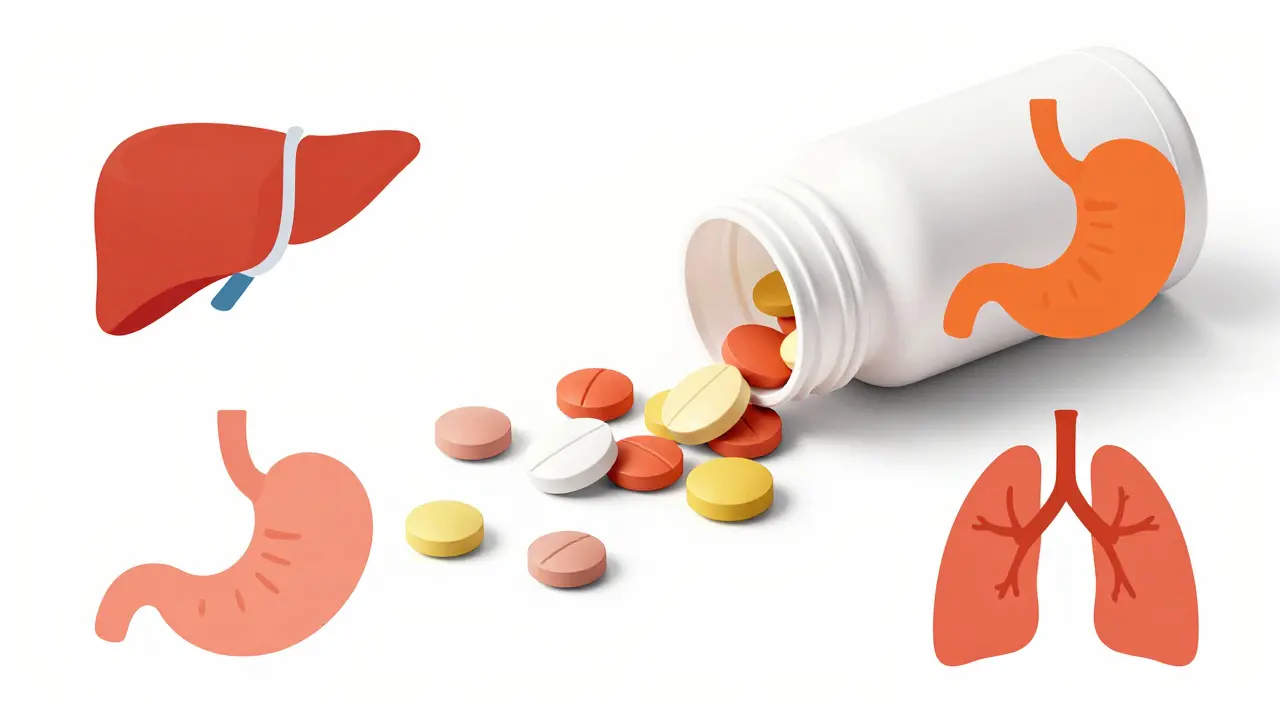
Also look for organ-specific warnings. Products containing Acetaminophen carry a liver warning. Those with Ibuprofen carry a stomach bleeding warning. If you have existing issues with those organs, the label is telling you to pause and consult your healthcare provider.
Mastering Dosage and Directions
The Directions section tells you how to use the drug safely. It usually splits advice by age group: "Adults and children 12 years and older" versus "Children 6 to under 12." Never give adult medication to a child unless the label explicitly says it’s safe. Children’s bodies process drugs differently, and their weight determines the correct dose.
Watch out for the phrase "every 4 to 6 hours." This means you wait four hours between doses, not that you take four doses in six hours. A common mistake is counting pills instead of dosing occasions. If the direction says "take 2 tablets every 6 hours," that’s four tablets total in 24 hours. Do not exceed the maximum daily limit stated on the label. For liquid medications, pay attention to the concentration. "5 mL per dose" is standard, but some concentrated drops require only 0.5 mL. Using a tablespoon instead of a measuring cup can lead to a massive overdose.
Practical Tips for Confident Label Reading
Reading labels becomes easier with practice. Here are five steps to build a habit:
- Identify the Active Ingredient: Before buying, scan the top section. Does this match what you think you need?
- Check for Duplication: Are you already taking another medication with this same ingredient?
- Read All Warnings: Look for your specific health conditions or current prescriptions.
- Verify Dosage: Ensure the amount matches your age and weight. Use the provided measuring device for liquids.
- Review Inactive Ingredients: If you have allergies to dyes, gluten, or certain fillers, check the bottom of the label.
Tools can help too. The FDA offers a "Drug Label Decoder" app that simplifies complex terms. Pharmacists are also free resources. Don’t hesitate to ask them to walk you through a new label, especially if you’re managing multiple health conditions.
What’s Changing in 2025 and Beyond?
The landscape of OTC labeling is evolving. In 2024, the Senate HELP Committee passed the OTC Drug Label Modernization Act. By December 2025, manufacturers will be required to update labels with color-coded sections and standardized icons for warnings. This means future labels will be even easier to read at a glance. Larger fonts for active ingredient concentrations and pictograms for high-risk warnings will reduce confusion, particularly for older adults who struggle with small print.
These changes reflect ongoing efforts to reduce medication errors. Early pilot programs show a 52% reduction in pediatric dosing errors when clear visual cues are used. As these updates roll out, stay alert for new designs on your favorite brands. The core principles remain the same: know what’s in it, know why you’re taking it, and know how much is safe.
Why is the Active Ingredients section so important?
The Active Ingredients section lists the actual drugs in the product by their generic chemical names. This is crucial because many different brand-name products contain the same active ingredient. If you take two products with the same active ingredient, you risk accidental overdose, which can lead to serious health issues like liver damage or stomach bleeding.
What do I do if I have multiple symptoms?
You can use a multi-symptom product, but you must carefully check the Active Ingredients to ensure you aren't doubling up on any component. Alternatively, you can take separate single-ingredient products, but you still need to track the total milligrams of each active ingredient you consume in a 24-hour period to stay within safe limits.
Are inactive ingredients safe?
Inactive ingredients do not treat symptoms, but they can cause allergic reactions in some people. If you have known allergies to dyes, gluten, lactose, or specific fillers like corn starch, you should always review the Inactive Ingredients section at the bottom of the label before purchasing or using the product.
How do I measure liquid medication correctly?
Always use the measuring device that comes with the medication, such as a dosing cup or syringe. Household spoons are not accurate and can lead to underdosing or overdosing. Pay attention to whether the dose is measured in milliliters (mL) or teaspoons, and note that 5 mL equals 1 teaspoon.
When should I call a doctor instead of using OTC meds?
If your symptoms persist beyond the duration recommended on the label (usually 3-7 days), worsen, or if you experience new symptoms, stop using the medication and consult a healthcare professional. Also, seek immediate help if you experience signs of an allergic reaction or severe side effects listed in the Warnings section.