When your liver is struggling, food isn’t just fuel-it’s medicine. Too many people think liver damage is irreversible, or that only pills can fix it. But decades of research show something simpler: what you eat every day can reverse early-stage liver disease, lower inflammation, and even shrink fat in the liver. You don’t need a miracle cure. You need a pattern of eating that works with your body, not against it.
The Real Science Behind a Liver-Healthy Diet
There’s no single ‘liver detox’ smoothie or magic supplement. The truth is messier-and better. The most proven approach comes from the Mediterranean diet. It’s not a trend. It’s not a 30-day challenge. It’s a way of eating backed by over 10 major studies, including a landmark 2013 trial published in Hepatology that showed a 30% drop in liver fat after just one year. This isn’t about cutting calories alone. It’s about the type of calories. A 2022 review in the Journal of Hepatology found that people following a Mediterranean-style diet saw liver enzyme levels drop by 20-30% within six months-even without losing weight. That’s not a fluke. It’s biology. The fats, fibers, and phytonutrients in this diet directly reduce liver inflammation and block fat buildup. The American Association for the Study of Liver Diseases (AASLD) updated its guidelines in 2023 and called the Mediterranean diet the only eating pattern with Level 1 evidence for improving liver tissue damage. That’s the highest level possible. No drug, no supplement, no trendy cleanse comes close.What You Should Be Eating
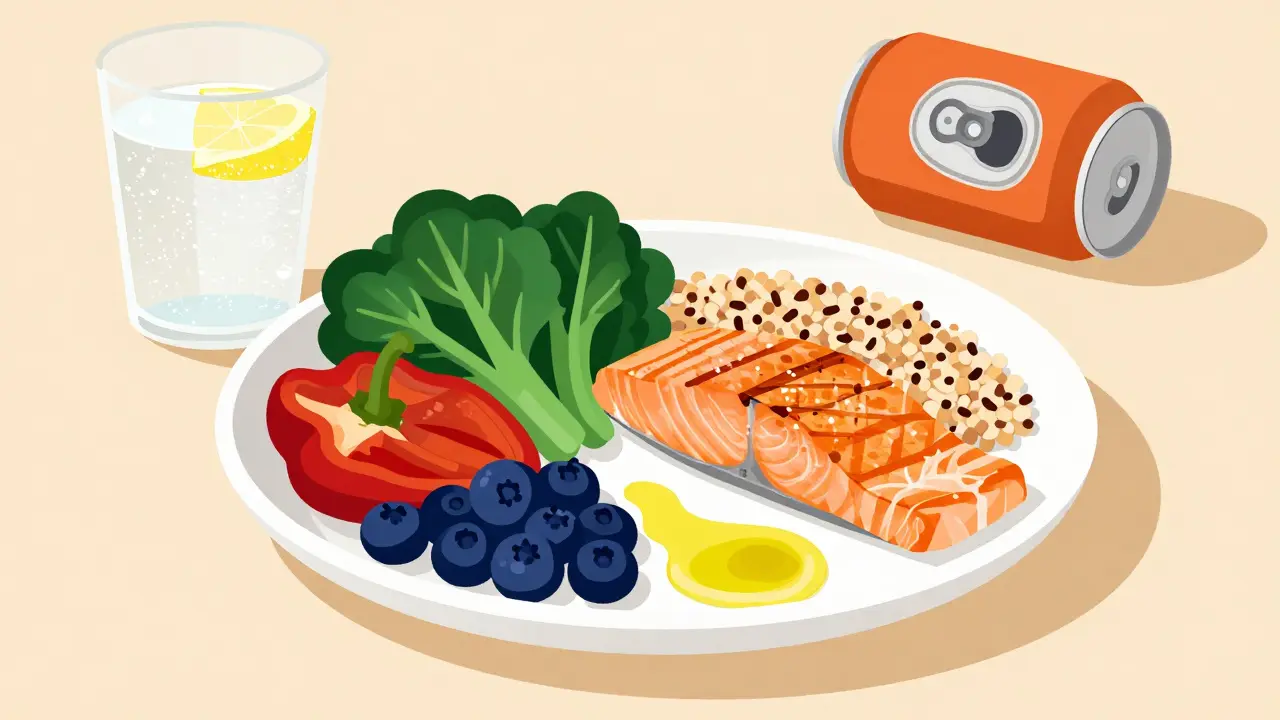
Think of your plate as a map for healing. The Harvard Healthy Eating Plate gives a simple visual: half your plate should be vegetables and fruits, one-quarter lean protein, and one-quarter whole grains. That’s it. No counting macros. No elimination phases.- Vegetables and fruits: Aim for at least 5 servings a day. Focus on color-dark greens, red peppers, purple eggplant, blueberries. These are packed with antioxidants like anthocyanins, which clinical trials show can cut liver inflammation by 25%. Cruciferous veggies like broccoli, Brussels sprouts, and kale contain indole-3-carbinol, a compound shown to reduce liver fat by 18% in six months.
- Whole grains: Choose brown rice, oats, quinoa, barley. They’re rich in fiber, which helps your liver process toxins and lowers insulin resistance. You need 25-30 grams of fiber daily. Most people get less than half that.
- Healthy fats: Olive oil is the star. Use it for cooking and dressing. It’s high in monounsaturated fats, which lower bad cholesterol and reduce fat storage in the liver. Nuts, especially walnuts, are a powerhouse-just 30 grams a day can drop LDL cholesterol by 15% in people with fatty liver.
- Lean protein: Fish (especially salmon, sardines, mackerel), skinless chicken, tofu, legumes. Aim for 3 ounces per meal-about the size of a deck of cards. Protein helps repair liver tissue and prevents muscle loss, which is critical if you have advanced disease.
What You Must Avoid
Some foods aren’t just unhealthy-they’re actively harmful to your liver. These aren’t suggestions. They’re deal-breakers.- Sugary drinks: Soda, sweetened tea, energy drinks, fruit juice. One 12-ounce can has 39 grams of sugar-more than your liver can safely process in a day. This sugar turns directly into liver fat. Studies show cutting these out alone can reduce liver fat by 20% in three months.
- Refined carbs: White bread, pastries, crackers, pasta made from refined flour. These spike blood sugar and insulin, which tells your liver to store fat. Limit them to less than 10% of your daily calories.
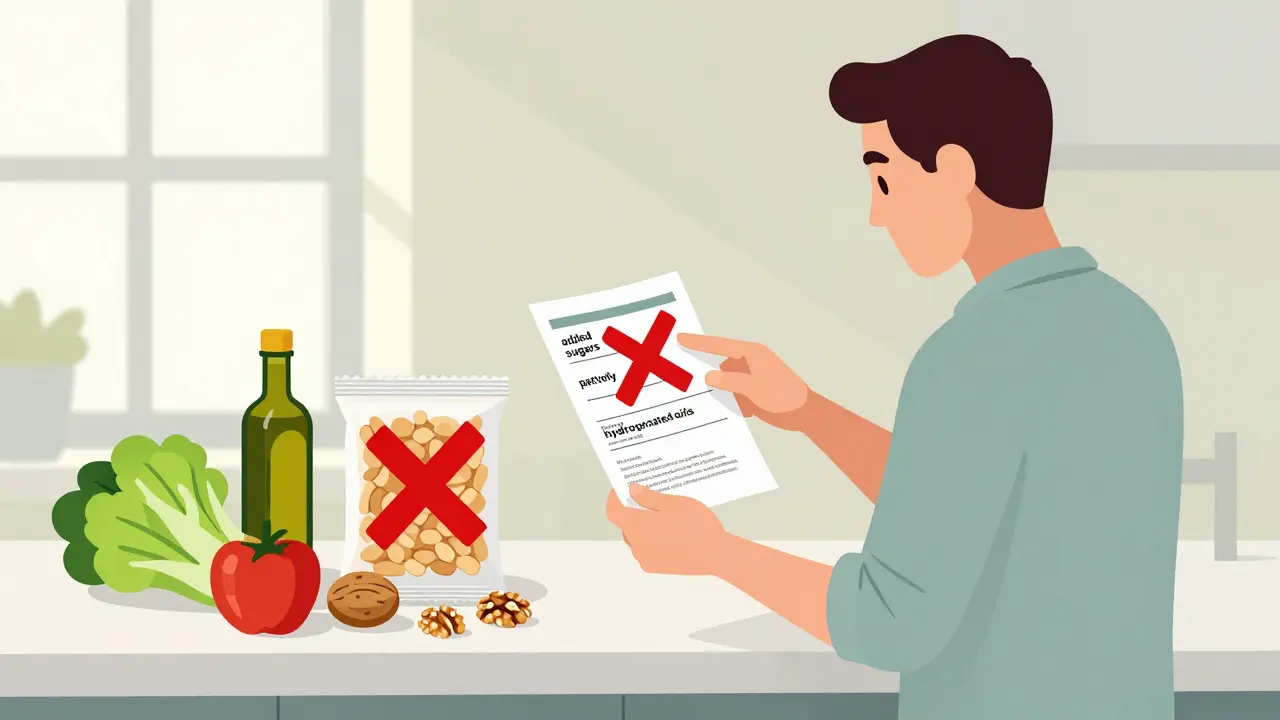
- Trans fats: Found in fried foods, packaged snacks, margarine, and anything labeled “partially hydrogenated oils.” These trigger inflammation and worsen fatty liver. Avoid them completely.
- Excess sodium: More than 2,000 mg a day can cause fluid buildup, especially if you have cirrhosis. Skip canned soups, processed meats, and restaurant meals. Cook at home and use herbs, lemon, or vinegar instead of salt.
Why Other Diets Don’t Work as Well
You’ve probably heard about keto, low-fat, or juice cleanses for liver health. Here’s the truth:- Keto diets: While they can help with weight loss, they’re high in saturated fats and low in fiber. A 2021 meta-analysis found they improve liver fat less than the Mediterranean diet and don’t reduce fibrosis as effectively.
- Low-fat diets: These often replace fat with sugar and refined carbs. That’s a disaster for the liver. One study showed low-fat diets produced 32% less liver fat reduction than the Mediterranean diet.
- Detoxes and juice cleanses: The American Liver Foundation says flat out: there’s zero scientific evidence they help. Your liver detoxes itself. You don’t need a $60 green juice to do it.
Real People, Real Results
John, 58, from Ohio, was diagnosed with stage 2 liver fibrosis. His FibroScan reading was 12.5 kPa-dangerously high. He started eating like a Mediterranean diet plan: daily vegetables, olive oil, fish three times a week, no sugar. Nine months later, his FibroScan dropped to 6.2 kPa. His ALT liver enzyme fell from 112 to 45. He didn’t take a pill. He changed his plate. On Reddit’s r/FattyLiver community, 68% of 1,247 people reported more energy within three months. But 42% said they struggled because healthy food costs more. A USDA analysis found Mediterranean meals average $1.50 more per serving than processed options. That’s a real barrier. That’s why successful people use tricks: buy frozen vegetables (just as nutritious, cheaper), cook in batches on Sundays, use lemon and garlic instead of salt, swap soda for sparkling water with lime. One woman on HealthUnlocked said cutting out all sugar gave her migraines. Her doctor adjusted her plan to allow 15 grams of natural sugar from berries a day. Flexibility matters.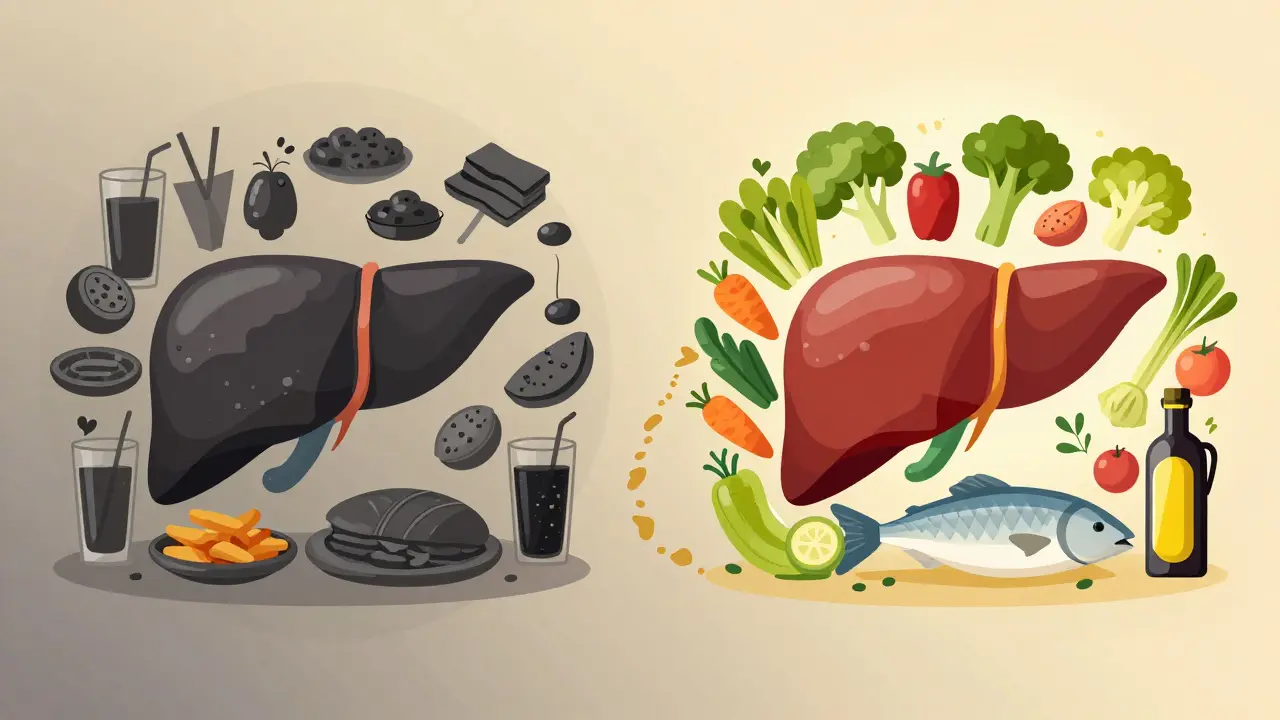
How to Start-Without Overwhelm
You don’t need to overhaul your life overnight. Start with one change.- Swap one drink: Replace your daily soda or juice with water, herbal tea, or sparkling water with lemon.
- Add one vegetable: Toss spinach into your eggs, add carrots to your soup, snack on bell peppers with hummus.
- Use olive oil: Drizzle it on roasted veggies, use it instead of butter on toast.
- Read labels: Look for “added sugars” and “partially hydrogenated oils.” If you can’t pronounce it, skip it.






This is one of the most grounded, science-backed pieces on liver health I’ve read in years. No hype, no detox scams-just clear, actionable advice. I’ve been following the Mediterranean pattern for eight months now, swapping soda for sparkling water with lime, and my ALT dropped from 89 to 41. No meds. Just food.
While the Mediterranean diet is indeed supported by robust clinical data, one must not overlook the confounding variables in these studies-namely, socioeconomic status, physical activity levels, and genetic predisposition. The 2013 Hepatology trial, for instance, excluded participants with comorbid metabolic syndrome, thereby skewing generalizability. Furthermore, the assertion that no supplement compares is misleading; N-acetylcysteine and vitamin E have demonstrated efficacy in NASH patients under controlled conditions. Caution against overgeneralization is warranted.
As someone who has worked with liver patients across five U.S. states, I can confirm that adherence to the Mediterranean pattern remains the single most effective non-pharmacological intervention we observe. The real challenge isn’t the science-it’s accessibility. In rural Appalachia and inner-city food deserts, fresh produce and olive oil are luxuries. Policy change must match clinical insight.
I cried reading John’s story. I was diagnosed with fatty liver last year. I thought I was doomed. Then I started eating like this-olive oil on everything, broccoli with every dinner, no more soda. Three months later, my doctor said, ‘This isn’t your liver anymore.’ I didn’t fix myself with a pill. I fixed it with a fork. And yeah-I’m still learning. But I’m alive. And I’m grateful.
Good stuff. I’ve been eating this way since my dad had cirrhosis. He didn’t make it, but I’m still here. I buy frozen spinach and peas-cheaper, same nutrients. I roast a big tray of veggies on Sunday. That’s my whole week done. No stress. No fancy apps. Just food that doesn’t fight you.
Wait-so you’re telling me the government and big pharma are hiding the truth about liver healing? That the real cure is olive oil and broccoli? And they’re making us pay for processed junk to keep us sick? I knew it. I’ve been avoiding ‘natural’ supplements since 2018. This makes sense now.
This is the kind of post that saves lives. I shared it with my mom-she’s 67, prediabetic, fatty liver. She started swapping soda for sparkling water yesterday. Said she feels lighter already. Small changes. Big results. Thank you.
Let us not be naive. The Mediterranean diet is a Western colonial construct repackaged as universal truth. In India, we’ve had turmeric, neem, and bitter gourd for millennia-foods that detoxify the liver without olive oil from Greece. Why does Western science get to define ‘evidence’? Why is our ancestral knowledge dismissed unless it’s validated by a journal in Boston? The real conspiracy is epistemic violence-forcing one dietary paradigm on a planet with 7,000 food cultures. I eat dal, brown rice, and bitter gourd every day. My liver is fine. No olive oil needed.
There are multiple grammatical and structural errors in this article that undermine its credibility. For instance, the sentence ‘You don’t need a miracle cure. You need a pattern of eating that works with your body, not against it.’ contains a dangling modifier-‘it’ lacks a clear antecedent. Additionally, the reference to ‘the Harvard Healthy Eating Plate’ is misleading; it is not an official dietary guideline but a visual tool developed by the Harvard School of Public Health, which is not synonymous with the U.S. Department of Agriculture. Furthermore, the phrase ‘one 12-ounce can has 39 grams of sugar’ should be ‘contains,’ not ‘has.’ Precision matters in medical communication.