Mouth Sore Prevention Calculator
Prevention Strategy Finder
Enter your treatment details to find the most effective way to prevent mouth sores during cancer treatment.
When you're undergoing cancer treatment, the last thing you want is to be in constant pain just trying to eat or talk. But for many people, medications meant to save their lives can cause a painful side effect: mouth sores and ulcers. This isn't just discomfort-it's a real medical condition called oral mucositis a predictable, inflammatory condition caused by direct damage to the lining of the mouth from chemotherapy or radiation. It affects anywhere from 20% to 100% of patients depending on the treatment, and severe cases can mean hospital stays, lost meals, and weeks of pain. The good news? Most of these sores can be prevented-if you know how.
Why Medications Cause Mouth Sores
Chemotherapy and radiation don’t just target cancer cells. They also hit fast-growing healthy cells, including the ones that line your mouth. These cells normally renew every few days. When treatment damages them faster than they can repair, the tissue breaks down, forming open sores. Radiation adds another layer: it dries out saliva, which normally protects and cleanses the mouth. Without enough saliva, even small irritations turn into painful ulcers.
This isn’t random. Certain drugs are more likely to cause it. Melphalan, 5-fluorouracil (5-FU), and high-dose methotrexate are big offenders. Radiotherapy to the head and neck carries the highest risk, especially if it’s given daily over several weeks. The severity is measured on a scale from 0 to 4. Grade 4 means you can’t eat or drink anything at all. That’s not just uncomfortable-it’s dangerous.
Prevention Is the Only Real Solution
Doctors used to treat mouth sores after they appeared. Now, they know better. Prevention is the only proven way to reduce the risk of severe oral mucositis. Once a sore forms, healing takes time-and there’s no magic cure. But starting the right steps before treatment even begins can cut your risk by half or more.
The Multinational Association of Supportive Care in Cancer (MASCC/ISOO) a global group that sets evidence-based guidelines for managing side effects of cancer treatment. recommends a prevention-first approach. Their 2020 guidelines say: don’t wait for pain. Act before it starts.
What Actually Works (And What Doesn’t)
Not all mouth rinses or gels are created equal. Some have solid proof. Others? Not so much.
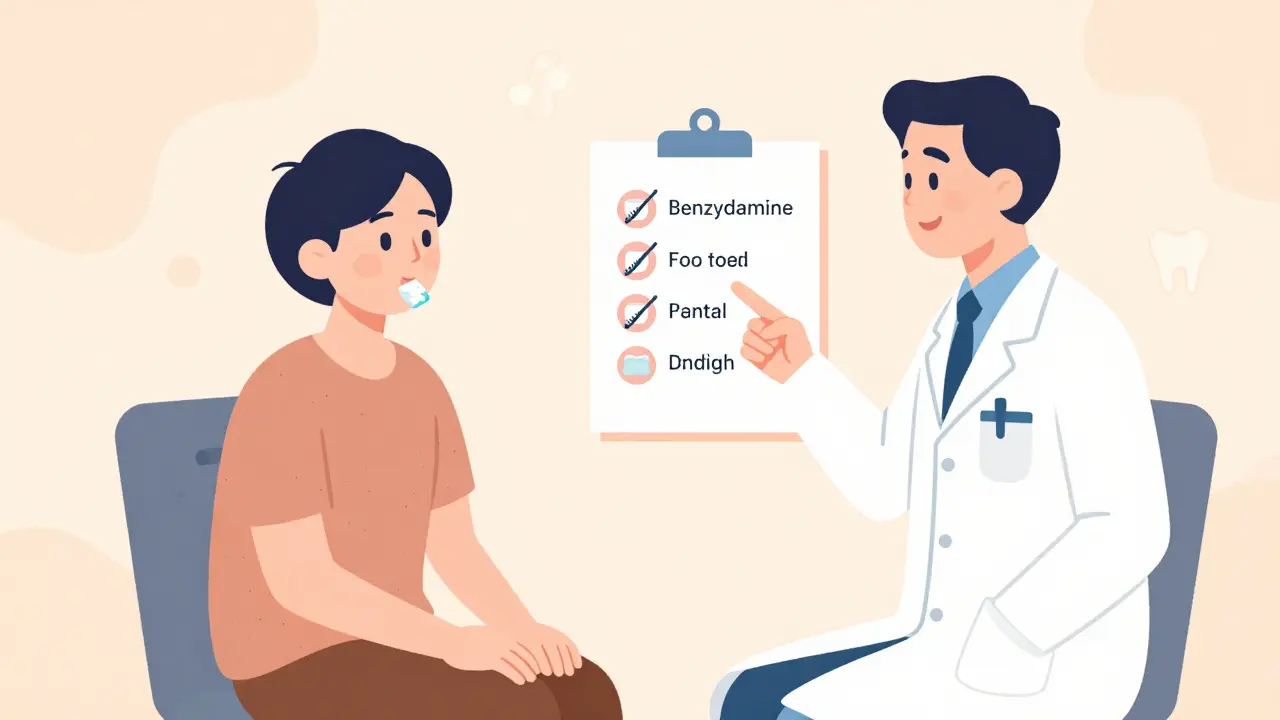
- Benzydamine hydrochloride 0.15% mouthwash - This is the gold standard for radiation patients. Used 3-4 times a day, starting before treatment, it cuts severe sores by 34%. It’s affordable-$15 to $25 per course-and doesn’t cause serious side effects. The only catch? If you’re allergic to aspirin, skip it. It’s an NSAID.
- Cryotherapy (ice chips) - For patients getting melphalan or 5-FU, sucking on ice chips for 30 minutes, starting 5 minutes before treatment, reduces severe mucositis by 50%. It’s free, simple, and effective. But it only works for short infusions. If your chemo runs for hours, ice won’t help. And some people can’t tolerate the cold. Still, 78% of users on cancer forums say it helped.
- Palifermin - This injectable drug is powerful. For stem cell transplant patients, it cuts severe sores from 63% down to 20%. But it costs over $10,000 per treatment. It’s only recommended for high-risk patients because of the price. Most uninsured people can’t get it.
- Glutamine - Some studies say 15 grams swished and swallowed 4 times a day helps. Others say it doesn’t. It only seems to work for people getting radiation for head and neck cancer. If you’re on chemo alone, skip it.
- Chlorhexidine - Many clinics still hand this out. But it only reduces risk by 15%. Worse, long-term use can stain your teeth brown. And 28% of users say it ruins their taste. It’s cheap, but not worth it.
- Gelclair - This gel coats your mouth and relieves pain for up to 4 hours. It’s not a preventer-it’s a pain reliever. But 71% of users say it gives immediate relief. The downside? It’s slimy. Some people can’t talk clearly after using it.
Here’s the truth: Allopurinol mouthwash a 500mg solution swished 4 times daily. shows promise for radiation patients, reducing severe sores by 40%. But there’s not enough data yet for chemo patients. And Low-level laser therapy (LLLT) a treatment using specific light wavelengths to reduce inflammation. is showing up in new studies. One 2023 trial cut severe mucositis from 41% to 18%. It’s not widely available yet, but it’s coming.
What You Should Do Before Treatment Starts
Don’t wait until your mouth is bleeding and you can’t swallow. Start now.
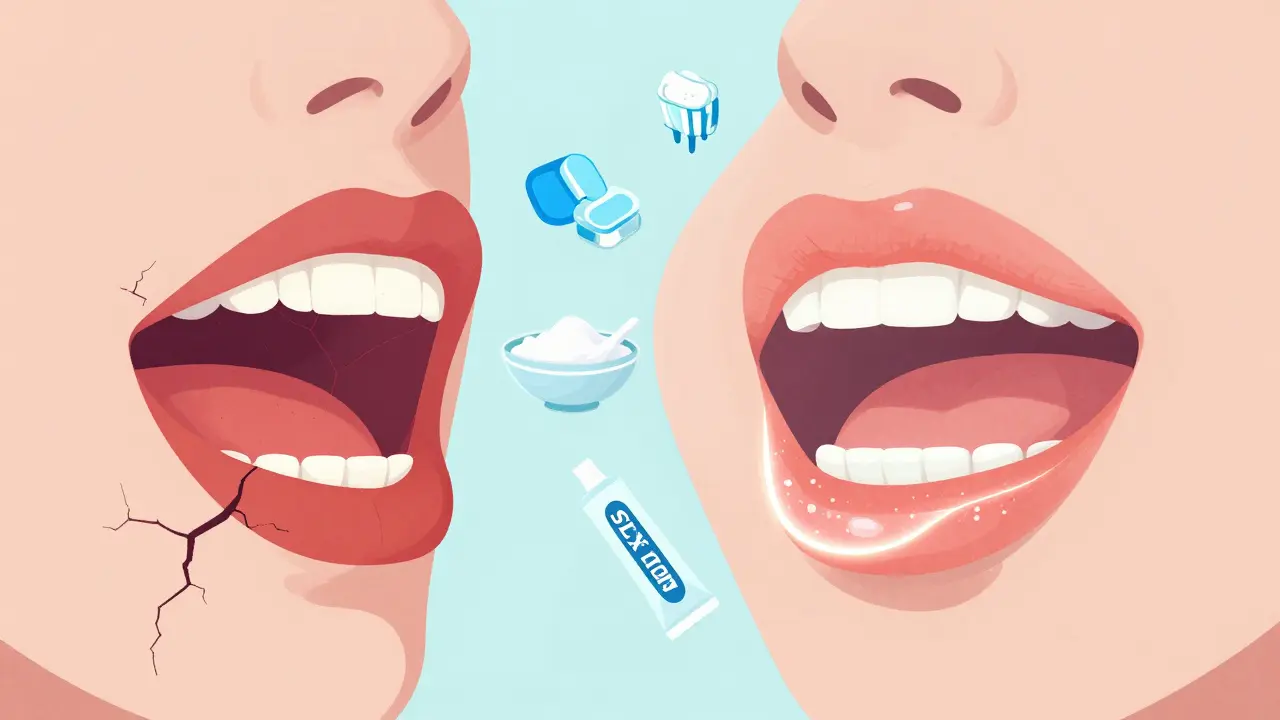
- See a dentist 2-4 weeks before treatment. Cavities, infected teeth, or loose fillings? Get them fixed. 78% of severe mouth sores are preventable with good pre-treatment dental care.
- Switch to a soft-bristle toothbrush. Look for one with bristles under 0.008 inches thick. Brush gently twice a day with fluoride toothpaste. Avoid anything with sodium lauryl sulfate-it’s in most toothpastes and makes sores worse.
- Rinse with baking soda water. Mix 1 teaspoon of baking soda in 8 ounces of warm water. Swish after meals. It neutralizes acid and keeps your mouth clean.
- Stay hydrated. Dry mouth is a major problem. Use artificial saliva like Biotene or take pilocarpine 5mg tablets three times a day. It boosts saliva flow by 47%.
- Ask your oncologist about your chemo drug. If you’re getting melphalan or 5-FU, ask about ice chips. If you’re getting radiation, ask about benzydamine. Don’t assume they’ll bring it up.
What to Avoid
Some things make mouth sores worse. Skip these:
- Alcohol-based mouthwashes
- Spicy, acidic, or crunchy foods
- Hot drinks
- Tobacco and alcohol
- Sodium lauryl sulfate toothpaste
- Over-the-counter numbing gels with benzocaine (FDA warns against them for children under 2, but adults should still avoid them unless prescribed)
And here’s one big mistake: using antibiotics to prevent sores. A 2021 study found this increased the risk of Clostridium difficile a dangerous bacterial infection that causes severe diarrhea. by 27%. Don’t do it.
Real People, Real Experiences
On cancer forums, people share what actually works.
- “I used ice chips during 5-FU. It hurt my teeth at first, but I didn’t get any ulcers. Worth it.” - Reddit user, 2024
- “Gelclair saved me. I could eat soup again. The texture was weird, but I didn’t care.” - CancerCare forum, 2023
- “My dentist said I had a loose tooth. Got it pulled before chemo. I didn’t get one sore.” - Patient survey, Oral Cancer Foundation
- “I tried glutamine. Swished it for 2 minutes like they said. Didn’t help. I stopped.” - HealthUnlocked user
One thing everyone agrees on: start early. If you wait until your mouth is burning, it’s too late.
The Future of Prevention
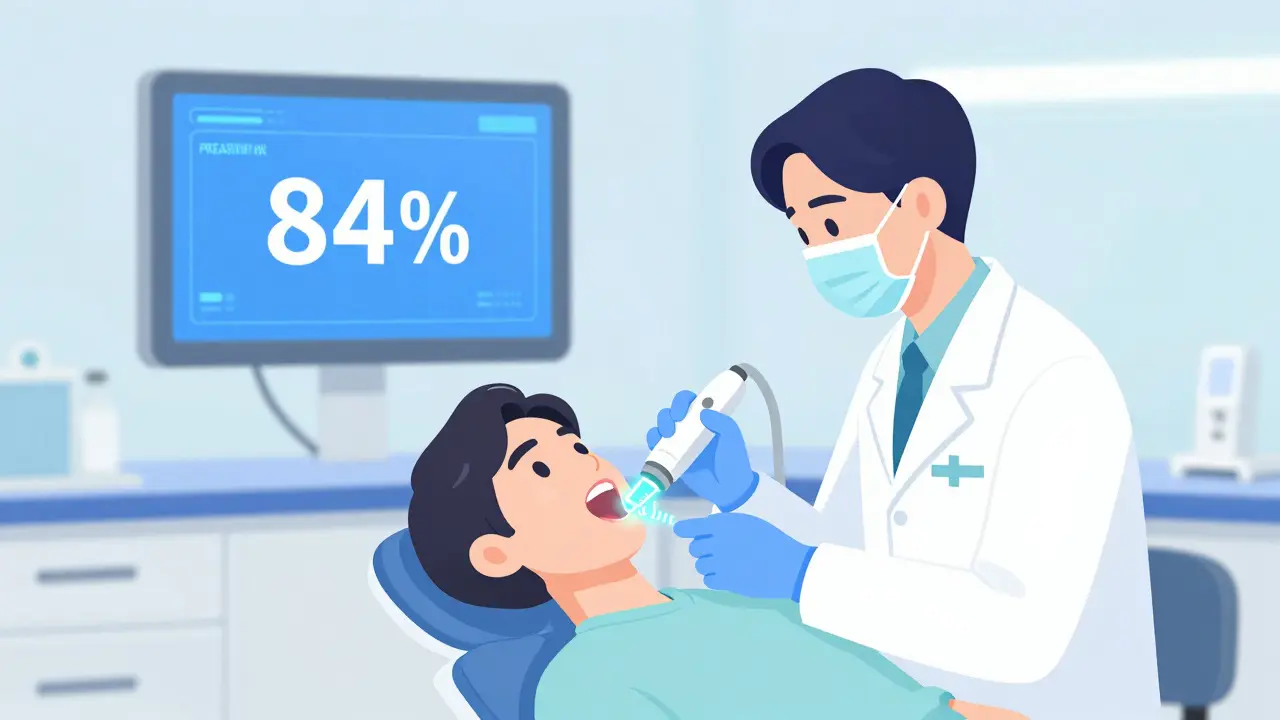
Researchers are getting smarter. Memorial Sloan Kettering built a tool that predicts who’s most likely to get severe mouth sores-using 12 factors like age, cancer type, and drug dose. It’s 84% accurate. Soon, doctors won’t guess. They’ll know.
New drugs are in trials too. GC4419, a mouth rinse that fights inflammation at the cellular level, cut severe mucositis duration by 38% in a 2024 study. It’s not available yet, but it’s coming.
The goal isn’t just to survive treatment. It’s to live through it without being crippled by pain. Prevention isn’t optional. It’s essential.
Can mouth sores from chemo be completely prevented?
Not always, but the risk can be cut in half or more with the right steps. Using ice chips for melphalan or 5-FU, benzydamine for radiation, and good dental care before treatment can reduce severe cases from 60-80% down to 10-20%. Prevention is the only proven method-there’s no cure once sores form.
Is it safe to use chlorhexidine mouthwash long-term?
No. While it’s commonly prescribed, chlorhexidine only reduces mouth sores by 15% and can cause permanent brown stains on teeth. It may also alter taste, which affects nutrition. The European Medicines Agency limits concentrations to 0.2% because of this. Use it only if your doctor says so, and avoid long-term use.
Why do some people get mouth sores and others don’t?
It depends on the type of treatment, the drugs used, and individual factors like genetics, oral health, and saliva production. People with poor dental health, dry mouth, or who smoke are at higher risk. New tools can now predict risk with 84% accuracy by analyzing 12 clinical factors before treatment starts.
Can I use regular toothpaste if I have mouth sores?
No. Most toothpastes contain sodium lauryl sulfate (SLS), which irritates sores and makes them worse. Switch to an SLS-free toothpaste. Look for brands labeled ‘for sensitive mouths’ or ‘no SLS.’ Fluoride is still important-just avoid the harsh foaming agents.
What should I do if I already have a mouth ulcer?
Focus on pain relief and avoiding further damage. Use Gelclair or a saltwater rinse. Avoid spicy, acidic, or hot foods. Stay hydrated. Don’t pick at the sore. If it doesn’t improve in a few days or if you can’t eat, contact your oncology team. They may prescribe dexamethasone mouthwash, which reduces pain by 37%.
Is there a difference between mouth sores from chemo vs. radiation?
Yes. Chemo causes sores by killing fast-growing cells, while radiation also damages blood vessels and dries out saliva. Radiation sores often appear later and last longer. Prevention strategies differ too: ice chips help with certain chemo drugs, but benzydamine and allopurinol are more effective for radiation. The cause affects the solution.
Can I use natural remedies like aloe vera or honey?
There’s no strong evidence that aloe vera or honey prevents or heals mucositis. Some patients report comfort, but they’re not backed by clinical trials. If you use them, make sure they’re sterile and don’t replace proven treatments like benzydamine or cryotherapy. Never use honey on children under 1 due to botulism risk.
How long do mouth sores last after treatment ends?
They usually start healing within 1-2 weeks after treatment ends, but full recovery can take 4-6 weeks. Radiation damage can linger longer. If sores persist beyond 6 weeks, see your dentist. There may be an infection, a dental issue, or another underlying problem.




Just wanted to say thanks for this post. I’m a nurse who’s seen this firsthand, and honestly? Most patients have no clue what to do until it’s too late. The ice chip trick for 5-FU? Game changer. My mom did it during her treatment and barely got any sores. Just wish more docs told people this stuff before they start chemo.
Benzydamine? That’s a UK-approved drug. Why are Americans still using chlorhexidine like it’s 1998? We’ve known for over a decade this stuff stains teeth and does jack squat for prevention. It’s like prescribing aspirin for a heart attack and calling it progress. Shameful.
Glutamine is a scam. I’ve read every study. The ones that say it works? Funded by supplement companies. The ones that don’t? Published in real journals. Stop wasting money on powders you mix with water. If it worked, Big Pharma would’ve patented it already.
Let me just say - if you’re taking methotrexate and you didn’t get a dental clearance before treatment, you’re not a patient. You’re a liability. Your dentist isn’t just checking for cavities - they’re preventing ICU admissions. This isn’t a suggestion. It’s a medical necessity. And yet, 80% of oncologists don’t even bring it up. Pathetic.
Why is this even a thing? Why do we let drugs that destroy your mouth be the standard? Who decided that collateral damage to your oral mucosa is an acceptable trade-off? This isn’t medicine - it’s triage with a side of suffering. And now we’re just teaching people how to suffer better? I’m not impressed.
Look, I get it. You’re all excited about ice chips and baking soda rinses. But let’s be real - this is just a Band-Aid on a bullet wound. The real problem? Cancer treatment is still barbaric. We’re using 1970s chemotherapy protocols on 2024 patients. We have targeted therapies, immunotherapies, gene editing - and yet we still let people suffer through mouth sores like they’re in a medieval torture chamber. Cryotherapy? Cute. But if you really cared, you’d stop using 5-FU altogether. It’s outdated. It’s toxic. And it’s not even that effective anymore. We need better drugs - not better mouthwash.
Did you know the FDA approved palifermin because of lobbying from pharmaceutical giants? The real reason it’s so expensive? Because they want you to think it’s the only solution. Meanwhile, the same companies that sell you $10k injections are also the ones who made the chemo drugs that cause the sores in the first place. It’s a pyramid scheme. You pay to fix what they broke. Wake up.
Chlorhexidine stains teeth? So what? At least it reduces infection risk. I’ve seen patients with sepsis from oral ulcers. You think a brown tooth is worse than dying? You’re not protecting your mouth - you’re protecting your vanity. This isn’t a spa day. It’s chemotherapy. Stop whining and start surviving.
Life is pain. But pain can be a teacher. I lost my mom to cancer. She used Gelclair. Said it felt like a hug for her mouth. I didn’t believe it until I saw her eat soup again after 3 weeks of nothing. That’s not science. That’s grace. And yeah, it’s slimy. But sometimes grace is slimy. And that’s okay. ❤️
My uncle had radiation for throat cancer. He didn’t do any of this. Just kept drinking ginger tea and eating mashed potatoes. No sores. Zero. He’s 78 and still hiking. I’m not saying skip the science - but don’t assume everyone needs a 12-step protocol. Some people’s bodies just handle it better. Maybe the real secret is stress reduction? Sleep? Not being terrified every day? Just a thought.
Thank you for writing this. It’s rare to see something so practical and kind. I’m a caregiver, and honestly? I’ve been overwhelmed. This gives me a roadmap. I’m printing it out. I’m giving it to my sister’s oncologist. I’m telling everyone I know. You didn’t just share info - you gave people back a little dignity. That’s rare. Thank you.
There’s a deeper truth here. We treat cancer like a war. But the body isn’t a battlefield. It’s a symphony. When you blast fast-dividing cells with chemo, you’re not just killing cancer - you’re silencing the harmony. The mouth sores? They’re not side effects. They’re a scream from the system saying: ‘I’m not designed for this.’ Maybe the real cure isn’t more rinses or ice chips. Maybe it’s learning to heal the body without breaking it. We’re fighting the wrong war.