Imagine you’re in severe pain. Maybe it’s from a broken bone, or perhaps it’s the nagging, unrelenting ache of chronic back issues that won’t let you sleep. You ask your doctor for help, and they hand you a prescription for opioids. It works-fast. The pain fades. But then comes the hard part: what happens next? Do you keep taking them? What if you need them for months? And more importantly, how do you know if you’re becoming dependent?
This is the reality for millions of people dealing with pain in the United States. Opioids are powerful tools, but they come with serious risks. In 2021 alone, there were over 80,000 opioid-related overdose deaths. That number isn’t just statistics; it represents lives cut short by misuse, addiction, or accidental overdose. So, when is opioid therapy actually appropriate? And how can patients and doctors navigate the fine line between relief and risk?
When Are Opioids Actually Appropriate?
Let’s get one thing straight right away: opioids are not first-line treatments for most types of pain. According to the Centers for Disease Control and Prevention (CDC), which published its updated Clinical Practice Guideline for Prescribing Opioids for Pain in November 2022, non-opioid therapies should always be tried first. This means physical therapy, anti-inflammatory drugs like ibuprofen, nerve pain medications, or even cognitive behavioral therapy.
Opioids make sense only in specific situations. For example, they’re highly effective for severe acute pain-think major surgery, a bad car accident, or a complex fracture. In these cases, short-term use (usually less than a week) helps patients recover without long-term risks. Massachusetts General Hospital’s guidelines echo this, stating that opioids should be “the last consideration” for acute pain unless other options fail.
For chronic pain-pain lasting longer than three months-the rules change slightly. Here, opioids may be considered only after non-pharmacologic and non-opioid pharmacologic treatments have failed. The Veterans Affairs/Department of Defense (VA/DoD) Clinical Practice Guideline emphasizes that even then, opioids must be used cautiously. They’re not meant to cure pain but to improve function and quality of life when nothing else works.
It’s also crucial to note what opioids are *not* for. The CDC explicitly excludes conditions like cancer pain, palliative care, sickle cell disease, and end-of-life care from its general guidelines because those scenarios require specialized approaches. If you fall into one of these categories, talk to a specialist who understands the nuances of your condition.
Understanding Dependence vs. Addiction
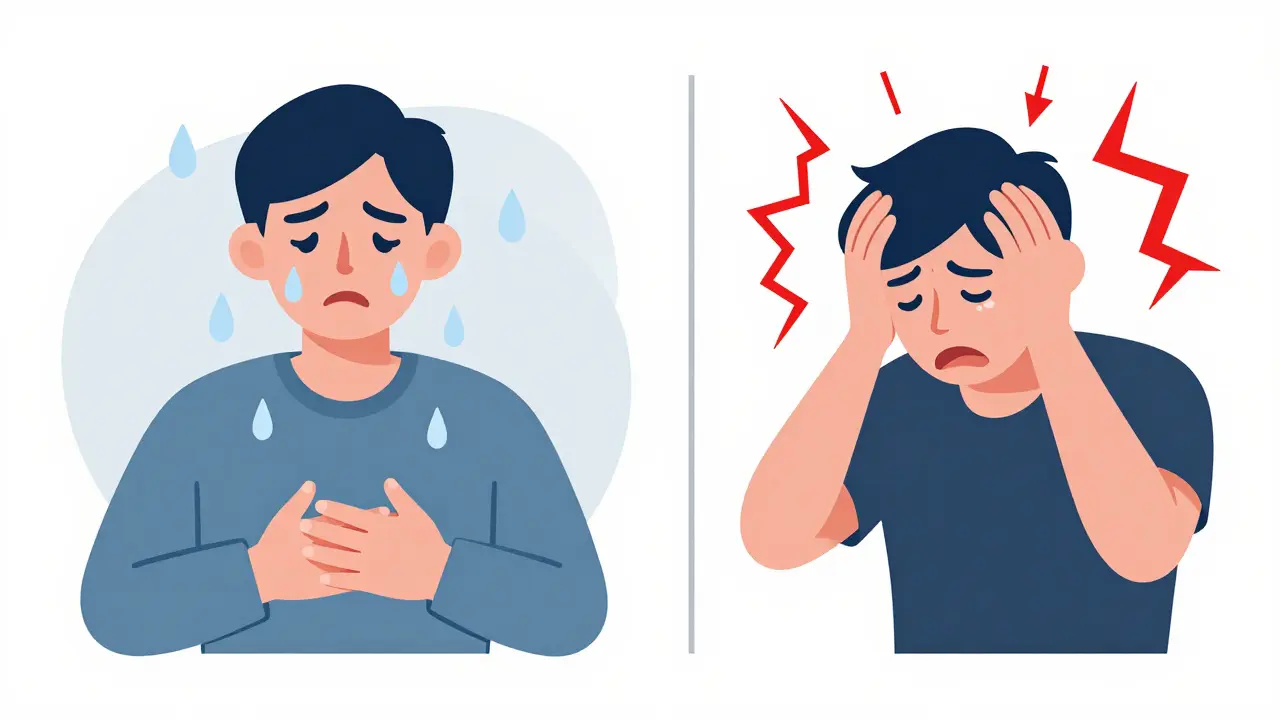
Here’s where things get tricky. Many people confuse physical dependence with addiction, but they’re two very different things. Physical dependence means your body gets used to the drug. If you stop suddenly, you’ll experience withdrawal symptoms like sweating, nausea, anxiety, and insomnia. This doesn’t mean you’re an addict-it just means your nervous system has adapted to the medication.
Addiction, on the other hand, involves compulsive use despite harm. It’s characterized by cravings, loss of control, and continuing to take the drug even when it causes problems in your life. The American Society of Addiction Medicine notes that genetic factors account for 40-60% of vulnerability to addiction, meaning some people are simply at higher risk than others.
The scary part? About 8-12% of patients prescribed opioids for chronic pain develop opioid use disorder (OUD). Among those taking high doses-100 morphine milligram equivalents (MME) per day or more-that risk jumps to 26%. These numbers highlight why careful monitoring is essential.
Risk Factors That Increase Danger
Not everyone faces the same level of risk when using opioids. Several factors can significantly increase the likelihood of overdose or developing OUD:
- Dose matters: Overdose risk increases by 8% for every additional 10 MME/day between 20-50 MME and by 11% for each extra 10 MME between 50-100 MME.
- Benzodiazepines: Taking benzodiazepines alongside opioids multiplies the danger. Studies show concurrent use raises overdose risk by up to 10.5 times compared to opioids alone.
- History of substance abuse: People with past substance use disorders face a 3.5-times-higher risk of problematic opioid use.
- Age: Older adults (65+) metabolize drugs differently due to decreased kidney and liver function, making them more susceptible to side effects.
If any of these apply to you, work closely with your healthcare provider to create a safe plan. Sometimes, co-prescribing naloxone-a medication that reverses overdoses-is recommended as a precautionary measure.
Monitoring Protocols: Keeping Things Safe
Starting opioid therapy isn’t a set-it-and-forget-it deal. Regular check-ins are critical to ensure benefits outweigh harms. The VA/DoD guideline suggests evaluating stable patients at least quarterly, while high-risk individuals should be seen monthly. During these visits, expect assessments of:
- Pain intensity (on a scale of 0-10)
- Functional status (can you walk, work, or enjoy daily activities?)
- Medication adherence (via urine drug testing)
- Signs of aberrant behavior (using tools like the Current Opioid Misuse Measure)
Kaiser Permanente’s Chronic Opioid Therapy Safety Guideline adds another layer: tapering protocols. If your dose exceeds 90 MME/day or if you’re not seeing functional improvement, gradual reduction might be necessary. Slow tapers involve cutting back 2-5% every 4-8 weeks, whereas rapid tapers reduce doses by 10% weekly under close supervision.
Abruptly stopping opioids can lead to severe withdrawal symptoms and potentially push someone toward illicit substances. Always collaborate with your doctor to adjust your regimen safely.

Navigating Implementation Challenges
Even with clear guidelines, putting them into practice isn’t easy. A 2021 study found that only 37% of primary care providers consistently use validated risk assessment tools before starting opioid therapy. Time constraints, inadequate training, and lack of resources contribute to inconsistent implementation.
In emergency departments, 68% of physicians cite “lack of time” as their biggest hurdle, while 52% admit insufficient training in mitigating opioid risks. Meanwhile, nearly half of patients prescribed opioids for acute pain receive more pills than needed, leaving unused medications sitting in home medicine cabinets-and increasing diversion risks.
To combat this, many hospitals now have standing orders for naloxone, bringing coverage up to 51% nationwide. Prescription Drug Monitoring Programs (PDMPs) help track prescriptions across states, reducing duplicate fills and identifying potential red flags early.
The Future of Pain Management
While opioids remain important in certain contexts, the future points toward alternatives. The National Institutes of Health HEAL Initiative has invested $1.5 billion annually since 2018 into researching non-addictive pain solutions. As of late 2023, 37 novel non-opioid analgesics are in Phase II/III clinical trials, offering hope for safer treatments down the road.
For now, though, we rely on balancing proven methods with emerging innovations. Whether through expanded access to physical therapy, mental health support, or new classes of medications, the goal remains the same: relieving suffering without compromising safety.
Are opioids ever appropriate for long-term pain management?
Yes, but only after trying non-opioid therapies first. Long-term opioid use should be reserved for cases where benefits clearly outweigh risks, such as improving mobility or enabling participation in daily activities. Doses typically stay below 50 MME/day, with stricter limits above 90 MME/day.
What’s the difference between physical dependence and addiction?
Physical dependence occurs when your body adapts to a drug, causing withdrawal symptoms upon discontinuation. Addiction involves compulsive use despite negative consequences, driven by psychological cravings rather than physiological needs.
How often should I see my doctor while on opioids?
Stable patients usually meet quarterly, while high-risk individuals need monthly evaluations. Assessments include pain levels, functionality, medication compliance, and screening for misuse behaviors.
Can I combine opioids with benzodiazepines?
Combining opioids with benzodiazepines drastically increases overdose risk-up to 10.5 times higher. Avoid mixing these unless absolutely necessary and under strict medical supervision.
What happens if I stop taking opioids abruptly?
Stopping suddenly can trigger intense withdrawal symptoms, including nausea, anxiety, and insomnia. Gradual tapering plans developed with your doctor minimize discomfort and prevent relapse.