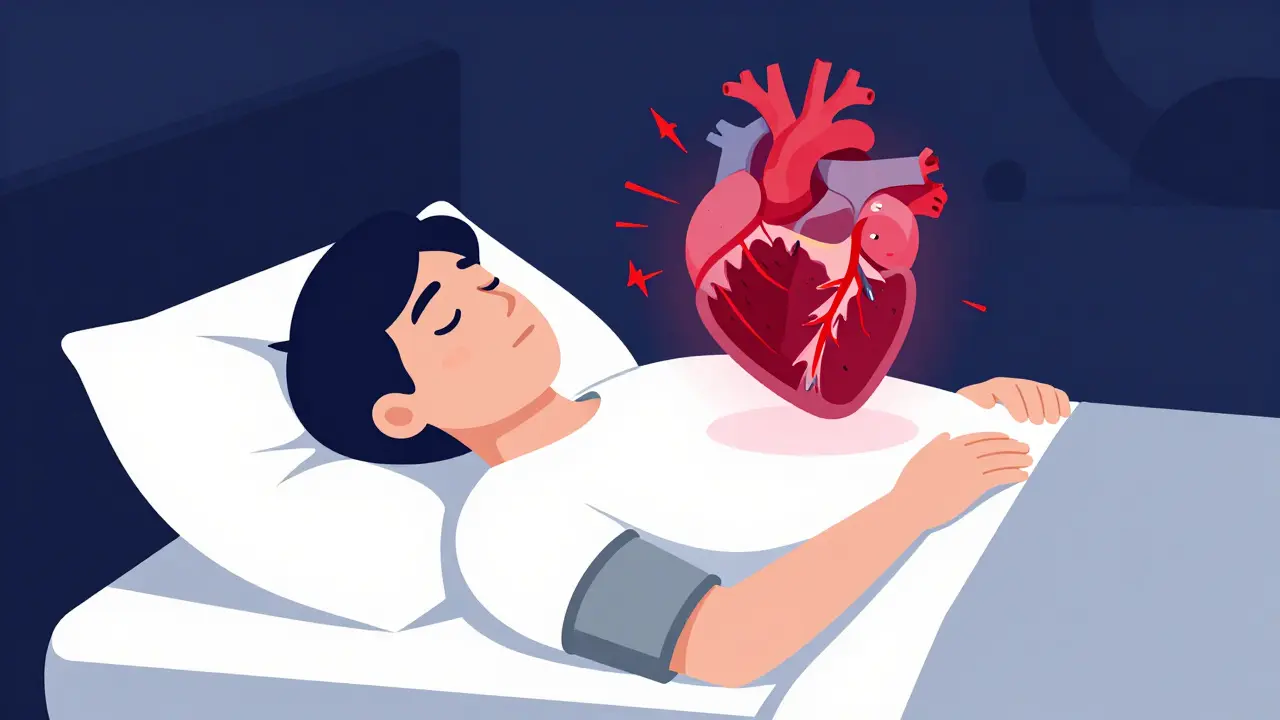
Your heart doesn't take a break when you close your eyes. In fact, for millions of people, the night is when their cardiovascular system faces its biggest stress test. If you have sleep apnea, a condition where breathing repeatedly stops and starts during sleep, your body is essentially fighting for oxygen while you rest. This isn't just about snoring or feeling tired in the morning. It is a direct pipeline to high blood pressure, heart attacks, and stroke.
We often think of heart disease as something caused by bad diet or lack of exercise. But there is a silent partner in many cases of cardiovascular failure that goes undiagnosed in up to 80% of moderate-to-severe cases. Understanding this link is not just academic; it is the difference between managing a chronic condition and surviving a medical emergency.
The Silent Mechanism: How Breathing Stops Hurt Your Heart
To understand why sleep apnea damages the heart, we have to look at what happens inside your chest during an apneic event. When your airway collapses (in obstructive sleep apnea) or your brain fails to signal breathing (in central sleep apnea), oxygen levels drop sharply. This state, known as hypoxemia, triggers a panic response in your nervous system.
Your sympathetic nervous system floods your body with catecholamines-stress hormones like adrenaline. Studies from the European Society of Cardiology show these hormone levels can be two to four times higher during sleep in people with untreated sleep apnea compared to healthy sleepers. Imagine running a marathon every time you stop breathing for ten seconds. Now imagine doing that hundreds of times a night.
This constant surge does three specific things to your cardiovascular system:
- Increases Afterload: As you struggle to breathe against a closed airway, you create negative pressure in your chest. This forces the heart to pump harder, increasing cardiac afterload by 30-50%.
- Triggers Inflammation: Chronic low oxygen raises C-reactive protein levels by 35-50%, damaging the lining of your blood vessels (endothelial dysfunction).
- Causes Oxidative Stress: The lack of oxygen creates free radicals, leading to oxidative stress markers that are two to three times higher than in controls.
The result is stiffened arteries and a heart that works overtime, even when you are lying still.
Blood Pressure: The Most Immediate Consequence
If you have high blood pressure that refuses to budge despite medication, doctors call it "resistant hypertension." Sleep apnea is present in up to 80% of patients with this condition. The connection is so strong that the American Heart Association now considers moderate-to-severe sleep apnea an independent risk factor for hypertension.
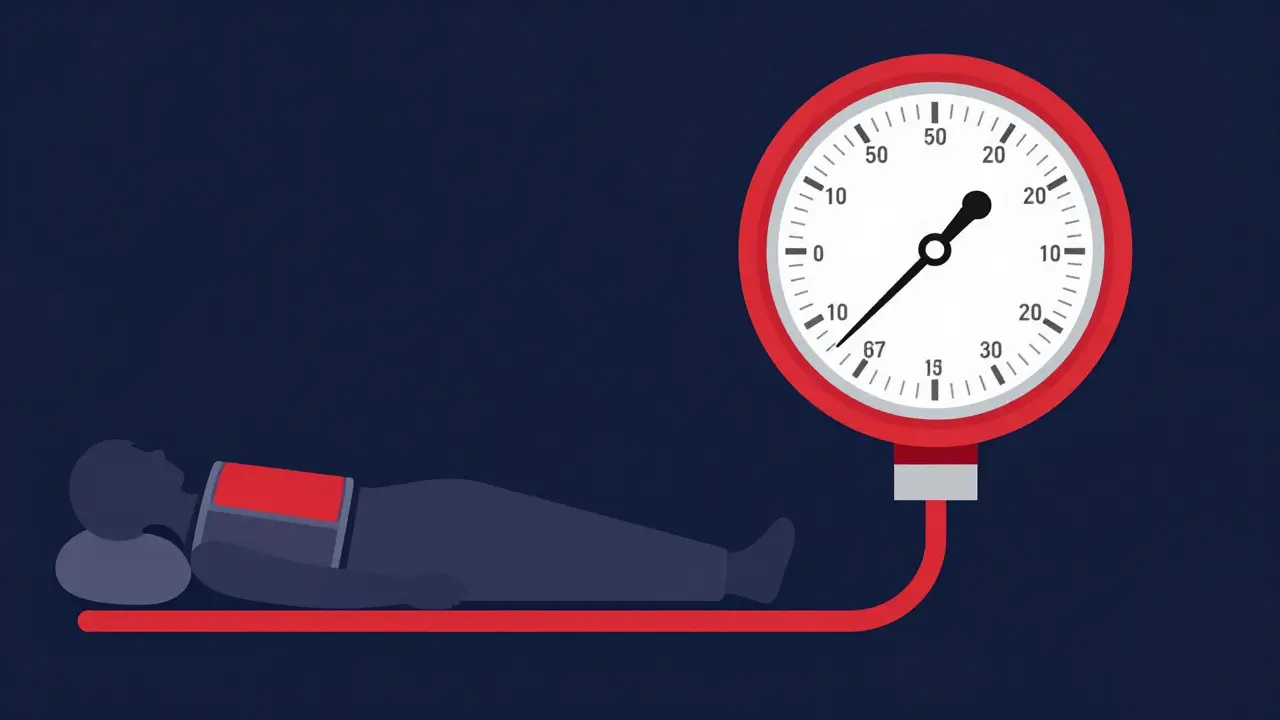
Normally, your blood pressure drops by 10-20% at night-a pattern called "dipping." This rest period is crucial for vascular health. However, 70-80% of people with obstructive sleep apnea lose this dip. Their blood pressure stays high or even rises overnight (reverse-dipping). This nocturnal hypertension is a stronger predictor of heart attacks and strokes than daytime readings alone.
Data from the Wisconsin Sleep Cohort Study shows that people with sleep apnea are two to three times more likely to develop hypertension within four to five years. For younger adults aged 20-40, the impact is even more alarming. A 2024 study from UT Southwestern found that young adults with sleep apnea symptoms had a 45% higher likelihood of developing hypertension compared to their peers without the disorder. This suggests that sleep apnea accelerates cardiovascular aging, hitting hard before traditional risk factors usually take hold.
Heart Attack and Stroke Risks
The damage extends beyond pressure. The inflammation and stress on the arterial walls make them prone to plaque buildup and rupture. Moderate-to-severe sleep apnea increases the risk of coronary artery disease by 30%. More specifically, it raises the incidence of myocardial infarction (heart attack) by 1.3 times and fatal coronary events by 1.6 times.
The timing of these events is telling. Research analyzing data from nearly 10,000 adults found that 26.5% of heart attacks in sleep apnea patients occurred between midnight and 6 AM, compared to only 16.5% in those without the disorder. This early morning window coincides with the highest frequency of apneic episodes and the greatest surge in blood pressure upon waking.
Stroke risk is equally severe. Obstructive sleep apnea increases the risk of a first-time stroke by 2.5 times and the risk of recurrent stroke by 3.2 times. The severity matters here too: if your oxygen saturation drops below 90% for more than 12% of your sleep time, your risk of stroke-related mortality jumps by 4.3 times. This is not a minor correlation; it is a life-threatening multiplier.
Heart Failure and Arrhythmias
Heart failure and sleep apnea share a bidirectional relationship. They feed each other. About 40-60% of people with heart failure also have sleep apnea, and having sleep apnea increases your risk of developing heart failure by 140%. The strain on the right side of the heart from lung pressure changes, combined with the left-side strain from high blood pressure, eventually leads to structural remodeling and failure.
Electrical instability is another major concern. The erratic oxygen levels and autonomic nervous system swings disrupt the heart's electrical rhythm. People with sleep apnea are two to four times more likely to develop atrial fibrillation (AFib). In fact, nearly half (49%) of patients with paroxysmal AFib have undiagnosed sleep apnea, compared to just 21% of the general population. Untreated sleep apnea also makes treatments for AFib less effective, reducing the success rate of catheter ablation by 30%.
| Condition | Risk Increase / Prevalence | Key Statistic |
|---|---|---|
| Hypertension | 2-3x higher risk of development | Present in 80% of resistant hypertension cases |
| Coronary Artery Disease | 30% increased risk | 1.6x higher risk of fatal events |
| Stroke | 2.5x higher incident risk | 3.2x higher recurrence risk |
| Heart Failure | 140% increased risk | 40-60% comorbidity rate |
| Atrial Fibrillation | 2-4x higher likelihood | 49% prevalence in paroxysmal AFib patients |
Diagnosis and Treatment Realities
Recognizing the problem is the first step, but diagnosis remains a hurdle. While polysomnography (an overnight lab study) is the gold standard, it is expensive and hard to access. Home sleep apnea tests are more common, offering 85-90% sensitivity for moderate-to-severe cases, though they miss many mild cases. Doctors increasingly use screening tools like the STOP-Bang questionnaire in cardiology clinics to flag high-risk patients.
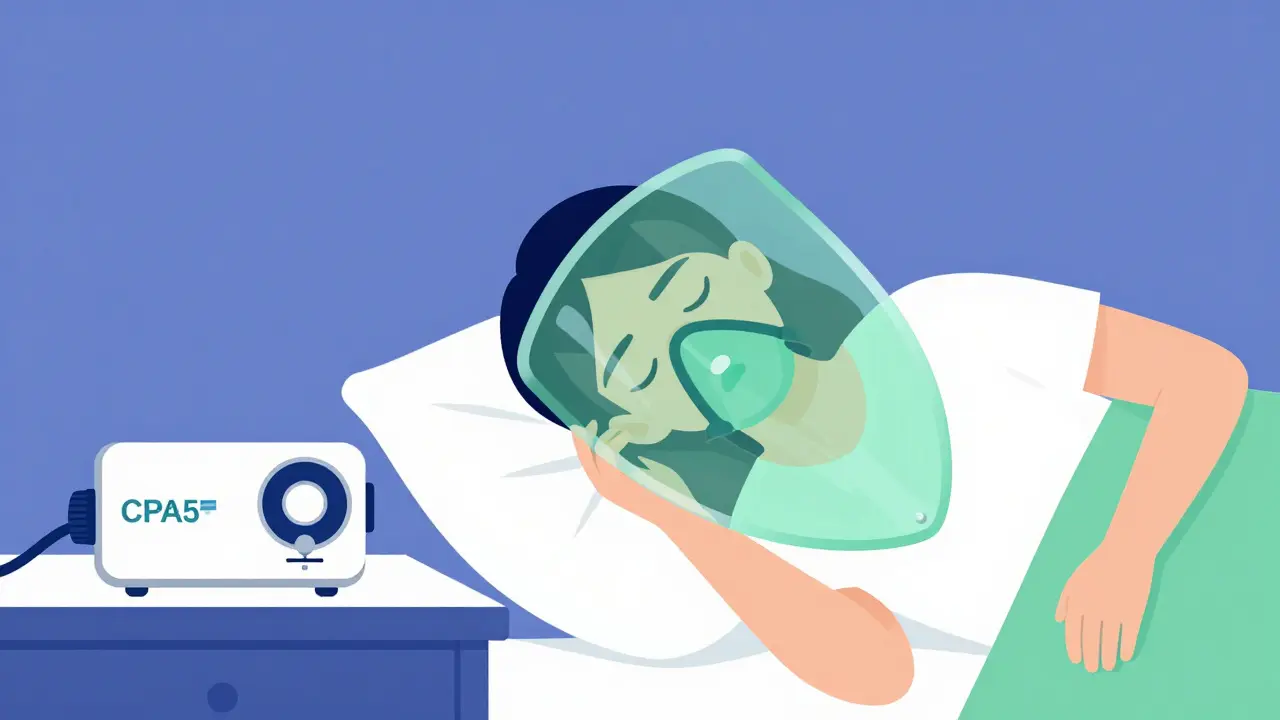
Treatment typically involves Continuous Positive Airway Pressure (CPAP, a machine that delivers pressurized air to keep the airway open). The reality of CPAP's impact on heart health is nuanced. Meta-analyses show it reduces blood pressure modestly by 2-3 mmHg in hypertensive patients. However, its benefits elsewhere are profound. CPAP therapy reduces stroke recurrence by 37% and significantly improves outcomes in heart failure patients with central sleep apnea.
The biggest challenge is adherence. Only 46% of users maintain adequate compliance (using the device for at least four hours a night, 70% of nights). Without consistent use, the cardiovascular protection vanishes. Emerging research emphasizes integrated care models where cardiologists, pulmonologists, and sleep specialists work together. For patients with suboptimal responses to standard heart medications, checking for sleep apnea should be a routine next step, not an afterthought.
When to Suspect Sleep Apnea
You do not need to be overweight to have sleep apnea, although obesity is a major risk factor linked to 70% of cases. Look for these signs in yourself or a partner:
- Loud, chronic snoring followed by gasping or choking sounds.
- Excessive daytime sleepiness, especially falling asleep while driving or watching TV.
- Morning headaches or dry mouth.
- Resistant high blood pressure or new-onset atrial fibrillation.
- Witnessed pauses in breathing during sleep.
If you have any of these, particularly combined with existing heart conditions, ask your doctor for a sleep study. Treating sleep apnea is not just about better rest; it is one of the most effective ways to protect your heart from premature failure.
Does treating sleep apnea reverse heart damage?
Treating sleep apnea with CPAP can improve blood pressure control and reduce the risk of future events like stroke and heart failure progression. While it may not fully reverse established structural damage to the heart muscle, it stops the ongoing nightly stress and inflammation, allowing other treatments to work more effectively.
Can thin people get sleep apnea?
Yes. While obesity is a major risk factor, anatomical features such as a narrow airway, enlarged tonsils, or jaw structure can cause obstructive sleep apnea in people of any weight. Central sleep apnea, related to neurological signals, is also unrelated to body weight.
How quickly does CPAP lower blood pressure?
Studies show modest reductions in blood pressure (2-3 mmHg) over time with consistent CPAP use. The effect is more pronounced in patients with severe sleep apnea and resistant hypertension. It is not an immediate substitute for medication but enhances overall cardiovascular management.
What is the best test for diagnosing sleep apnea?
Polysomnography in a sleep lab is the gold standard, capturing all physiological data. However, home sleep apnea tests are widely accepted for diagnosing moderate-to-severe obstructive sleep apnea due to their convenience and high sensitivity (85-90%) for these cases.
Why is morning blood pressure higher in sleep apnea patients?
The repeated arousals from apnea events cause surges in adrenaline and sympathetic nervous system activity. This keeps blood pressure elevated throughout the night and causes a sharp spike upon waking, contributing to the "morning surge" that is associated with higher risks of heart attack and stroke.




You people are so obsessed with blaming external factors for your own poor health choices that it is frankly disgusting. The article talks about sleep apnea, sure, but let us be real here: the vast majority of cases are directly linked to obesity and a lack of personal discipline in modern society. It is not just about genetics or bad luck; it is about the moral failing of consuming too much and moving too little. When you see these statistics about heart disease, do not look at the machinery of CPAP machines as the savior. Look in the mirror. The cardiovascular system does not fail because of some mysterious 'silent partner'; it fails because we have allowed our bodies to become bloated vessels of inefficiency. We need to stop medicalizing laziness and start taking responsibility for our physical forms. If you are overweight and snoring, the solution is not a machine; it is a lifestyle overhaul that most people are too weak to commit to.
I disagree with the idea that this is just about weight. My uncle was skinny as a rail and had severe apnea. It is about the structure of the face and jaw which has changed due to modern diets being too soft. We stopped chewing hard foods so our jaws did not grow properly. It is an evolutionary trap.
The dichotomy between the conscious self and the sleeping body reveals a profound existential vulnerability. We surrender control every night, trusting that our biological mechanisms will sustain us, yet for many, this trust is betrayed by the collapse of the airway. This is not merely a medical condition; it is a philosophical crisis of autonomy. The heart continues its rhythmic labor without our consent, subjecting itself to stress hormones that mimic the panic of survival. One must ask whether the modern human condition is inherently incompatible with restful slumber. The silence of the night becomes a theater of internal conflict, where the body fights for oxygen while the mind remains oblivious. It suggests that true peace is an illusion, perpetually threatened by the fragility of our physiological design.
Man listen up! You gotta take charge of your life right now! Stop letting this stuff scare you and start acting! I started using my cpap and boom i feel like a new man! Energy levels through the roof! Dont wait till your heart gives out! Get tested today! Life is short and you deserve to wake up feeling awesome! Lets gooo!
Oh wow, thanks for the pep talk Jeremy. Because nothing says 'health advice' like screaming in all caps and misspelling words. But seriously, if you think CPAP is just a magic pill for energy, you are missing the point. It is a medical device for a serious condition. Some of us actually suffer from this and it is not a fun adventure. It is exhausting. But hey, keep shouting, maybe someone will hear you over the noise.
The statistical correlation between untreated obstructive sleep apnea and resistant hypertension is clinically significant. Medical professionals should prioritize screening for sleep disorders in patients presenting with uncontrolled blood pressure despite pharmacological intervention. The data presented regarding nocturnal non-dipping patterns warrants immediate attention from primary care providers.
I cant believe how many people ignore this! My husband snores so loud i thought he was dying everynight. He refused to get tested because he was lazy. Then he had a heart attack last year. Now he uses the mask and complains about the hose but at least he is alive. People need to listen to their partners! If they gasp for air, something is wrong! Do not be stupid like him!
This narrative is carefully constructed to sell more CPAP machines and insurance coverage. Who benefits from labeling normal breathing variations as pathological? The pharmaceutical industry certainly does not produce a pill for this, so they push devices instead. The 'sympathetic nervous system' explanation is vague and easily manipulated. I suspect the data on adrenaline levels is exaggerated to create fear. We are being conditioned to view our natural sleep cycles as enemies. Wake up to the agenda behind these 'health warnings'.
It is rather amusing to observe the layperson's fascination with such rudimentary physiological mechanics. One would assume that individuals educated enough to engage in online discourse would possess a basic understanding of respiratory physiology without needing such exhaustive explanations. The notion that hypoxemia triggers catecholamine release is elementary biology, yet here we are, treating it as novel information. The pretense of surprise regarding the link between chronic stress responses and cardiovascular deterioration is indicative of a broader societal decline in intellectual rigor. It is tedious to witness the collective ignorance masquerading as engagement.
they dont want you to know that the air quality in your home is worse than outside but they blame your throat. big pharma loves this diagnosis. its easier to treat the symptom with a machine than fix the environment. check your water pipes too. fluoride causes inflammation in the throat tissues leading to collapse. its all connected. stay awake question everything.
The intricate tapestry of our nocturnal existence is woven with threads of vulnerability that few dare to examine. Sleep apnea represents a discordant note in the symphony of human biology, a cacophony of interrupted breaths that reverberates through the chambers of the heart. To dismiss this phenomenon as mere inconvenience is to ignore the profound elegance of our circulatory system. Each apneic event is a miniature tragedy, a brief cessation of life’s vital rhythm that accumulates into a chorus of damage. We must approach this condition with the reverence due to any breach in our biological integrity, recognizing that the night holds secrets that can unravel our daytime vitality.
Hello friends! I am so glad we are talking about this because it affects our national strength. If our citizens are tired and have heart problems, who is going to defend our values? I personally know someone who got better after treatment and now volunteers at the local community center. It is important to support each other in health matters. Let us embrace this knowledge and share it with our neighbors. Together we can build a healthier nation!
Great points everyone! Remember that early detection is key!! If you suspect sleep apnea please consult a specialist!!! Home tests are very accessible now!!! Don't let stigma stop you from getting help!!! Your heart deserves care!!! Stay positive and proactive!!!
Just get the test. Done.