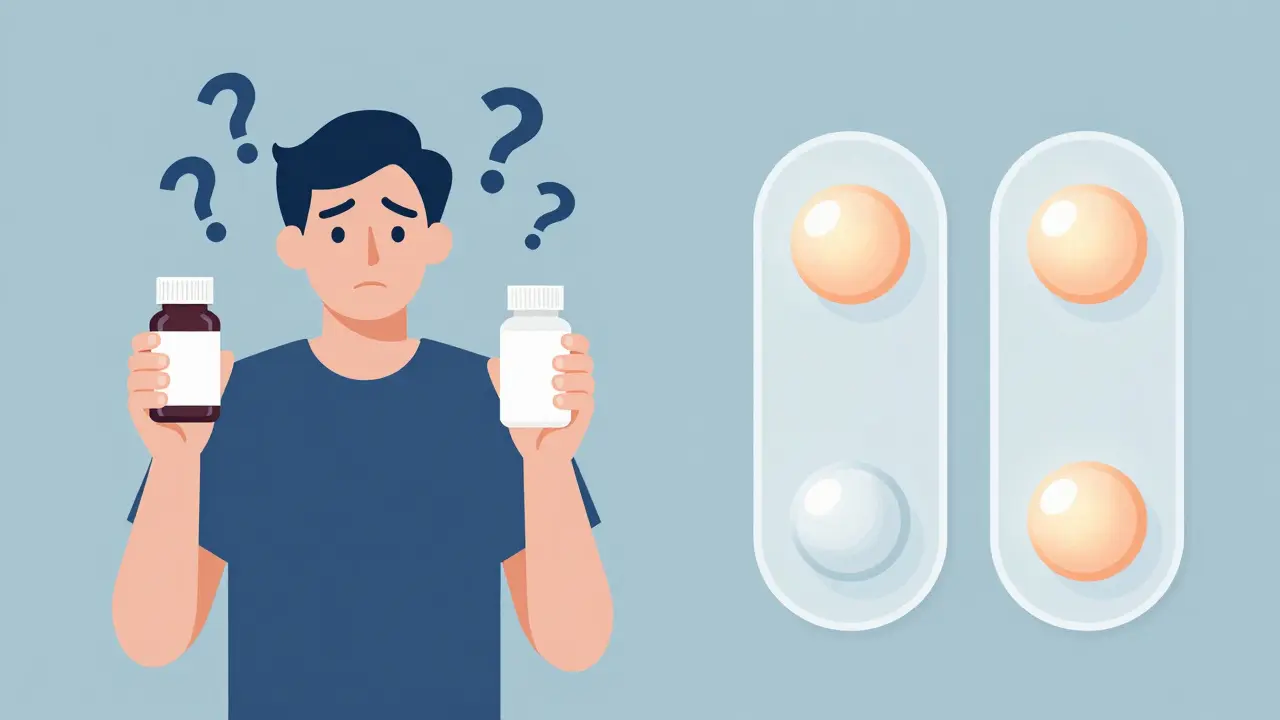
Imagine a scenario where a patient leaves your office with a prescription for a life-saving medication. They go to the pharmacy, and the pharmacist hands them a box that looks completely different from what you discussed. The color is wrong. The shape is off. Maybe even the taste is different. Does this mean the medicine is weaker? Cheaper? Less effective?
If you are a healthcare provider, you have likely faced this exact moment of hesitation-not just from patients, but sometimes within yourself. Despite decades of regulatory science proving that generic drugs are therapeutically equivalent to their brand-name counterparts, skepticism lingers in clinical practice. This isn't about distrust in science; it’s often about gaps in how we were trained and how we communicate with patients.
Today, generic medications account for roughly 90% of all prescriptions dispensed in the United States, yet they represent only about 23% of total prescription drug spending. That is a massive economic driver for the healthcare system. However, numbers don’t always translate into confidence at the bedside. A significant portion of physicians still harbor concerns about equivalence, leading to inappropriate prescribing patterns and missed opportunities to improve patient adherence.
The Root of the Problem: Misconceptions About Equivalence
To fix the problem, we first need to understand why it exists. Many clinicians operate under subtle misconceptions that stem from outdated information or incomplete training during medical school. One common error is the belief that generic drugs must contain identical inactive ingredients-fillers, dyes, and binders-to be considered safe. In reality, while active ingredients must be identical, inactive components can differ as long as they do not affect safety or efficacy.
Another major hurdle is the misunderstanding of bioequivalence. Some providers mistakenly believe that the FDA allows generics to have up to 20-25% less active ingredient than the brand name. This is factually incorrect. The regulatory standard requires that the 90% confidence interval for the ratio of population geometric means of Area Under the Curve (AUC) and Cmax (maximum concentration) falls strictly within 80-125%. This tight window ensures that the generic performs identically to the reference listed drug (RLD) in the body.
When providers aren't clear on these technical specifications, they hesitate to prescribe generics confidently. And when a doctor hesitates, the patient notices. Studies show that patients are 35% more likely to initiate therapy when prescribed generics if the provider explicitly endorses their equivalence. Conversely, uncertainty from the prescriber can trigger nocebo effects, where patients report side effects simply because they expect the "cheaper" version to be inferior.
Bridging the Gap: Effective Educational Strategies
So, how do we close this knowledge gap? Traditional methods like handing out static fact sheets or sending emails rarely work. Attention spans are short, and clinical workflows are busy. Research published in JAMA Internal Medicine indicates that interactive, case-based education yields significantly better results. Clinicians who engaged in case studies demonstrated 42% higher knowledge retention at six months compared to those who received passive information.
Effective provider education should focus on three core pillars:
- Regulatory Literacy: Understanding the Hatch-Waxman Act and the Abbreviated New Drug Application (ANDA) process helps providers appreciate the rigorous scrutiny generics undergo before reaching the market.
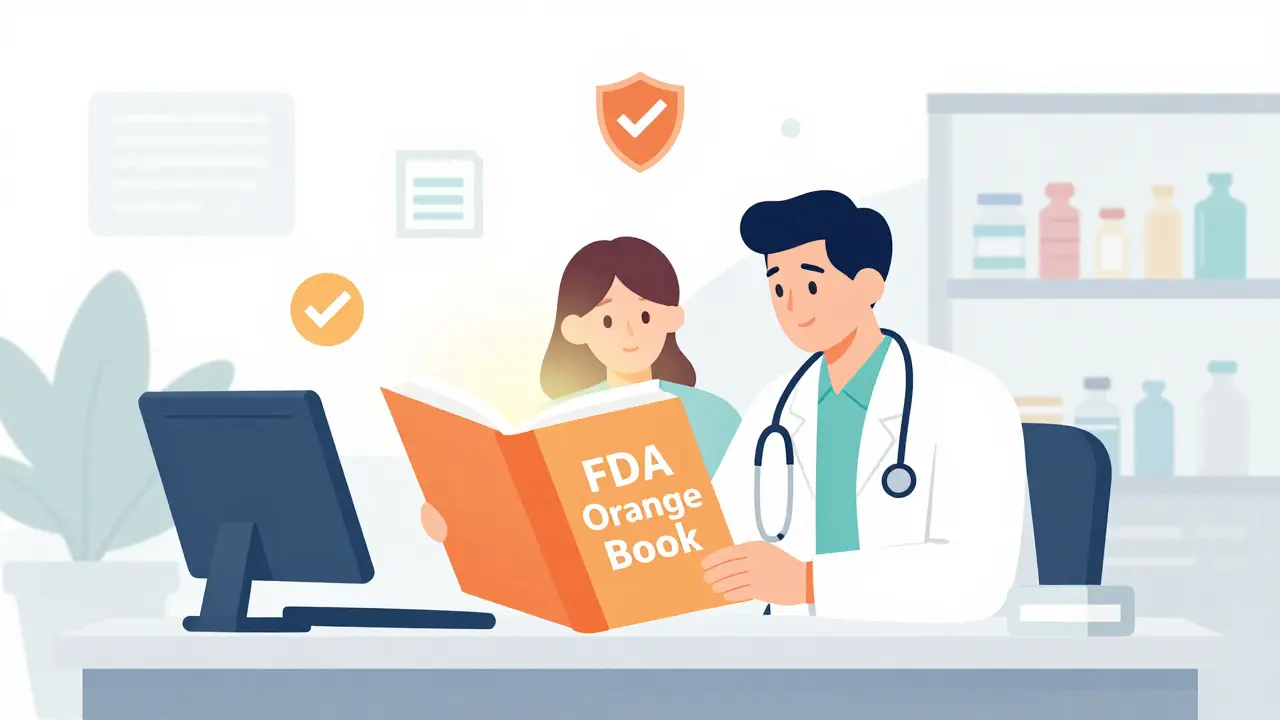
- Tool Utilization: Teaching clinicians how to use the FDA Orange Book is crucial. This resource documents therapeutic equivalence ratings using two-letter codes. An 'A' rating indicates therapeutic equivalence, while a 'B' rating suggests differences. Knowing how to interpret these codes empowers doctors to make informed decisions instantly.
- Communication Skills: Role-playing conversations with skeptical patients helps providers develop scripts that address concerns proactively rather than reactively.
For instance, instead of saying, "This is the generic version," a more effective approach might be, "I’m prescribing this medication because it contains the exact same active ingredient as the brand name, has passed strict FDA testing for performance, and will save you money without compromising your health." Specificity builds trust.
Specialty-Specific Challenges and Opportunities
Not all specialties face the same barriers. Family physicians typically show high rates of generic prescribing (around 89%), whereas specialists like neurologists and cardiologists often exhibit more resistance (with rates dropping to 67-79%). Why? Often, it comes down to perceived complexity and fear of variability in narrow-therapeutic-index drugs.
In psychiatry, the stakes feel particularly high. Providers worry that slight variations could destabilize a patient's mood. However, Harvard Medical School research has documented that explicit provider endorsement of generic equivalence leads to 18% fewer patient-reported side effects. The placebo effect works both ways; confidence in the treatment enhances its effectiveness.
Conversely, confusion arises with biologics. Only about 28% of oncologists correctly distinguish between generic small molecules and biosimilar large molecules. These are distinct categories with different approval pathways. Biosimilars are highly similar to reference biologics but allow for minor differences due to the complexity of biological manufacturing. Provider education must clearly separate these concepts to avoid unnecessary alarm.
| Attribute | Brand Name Drug | Generic Drug |
|---|---|---|
| Active Ingredient | Original formulation | Identical to brand |
| Inactive Ingredients | Proprietary mix | May differ (color, flavor) |
| Bioequivalence Standard | N/A (Reference Listed Drug) | 80-125% CI for AUC/Cmax |
| Cost Impact | Higher price | Significantly lower cost |
| FDA Approval Pathway | New Drug Application (NDA) | Abbreviated NDA (ANDA) |
Integrating Education into Clinical Workflows
The biggest barrier to implementing new knowledge is time. Physicians report that 89% struggle to find time for additional education amidst heavy clinical loads. Therefore, successful educational initiatives embed learning directly into electronic health record (EHR) systems.
Point-of-care prompts are powerful tools. When a provider attempts to prescribe a brand-name statin, an EHR alert can suggest the generic alternative, citing specific savings and equivalence data. This "just-in-time" learning reinforces correct behavior without requiring hours of dedicated study. Programs that integrated such alerts saw a 24% increase in generic acceptance rates.
Furthermore, academic detailing programs run by organizations like the Institute for Clinical and Economic Review (ICER) provide peer-to-peer education. Pharmacists visit clinics to discuss evidence-based alternatives, offering a collaborative rather than top-down approach. This method respects the physician's autonomy while providing necessary context.
Future Directions: AI and Personalized Learning
As we move forward, technology will play an increasingly central role. Artificial intelligence is beginning to identify prescribers with low generic utilization rates and deliver targeted educational content. For example, a pilot program by UnitedHealthcare used AI to analyze prescribing patterns and sent personalized insights to physicians, resulting in a 28% increase in generic prescribing among the intervention group.
Virtual reality (VR) training modules are also emerging. These simulations allow providers to practice difficult conversations with virtual patients, building communication confidence in a risk-free environment. Early results show a 41% improvement in provider confidence after VR training.
Looking ahead, regulatory bodies are aligning incentives with education. The Centers for Medicare & Medicaid Services (CMS) plans to include generic prescribing rates as a quality metric in the Merit-based Incentive Payment System (MIPS) starting in 2025. This shift signals that choosing generics is not just a cost-saving measure but a component of high-quality, value-based care.
Conclusion: Empowering Providers for Better Outcomes
Improving clinician knowledge about generics is not about pushing a product; it’s about empowering providers with accurate, actionable information. When doctors understand the science behind bioequivalence, know how to navigate resources like the FDA Orange Book, and feel confident communicating with patients, everyone wins. Patients get access to affordable, effective care. Healthcare systems reduce unnecessary spending. And providers can focus on what matters most: treating the disease, not the doubt.
The journey toward optimal generic utilization starts with education. By addressing misconceptions, leveraging technology, and integrating learning into daily workflows, we can ensure that every patient receives the best possible therapy, regardless of the label on the bottle.
What is the difference between a generic drug and a brand-name drug?
The primary difference lies in marketing and cost, not efficacy. Generic drugs contain the same active ingredient, strength, dosage form, and route of administration as the brand-name reference listed drug (RLD). They must demonstrate bioequivalence, meaning they perform identically in the body. Inactive ingredients like dyes or fillers may differ, but this does not impact therapeutic outcome. Generics are significantly cheaper because manufacturers do not bear the initial research and development costs.
How does the FDA ensure generic drugs are safe and effective?
The FDA requires generic manufacturers to submit an Abbreviated New Drug Application (ANDA). This application must prove that the generic is bioequivalent to the brand-name drug. Bioequivalence is determined through clinical studies showing that the 90% confidence interval for the ratio of AUC and Cmax falls within 80-125%. Additionally, facilities must meet Good Manufacturing Practice (GMP) standards to ensure consistent quality and purity.
Why do some doctors still prefer prescribing brand-name medications?
Several factors contribute to this preference, including habit, lack of familiarity with generic options, or misconceptions about equivalence. Some providers worry about variability in inactive ingredients affecting patient tolerance, particularly for sensitive conditions. Others may have been influenced by historical anecdotes or insufficient education on current regulatory standards. Addressing these knowledge gaps through targeted education can help shift prescribing behaviors.
What is the FDA Orange Book and how can clinicians use it?
The FDA Orange Book, officially titled "Approved Drug Products with Therapeutic Equivalence Evaluations," lists all approved drug products along with their therapeutic equivalence ratings. Clinicians can use it to verify if a generic is therapeutically equivalent to a brand-name drug. Drugs with an 'A' rating are considered interchangeable, while 'B' ratings indicate differences that may prevent substitution. It is a vital tool for making informed prescribing decisions.
Are biosimilars the same as generic drugs?
No, biosimilars are not the same as generic drugs. Generics are copies of small-molecule chemical drugs, which are simple and easy to replicate exactly. Biosimilars are copies of large-molecule biologic drugs, which are complex and produced in living cells. Because of this complexity, biosimilars are "highly similar" to the reference biologic but allow for minor differences. They require a different approval pathway and cannot be automatically substituted without specific state laws and provider awareness.
How can providers effectively communicate generic benefits to patients?
Providers should proactively explain that generics contain the same active ingredient and have passed strict FDA testing for performance. Using clear, non-jargon language helps build trust. For example, stating, "This medication works exactly the same way as the brand name but costs less," addresses the core concern. Acknowledging potential differences in appearance or taste reassures patients that these changes do not affect efficacy. Confidence from the provider significantly reduces patient anxiety and improves adherence.
What role does the Hatch-Waxman Act play in generic drug availability?
The Drug Price Competition and Patent Term Restoration Act of 1984, known as the Hatch-Waxman Act, established the modern framework for generic drug approval. It created the Abbreviated New Drug Application (ANDA) pathway, allowing manufacturers to skip costly clinical trials if they could prove bioequivalence to an existing brand-name drug. This act balanced innovation incentives for brand developers with timely access to affordable generics for consumers, fundamentally shaping today's pharmaceutical market.
Do generic drugs have the same side effects as brand-name drugs?
Yes, because they contain the same active ingredient, generic drugs generally have the same side effect profile as their brand-name counterparts. Any differences in reported side effects are often attributed to the nocebo effect, where patients expect worse outcomes from cheaper medications. In rare cases, sensitivity to inactive ingredients like dyes or gluten in fillers might cause reactions, but these are exceptions rather than the rule. Overall, safety profiles are comparable.
Can pharmacists substitute generic drugs without asking the doctor?
In most U.S. states, pharmacists can automatically substitute a generic drug for a brand-name one unless the prescriber specifically marks the prescription as "Dispense As Written" (DAW) or "Brand Medically Necessary." Laws vary by state; some require notification, while others permit silent substitution. Providers should be aware of local regulations to manage patient expectations and ensure continuity of care, especially for narrow-therapeutic-index drugs where consistency is critical.
How does provider education impact healthcare costs?
Improved provider education directly reduces healthcare costs by increasing generic utilization. Since generics cost significantly less than brand-name drugs, shifting prescriptions saves billions annually. Additionally, better communication improves patient adherence, reducing hospitalizations and complications associated with untreated conditions. Studies estimate that comprehensive education initiatives could generate over $150 billion in savings over the next decade while improving overall health outcomes.